

JOHANNESBURG — Buy-now-pay-later services have moved from a niche checkout option to a mainstream feature of online and increasingly in-store retail across several of Africa’s largest economies, offering consumers a way to spread payments for everything from smartphones to school fees without the documentation, collateral or credit history traditionally required to access consumer finance. The model’s rapid expansion across South Africa, Nigeria, Egypt and Kenya has introduced formal consumer credit to millions of people for the first time, reshaped merchant economics and raised substantive questions about regulatory oversight, consumer protection and the adequacy of credit infrastructure in markets where traditional bureau coverage remains thin.
The BNPL model allows shoppers to receive goods or services immediately while repaying the cost over a series of scheduled installments, typically between two and twelve monthly payments, with the fee structure either absorbed by the merchant through a discount rate, charged directly to the consumer or split between the two parties. The product has found particular traction in African markets for structural reasons specific to the continent’s financial landscape: credit card penetration remains low relative to global averages, with formal revolving credit largely concentrated among higher-income, formally employed urban populations, while smartphone-based digital payments have grown rapidly and created the technical infrastructure through which BNPL providers can originate, disburse and collect installment credit at scale without physical presence or paper-based processes.
For many consumers accessing BNPL services, the experience represents the first time they have been extended formal credit of any kind. Traditional consumer lending in most African markets requires documentation — formal employment records, payslips, bank statements spanning multiple months — that systematically excludes informal workers, self-employed individuals and first-time borrowers who have accumulated no credit history because they have had no prior access to formal financial products. BNPL providers have addressed this barrier by building underwriting models that draw on alternative data sources: mobile money transaction histories, mobile network usage patterns, utility payment records and, in some cases, psychometric assessments designed to evaluate behavioral indicators of creditworthiness independent of formal financial track record.
Retailers have embraced the model enthusiastically for its measurable effect on key commercial metrics. E-commerce platforms and large retail chains alike have reported significant increases in average order value and overall conversion rates when BNPL is offered as a checkout option — consistent with research findings from BNPL markets elsewhere that show consumers willing to purchase higher-value items when the total cost is spread over time than when full payment is required upfront. For online retailers operating in markets where consumer trust in e-commerce remains fragile and cart abandonment rates are high, offering a familiar, low-friction installment payment option has also helped address a specific behavioral barrier to completing purchases that credit or debit card options alone have not resolved.
Sector-specific applications have expanded well beyond retail electronics and fashion, the categories in which the model first gained traction across the continent. Education financing has emerged as one of the most significant use cases: private school tuition, university registration fees and professional certification costs are recurring, predictable expenses that impose concentrated cash-flow pressure on household budgets at the start of each term or enrollment cycle. Several BNPL providers have built dedicated education financing verticals in partnership with school groups, with products designed to match the specific payment timing of educational institutions rather than standard retail installment schedules. Healthcare financing has followed a similar trajectory, with BNPL-style products increasingly offered at private clinics, dental practices and pharmacies to help patients spread the cost of procedures or extended treatment courses.
The underlying credit risk embedded in BNPL has proven a persistent challenge for providers. Unlike markets with mature credit bureau infrastructure where lenders can query a prospective borrower’s full credit history before extending an offer, most African BNPL providers must underwrite with limited formal data, relying heavily on the alternative data models described above. Default rates have varied significantly by market and provider, with some companies reporting non-performing loan ratios well above what would be considered sustainable in mature consumer credit markets. Several providers have responded by tightening credit scoring criteria, reducing maximum loan limits for new customers and building more granular behavioral models that attempt to distinguish between first-time borrowers who present a manageable risk and those whose usage patterns suggest a higher probability of non-repayment.
Regulatory oversight of the BNPL sector has lagged its growth in most jurisdictions, a pattern that has drawn pointed criticism from consumer protection advocates. Unlike traditional consumer loans, BNPL products in several markets have operated outside the formal definition of credit under existing consumer protection legislation, exempting them from disclosure requirements, affordability assessments and interest rate caps that apply to licensed lenders. South Africa’s National Credit Regulator has been among the more active on the continent in examining whether existing credit legislation should be extended to cover BNPL explicitly, a question that the providers concerned have approached with varying degrees of willingness to engage, mindful of the compliance costs and product redesign that reclassification as credit might entail.
Shared credit data infrastructure specific to the BNPL sector remains underdeveloped across most African markets, creating a structural blind spot that neither regulators nor providers can yet fully see around. In more developed BNPL markets, regulatory pressure has pushed providers toward reporting repayment activity to credit bureaus, feeding the data back into broader credit scoring systems and reducing the risk that a consumer can accumulate multiple concurrent installment obligations across different providers without any single lender seeing the full picture. Across Africa, credit bureau coverage itself remains inconsistent even for traditional bank lending, meaning that the data architecture required to manage indebtedness risk across BNPL providers does not yet exist in most markets and would require both regulatory mandate and industry cooperation to build.
Funding conditions for the sector have tightened meaningfully alongside the broader pullback in venture capital available to African fintech companies. Several BNPL providers that had built rapid customer growth on venture funding have pivoted toward partnership models with established banks and retailers rather than pursuing independent balance-sheet lending at scale, a structural shift that allows them to operate the technology and underwriting capabilities while a licensed institution holds the credit risk on its own balance sheet. This partnership model has become increasingly common and has, in some instances, improved credit discipline by subjecting BNPL underwriting to the risk management oversight of regulated banking institutions rather than allowing it to operate entirely outside prudential supervision.
Competition within the sector has intensified as mobile money operators, established commercial banks and global card networks have each launched installment payment products of their own, in many cases directly targeting the same merchant and consumer segments that dedicated BNPL startups had sought to build their businesses around. The crowding has pushed merchant fee structures lower in several markets, benefiting retailers but compressing the margins of providers that had built revenue models around relatively high merchant discount rates that reflected the early scarcity of installment payment options in their markets.
Looking at the trajectory of the sector over the medium term, analysts expect continued consolidation among standalone BNPL providers, driven by tightening venture funding, growing competition from better-capitalized incumbent institutions and the increasing compliance costs associated with operating in regulatory environments that are gradually catching up with the product’s growth. Whether the remaining independent BNPL companies emerge from that consolidation as distinct fintech brands or are absorbed into broader banking or payment group structures is likely to vary by market, shaped by the relative openness of each country’s banking sector to new entrants and by the preferences of the established institutions that may ultimately acquire stakes in or outright purchase the most successful independent platforms. For consumers, the central question is whether the competitive pressure and eventual regulatory clarity this process produces will deliver a BNPL market that offers genuine access to well-priced, responsibly underwritten installment credit, or whether the same structural gaps in African consumer credit infrastructure that made the product attractive will also constrain its long-term potential to deliver on that promise.

More from Finance

Who will own Africa’s next trillion-dollar businesses?
Africa’s next corporate giants may emerge from AI, energy, finance, mining, logistics and consumer markets rather than traditional industries.

MTN Rwanda’s profit surge shows how mobile money is reshaping Africa’s digital economy
Rwanda’s mobile-money boom is turning telecom networks into financial infrastructure, creating a new investment frontier across Africa.
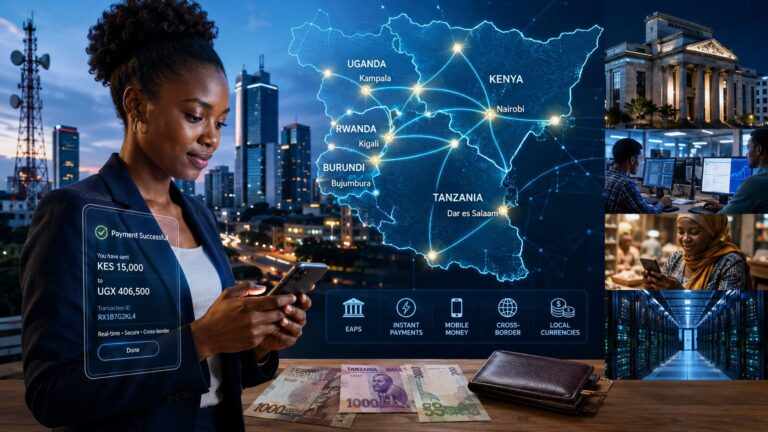
Who will control East Africa’s new digital payments network?
East Africa is building a faster, more connected payments ecosystem, opening a new contest among banks, fintechs, central banks and technology companies.