

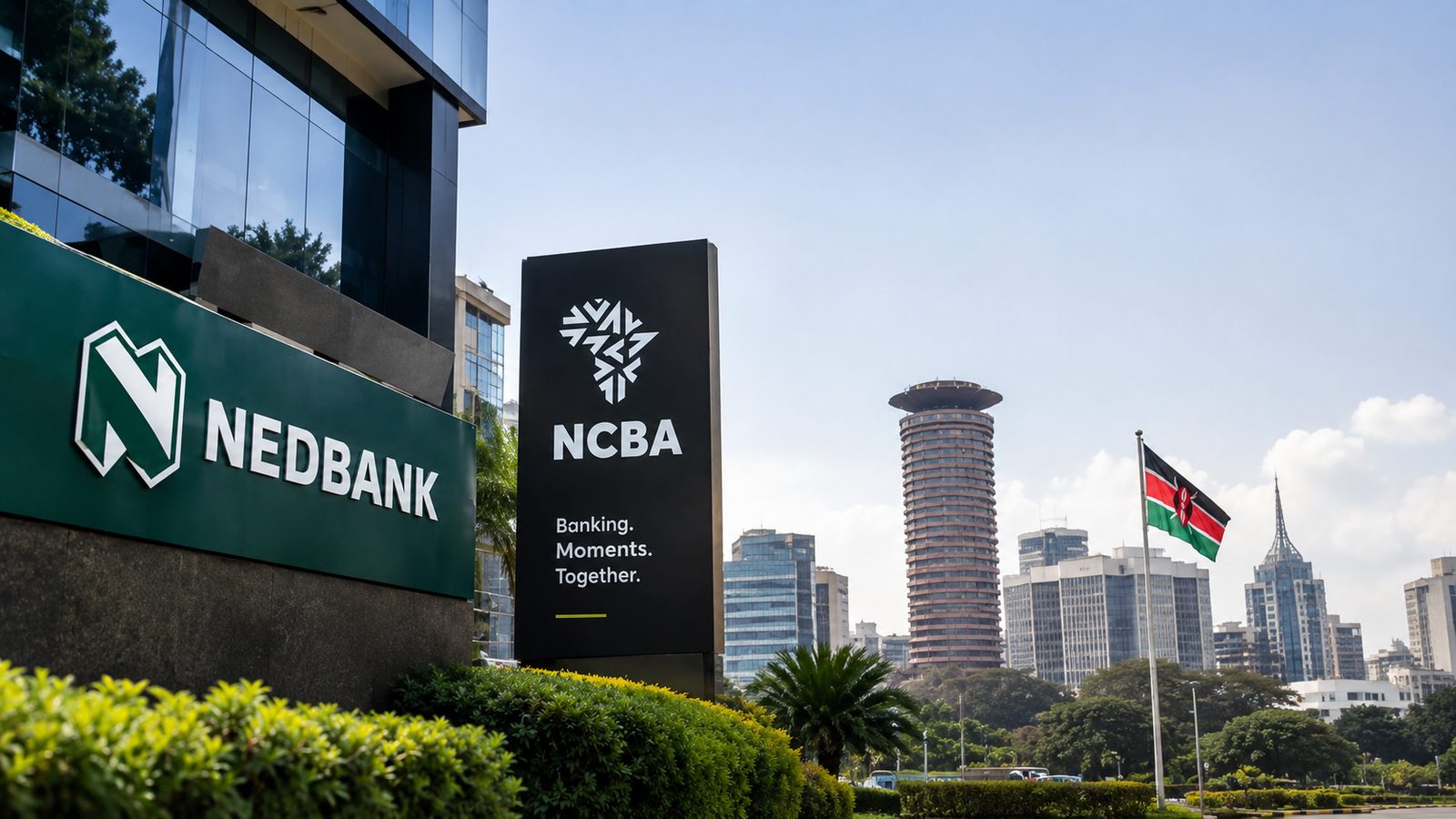
Kenya’s two most storied banking families are collecting one of the largest paydays in the country’s corporate history, but the price of that windfall is control of the lender their fathers built. The Central Bank of Kenya cleared South Africa’s Nedbank Group to acquire up to 66% of NCBA Group PLC for roughly $842 million, a decision that hands Johannesburg the keys to one of East Africa’s biggest banks while leaving the Kenyatta and Ndegwa families holding a smaller, though still valuable, slice of what they built.
The regulator’s approval, issued on August 28 under Section 13(4) of Kenya’s Banking Act, removed the last major hurdle standing between Nedbank and a deal first announced back in January. According to an official statement from the Central Bank of Kenya, the transaction takes effect once Nedbank and NCBA formally complete it under the terms both sides agreed. That completion is now expected within weeks, closing a transaction years in the making and reshaping the ownership map of one of the region’s most recognisable financial brands.
A Bank Built By Two Dynasties
NCBA exists today because two powerful Kenyan families merged their banks in September 2019. Commercial Bank of Africa traced its roots to the family of Jomo Kenyatta, the country’s founding president, while NIC Group carried the legacy of Philip Ndegwa, a former governor of the Central Bank of Kenya.
That merger created a lender serving more than 60 million customers across Kenya, Uganda, Tanzania, Rwanda, Ivory Coast and Ghana through 122 branches, built in large part on the strength of its M-Shwari and Loop digital lending platforms.
Who Owns NCBA Now
Before the Nedbank transaction, the Kenyatta and Ndegwa families together controlled well over a quarter of NCBA’s issued shares, making them by far the bank’s dominant shareholders.
Both families agreed to sell two-thirds of their respective holdings to Nedbank, a decision that converts a large share of their wealth from Kenyan bank stock into cash and newly issued shares on the Johannesburg Stock Exchange.
The remaining shares stay in Nairobi, where NCBA will continue trading on the Nairobi Securities Exchange as a 34% free float even after Nedbank takes majority control.
The Kenyatta Family’s Stake
The Kenyattas hold their position mainly through Enke Investments, which owns 217.49 million NCBA shares, equal to 13.2% of the bank. Muhoho Kenyatta, son of the founding president and brother of former president Uhuru Kenyatta, holds a further 12.75 million shares directly.
Under the deal, the family’s tendered stake converts into roughly 4.9 million Nedbank shares worth about $77 million, plus an undisclosed cash component, according to figures reported by Billionaires.Africa. The family keeps roughly 73.94 million NCBA shares, a position still worth billions of shillings once the deal closes.
A separate disclosure during the takeover talks revealed the scale of Muhoho Kenyatta’s personal stake. After he joined the NCBA board as a non-executive director on December 1, 2025, disclosure rules forced publication of his beneficial interest, which totalled 227.3 million shares, making him the largest disclosed individual shareholder on the entire Nairobi Securities Exchange.
The Ndegwa Family’s Stake
The Ndegwa family holds its NCBA position through First Chartered Securities, a vehicle that controls 246.14 million shares, or roughly 14.94% of the bank. Their tendered portion converts into about 5.24 million Nedbank shares, valued at approximately $82 million at the deal’s agreed exchange rate, alongside a cash payment.
Once the transaction settles, the family retains around 83.69 million NCBA shares, a position that keeps them among Kenya’s wealthiest banking dynasties even after ceding majority control.
Nedbank’s New Majority
Nedbank is paying roughly R13.9 billion, about $842 million, for its 66% stake, structured as a hybrid of 80% newly issued Nedbank shares and 20% cash. For every 100 NCBA shares tendered, qualifying shareholders receive 4.02994 Nedbank shares plus a cash top-up, while retail investors holding fewer than 7,520 shares can opt for a full cash exit instead.
Demand for the offer far outstripped what Nedbank needed, with shareholders representing nearly 80% of NCBA’s stock tendering shares before the bank scaled the offer back to its intended 66%, a detail reported by allAfrica.
Nedbank chief executive Jason Quinn has said the acquisition gives the South African lender a platform to bring corporate banking, infrastructure finance and wealth management services across East Africa, building on NCBA’s strong capital ratios and its long record of return on equity in the low 20% range.
The Free Float and Other Investors
Beyond the two founding families, NCBA’s share register includes institutional investors, pension funds and thousands of retail shareholders who together hold the remaining shares outside the Kenyatta and Ndegwa vehicles.
Those shareholders faced the same offer terms as the founding families, and Kenya’s Capital Markets Authority granted Nedbank a waiver in February releasing it from the requirement to make a mandatory offer for 100% of the company once ownership crossed the relevant threshold.
That waiver is what allows NCBA to keep its NSE listing and its 34% public float once the deal completes, preserving a route for ordinary Kenyan investors to hold a stake in the bank going forward.
What Changes After Completion
Once the transaction closes, NCBA becomes a subsidiary of Nedbank rather than an independent, family-anchored lender, even though its management has stressed that its brand, local leadership and NSE listing remain intact. NCBA chief executive John Gachora has said the bank will keep its own board and governance structure for the 34% of shares still trading publicly.
For the Kenyatta and Ndegwa families, the transaction converts a large share of their wealth out of a single Kenyan bank stock and into a diversified, dual-listed position spanning Johannesburg and Nairobi, a shift that has already paid off.
Nedbank’s share price has risen roughly 9.5% since the offer terms were fixed in January, and according to a separate report from Billionaires.Africa, the two families have gained a combined $166 million in paper value even before the deal has formally closed.
For now, what remains are largely administrative steps, the transfer of shares, regulatory sign-off on the final mechanics, and the formal integration of NCBA into Nedbank’s regional reporting structure.
But the outlines of the new ownership map are already clear: a bank once defined by two Kenyan dynasties now answers, in majority, to a shareholder base anchored in Johannesburg, even as the families who built it keep a meaningful, if smaller, seat at the table.