
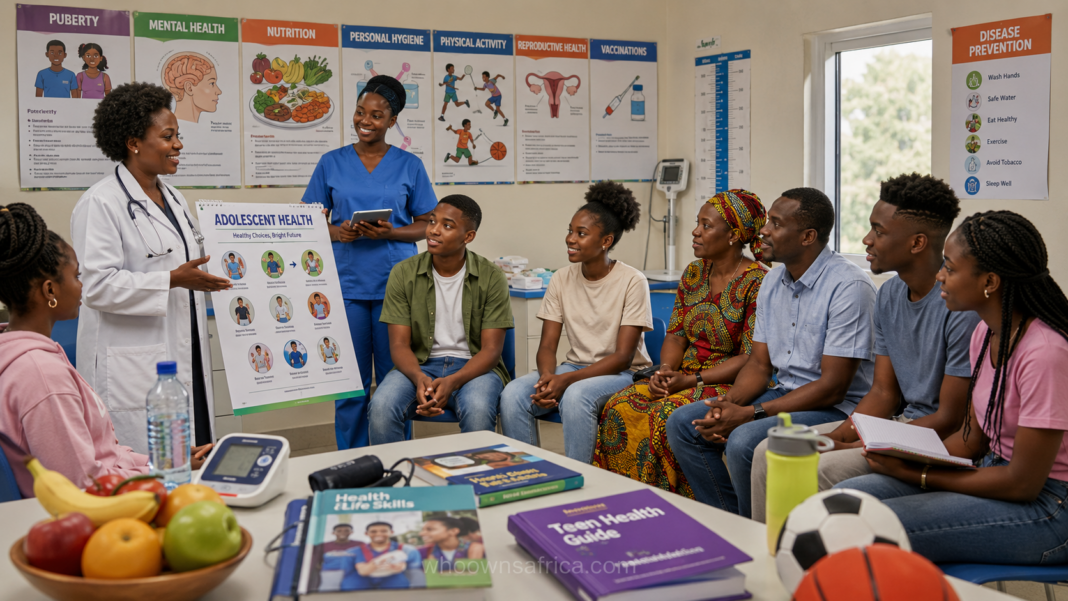

Adolescence (ages 10–19) is one of the most dynamic and consequential periods of development. Africa has over 200 million adolescents — the world’s youngest population — yet adolescent health remains chronically neglected in policy and family conversations.
Nutrition During Adolescence
- Iron — Girls who have begun menstruating need significantly more iron. Deficiency impairs energy, concentration, and school performance. Prioritise dark leafy greens, beans, lean meat, and fish
- Calcium and vitamin D — 90% of peak bone mass is built by age 18. Include dairy, small whole fish, dark leafy greens, and sesame seeds daily
- Zinc — Critical for growth, immune function, and sexual development. Found in legumes, nuts, seeds, and animal foods
- Avoid ultra-processed snacks and sugary drinks — Dietary habits formed during adolescence tend to persist into adulthood
Physical Activity
Adolescents need at least 60 minutes of moderate-to-vigorous activity every day. Regular exercise builds bone density, establishes healthy cardiovascular patterns, reduces depression and anxiety, and improves academic performance. Recreational screen time should be limited to no more than 2 hours daily.
Mental Health
Half of all lifetime mental health conditions begin before age 14. Common challenges include depression, anxiety, PTSD (in conflict-affected areas), and substance use. Parents play a critical protective role by maintaining open, non-judgmental communication. Warning signs requiring professional attention: persistent sadness, dramatic appetite or sleep changes, declining school performance, self-harm, or talk of death.
Sexual and Reproductive Health
Sub-Saharan Africa has the world’s second highest adolescent birth rate. Key protective messages:
- Every young person has the right to make informed decisions about their body
- HIV and STIs can affect anyone sexually active regardless of age or relationship status
- Consistent condom use significantly reduces STI and pregnancy risk
- Every adolescent girl should understand her menstrual cycle and know what is normal
Substance Use
The adolescent brain is particularly vulnerable to addiction — the prefrontal cortex governing impulse control is not fully developed until the mid-20s. Parents should have honest, non-judgmental conversations about alcohol, tobacco, khat, and cannabis. Adolescents who feel safe discussing these topics with parents are less likely to engage in harmful use.
Digital Wellbeing
Excessive social media use is associated with poor sleep, reduced physical activity, cyberbullying, anxiety, and depression. Establish screen-free times (meals, one hour before bed) and maintain open family communication about online safety.
Disclaimer: For specific health concerns regarding adolescents, consult a qualified healthcare provider or adolescent health specialist.

