

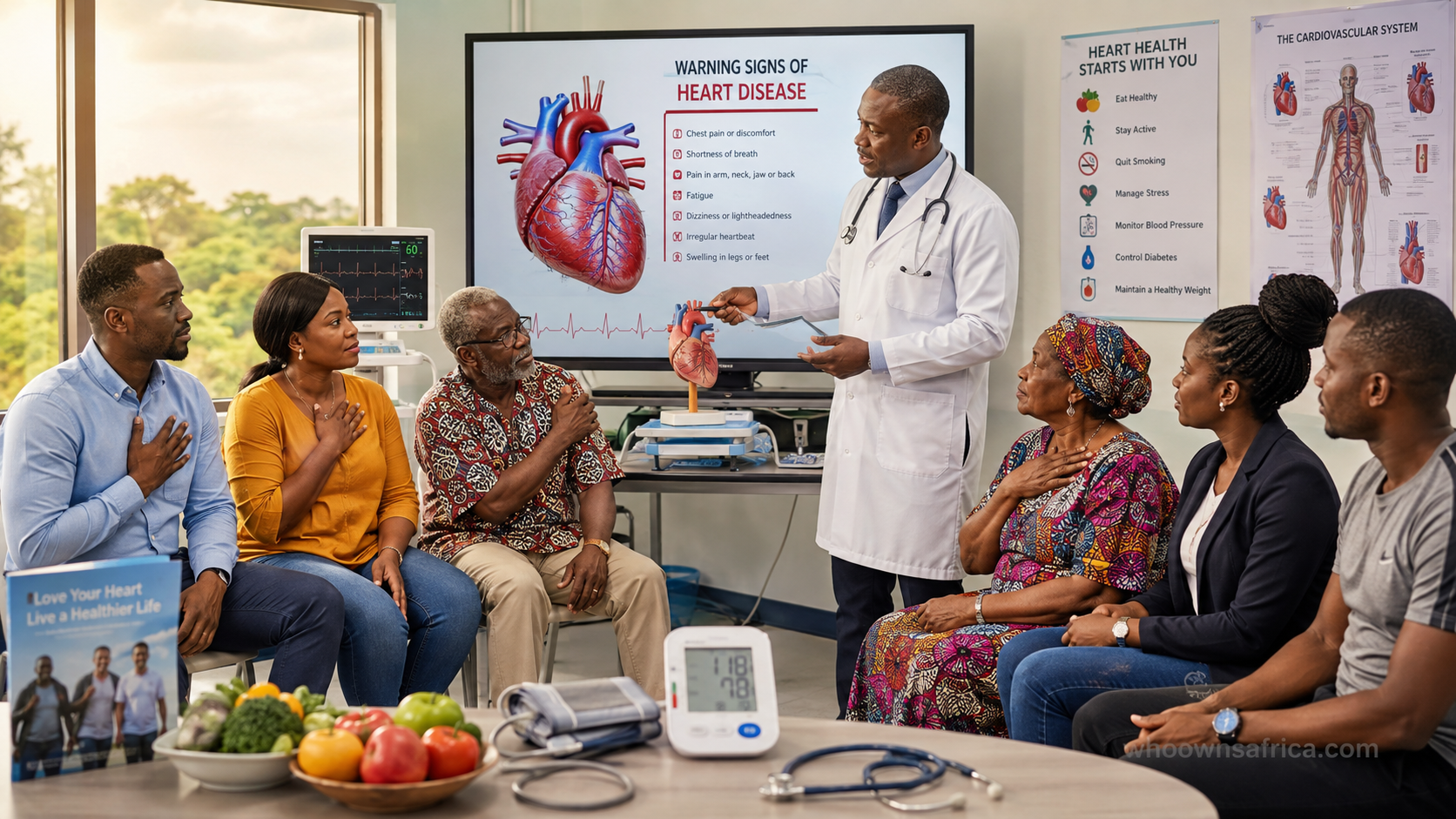
Cardiovascular disease is now the leading cause of death globally and an accelerating crisis across Africa. Disease often strikes at younger ages and in people entirely unaware of any risk — making awareness and early detection critical.
Warning Signs You Must Never Ignore
Heart Attack: Heavy, crushing, squeezing pressure in the centre of the chest lasting more than a few minutes, possibly radiating to the left arm, jaw, neck, back, or stomach. Women, diabetics, and older adults often present atypically — with nausea, extreme fatigue, or breathlessness. Seek emergency care immediately. Do not drive yourself.
Stroke — Use FAST: Face drooping, Arm weakness, Speech difficulty, Time to call emergency services immediately. Every minute of delay increases permanent brain damage.
Heart Failure: Progressive breathlessness during activity then at rest, waking gasping for air, swelling of feet and ankles, persistent fatigue, rapid unexplained weight gain from fluid retention.
Palpitations: Awareness of rapid, slow, or irregular heartbeat. Persistent palpitations with dizziness, fainting, or chest pain require prompt medical evaluation.
Key Risk Factors in Africa
- Hypertension — The single most important modifiable risk factor for heart attack and stroke
- Diabetes — Doubles cardiovascular risk and promotes aggressive atherosclerosis
- Tobacco use — Dramatically accelerates atherosclerosis and clot formation
- Physical inactivity — Sedentary lifestyle doubles cardiovascular risk
- Obesity — Particularly central/abdominal obesity driving insulin resistance and inflammation
- High-sodium diet — Directly raises blood pressure; people of African descent tend to be salt-sensitive
- Rheumatic heart disease — From untreated childhood throat infections; remains significant in sub-Saharan Africa
Protecting Your Heart: Actionable Steps
- Know your numbers — Blood pressure, fasting blood glucose, and weight at least once per year
- Eat for your heart — Reduce sodium, eat oily fish twice weekly, increase fibre, eliminate sugary drinks
- Move your body — 150 minutes of moderate aerobic activity weekly reduces cardiovascular mortality by approximately 35%
- Manage hypertension and diabetes — Take prescribed medication consistently; these are the most powerful drivers of cardiovascular disease in Africa
- Stop smoking — One of the highest-impact changes for cardiovascular health
Disclaimer: If you are experiencing chest pain, sudden weakness, speech difficulty, or other emergency symptoms, seek emergency medical care immediately.
