
Men’s Health in Africa: Topics Men Avoid and Why They Shouldn’t
Men in Africa die earlier than women from almost every major cause of death — and much of this disparity is preventable. Cultural norms around masculinity discourage men from acknowledging pain, expressing emotional distress, or seeking care. Men tend to present to healthcare facilities later, with more advanced disease, and with worse outcomes.
Prostate Health
Benign Prostatic Hyperplasia (BPH) — Non-cancerous prostate enlargement extremely common in men over 50. Symptoms include difficulty starting urination, weak stream, frequent nighttime urination, and incomplete emptying. Effective medication and minimally invasive procedures are available.
Prostate Cancer — The most common cancer in men across sub-Saharan Africa, with particularly high incidence in men of African descent. Early-stage disease has no symptoms. Men over 50 (or over 40 with family history) should discuss PSA testing with their doctor.
Testicular Health
Monthly self-examination is recommended — check for new lumps, size changes, or persistent discomfort. Early detection of testicular cancer carries over 95% survival rates. Report any suspicious findings promptly and do not delay out of embarrassment.
Erectile Dysfunction
Affects approximately 50% of men over 40. Critically, ED is often an early warning sign of cardiovascular disease or diabetes — sharing the same risk factor of impaired blood vessel function. Seek medical evaluation rather than unregulated supplements. Treating the underlying condition often resolves ED.
Mental Health: The Invisible Crisis
African men have significantly higher suicide rates than women. The cultural expectation of stoicism creates dangerous reluctance to acknowledge emotional pain. Depression in men often presents through irritability, anger, alcohol use, and risk-taking rather than tearfulness. Take these signs seriously in yourself and male family members.
Cardiovascular Disease
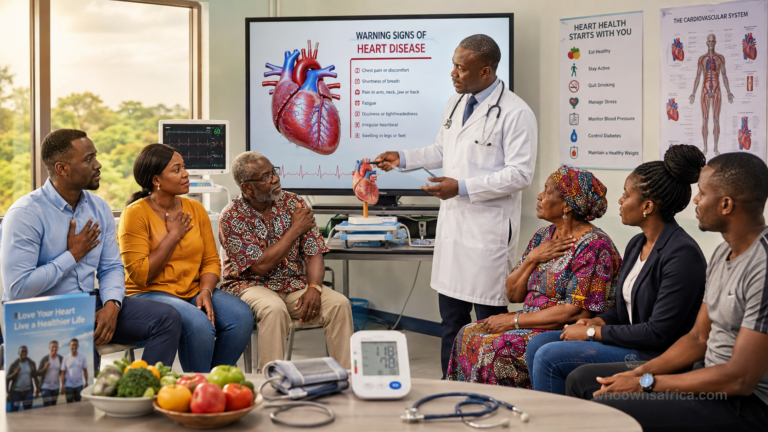
Men are particularly likely to have undetected hypertension. Every man should know his blood pressure reading and have it checked at least annually. Early management of hypertension and diabetes dramatically reduces fatal heart attack and stroke risk.
HIV and Sexual Health
- Test for HIV at least once per year if sexually active with multiple partners
- Use condoms consistently with non-regular partners
- Consider voluntary medical male circumcision (VMMC) — reduces HIV acquisition risk by approximately 60%
- If HIV-positive, start antiretroviral treatment immediately and maintain it
Disclaimer: This article is for general informational purposes only. Please consult a qualified healthcare provider for personal health assessments and treatment.