
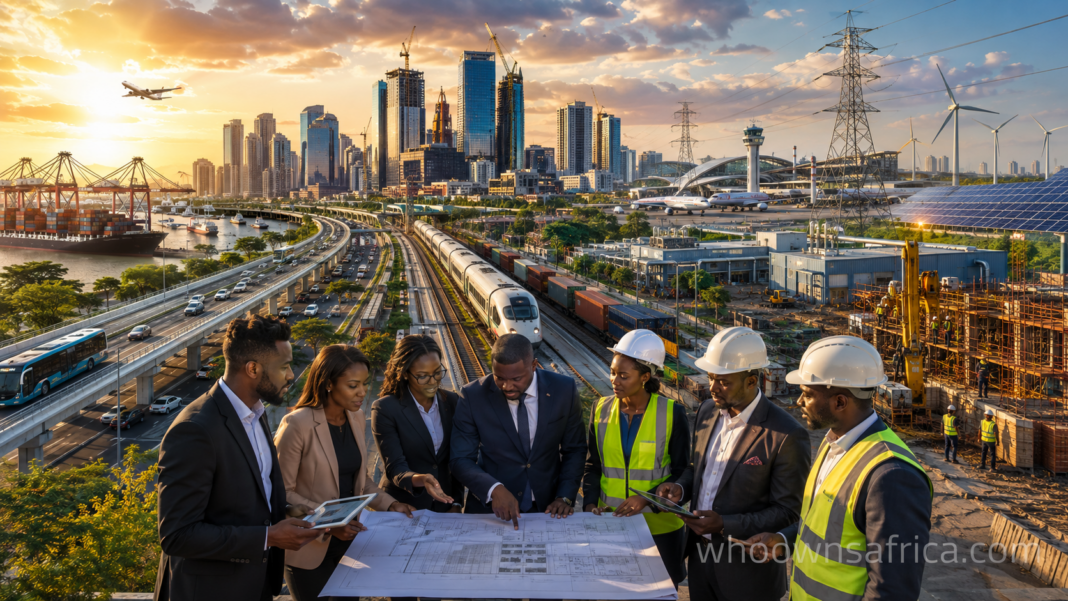

Africa is entering a period of significant economic transformation driven by growing investment in infrastructure and expanding business opportunities across multiple industries. Governments, development finance institutions, private investors, and international partners are increasing funding for projects designed to improve transport, energy, digital connectivity, water systems, manufacturing, and urban development. These investments are creating the conditions needed for businesses to expand, improve productivity, and compete more effectively in regional and global markets.
Infrastructure has long been recognised as one of the foundations of economic development. Reliable roads, ports, railways, airports, power generation, telecommunications, and logistics networks reduce business costs while improving efficiency. In many African countries, infrastructure improvements are opening regions that were previously difficult to access, allowing businesses to reach new customers and suppliers.
Business investment and infrastructure development are closely connected. Companies are more likely to invest where transport systems function efficiently, electricity is dependable, and digital services support modern commerce. At the same time, expanding businesses generate tax revenue, employment, and demand for additional infrastructure, creating a cycle of economic growth that benefits both the public and private sectors.
Across the continent, policymakers increasingly view infrastructure as more than physical construction. Modern infrastructure includes digital networks, renewable energy facilities, industrial parks, innovation hubs, and logistics centres that support the broader economy. This wider approach reflects changing business needs and the rapid adoption of technology throughout Africa.
Infrastructure as the Backbone of Economic Growth
Economic growth depends on the efficient movement of people, goods, services, information, and capital. Infrastructure provides the systems that make this possible. When roads reduce travel times, businesses lower transportation costs. When ports operate efficiently, exporters become more competitive. When electricity supplies become more reliable, manufacturers increase production while reducing operational disruptions.
Many African countries continue investing heavily in transport corridors connecting major cities with agricultural regions, mining areas, manufacturing centres, and neighbouring countries. Improved highways and rail systems help reduce delays while strengthening regional trade under the African Continental Free Trade Area.
Urban infrastructure also plays an increasingly important role. Rapid urbanisation has increased demand for housing, water supply, sanitation, waste management, and public transportation. Well planned cities attract businesses by providing better living conditions for employees and more efficient operating environments for companies.
Digital infrastructure has become equally important. High speed internet, mobile broadband, data centres, and fibre optic networks allow businesses to participate in digital commerce, financial services, online education, healthcare, and remote work. Expanding internet access has supported thousands of entrepreneurs operating entirely through digital platforms.
Rising Private Sector Participation
Private investment has become an increasingly important source of infrastructure financing across Africa. Governments often collaborate with private companies through public private partnerships that combine public oversight with private sector expertise and capital.
These partnerships are supporting projects ranging from toll roads and airports to renewable energy facilities and industrial zones. Investors are attracted by opportunities to participate in sectors where demand continues to grow alongside expanding populations and rising incomes.
Institutional investors, pension funds, infrastructure funds, sovereign wealth funds, and commercial banks are also increasing their interest in African infrastructure. Although investment decisions vary according to market conditions and project risks, many investors view long term infrastructure assets as stable investments capable of generating predictable returns over many years.
Successful partnerships depend on transparent procurement systems, clear regulatory frameworks, effective governance, and sound project management. Investors generally seek policy consistency, legal certainty, and reliable dispute resolution mechanisms before committing significant capital.
Energy Investment Supporting Industrial Development
Reliable electricity remains one of the most important requirements for business growth. Manufacturing, mining, agriculture, tourism, healthcare, education, and digital services all depend on stable power supplies.
Many African countries continue expanding electricity generation using a combination of renewable energy, natural gas, hydropower, geothermal resources, and improved transmission networks. Solar and wind projects have attracted increasing investment as technology costs have fallen and governments pursue cleaner energy solutions.
Renewable energy also creates opportunities for rural electrification. Communities previously without reliable electricity are gaining access through mini grids and standalone solar systems, supporting small businesses, healthcare facilities, schools, and agricultural enterprises.
Industrial development benefits significantly from improved energy access. Manufacturers can operate more efficiently, reduce reliance on expensive backup generators, and increase production capacity. Lower operating costs improve competitiveness while encouraging additional domestic and foreign investment.
Transport Networks Expanding Regional Trade
Efficient transport systems remain essential for economic integration across Africa. Businesses require reliable logistics to move raw materials, finished products, and agricultural goods quickly and cost effectively.
Major investments continue focusing on highways connecting neighbouring countries, modern railway systems, expanded ports, upgraded airports, and inland logistics facilities. These projects support trade by reducing transportation times and improving supply chain reliability.
Regional integration has become increasingly important as businesses seek larger markets beyond national borders. Better transport infrastructure enables companies to expand distribution networks while supporting exporters reaching international markets.
Modern customs systems, digital trade documentation, and border infrastructure improvements are also helping simplify cross border commerce. Faster processing reduces delays and lowers costs for importers and exporters.
Agricultural producers particularly benefit from improved transport. Better rural roads allow farmers to deliver produce more quickly, reducing post harvest losses while increasing access to urban consumers and export markets.
Digital Infrastructure Driving Business Innovation
Africa’s digital economy continues expanding rapidly as internet connectivity improves and smartphone adoption increases. Digital infrastructure supports innovation across financial technology, electronic commerce, healthcare, education, agriculture, and professional services.
Technology companies are investing in fibre optic networks, cloud computing facilities, cybersecurity services, and data centres that strengthen digital ecosystems across multiple countries.
Small businesses increasingly use online marketplaces, digital payments, and social media marketing to reach customers beyond their immediate communities. Digital tools also improve inventory management, customer communication, accounting, and business planning.
Financial technology companies have become particularly influential by expanding access to banking services through mobile platforms. Digital financial services allow businesses to receive payments, manage cash flow, access financing, and participate more effectively in formal economic activity.
Innovation hubs, business incubators, and technology parks are supporting entrepreneurs developing solutions tailored to African markets. These ecosystems encourage collaboration between universities, investors, governments, and private companies.
Manufacturing and Industrial Parks
Industrialisation remains a priority for many African governments seeking to increase value addition, diversify exports, and create employment opportunities.
Special economic zones and industrial parks provide businesses with infrastructure designed specifically for manufacturing and processing activities. These facilities often offer reliable electricity, transport connections, water supply, telecommunications, and streamlined administrative procedures.
Manufacturing investment supports economic diversification by reducing dependence on raw commodity exports. Processing agricultural products, minerals, textiles, pharmaceuticals, and consumer goods domestically creates higher value products while generating additional employment.
Growing regional markets also encourage manufacturers to establish production facilities capable of serving multiple countries under expanding trade agreements.
Investment in industrial infrastructure supports supplier networks involving small and medium sized enterprises that provide raw materials, packaging, transportation, maintenance, and professional services.
Agriculture and Rural Infrastructure
Agriculture continues employing a substantial share of Africa’s workforce while contributing significantly to national economies. Infrastructure investment improves agricultural productivity through better irrigation, storage facilities, transportation networks, and market access.
Modern warehouses and cold storage facilities reduce food losses while helping farmers obtain better prices throughout the year. Improved irrigation increases resilience against changing weather patterns while supporting higher crop yields.
Rural electrification enables food processing businesses, refrigeration, irrigation pumps, and digital agricultural services. Farmers increasingly use mobile technology to access weather forecasts, market prices, financial services, and agricultural advice.
Investment throughout agricultural value chains supports food security while increasing export opportunities for processed agricultural products.
Urban Development and Smart Cities
Africa’s urban population continues growing rapidly, increasing demand for modern infrastructure capable of supporting expanding cities.
Smart city initiatives integrate technology with urban planning to improve transportation, energy management, waste collection, public safety, and municipal services. Digital systems help cities manage resources more efficiently while improving residents’ quality of life.
Commercial real estate development, business districts, logistics centres, and mixed use developments are attracting investment alongside improvements in transport and utilities.
Well designed urban infrastructure encourages business expansion by reducing congestion, improving mobility, and supporting efficient service delivery.
Financing Infrastructure Projects
Financing large infrastructure projects requires cooperation among governments, multilateral development banks, commercial lenders, institutional investors, export credit agencies, and private developers.
Development finance institutions continue playing an important role by providing long term financing, technical expertise, and risk mitigation instruments. Their participation often encourages additional private investment by increasing investor confidence.
Innovative financing approaches are also becoming more common. Green bonds, sustainability linked financing, blended finance, and infrastructure investment funds help mobilise capital for projects supporting environmental and social objectives alongside economic growth.
Domestic capital markets are gradually expanding their capacity to finance infrastructure, allowing pension funds and insurance companies to invest in long term national development projects.
Challenges Facing Infrastructure Investment
Despite encouraging progress, infrastructure development continues facing several challenges.
Financing gaps remain significant in many countries. Large scale infrastructure requires substantial capital while governments often balance competing priorities including healthcare, education, and social protection.
Project preparation can also present difficulties. Successful infrastructure investments require careful feasibility studies, environmental assessments, financial planning, and stakeholder engagement before construction begins.
Maintenance represents another important consideration. Existing infrastructure requires continuous investment to remain efficient and safe throughout its operational life.
Climate resilience has become increasingly important as infrastructure projects are designed to withstand changing weather conditions, floods, droughts, and rising temperatures.
Regulatory consistency, transparent governance, skilled workforce development, and efficient public institutions remain essential for attracting long term investment.
Sustainability and Green Infrastructure
Environmental sustainability has become central to infrastructure planning across Africa. Governments and investors increasingly prioritise projects that reduce emissions, protect natural resources, and improve climate resilience.
Renewable energy continues attracting significant investment because it supports economic growth while reducing dependence on fossil fuels. Solar farms, wind projects, hydroelectric facilities, and battery storage systems contribute to cleaner electricity generation.
Green buildings, sustainable transport systems, water conservation projects, and circular economy initiatives are becoming more common as environmental standards evolve.
Businesses increasingly recognise that sustainability strengthens long term competitiveness by reducing operating costs, improving resource efficiency, and meeting investor expectations.
Opportunities for International Investors
Africa offers diverse investment opportunities across infrastructure, manufacturing, renewable energy, telecommunications, logistics, agriculture, tourism, healthcare, and financial services.
Population growth, urbanisation, expanding consumer markets, and regional economic integration continue supporting long term demand for infrastructure and business investment.
International companies increasingly partner with local firms that possess market knowledge and operational experience. These partnerships often contribute to skills development, technology transfer, and stronger local supply chains.
Risk management remains an important consideration for investors. Comprehensive due diligence, strong governance, local partnerships, and careful project selection help improve investment outcomes.
The Future of African Infrastructure
The future of African infrastructure investment will likely be shaped by technology, sustainability, regional integration, and demographic growth.
Artificial intelligence, digital infrastructure, smart logistics systems, and advanced manufacturing technologies are expected to improve productivity across multiple industries. Renewable energy expansion will continue supporting industrial growth while strengthening energy security.
Regional trade agreements are likely to increase demand for transport corridors, logistics facilities, and border infrastructure that facilitate commerce among African economies.
Public and private investment will remain essential to closing infrastructure gaps while supporting inclusive economic growth. Continued collaboration among governments, financial institutions, businesses, and development partners can help deliver projects that improve living standards and strengthen economic resilience.
Conclusion
African business and infrastructure investment remain closely connected as countries pursue long term economic transformation. Modern infrastructure enables businesses to expand, improves productivity, supports innovation, and strengthens regional trade. At the same time, successful businesses create employment, generate tax revenue, and encourage further investment across the economy.
Although challenges remain, including financing requirements, project preparation, maintenance, and climate resilience, the overall direction points toward continued progress. Growing participation from governments, private investors, development finance institutions, and international partners is supporting projects that strengthen transport, energy, digital connectivity, manufacturing, agriculture, and urban development.
As infrastructure networks continue expanding and business environments improve, Africa is positioned to unlock greater economic potential through increased investment, stronger regional integration, and sustainable long term growth. The combination of strategic planning, responsible investment, technological innovation, and effective governance will play a central role in shaping the continent’s economic future for decades to come.

