
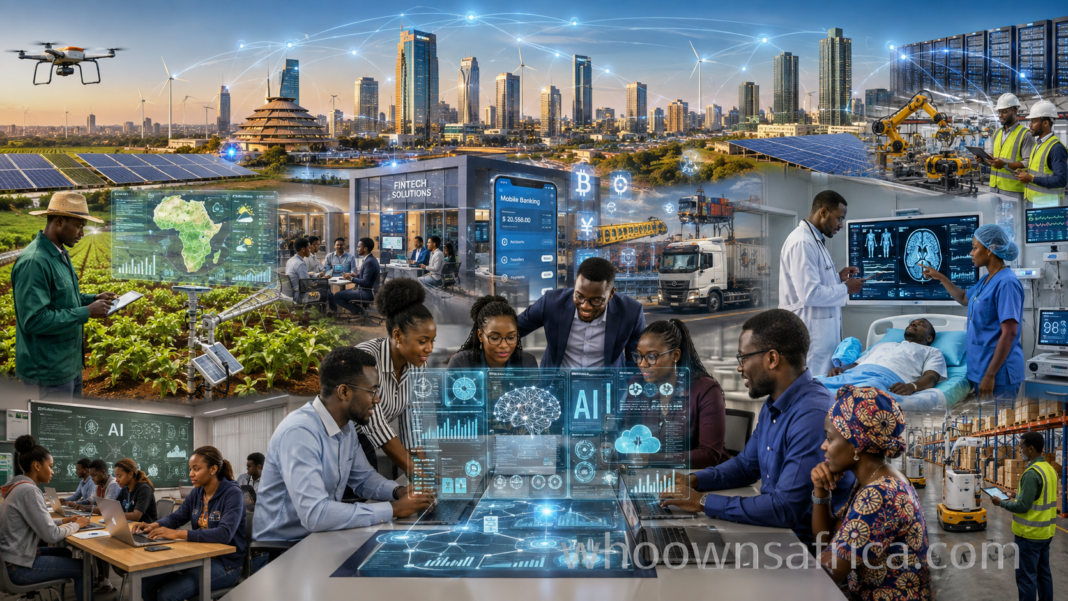

Artificial intelligence is emerging as one of the most significant technologies shaping economic development across Africa. Governments, businesses, entrepreneurs and researchers are increasingly adopting AI powered solutions to improve productivity, expand access to essential services and create new business opportunities. While challenges remain, AI is steadily becoming an important driver of economic transformation across the continent.
Africa has long been recognised for its entrepreneurial spirit and its ability to adopt innovative technologies quickly. The rapid spread of mobile money, digital banking and online commerce demonstrated that African countries could leap beyond traditional infrastructure limitations. Artificial intelligence now presents another opportunity to accelerate economic growth by improving efficiency, reducing costs and opening entirely new industries.
The technology is no longer limited to global technology giants. African startups are building AI tools tailored to local languages, farming conditions, healthcare systems and financial services. Governments are exploring how machine learning can improve public administration, while universities are investing in AI research to prepare future generations for a changing job market.
The economic implications extend far beyond technology companies. Agriculture, mining, manufacturing, logistics, retail, education and healthcare are all experiencing gradual transformation through AI enabled solutions.
Understanding Artificial Intelligence
Artificial intelligence refers to computer systems capable of performing tasks that normally require human intelligence. These include analysing large amounts of data, recognising images, translating languages, predicting outcomes, generating content and assisting with decision making.
Modern AI systems rely on algorithms trained using vast quantities of information. As more data becomes available, these systems often become more accurate and efficient.
Generative AI has expanded public awareness by enabling computers to create written content, software code, images, music and videos. Businesses are increasingly integrating these tools into everyday operations.
For African economies, AI represents not only a technological advancement but also an economic opportunity capable of improving productivity across multiple sectors.
Why AI Matters for African Economies
Africa has one of the world’s youngest populations. Millions of young people enter the labour market every year while governments seek ways to create enough employment opportunities.
AI can help increase productivity, allowing businesses to produce more goods and services with available resources. Higher productivity often contributes to stronger economic growth.
Small businesses can use AI to automate repetitive administrative work, improve customer service and analyse market trends. Farmers can receive better weather predictions. Hospitals can improve diagnosis. Banks can reduce fraud. Manufacturers can optimise production.
Each improvement may appear modest individually, but together they have the potential to strengthen national economies.
Transforming Agriculture
Agriculture remains one of Africa’s largest employers and contributes significantly to national income across many countries.
Artificial intelligence is helping farmers make better decisions through data driven insights.
Satellite imagery combined with AI can detect crop diseases before they become visible to farmers. Mobile applications provide planting recommendations based on weather forecasts, soil conditions and historical rainfall data.
Livestock farmers increasingly use smart monitoring systems that detect health problems earlier, reducing losses.
AI also helps predict market demand, enabling farmers to choose crops with stronger commercial potential.
Food security may improve as precision agriculture reduces waste and increases yields.
Although many small scale farmers still face barriers including internet access and affordability, digital agriculture continues expanding across the continent.
Improving Healthcare
Healthcare systems across Africa often face shortages of medical professionals, equipment and specialist services.
Artificial intelligence offers practical tools that support healthcare workers rather than replacing them.
Medical imaging software can help detect diseases such as tuberculosis, breast cancer and pneumonia more quickly.
AI powered diagnostic systems assist clinicians in interpreting laboratory results and identifying potential health risks.
Hospitals also use predictive analytics to manage medicine supplies, forecast patient demand and optimise staffing.
Telemedicine platforms enhanced by AI enable doctors to consult patients in remote areas more efficiently.
Language translation systems may also improve communication between healthcare providers and patients who speak different local languages.
While AI cannot replace experienced medical professionals, it can enhance decision making and improve patient care.
Expanding Financial Inclusion
Africa has already demonstrated global leadership in digital payments through mobile money services.
Artificial intelligence is now enhancing financial inclusion further.
Banks use AI to detect suspicious transactions, reducing fraud and strengthening customer confidence.
Digital lenders analyse alternative financial data, enabling more people without traditional credit histories to access loans.
Insurance companies use AI to assess risks more accurately and process claims faster.
Customer service chatbots provide round the clock assistance, improving access to banking services for millions of users.
Small businesses also benefit from AI powered accounting software that simplifies bookkeeping and financial planning.
Improved access to finance encourages entrepreneurship and business expansion.
Supporting Small Businesses
Small and medium sized enterprises account for a significant share of employment across Africa.
Many entrepreneurs operate with limited staff and resources.
Artificial intelligence allows these businesses to perform tasks previously requiring larger teams.
AI tools can create marketing content, analyse customer behaviour, manage inventory and automate invoices.
Retailers use AI to forecast demand and optimise pricing.
Hotels analyse customer feedback to improve services.
Restaurants manage stock more efficiently, reducing waste.
Professional service firms automate document preparation and scheduling.
As costs decline, AI technologies become accessible to a wider range of businesses.
Creating New Jobs
One common concern surrounding artificial intelligence is job displacement.
Automation may reduce demand for certain repetitive administrative roles.
However, history suggests technological advances also create entirely new occupations.
Africa’s growing digital economy is already generating demand for software developers, data scientists, cybersecurity specialists, AI trainers, prompt engineers, robotics technicians and digital marketing professionals.
Businesses adopting AI often require employees capable of supervising automated systems, analysing outputs and maintaining technology infrastructure.
Educational institutions therefore play an essential role in preparing workers with relevant digital skills.
Rather than eliminating work entirely, AI is likely to reshape employment patterns.
Education and Skills Development
Preparing Africa’s workforce for an AI driven economy requires significant investment in education.
Schools increasingly introduce coding, robotics and digital literacy programmes.
Universities are expanding computer science, data analytics and machine learning courses.
Online education platforms powered by AI personalise learning according to each student’s progress.
Teachers receive support through automated grading systems and lesson planning tools.
Students gain access to interactive tutoring regardless of geographical location.
Improved education strengthens long term economic competitiveness by producing skilled workers capable of supporting advanced industries.
Manufacturing and Industrial Growth
Manufacturing has long been viewed as a pathway toward economic diversification.
Artificial intelligence enhances factory efficiency through predictive maintenance, quality control and production planning.
Machines equipped with sensors can identify maintenance needs before breakdowns occur.
Computer vision systems inspect products for defects with high accuracy.
Supply chains become more efficient as AI predicts demand and manages inventory.
These improvements reduce operating costs while increasing competitiveness.
African manufacturers seeking to expand exports may particularly benefit from higher productivity and consistent product quality.
Logistics and Transportation
Transport costs remain relatively high across many African countries.
Artificial intelligence helps logistics companies optimise delivery routes, reduce fuel consumption and improve fleet management.
Ports increasingly adopt smart systems that speed cargo handling.
Airlines use predictive maintenance to reduce delays.
Public transport operators analyse passenger data to improve scheduling.
Better logistics strengthen regional trade and support economic integration.
Reduced transportation costs benefit businesses and consumers alike.
Public Services and Government
Governments are beginning to explore AI applications across public administration.
Tax authorities analyse financial data to identify compliance risks.
Municipal authorities use AI to improve traffic management.
Agricultural ministries monitor drought conditions using satellite imagery.
Emergency services analyse weather and disaster data to improve preparedness.
Digital public services reduce paperwork and improve citizen access to government information.
However, public sector AI adoption requires careful governance to ensure fairness, transparency and accountability.
AI and African Startups
Africa’s technology ecosystem has expanded significantly over the past decade.
Entrepreneurs increasingly build AI solutions addressing local challenges rather than copying foreign business models.
Startups develop language technologies supporting African languages.
Others focus on healthcare diagnostics, agricultural advisory services, financial technology and educational software.
Local innovation ensures AI products reflect regional realities, cultural contexts and consumer needs.
Growing venture capital investment supports this expanding ecosystem.
Infrastructure Challenges
Despite considerable progress, infrastructure remains a major obstacle.
Reliable electricity remains inconsistent in several regions.
Internet connectivity varies significantly between urban and rural communities.
Cloud computing infrastructure continues expanding but remains unevenly distributed.
High computing costs can limit AI development for smaller companies.
Governments and private investors continue investing in broadband networks, renewable energy and digital infrastructure to support technological growth.
Data Availability
Artificial intelligence depends heavily on quality data.
Many African countries face limited availability of organised digital datasets.
Government records may still exist primarily on paper.
Healthcare information, agricultural statistics and business records often require digitisation before AI systems can use them effectively.
Improving data quality strengthens both public policy and private sector innovation.
Open data initiatives can encourage research while supporting responsible AI development.
Ethical Considerations
Artificial intelligence raises important ethical questions.
Algorithms may unintentionally reflect biases present in training data.
Privacy concerns increase as organisations collect larger volumes of personal information.
Transparent governance frameworks help build public trust.
Responsible AI requires fairness, accountability and respect for human rights.
Businesses adopting AI increasingly recognise that ethical practices strengthen long term success.
Cybersecurity Risks
Greater digital adoption also increases cybersecurity challenges.
AI systems themselves may become targets for cybercriminals.
Organisations therefore invest in stronger cybersecurity measures alongside AI implementation.
Employee training remains essential because human error often contributes to security breaches.
Governments continue strengthening national cybersecurity strategies to protect critical infrastructure.
AI and Regional Trade
The African Continental Free Trade Area aims to increase trade among African nations.
Artificial intelligence can support this objective by improving customs processing, logistics planning and supply chain coordination.
Businesses gain better market intelligence through AI driven analytics.
Manufacturers identify export opportunities more efficiently.
Improved trade contributes to broader economic integration and resilience.
Investment Opportunities
International investors increasingly recognise Africa’s growing technology potential.
AI startups attract funding from venture capital firms, development finance institutions and corporate investors.
Governments also establish innovation hubs and technology parks.
Public private partnerships encourage research collaboration between universities and industry.
Sustained investment supports long term ecosystem development.
Local Language Innovation
Africa is home to thousands of languages.
Developing AI systems capable of understanding local languages improves digital inclusion.
Voice assistants, translation tools and educational applications become more accessible to broader populations.
Language technology also preserves cultural heritage while expanding participation in the digital economy.
Environmental Applications
Artificial intelligence supports environmental management through better monitoring of forests, wildlife and water resources.
Satellite analysis identifies illegal logging, land degradation and changing weather patterns.
Energy companies optimise renewable power generation using AI forecasts.
Cities improve waste management through smart monitoring systems.
Environmental sustainability increasingly aligns with economic development goals.
The Workforce of Tomorrow
Employers increasingly value adaptability alongside technical expertise.
Workers capable of collaborating with AI systems may become more competitive.
Lifelong learning is likely to become increasingly important.
Governments, educational institutions and businesses all have roles in supporting continuous skills development.
Reskilling programmes help employees transition into emerging occupations.
Policy and Regulation
Effective regulation encourages innovation while protecting citizens.
Several African governments are developing AI strategies focused on responsible adoption.
Clear legal frameworks provide certainty for investors and businesses.
International cooperation also becomes important because AI development often crosses national borders.
Balanced regulation helps maximise economic benefits while reducing potential risks.
Looking Ahead
Artificial intelligence is unlikely to transform African economies overnight.
Adoption will vary between industries and countries depending on infrastructure, education, investment and policy.
Nevertheless, the long term direction appears clear.
Businesses increasingly view AI as a practical tool rather than an experimental technology.
Governments recognise its potential to improve service delivery.
Educational institutions continue preparing future workers for digital careers.
Entrepreneurs are developing solutions specifically designed for African markets.
The pace of innovation suggests AI will become deeply integrated into economic activity over the coming decades.
Success will depend not only on technological capability but also on investments in education, infrastructure, ethical governance and digital inclusion.
If these foundations continue strengthening, artificial intelligence could become one of the defining drivers of Africa’s next chapter of economic development. By combining local innovation with responsible policy and sustained investment, African economies have an opportunity to harness AI in ways that improve productivity, expand opportunity and support more inclusive growth for millions of people.

