
Africa is recognized by climate scientists as one of the regions most vulnerable to the physical impacts of climate change, despite contributing only a small fraction of cumulative global greenhouse gas emissions. More frequent and intense droughts, flooding events, cyclones, and rising temperatures are already affecting agricultural production, human health, and infrastructure across many parts of the continent. As these risks intensify, the role of insurance in managing financial exposure to climate risk — for individual farmers, businesses, governments, and communities — is attracting growing attention from policymakers, development institutions, and the insurance industry.
The Changing Risk Landscape
Climate change is altering the risk landscape in ways that challenge conventional insurance approaches built on historical weather data. If historical rainfall patterns, storm intensities, or drought frequencies are no longer reliable guides to future risk, then insurance pricing based on historical data will systematically underestimate actual exposure. This creates a fundamental technical challenge: models must increasingly incorporate forward-looking climate projections rather than relying solely on historical data, requiring collaboration between actuaries, climate scientists, and data providers to build the risk models on which credible climate insurance products depend.
Agricultural Climate Insurance
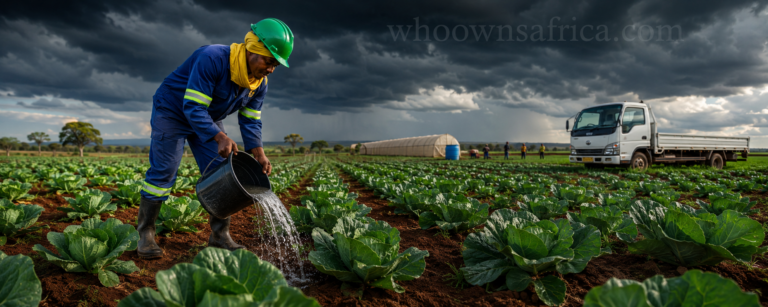
Agriculture is the sector most immediately and widely exposed to climate risk across the continent, and agricultural climate insurance has accordingly been the most extensively developed category. Index-based products, triggered by objectively measured weather indicators rather than individual crop loss assessment, have been developed and piloted across multiple countries and crop types. Climate change specifically adds urgency to this development: as rainfall becomes more erratic and droughts more frequent in vulnerable agricultural zones, the financial shocks from crop failure become more severe and more frequent, and the case for systematic risk management through insurance grows stronger even as accurate pricing in a changing climate becomes more challenging.
Sovereign Climate Risk Insurance
At the national government level, climate-related catastrophes — severe droughts, major floods, devastating cyclones — can impose large fiscal costs that strain budgets and create humanitarian crises requiring emergency response expenditure. Sovereign climate risk insurance provides governments with financial protection against these events, paying out quickly following a defined trigger without requiring lengthy loss assessment, allowing rapid emergency response without depleting reserves or waiting for international humanitarian assistance. Regional sovereign risk pools, through which multiple governments collectively pool their climate risk, have been established in several African regions, providing coverage that individual countries could not access affordably and generating diversification benefits from pooling uncorrelated risks across different geographies.
Climate Resilience and Adaptation
Insurance in isolation cannot address the underlying vulnerability to climate risk. Building climate resilience — through irrigation infrastructure that reduces dependence on erratic rainfall, early warning systems allowing communities to prepare for weather events, flood defenses, and agricultural diversification — reduces both the frequency and severity of insured losses and ultimately the cost of coverage. The combination of risk reduction investment and risk transfer through insurance is increasingly seen as the most effective framework for managing climate risk comprehensively, ensuring that financial risk transfer serves as one element of a broader approach rather than a standalone response.
Infrastructure and Asset Climate Risk
Climate change creates increasing risks for physical infrastructure — roads and bridges damaged by flooding or landslides, coastal facilities exposed to sea level rise and storm surge, energy infrastructure affected by extreme temperatures or hydrological changes affecting hydropower generation. Insuring climate-exposed infrastructure requires careful assessment of asset-specific climate risk and access to catastrophe reinsurance capacity. Development finance institutions financing African infrastructure have increasingly incorporated climate risk assessment and climate insurance requirements into project financing frameworks, recognizing that climate risk exposure affects long-term asset viability.
The Role of Data and Technology
Reliable climate risk assessment depends critically on underlying data quality, and data availability for many parts of Africa has historically been limited by sparse weather station networks and incomplete historical records. Satellite-based remote sensing — measuring rainfall, vegetation cover, and other climate-related variables from space — has significantly improved geographic coverage of relevant data, enabling index insurance products for areas without nearby weather stations. Advances in climate modeling and downscaling have also improved the resolution and reliability of local climate projections, supporting more sophisticated assessment of how risk will evolve in specific locations over coming decades.
Regulatory and Market Development
Developing climate insurance markets requires not only product innovation and data infrastructure but enabling regulatory and market conditions. Regulatory frameworks accommodating the specific features of climate insurance products — parametric triggers, rapid automatic payouts, seasonal premium structures — are important for allowing appropriate products to reach market efficiently. Government support through premium subsidies and public-private risk-sharing structures has been important in scaling several agricultural insurance initiatives beyond small pilots to meaningful market reach, while international donor support has provided the patient capital needed to develop products that are not yet commercially self-sustaining.
Looking Forward
As climate change continues to intensify weather-related risks across the continent, the importance of well-designed climate risk insurance will only grow. Realizing its potential requires continued investment in data infrastructure, risk modelling capability, product innovation, and regulatory frameworks, alongside parallel investment in physical climate adaptation that reduces the underlying vulnerability against which insurance provides financial protection.