

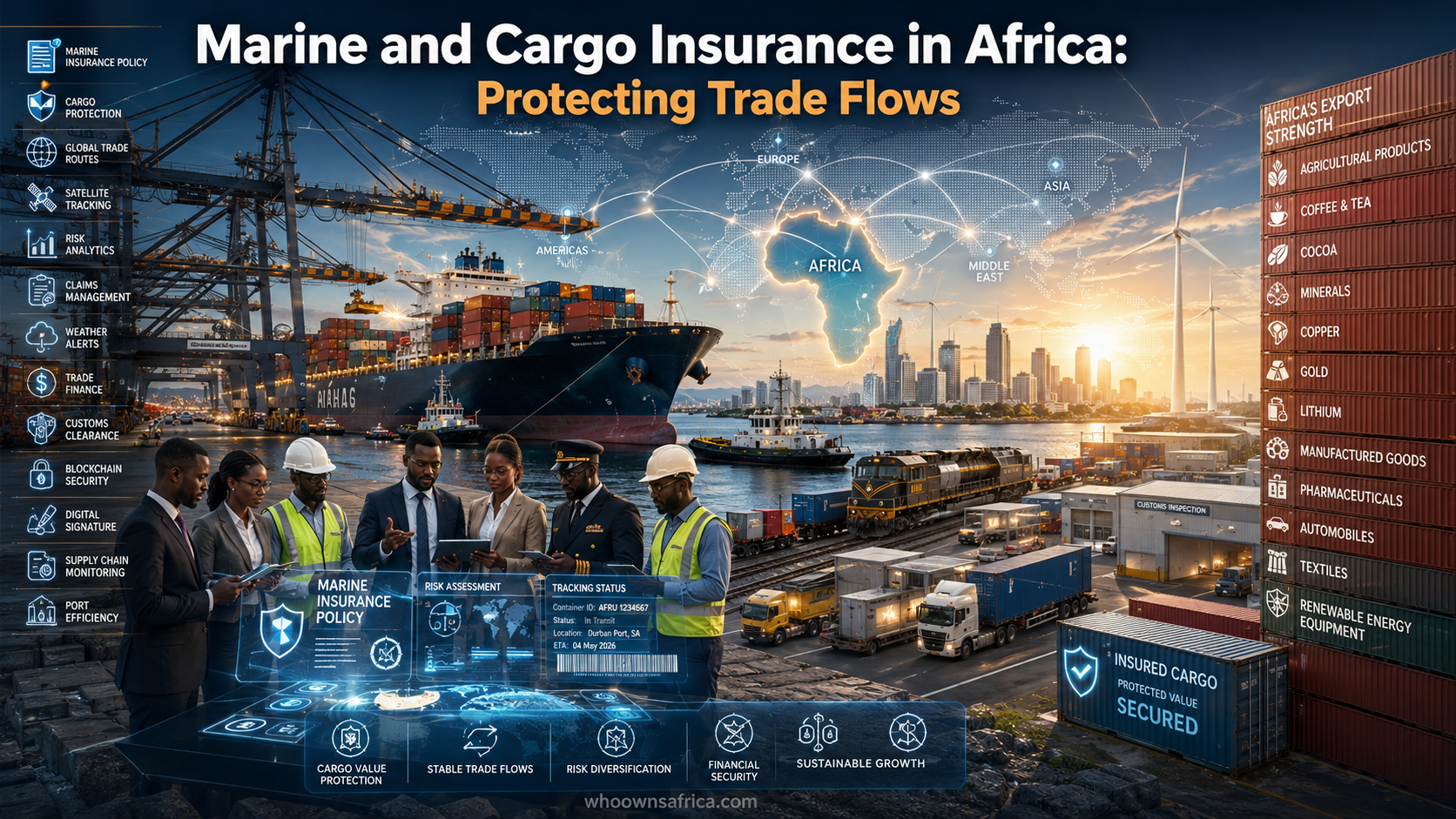
Marine and cargo insurance — covering the loss of or damage to goods transported by sea, air, road, or rail, and in some cases the vessels or vehicles carrying them — is one of the oldest and most commercially significant segments of the global insurance industry. For African economies that are deeply integrated into global trade through commodity exports and manufactured goods imports, marine and cargo insurance is foundational commercial infrastructure, enabling the financing and movement of goods with the risk management mechanisms that traders, financiers, and logistics operators require.
The Structure of Marine Insurance
Marine insurance encompasses several distinct coverage categories. Cargo insurance covers physical loss of or damage to goods in transit, and is the category most directly relevant to the day-to-day needs of importers, exporters, and traders moving goods through African ports and across borders. Hull and machinery insurance covers physical loss of or damage to ships themselves — the vessel structure, engines, and machinery — and is primarily purchased by shipping companies and vessel owners rather than cargo interests. Marine liability insurance, including protection and indemnity coverage, covers the legal liabilities of vessel owners and operators toward cargo interests, crew, and third parties. Port and terminal operators also purchase specific liability coverages related to their handling of vessels and cargo in port facilities.
Cargo Insurance and African Trade
For businesses engaged in importing or exporting goods through African ports, cargo insurance is typically a standard commercial requirement, whether mandated by trade finance banks as a condition of documentary credit financing, required by freight forwarders, or adopted voluntarily as prudent risk management. The terms of cargo coverage are generally determined by the nature of the goods, their value, the transportation route and mode, and the specific risks associated with the journey. Standard international cargo insurance market terms — known as Institute Cargo Clauses — are widely used across African and global cargo insurance markets, providing a common contractual framework understood by all parties in international trade transactions.
Port Infrastructure and Risk
The physical conditions at African ports affect marine insurance risk and pricing. Port efficiency — including how quickly vessels are loaded and unloaded, the quality of cargo handling equipment, and the availability of suitable storage — affects the duration of cargo exposure and the risk of damage during port operations. Security conditions at ports, including the risk of theft, pilferage, and in some coastal regions piracy, are also relevant risk factors that marine insurers assess when underwriting cargo on specific routes. Improvements in port infrastructure and security through private concession management, investment in cargo handling equipment, and enhanced port security measures have in several cases contributed to improved marine risk profiles and more competitive insurance pricing on specific corridors.
Piracy and Security Risks
Maritime security, particularly the risk of piracy and armed robbery at sea in specific regions around the African coast, has been a significant marine insurance consideration at various points over recent decades. Piracy activity in the waters of the Gulf of Aden and off the Horn of Africa attracted major international attention and significant insurance market response in the late 2000s and early 2010s, with war risk and kidnap and ransom premium additions applied to voyages through the affected areas. While the frequency of piracy incidents in this region declined significantly following the implementation of naval patrol programs and vessel self-protection measures, maritime security risk in the Gulf of Guinea off West Africa became a growing concern in subsequent years, attracting corresponding insurance market attention. Marine insurance underwriters continuously monitor piracy and security risks across specific sea lanes and adjust terms and pricing accordingly.
Trade Finance and Insurance Integration
Marine cargo insurance is closely integrated with trade finance: letters of credit — the most common mechanism for financing international trade transactions — typically require the beneficiary to provide evidence of cargo insurance as a condition of payment, ensuring that the financed goods are protected against loss in transit. This requirement means that the development of efficient, competitively priced cargo insurance markets is directly linked to the accessibility and cost of trade finance for African importers and exporters. Where cargo insurance is expensive, difficult to obtain, or poorly claims-serviced, it adds friction and cost to the entire trade finance chain.
Domestic Insurance Market Capacity
As with other large commercial insurance classes, the capacity of domestic African insurance markets to retain marine risks locally — rather than ceding the majority to international reinsurers — is an important aspect of insurance market development and premium retention within the continent. Several African regulatory frameworks include provisions encouraging or requiring domestic market participation in marine insurance for locally traded goods, though the practical capacity and technical expertise for marine underwriting within domestic markets varies considerably between countries. Developing stronger marine insurance underwriting expertise and retention capacity within African insurance markets is part of the broader agenda of building insurance sector depth and retaining more insurance premium value within the continent.
Inland and Overland Cargo Coverage
While marine insurance is primarily associated with seaborne trade, the insurance of goods in transit also covers overland movements — by road and rail — which are particularly significant in the African context given the importance of road transport for reaching landlocked destinations and the extensive overland trade corridors that connect coastal ports with interior markets. Inland transit insurance covering overland cargo movements is subject to similar principles as marine cargo insurance and is an important coverage category for the large volume of goods that moves by road across the continent’s land borders.
Looking Ahead
Marine and cargo insurance markets in Africa are likely to grow alongside trade volumes, driven by the expansion of intra-African trade under the African Continental Free Trade Area, continued commodity export growth, and rising import volumes tracking consumer market expansion. Improving port infrastructure quality, continued progress on maritime security, and development of deeper domestic marine underwriting capacity are all likely to contribute to a more efficient and competitive marine insurance market supporting the continent’s growing trade flows over the coming years.