

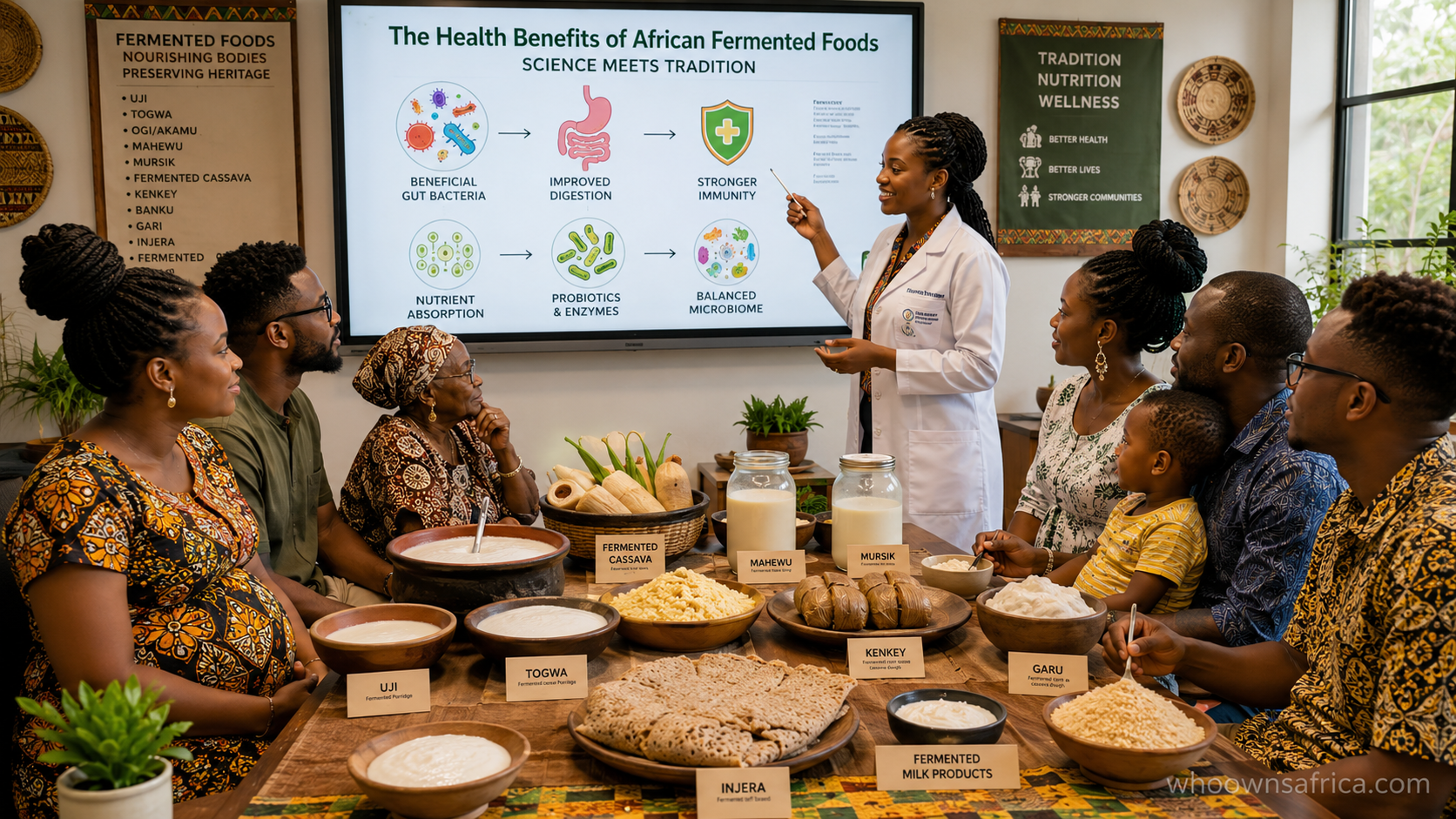
Fermentation is one of humanity’s oldest food technologies — and Africa has one of the world’s richest traditions. Modern nutritional science is confirming what African grandmothers have always known: fermented foods are extraordinarily good for you.
What Fermentation Does
Microorganisms convert carbohydrates into acids, gases, or alcohol — preserving food, improving nutritional value by breaking down anti-nutritional factors, increasing bioavailability of vitamins and minerals, introducing beneficial live microorganisms (probiotics), producing new beneficial compounds, and reducing harmful compounds (for example, fermentation reduces cyanide in cassava).
Africa’s Most Important Fermented Foods
Ogi / Akamu / Pap — Fermented cereal porridge from maize, sorghum, or millet. Fermentation increases vitamin content, reduces phytates (which block iron and zinc absorption), and introduces lactic acid bacteria supporting gut health. Sorghum or millet versions are nutritionally superior.
Injera — Ethiopian and Eritrean fermented teff flatbread. Fermentation significantly increases iron and zinc bioavailability while reducing phytates. Teff is also rich in calcium, fibre, and resistant starch.
Amasi / Mala — Fermented milk from East and Southern Africa rich in Lactobacillus species. Associated with improved lactose tolerance, enhanced gut microbial diversity, reduced diarrhoeal disease risk, and improved cholesterol profiles.
Dawadawa / Iru — Fermented locust beans used as a West African cooking condiment. Rich in protein, probiotics, and studied for antioxidant, antimicrobial, and cholesterol-lowering properties.
Kenkey — Ghanaian fermented maize; high fibre content supports digestive health and blood sugar regulation. Lactic acid bacteria produced support gut health.
Gari — Fermented and roasted cassava. Fermentation critically reduces dangerous cyanogenic glucosides and improves digestibility. Always eat with nutritious accompaniments as it is low in protein and micronutrients alone.
The Scientific Evidence
A landmark 2021 study published in Cell found that a high-fermented-food diet significantly increased gut microbiome diversity and reduced inflammatory markers — faster than a high-fibre diet alone. Multiple African studies have found fermented porridges reduce childhood diarrhoea incidence. Fermentation also reduces phytates — improving iron, zinc, and calcium absorption from the same foods, highly significant given Africa’s widespread anaemia.
How to Include More Fermented Foods Daily
- Replace unfermented porridge with ogi or togwa at breakfast
- Include dawadawa or ogiri in soups and stews regularly
- Drink a small cup of amasi or natural yoghurt daily
- Choose kenkey or injera over unfermented starches when possible
- Make your own lacto-fermented vegetables (cabbage or carrots) using just salt and water
Disclaimer: Individuals with immune-compromising conditions should consult a healthcare provider before significantly increasing fermented food intake.