
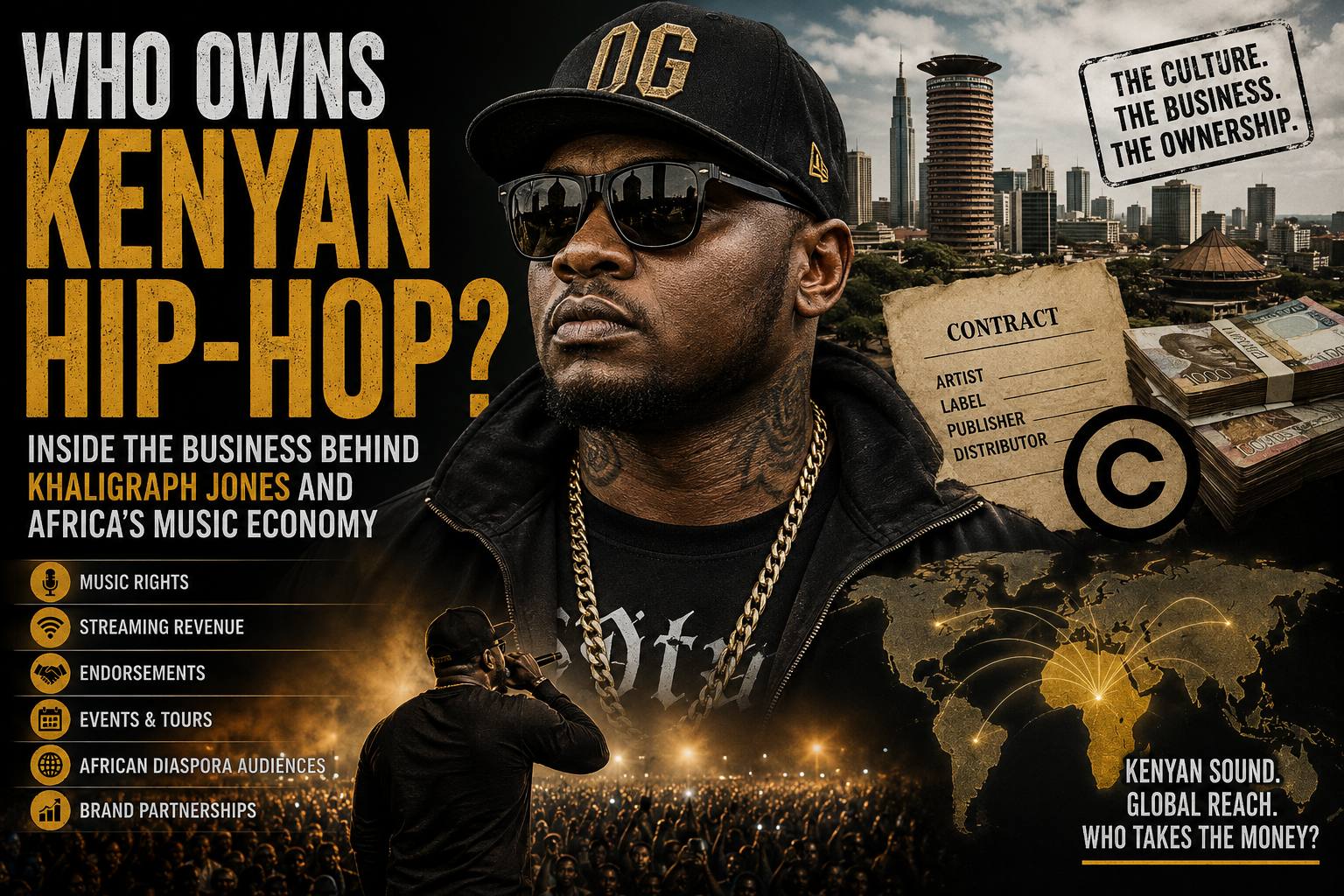
Kenyan hip-hop has long been measured in hits, rivalries and cultural influence. Increasingly, however, the more important question is where the money sits. Khaligraph Jones, one of Kenya’s most recognisable rappers, offers a useful case study of how an artist can turn cultural influence into a wider commercial platform spanning recordings, live performances, endorsements, entrepreneurship and audiences beyond Kenya.
His career illustrates a broader shift in African music, where the artist is no longer simply the person making the record but can also become the brand, business partner, event attraction and gateway to a global African audience.
From rapper to commercial brand
Khaligraph Jones, whose real name is Brian Ouko Omollo, built his reputation over more than a decade in Kenyan hip-hop. His public profile has grown alongside his music catalogue, performances and collaborations, giving him something increasingly valuable in the African entertainment economy: an identifiable brand that exists beyond any single song.
That distinction matters because music income is rarely generated from one source. A successful artist can earn through recordings, publishing and neighbouring rights, digital streaming, performance fees, merchandise, sponsorships, advertising, appearances and commercial partnerships. In Khaligraph’s case, his public business activities have included BluInk Corp and automotive interests, while Kenyan media have reported partnerships with brands including Safaricom, Oppo, Tusker and Monster Energy.
The business lesson is straightforward. A hit song can create attention, but a durable entertainment business monetises the attention repeatedly.
For an artist with a strong identity, that can make the difference between being paid once for a performance and building an ecosystem around an audience.
Streaming changes the economics
Streaming has made African music easier to discover globally, but it has not eliminated the structural challenges surrounding artist income. Platforms such as Spotify and Apple Music provide access to international audiences, while African-focused services are also attempting to build more sustainable local digital music markets.
Kenyan-based Mdundo, for example, has projected $1.2 million in royalty payments to African artists by 2026, highlighting the growing importance of digital distribution and royalty infrastructure.
For Kenyan artists, the opportunity is significant because streaming changes the geographical value of a song. A track recorded in Nairobi can be consumed by listeners in London, Atlanta, Toronto, Johannesburg or Dubai without the artist physically travelling to those markets.
That creates a new form of export economy.
But streams do not automatically translate into large earnings for artists. Revenue depends on factors including the platform, territory, rights ownership, contracts, intermediaries and the number of rights holders attached to a recording. The African market also faces problems involving weak collection systems, copyright enforcement and monetisation gaps.
Recent industry analysis has pointed to the mismatch between Africa’s cultural influence and the relatively small share of global recorded-music revenue captured by the continent.
For artists such as Khaligraph Jones, therefore, streaming is best understood as one part of a larger commercial strategy rather than the entire business.
Who owns the music?
The question of ownership becomes more complicated once a song becomes valuable.
A recording can involve several rights, including the underlying composition and the sound recording. Songwriters, producers, performers, publishers, labels and distributors can all have economic interests depending on the agreements involved.
That makes intellectual property one of the most important assets in modern African music.
Kenya’s copyright system has also faced institutional uncertainty. In March 2025, the Kenya Copyright Board said the High Court had barred the Music Copyright Society of Kenya from collecting royalties as a licensed collective management organisation at that time, while other disputes over royalty collection remained before the courts.
The dispute illustrates why ownership and administration of music rights matter to artists. The bigger the catalogue, the more important it becomes to know who controls the rights, who collects income and how that money reaches creators.
For established musicians, the catalogue can eventually become more valuable than a single performance because songs can continue generating income through streaming, licensing, radio, television, public performance and other commercial uses.
The African music industry is therefore moving toward a model in which intellectual property is an asset class, not merely a by-product of creativity.
Endorsements turn influence into revenue
Brand partnerships are another major piece of the equation.
Khaligraph Jones has repeatedly attracted corporate interest because brands are not simply buying access to an artist’s music. They are buying access to recognition, personality, cultural credibility and an existing audience.
His commercial appeal has been evident in previous ambassadorial relationships, including a reported renewal of his 22Bet partnership in 2024.
More recently, in July 2026, electric mobility company Spiro Kenya unveiled Khaligraph as a brand ambassador. The partnership was positioned around promoting electric mobility, engaging rider communities and connecting the company with younger Kenyan consumers.
That is revealing because the partnership has little to do with selling music directly.
It demonstrates how an artist’s commercial value can migrate into completely different industries.
For companies, the calculation is increasingly about cultural relevance. For artists, the opportunity is to convert reputation into longer-term commercial relationships.
Events remain a powerful cash engine
Live entertainment remains another crucial component of the African music economy.
Streaming can create global reach, but concerts and festivals create direct revenue through performance fees, ticket sales, sponsorships, hospitality, merchandising and brand activations.
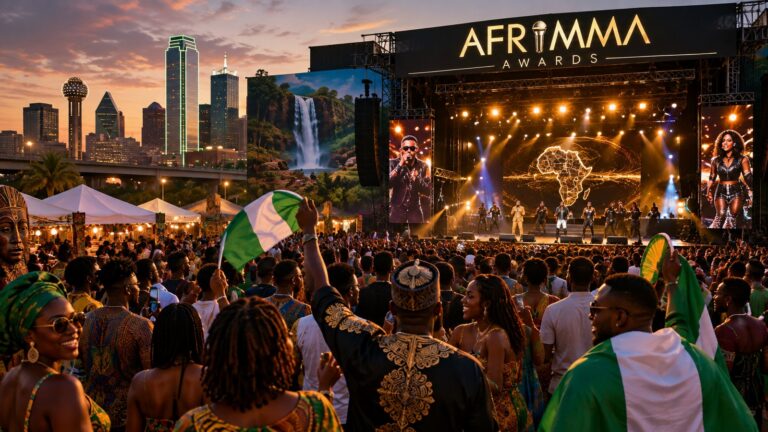
The rise of major African music festivals has also created opportunities for artists to reach diaspora audiences without abandoning their home markets. Nairobi remains an important regional entertainment hub, while cities such as London, New York, Atlanta and Dallas have become increasingly significant destinations for African music and culture.
The diaspora matters because its economics are different.
Consumers outside Africa may have greater purchasing power, while African music can carry cultural value that extends beyond the price of a stream. A Kenyan artist performing for diaspora audiences is therefore selling more than music. The performance can become a cultural experience tied to identity, nostalgia and community.
This is one reason the business of African music increasingly intersects with tourism, fashion, food, media and events.
The diaspora is becoming part of the market
The growth of African music internationally is changing the definition of a home audience.
For a Kenyan rapper, a listener in Nairobi and a Kenyan living in London can both contribute to the commercial value of the same catalogue. But their spending patterns may be very different.
That creates opportunities for African artists to build businesses around diaspora communities through international tours, collaborations, merchandise, digital campaigns and brand partnerships.
It also explains why African music organisations and entertainment companies are increasingly interested in international markets. The African diaspora can function as both a cultural audience and a commercially attractive consumer base.
The broader African music story is already demonstrating this shift. Global audiences are consuming Afrobeats, Amapiano, hip-hop and other African genres at increasing rates, even as the continent continues to work through challenges in copyright administration and monetisation.
So, who owns Kenyan hip-hop?
The answer is not simply Khaligraph Jones.
He is one of its most visible commercial figures, but Kenyan hip-hop is an ecosystem involving artists, producers, songwriters, labels, distributors, publishers, promoters, streaming platforms, broadcasters, advertisers, venues and audiences.
The more important question is who controls the valuable assets created by that ecosystem.
For artists, those assets include master recordings, publishing rights, trademarks, audience data, social-media communities and relationships with commercial partners. For companies, they include distribution networks, technology, advertising inventory and access to consumers.
The winners in the next phase of Kenyan hip-hop are therefore unlikely to be determined only by who has the biggest song.
They will also be determined by who understands ownership.
Khaligraph Jones’s trajectory provides a useful example of that transition. His relevance now extends beyond the recording studio into corporate partnerships, entrepreneurship, live entertainment and cultural influence. His recent Spiro partnership shows how an established music identity can be transferred into an entirely different commercial category.
Kenya’s bigger opportunity
Kenya has the ingredients for a much larger music economy: a young population, strong mobile penetration, a globally connected diaspora, established creative talent and Nairobi’s position as a regional business centre.
The missing ingredient has often been infrastructure that allows more of the value created by music to remain with its creators and rights holders.
That includes reliable copyright administration, transparent royalty collection, professional management, stronger publishing businesses, better music data and investment in artists as intellectual-property owners.
The stakes are larger than hip-hop.
As African music travels further around the world, the continent has an opportunity to build businesses around the culture it exports. But cultural influence alone does not guarantee economic ownership.
Khaligraph Jones’s career captures that tension. The music creates the audience. The audience creates influence. Influence attracts brands and events. The catalogue creates intellectual property. And intellectual property, if properly controlled and monetised, can become a long-term business asset.
That is the emerging economics of Kenyan hip-hop.
The next chapter will not simply be about who makes the loudest music.
It will be about who owns the rights, controls the audience and captures the value.