

NAIROBI — The commercial logic for renewable energy investment in Africa has shifted from aspirational to compelling over the past several years, as the dramatic decline in solar photovoltaic and wind energy costs has intersected with Africa’s exceptional renewable resource endowment, growing electricity demand, persistent unreliability of fossil fuel-based generation, and the strategic interest of international investors, development finance institutions and energy companies in African clean energy markets. The business case is not uniform across all African markets or all renewable energy segments — it remains constrained in some contexts by off-taker credit risk and regulatory uncertainty — but in the most commercially favorable markets, utility-scale renewable energy has become one of the most attractive infrastructure investment categories available to patient capital.
The cost trajectory of solar photovoltaic technology has been the single most important commercial factor reshaping African renewable energy investment. Utility-scale solar levelized costs have declined by more than ninety percent over the past fifteen years, making solar the cheapest form of new electricity generation across virtually all African locations, given Africa’s extraordinary sunshine endowment. The cost competitiveness of solar relative to diesel generation, coal power and gas-fired generation creates a commercial incentive for switching to renewables that operates independently of climate policy motivations, making the African renewable energy investment case durable across a range of policy environments and investor mandates.
Morocco’s renewable energy program represents one of the continent’s most successful examples of utility-scale renewable deployment driven by commercial logic alongside climate ambition. The Noor concentrated solar power complex and a growing portfolio of solar PV and wind installations have helped Morocco achieve one of Africa’s most rapidly decarbonizing power mixes while attracting international project finance on commercially competitive terms. Morocco’s success rests on excellent resource quality, a regulatory framework with proven bankability, infrastructure connectivity to the European grid that creates export revenue opportunity, and consistent government commitment to renewable energy targets that has given investors confidence across project development timelines.
South Africa’s Renewable Energy Independent Power Producer Procurement Program has generated the most extensive body of bankable African renewable energy project finance experience on the continent, having contracted and built several gigawatts of wind and solar capacity through a competitive auction mechanism that consistently achieved declining prices. The program’s bankability — with Eskom as off-taker under government-supported power purchase agreements and a combination of South African and international development finance institutions providing project finance — created a reference framework that other African countries have sought to replicate.
Kenya’s geothermal resources in the East African Rift Valley represent the continent’s most distinctive renewable energy competitive advantage — a geothermal endowment that allows baseload generation from renewable sources in ways that solar and wind cannot provide without expensive storage, giving Kenya a power generation capability well suited to industrial and commercial energy demand. KenGen’s geothermal development has made Kenya one of the world’s leaders in geothermal installed capacity relative to population, with a power system renewable baseload foundation that most African grids lack.
Development finance institutions have been catalytic investors in the African renewable energy market, providing equity, debt and guarantee products that reduce the risk profile of early-stage projects to levels that attract commercial capital. The IFC, AfDB, and development finance institutions from Germany, France, the Netherlands and the United Kingdom have collectively deployed billions of dollars into African renewable energy projects, developing the bankability frameworks, off-taker risk mitigation instruments and technical assistance programs that have made commercially structured African renewable energy finance progressively more accessible. The captive and commercial rooftop solar market has grown rapidly alongside utility-scale development, serving large demand for reliable electricity among African businesses and middle-income households who have found grid power inadequate. A manufacturing company that installs a solar-hybrid system providing reliable power at a predictable cost has a straightforward return-on-investment calculation that drives investment decisions independently of any regulatory or policy framework — an entirely market-driven dynamic that is progressively spreading the renewable energy revolution beyond the utility-scale projects that have attracted most policy and development finance attention.

More from Business

How Mr Eazi became a major shareholder in Ghana’s pharmaceutical industry
Nigerian musician Mr Eazi's investment firm Zagadat Capital has quietly built a major stake in a Ghanaian drug maker.

Who owns Africa’s new wealth? The companies and sectors creating the continent’s next billionaires
African governments are competing for global capital with tax incentives, but the bigger question is who will own the wealth created.
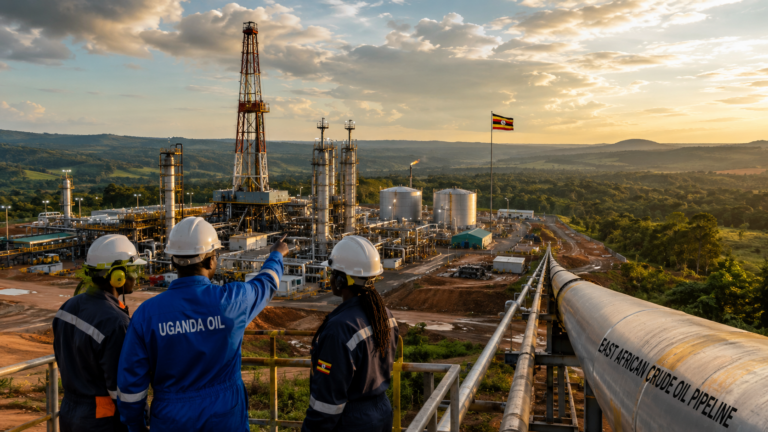
Uganda’s oil gets a name: “Pearl Sweet” as first oil draws near
Uganda’s long-awaited oil era is nearing reality, but questions remain over ownership, revenues, local benefits and who ultimately controls the wealth.