

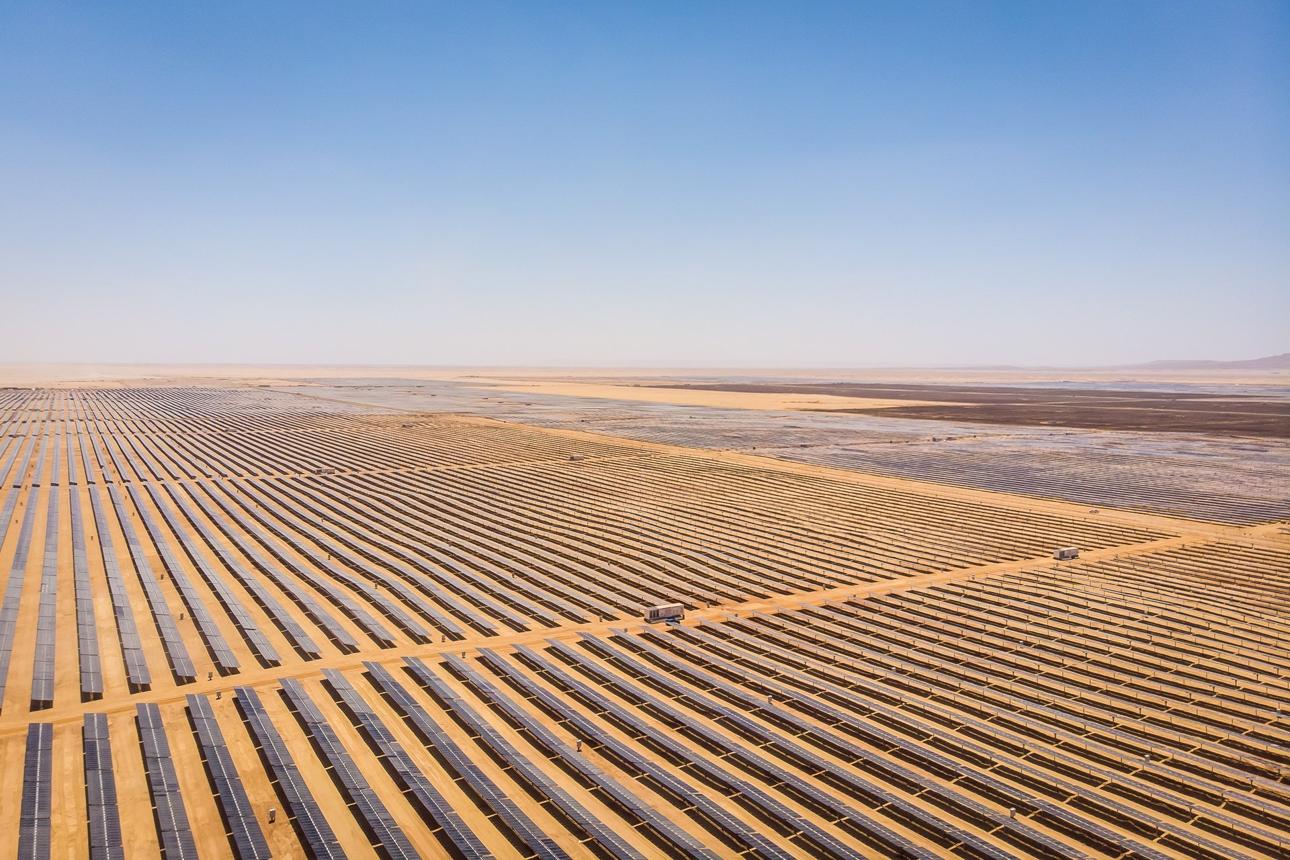
Africa may become one of the world’s most important suppliers of the materials, electricity and land required for the green economy. Yet the continent faces a familiar economic question in a new form: will it own the industries built from its resources, or once again supply the foundations for wealth created elsewhere?
The global transition away from fossil fuels is changing the value of Africa’s natural resources. Copper is needed for electricity networks. Cobalt and lithium are important to battery supply chains. Solar radiation, wind corridors, hydroelectric potential and vast areas suitable for energy infrastructure are attracting investors searching for new sources of power and materials.
For African governments, the opportunity is considerable. Renewable energy could reduce electricity shortages, improve industrial competitiveness, create new export industries and help countries develop technologies that will remain economically relevant for decades.
But the size of the opportunity should not obscure the central question of ownership.
A country can host a giant solar farm without owning its technology. It can export lithium without producing batteries. It can generate electricity from wind without manufacturing turbines. It can supply copper to global manufacturers while importing the finished equipment made from that copper.
The green economy could therefore expand Africa’s economic importance without necessarily expanding African economic power.
The distinction between participation and ownership may ultimately determine whether the continent experiences a genuine industrial transformation or another resource boom in which production grows faster than domestic wealth.
The Green Transition Is Creating a New Resource Economy
The energy transition is not simply a shift from coal, oil and gas to solar panels, wind turbines and electric vehicles. It is a restructuring of global industrial supply chains.
Countries that control the materials, manufacturing processes, intellectual property, financing and infrastructure behind these technologies stand to capture a disproportionate share of the economic value.
Africa enters this transformation with considerable advantages. The Democratic Republic of Congo is a major source of cobalt and copper. Zambia is an important copper producer. Zimbabwe has attracted growing investment in lithium. South Africa possesses mineral resources, industrial capacity and a relatively sophisticated financial system. Namibia is developing ambitions around renewable energy and green hydrogen, while Morocco has positioned itself within renewable energy, industrial manufacturing and emerging green investment networks.
These resources give African countries strategic relevance at a time when governments and companies are seeking to diversify supply chains and reduce dependence on concentrated sources of minerals and manufacturing.
Yet resource abundance is not the same as industrial power.
The most profitable stages of the green economy frequently occur after extraction. Processing, refining, component manufacturing, engineering, software, logistics, financing, intellectual property and long-term maintenance can generate value long after raw materials leave the mine.
The countries that build these capabilities may capture more enduring economic benefits than those whose principal role is to supply minerals.
Africa’s challenge is to move from being strategically important to becoming commercially indispensable.
Who Owns Africa’s Renewable Energy Infrastructure?
The ownership question is equally important in electricity generation.
Across Africa, renewable energy projects are developed through a mixture of government-owned utilities, independent power producers, foreign energy companies, African businesses, private investors and development finance institutions. Ownership varies by country, project and financing structure. There is no single African model.
South Africa’s Renewable Energy Independent Power Producer Procurement Programme has demonstrated how government procurement can attract private capital, developers, banks and local participation. Morocco has built a different model in which public institutions, including the Moroccan Agency for Sustainable Energy, play a significant role in project development, procurement and financing.
Egypt’s Benban solar complex, meanwhile, illustrates the scale that can be achieved when international finance, private developers and public infrastructure align.
These projects represent real progress. They bring electricity generation capacity, construction activity, technical expertise, jobs and investment into markets that need additional power.
But the presence of solar panels on African soil does not necessarily mean the underlying assets are owned by African investors.
Foreign developers can hold equity in projects for decades. International lenders can finance construction. Equipment suppliers can control critical technology. Power purchase agreements can determine the revenue stream, while contracts define the division of risk between governments, utilities and private investors.
Local participation may exist through land agreements, construction contracts, minority equity holdings, procurement commitments or employment. Each form matters, but they do not carry equal economic weight.
A construction contract generates income while a project is being built. An ownership stake can generate dividends over the project’s lifetime. Operational control can build technical knowledge. Ownership of equipment manufacturing or engineering firms can create recurring business beyond a single power plant.
This distinction matters because Africa’s renewable energy expansion is not merely an infrastructure programme. It is an opportunity to build an energy industry.
The continent needs African companies that can identify projects, secure financing, negotiate power contracts, design infrastructure, construct facilities, operate assets and reinvest profits into the next generation of projects.
Without that ecosystem, the expansion of renewable energy risks becoming a collection of foreign-controlled assets surrounded by local contractors rather than a foundation for domestic industrial development.
The Financing Problem Is Also an Ownership Problem
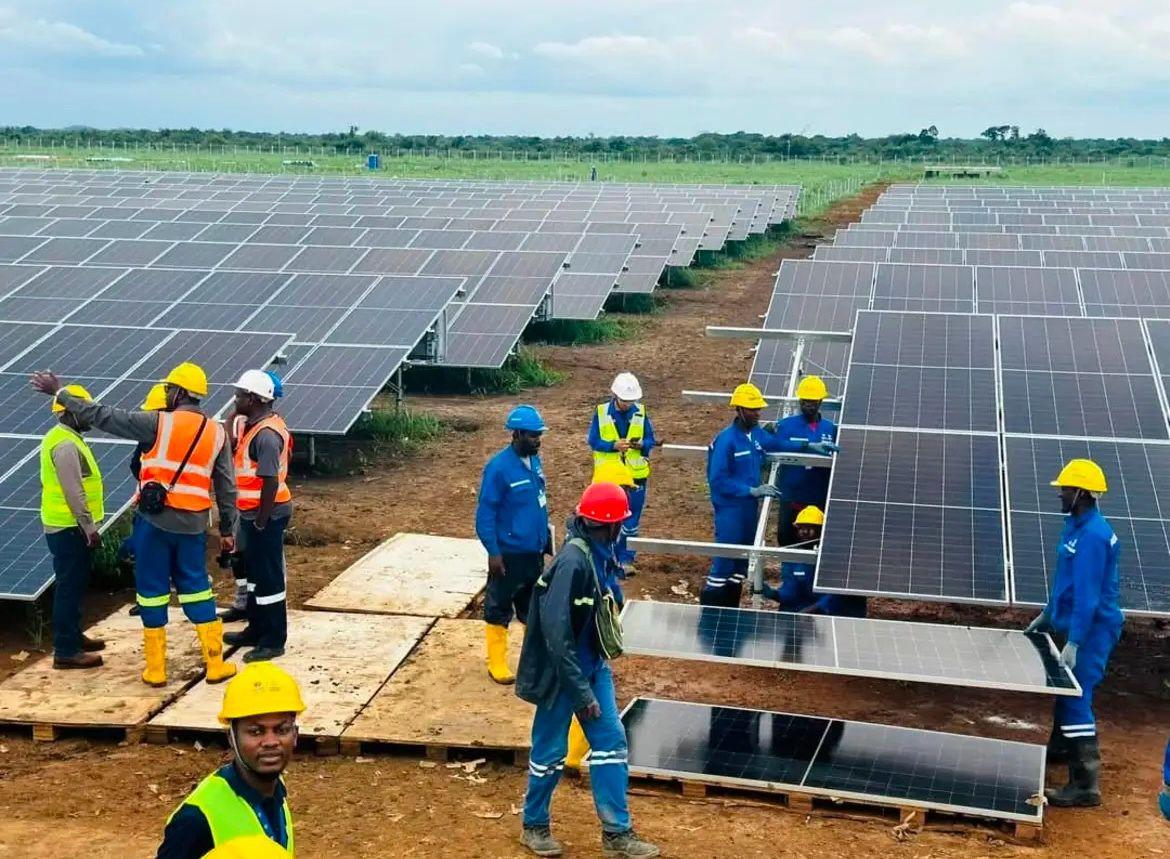
Renewable energy is capital-intensive. A solar or wind project may require substantial investment before generating a single unit of electricity. Developers must secure land, permits, grid connections, equipment, construction financing, insurance and long-term agreements to sell power.
The financing environment in Africa complicates this process.
Investors often face currency volatility, high interest rates, limited long-term local currency financing, concerns over utility payment capacity, regulatory uncertainty and perceived country risk. These pressures can make African projects more expensive to finance than comparable developments elsewhere.
The consequences extend beyond the cost of electricity.
When financing is expensive, local developers face a competitive disadvantage against multinational companies with access to larger balance sheets, established investor relationships and international capital markets.
A foreign developer may have the financial capacity to absorb years of development risk, offer stronger guarantees and secure equipment at scale. A domestic company may have the technical ability and knowledge of the local market but lack the capital to survive the lengthy period between project conception and financial close.
The result is a structural imbalance.
African governments may successfully attract investment while domestic businesses remain concentrated in subcontracting, consulting, transport, installation and other lower-capital segments.
This is not necessarily the result of deliberate exclusion. It is often the consequence of financing rules and market structures that reward scale, established track records and access to international capital.
But the outcome matters more than the intention.
If public guarantees, tax incentives, land access, regulatory support and infrastructure help make projects commercially viable, policymakers have a legitimate interest in ensuring that public support produces measurable domestic economic benefits.
The question should not be whether foreign capital is welcome. It should be whether the conditions under which it enters help African businesses move up the ownership ladder.
The Minerals Are Valuable. The Supply Chains Are More Valuable.
The mineral story presents an even sharper ownership challenge.
Africa’s critical minerals are increasingly important to electric vehicles, energy storage, power transmission, electronics and industrial technologies. Yet mining is only one stage of a much larger commercial ecosystem.
Consider the Democratic Republic of Congo, which dominates global cobalt production and is also a major copper producer.
The country possesses enormous strategic leverage. But leverage based on the supply of raw materials is not automatically translated into control over refining, battery chemicals, manufacturing, technology or downstream markets.
The ownership structures of major Congolese mining operations illustrate how international capital shapes the sector.
At Tenke Fungurume, CMOC holds a dominant ownership position alongside a minority stake held by Gécamines, the Congolese state mining company. At Kamoa-Kakula, international mining partners hold substantial interests alongside the DRC government’s participation. Other major operations involve foreign-controlled companies and varying levels of state equity.
These arrangements bring investment, infrastructure, technology, production expertise and access to international markets. They also mean that much of the commercial decision-making and capital allocation takes place within corporate structures whose controlling shareholders are based outside the country.
The same pattern is visible in Zambia, where major copper operations are predominantly foreign-owned, although state-linked ZCCM Investments Holdings maintains participation in mining assets.
The challenge facing resource-rich countries is that government ownership and royalty income provide some economic participation, but they do not necessarily translate into control over technology, procurement, trading, logistics, processing or reinvestment decisions.
The distinction is particularly important in copper, cobalt and lithium, where the value chain extends from extraction to chemical processing, component manufacturing and battery production.
A mine may be profitable. A refinery can create additional industrial capacity. A battery-materials plant can establish new technical skills and supplier relationships. A manufacturing ecosystem can create entirely different categories of employment and enterprise.
Africa cannot realistically build every stage of every green technology supply chain in every country. The capital, markets, infrastructure and technical requirements would make such an ambition inefficient.
But it can make strategic choices.
The DRC and Zambia, for example, have a stronger economic case for exploring integrated copper and battery-material value chains together than either country has for attempting to build a complete industry independently. Regional cooperation could create larger markets, shared infrastructure, complementary processing capabilities and greater negotiating power.
The real question is not whether every mineral should be processed domestically.
It is which stages of the value chain Africa can competitively own, operate and scale.
The Profits Follow Control, Not Geography
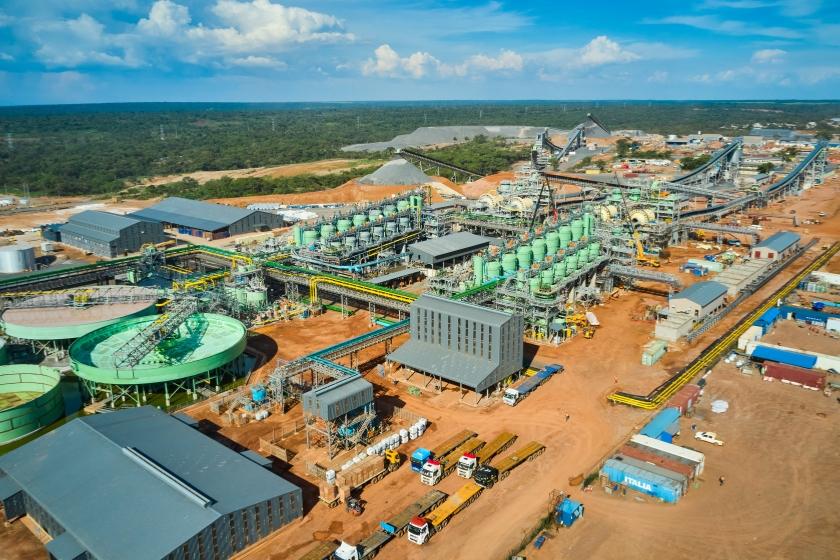
The debate over African ownership is often reduced to a question of whether a foreign investor is making money.
That is the wrong starting point.
Foreign companies earning returns from African projects is not, in itself, evidence of exploitation. Investment requires compensation for risk, capital, expertise and the possibility of failure. Governments need investment, and many African energy projects would struggle to reach construction without international financing.
The more important question is how the economic value is distributed, and whether African economies retain enough of it to build future capacity.
Project profits can flow to shareholders abroad. Debt repayments can move money to international lenders. Equipment purchases can benefit manufacturers outside the continent. Technical services, insurance, engineering and consulting fees may be paid to foreign firms.
Meanwhile, African economies can still benefit through taxes, royalties, wages, local procurement, electricity supply, infrastructure and equity dividends.
The balance between these benefits is determined by contracts, tax regimes, financing structures, ownership arrangements and the bargaining capacity of governments.
Transparency is therefore critical.
Where project agreements are difficult to scrutinise, citizens may know that a renewable energy facility has been built without understanding the public guarantees attached to it, the obligations of the developer, the pricing of electricity or the distribution of long-term revenues.
This raises a legitimate policy question: if governments are providing land, infrastructure, incentives or guarantees, what should they expect in return?
The answer should not necessarily be compulsory majority ownership. It could include meaningful local equity participation, transparent concession agreements, enforceable employment and training targets, supplier-development programmes, domestic engineering partnerships, technology transfer and clear community benefit arrangements.
The objective should be to ensure that the public value created by investment is not measured only by the number of megawatts installed or tonnes exported.
It should also be measured by what African companies, workers, institutions and communities are capable of doing after the project is completed.
African Companies Are Entering the Market, but Scale Remains the Test
The assumption that Africa has no capable renewable energy businesses is increasingly outdated.
African companies are participating in solar development, distributed energy, mini-grids, commercial power solutions, engineering, construction, project management and energy services. Entrepreneurs are building businesses around electricity access, financing solar systems, servicing industrial clients and developing power solutions for businesses that cannot depend entirely on national grids.
Businesses operating in distributed solar and commercial and industrial energy markets are particularly important because they are not dependent on waiting for massive national infrastructure programmes.
They can install solar systems for factories, farms, warehouses, shopping centres, hotels and other commercial customers. Some provide electricity through power purchase agreements, allowing clients to avoid the initial capital cost of purchasing equipment.
These business models can create locally rooted energy companies with recurring revenues, customer relationships and practical technical expertise.
Companies such as CrossBoundary Energy have built businesses around commercial and industrial renewable energy solutions across African markets. Such models demonstrate how the continent’s energy transition can extend beyond national utilities and large international developers.
However, the presence of African businesses does not automatically resolve the ownership challenge.
A company may be African-founded but rely heavily on imported panels, batteries, inverters, software, foreign financing and overseas technical suppliers. It may control customer relationships and installation services while remaining dependent on external manufacturers.
That dependency is not inherently a weakness. International supply chains are normal in modern industry.
The strategic question is whether African businesses can gradually develop the capabilities that allow them to negotiate better terms, diversify suppliers, build technical expertise, manufacture selected components and retain more of the value generated.
African governments and development institutions should pay greater attention to the growth of these companies. A domestic renewable energy developer that progresses from small commercial installations to financing, owning and operating larger power assets may contribute more to long-term economic capability than a temporary construction boom.
The objective should be to help African companies become owners of productive infrastructure, not simply service providers to it.
The Manufacturing Question Cannot Be Ignored
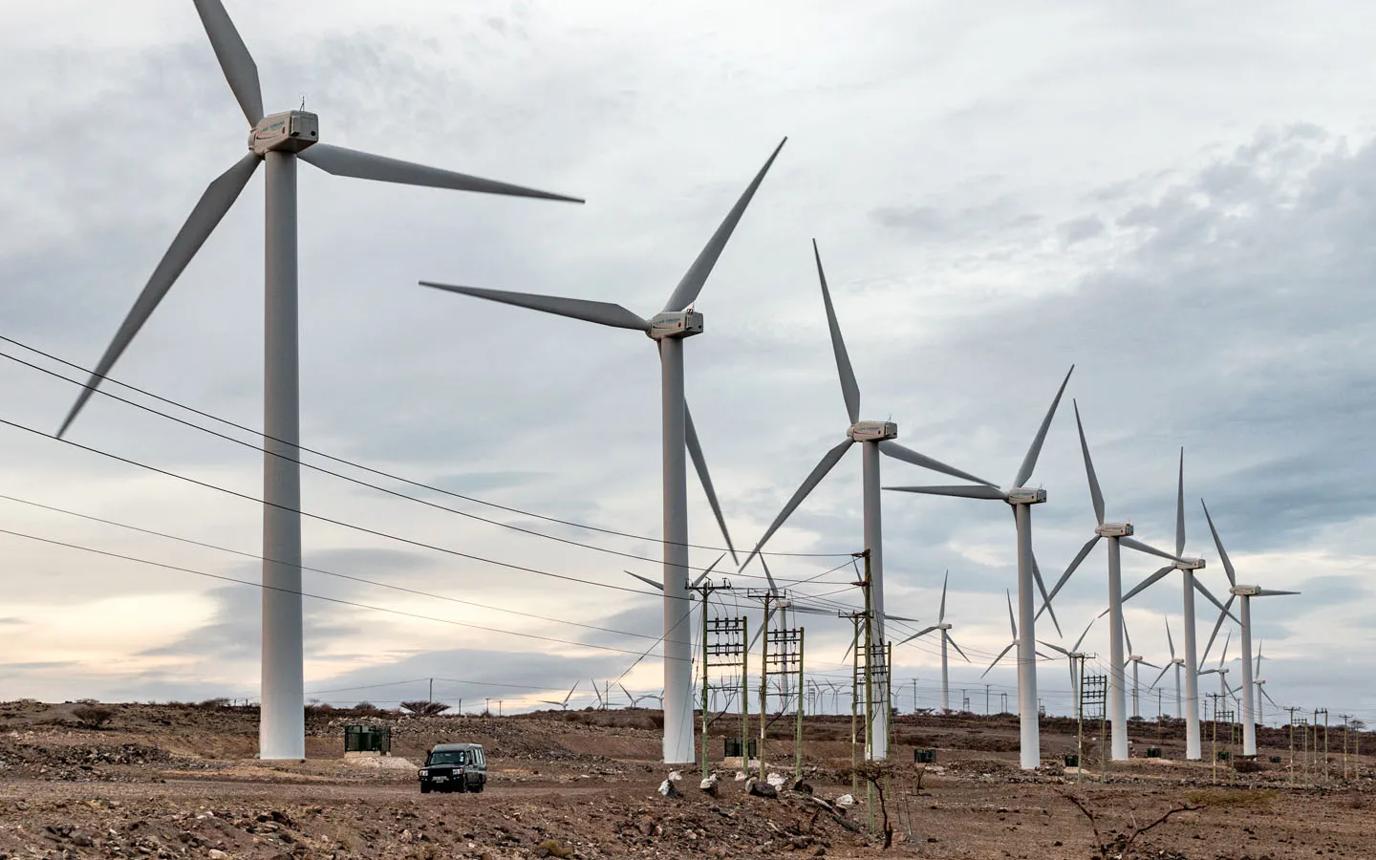
Africa’s green industrialisation ambitions will be difficult to achieve if the continent remains dependent on imported technology for nearly every stage of renewable energy deployment.
Solar panels, batteries, wind turbines, power electronics, electrical components, transmission equipment and specialised software are all part of an industrial ecosystem.
Importing these products is necessary in the short term. It would be economically unrealistic to assume that every African country can immediately compete with established manufacturers in Asia, Europe or North America.
But import dependence becomes a strategic problem when it prevents the development of local industries, skills and supplier networks.
Manufacturing opportunities should therefore be approached selectively.
Countries with existing industrial capacity, access to regional markets, competitive electricity, logistics infrastructure and skilled workers may have stronger prospects in selected components, assembly, electrical equipment, battery materials, recycling or maintenance services.
South Africa has industrial and engineering capabilities that can support parts of the renewable energy supply chain. Morocco has invested in manufacturing and export industries and is seeking to leverage its energy and industrial infrastructure. Egypt also has a large industrial base and ambitions to expand manufacturing and energy investment.
The African Continental Free Trade Area could strengthen these opportunities by creating larger regional markets and making it more commercially attractive for businesses to manufacture in one country and sell across several others.
This is where regional integration becomes more than a diplomatic objective.
A solar component manufacturer may struggle to survive on demand from one relatively small national market. A battery materials processor may require a stable supply of minerals from several countries. An industrial company may need customers, suppliers, technicians and logistics networks spread across a region.
If African countries compete against each other for individual factories by offering tax concessions without coordinating industrial policy, they risk fragmenting their bargaining power.
If they coordinate infrastructure, standards, trade rules, investment incentives, skills development and industrial policy, they can create markets large enough to attract industrial investment on more sustainable terms.
The green economy will reward scale. Africa’s ability to create that scale may depend as much on regional cooperation as on the resources beneath its soil.
Who Finances the Transition, and Who Carries the Risk?
Africa’s renewable energy transition is being financed through a complex mix of development finance institutions, commercial banks, sovereign institutions, private equity, infrastructure funds, foreign developers, governments and climate-related financing mechanisms.
Institutions such as the World Bank, African Development Bank, International Finance Corporation and other development lenders frequently play a role in providing loans, guarantees, concessional finance or risk mitigation.
Commercial banks and private investors can finance projects where revenue structures, regulatory conditions and repayment prospects are sufficiently attractive.
But financing is not neutral. The institution providing capital can influence the project structure, procurement decisions, risk allocation, financial returns and the conditions under which electricity is sold.
When African governments guarantee electricity payments, support infrastructure development or provide sovereign backing, they may help attract investment that would otherwise be unavailable. Such support can be justified where projects deliver substantial public benefits.
However, governments must carefully balance these commitments against fiscal constraints and competing priorities.
A poorly structured guarantee can leave taxpayers exposed if a utility cannot meet its obligations. Foreign-currency debt can become more expensive when local currencies depreciate. A project may be technically successful but financially difficult if electricity buyers cannot pay or if transmission infrastructure fails to deliver power.
The financing challenge is therefore not simply to attract more money.
It is to attract capital on terms that are sustainable, transparent and capable of strengthening African financial institutions and businesses.
Africa’s pension funds, insurance companies, sovereign investment institutions, commercial banks and long-term savings pools could play a larger role in financing domestic infrastructure. Developing local capital markets and long-term investment instruments would allow African investors to participate in assets that currently depend heavily on international financing.
The more African capital participates in renewable energy ownership, the greater the opportunity for revenues to circulate within domestic and regional economies.
This would not eliminate the need for foreign investment. It would create a more balanced partnership between external capital and African financial institutions.
The Risk of Repeating the Extractive Model
The most serious risk is that Africa’s green economy could reproduce the structure of its traditional extractive industries under a different environmental label.
The continent could export copper, cobalt, lithium and other minerals in increasingly large quantities while importing batteries, solar equipment, electric vehicles and industrial technologies.
It could host renewable energy projects whose electricity is exported to distant markets while domestic communities remain underserved.
It could provide land, resources and public guarantees without acquiring sufficient technical capacity, commercial ownership or negotiating leverage.
These are not inevitable outcomes. They are risks shaped by policy, institutions and commercial decisions.
The green transition is also not free of environmental and social costs. Mining can damage ecosystems, pollute water sources and expose workers and communities to hazardous conditions. Renewable infrastructure can create land-use conflicts, affect livelihoods and place pressure on water resources, particularly where projects are poorly planned.
African governments must avoid treating the green label as a substitute for rigorous environmental regulation.
A project should be evaluated by its actual impact, its transparency, the quality of its employment, its contribution to local development and the fairness of its economic arrangements.
The objective is not to reject foreign investors or international supply chains. It is to negotiate partnerships that build enduring domestic capabilities rather than deepen dependence.
The Ownership Question Will Determine Africa’s Green Future
Africa has a genuine opportunity to become a major force in the global green economy. Its minerals, renewable energy resources, growing markets and strategic geography give it advantages that will remain important as countries modernise their energy systems.
But resources alone do not guarantee industrial transformation.
The countries that benefit most will be those that build the institutions, financial markets, technical expertise, businesses and regional partnerships needed to move beyond extraction and infrastructure deployment.
That requires governments to think beyond the next investment announcement. It requires policymakers to examine ownership structures, financing agreements, local procurement, industrial development, skills, technology transfer and the long-term distribution of profits.
It also requires African businesses to pursue scale, strengthen balance sheets, develop technical capabilities and compete for positions in the ownership and operation of energy assets.
The green revolution is already creating new economic relationships across Africa. The question is whether these relationships will leave the continent with more than mines, power plants and export statistics.
The ultimate measure of success will be whether Africa develops companies that own the infrastructure, workers who possess the skills, institutions that finance the assets, manufacturers that supply the markets and economies that retain a meaningful share of the profits.
Africa could power the green revolution.
But supplying the world with what it needs to become greener is not the same as becoming richer, more industrialised or more economically independent.
The real prize is not simply to own the resources beneath the ground or the renewable energy projects above it.
It is to own more of the economic future those resources are creating.

More from Mining
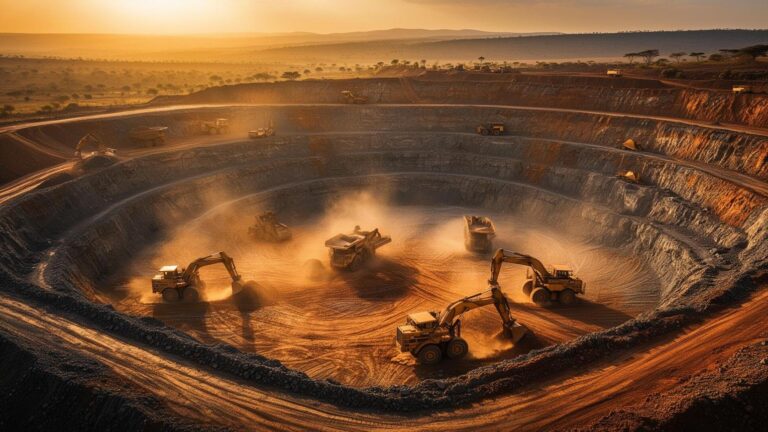
Africa has the minerals. But who controls the money?
Kenya's Mrima Hill mineral project exposes a deeper African challenge: attracting foreign investment while retaining ownership, industrial value and economic benefits.
Tata Chemicals Exit: Who will control Kenya’s lake Magadi Soda Ash Wealth?
Kenya ordered Tata Chemicals out of Lake Magadi, reviving debate over foreign ownership and who truly benefits from Africa's minerals.
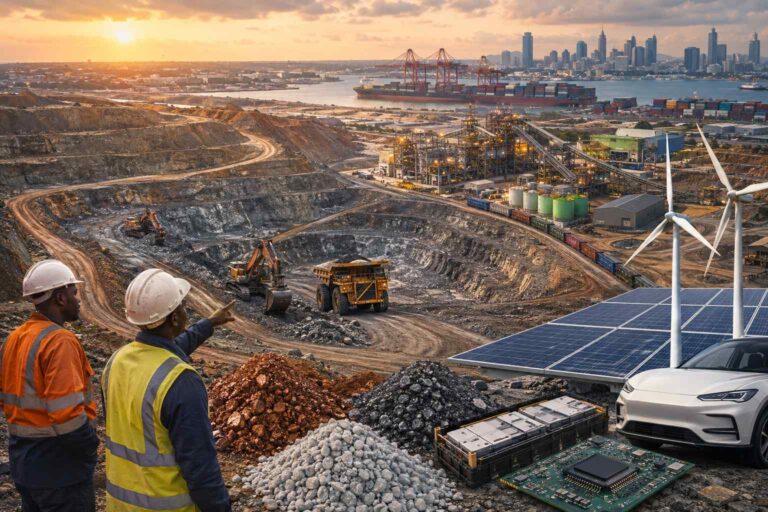
Who really owns Africa’s critical minerals?
Global powers compete for Africa's copper, cobalt, lithium and rare earth resources as governments seek greater control over ownership, processing and long term value creation.