
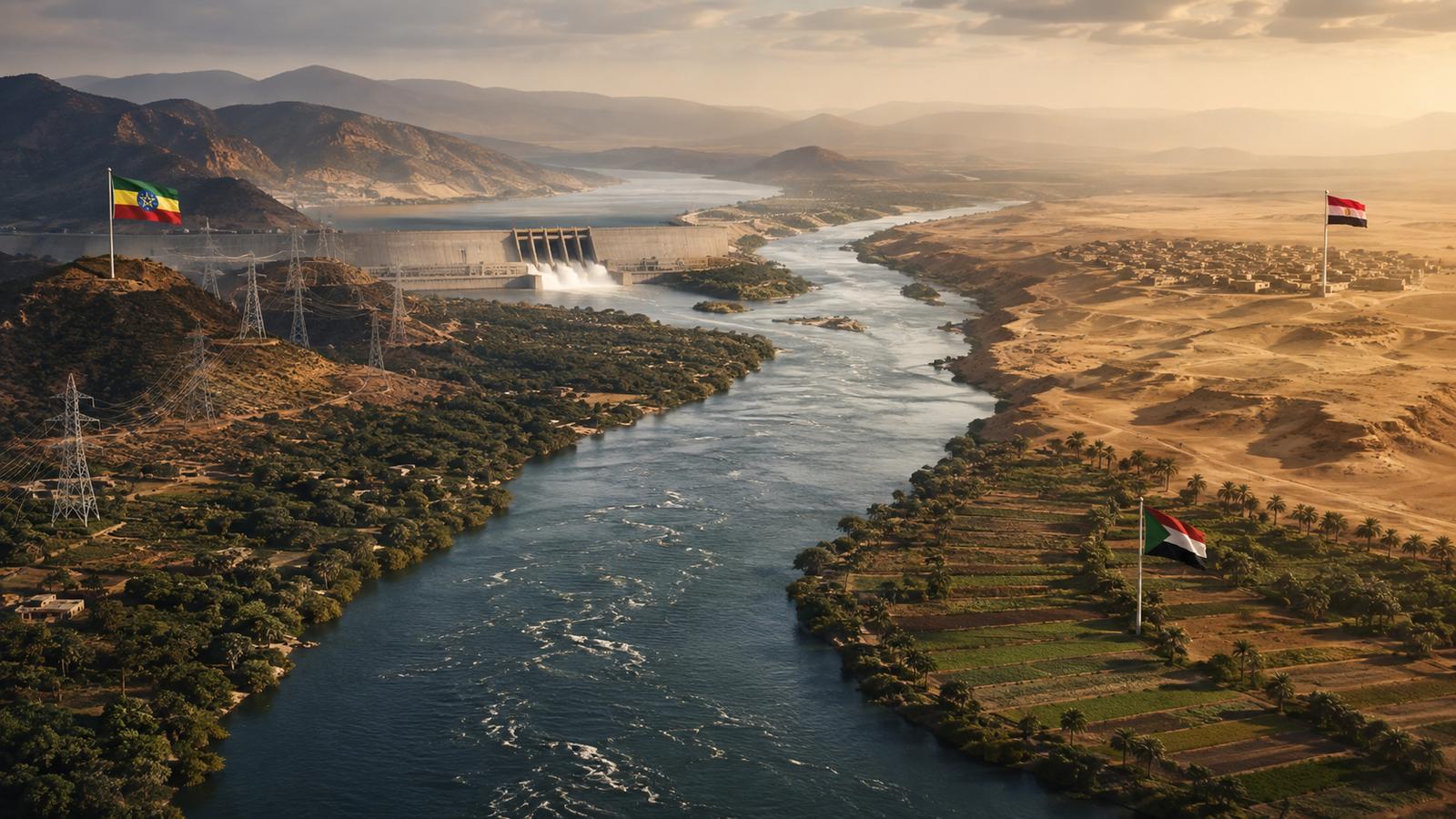
Egypt has renewed its warning to Ethiopia over plans for three additional Nile dams, saying it will not accept any attempt to control water flows to downstream countries. The latest escalation in the Egypt Ethiopia Nile dispute is putting Sudan at the centre of a wider struggle over water, energy, sovereignty and influence in Africa.
The warning followed comments attributed to Ethiopian Water and Energy Minister Habtamu Itefa about plans for additional dams and the management of Nile water flowing towards Egypt and Sudan.
An Egyptian official source, quoted by the state run Middle East News Agency, described Ethiopia’s approach as unilateral and contrary to international law. Cairo said it had “multiple and wide-ranging tools” available to defend its water interests, without specifying what those measures might involve.
The latest confrontation comes after years of failed negotiations between Egypt, Ethiopia and Sudan over the use of the Nile.
Ethiopia expands its dams
For Ethiopia, the Nile is increasingly linked to development, electricity generation and economic transformation.
The country has argued that it has a sovereign right to develop its water resources and use them to generate electricity for its population and industries.
The Grand Ethiopian Renaissance Dam, or GERD, is the clearest symbol of that strategy. Built on the Blue Nile, the project was inaugurated in September 2025 and has a generating capacity of about 5,150 megawatts, making it Africa’s largest hydroelectric facility by installed capacity.
Ethiopia’s ambitions do not appear to end with the GERD.
Reports have pointed to plans for three further hydroelectric projects on the Blue Nile: Karadobi, Mandaya and Beko Abo. The proposed projects would expand Ethiopia’s electricity generation capacity and potentially strengthen its position as a regional power exporter.
For Addis Ababa, the dams represent infrastructure and economic opportunity.
For Cairo, they raise a far more sensitive question: how much influence should Ethiopia have over a river on which millions of people downstream depend?
Why Egypt is worried
Egypt depends heavily on the Nile for freshwater.
The river supports much of the country’s population, agriculture, industry and urban centres. With most of Egypt’s territory dominated by desert, reliable access to Nile water is considered a national security priority.
That makes the prospect of more Ethiopian dams particularly sensitive.
Egypt has repeatedly called for a legally binding agreement governing the filling and operation of the GERD and future projects. Cairo wants assurances that upstream developments will not significantly reduce water availability during periods of drought.
Ethiopia has rejected demands that could restrict its ability to develop its water resources.
The result has been a prolonged diplomatic standoff.
The Egypt Ethiopia Nile dispute is therefore no longer simply about the GERD. It is increasingly about the rules that will govern future development of the entire river system.
Sudan’s difficult position
Sudan is caught between the interests of its two neighbours.
Its location gives it a direct stake in the management of the Blue Nile and the wider river system. Sudan can benefit from Ethiopian hydropower, regulated water flows and reduced flooding, but it can also face serious consequences if upstream decisions are made without adequate coordination.
Sudanese officials have previously expressed support for cooperation with Ethiopia over the GERD, pointing to potential benefits for electricity generation and flood management.
At the same time, Sudan’s fragile political and economic situation makes water security especially important.
The country therefore occupies a crucial position in the Nile dispute. It is neither simply aligned with Cairo nor naturally opposed to Addis Ababa.
Who controls the Nile?
The deeper question is not whether one country legally owns the Nile.
No country can simply claim ownership of the entire river.
The real question is who has the power to influence its flow, build infrastructure along its course and determine how its water resources are developed.
That question is becoming increasingly important across Africa.
Population growth, climate change, electricity shortages and rising demand for food are forcing governments to rethink how rivers and other shared natural resources are managed.
Ethiopia’s dam strategy reflects the growing confidence of upstream African states in developing resources within their territories.
Egypt’s response reflects the concerns of a downstream country whose economy and population are heavily dependent on a single river.
A new African water politics
The Nile dispute is part of a much larger transformation in African politics.
Across the continent, governments are seeking greater control over energy production, infrastructure and natural resources. Hydropower projects are particularly attractive because they can provide electricity while supporting industrialisation and regional trade.
Ethiopia wants to use its rivers to become a major energy producer.
Egypt wants to protect the water security on which its population depends.
Sudan wants stability, electricity and predictable water supplies.
Those interests do not necessarily have to conflict. But without stronger agreements and reliable communication, every new dam risks becoming another source of regional tension.
What happens next?
The immediate challenge for Egypt and Ethiopia is to prevent the latest dispute from becoming another cycle of threats and diplomatic breakdowns.
Ethiopia is unlikely to abandon its ambition to expand electricity generation and develop its water resources. Egypt, meanwhile, is unlikely to accept arrangements that it believes could threaten its access to Nile water.
That leaves negotiation as the most practical route forward.
Sudan could play an important role in that process, particularly because it has interests in both the benefits and risks associated with Ethiopia’s dam programme.
The Nile has connected northeastern Africa for thousands of years, but it has also repeatedly become a source of political rivalry.
As Ethiopia expands its hydropower ambitions, the Egypt Ethiopia Nile dispute is evolving into something larger than a disagreement over individual dams.
It is becoming a test of who gets to shape Africa’s water future.
The Nile may belong to no single country, but the struggle over its future could influence African diplomacy, energy security and regional power for decades to come.

More from News
 Breaking
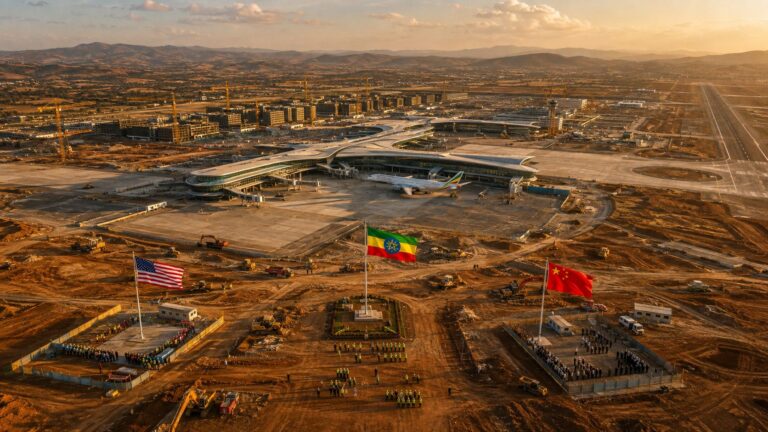
China and US face off over Ethiopia’s $12.5 billion mega-airport
Bishoftu airport is emerging as a strategic battleground where Chinese builders and American companies seek influence.