

LAGOS — The expansion of Africa-headquartered business groups into neighboring and regional markets is one of the continent’s most significant and least externally recognized business developments of the past two decades. While international attention has focused on the entry of global multinationals into African markets and the growth of African technology startups, the progressive cross-border expansion of established African conglomerates — moving from their home market into adjacent economies through investment, acquisition and organic market entry — has been quietly building a class of genuinely pan-African business institutions with the regional scale, operational knowledge and relationship networks that neither global multinationals nor early-stage startups can replicate.
The strategic logic driving African conglomerate regional expansion reflects the specific competitive advantages that regional incumbents possess relative to both local competitors in destination markets and global multinationals entering the same markets simultaneously. An African conglomerate from Nigeria entering the Ghanaian market brings understanding of West African consumer behavior, supply chain dynamics, regulatory environment and business culture that a global multinational headquartered in London or New York genuinely lacks and must expensively and slowly develop. It brings operational flexibility and decision-making speed calibrated to African market conditions, and a tolerance for the returns profile and timeline that African market development actually requires, rather than the quarterly reporting pressure that reduces global multinationals’ patience for the multi-year development periods that African market entry often requires before reaching profitability.
Dangote Industries’ expansion beyond Nigeria — building cement plants in Ghana, Senegal, Cameroon, Ethiopia, Zambia, Tanzania, South Africa and other countries — represents the most visible example of Nigerian business expansion across the continent. Building cement production capacity in regional markets reduces those markets’ import dependence, captures value added that previously accrued to exporting country manufacturers, and builds the Dangote brand as a pan-African industrial entity. The cement expansion has been followed by agricultural processing, logistics and other diversification across multiple African countries, building a business architecture that increasingly spans the continent.
Banking sector expansion by African financial institutions has created the most commercially significant regional business networks, with banks from South Africa, Nigeria, Morocco and Kenya each building meaningful multi-country African banking presences. Standard Bank’s operations across more than twenty African countries, Ecobank’s West African origin and subsequent continental expansion, and Morocco-headquartered Attijariwafa Bank’s presence across Francophone African markets each represent substantial regional banking institutions that serve both local retail and corporate customers and the cross-border trade and investment flows that regional economic integration progressively generates.
The retail sector expansion of South African companies into sub-Saharan African markets has been one of the more consequential commercial developments in several East, West and Central African countries, with Shoprite’s grocery retail operations and Massmart’s wholesale and retail formats building the organized retail infrastructure of several cities across a dozen or more countries. The South African retail expansion has brought supply chain sophistication, cold chain infrastructure and organized fresh produce procurement capabilities that have both directly improved retail market quality and created competitive benchmarks that local retailers have had to respond to.
The governance and organizational challenges of managing genuinely multi-country African business operations are substantial and have in some cases constrained expansion ambitions of companies that found operational complexity more demanding than initial market entry assessments anticipated. Talent management across multiple African countries, legal and regulatory compliance across multiple jurisdictions with different frameworks, and currency management across portfolios of African currencies with very different volatility and convertibility profiles create treasury complexity that single-market businesses never encounter. The conglomerates that have managed these challenges most effectively are those that have built genuine multi-country organizational capabilities — not simply central management teams with regional responsibility, but genuine local management talent with the support, authority and resources to run businesses effectively in their specific market contexts while maintaining accountability to group-level strategy and standards.

More from Business

Who gets to own Africa’s biggest industrial projects? The Dangote IPO reveals the barriers
Africa’s biggest refinery share sale raises a fundamental question about wealth creation: can Africans invest across borders as easily as capital moves across continents?

ICEA Lion: The Ndegwas buy back what they once sold
The ICEA Lion buyback is more than a family deal; it exposes the changing balance between local capital, foreign investors and control.
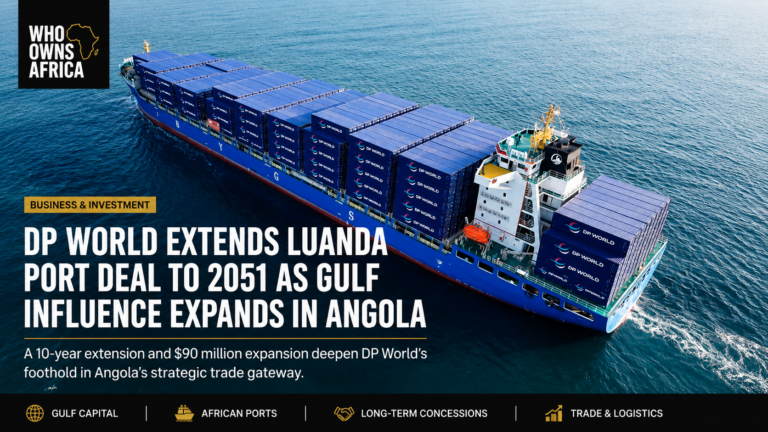
DP World extends Luanda port deal to 2051 as Gulf influence expands in Angola
DP World’s Luanda extension reveals how Gulf capital is reshaping African trade infrastructure through long-term concessions, logistics and strategic access.