
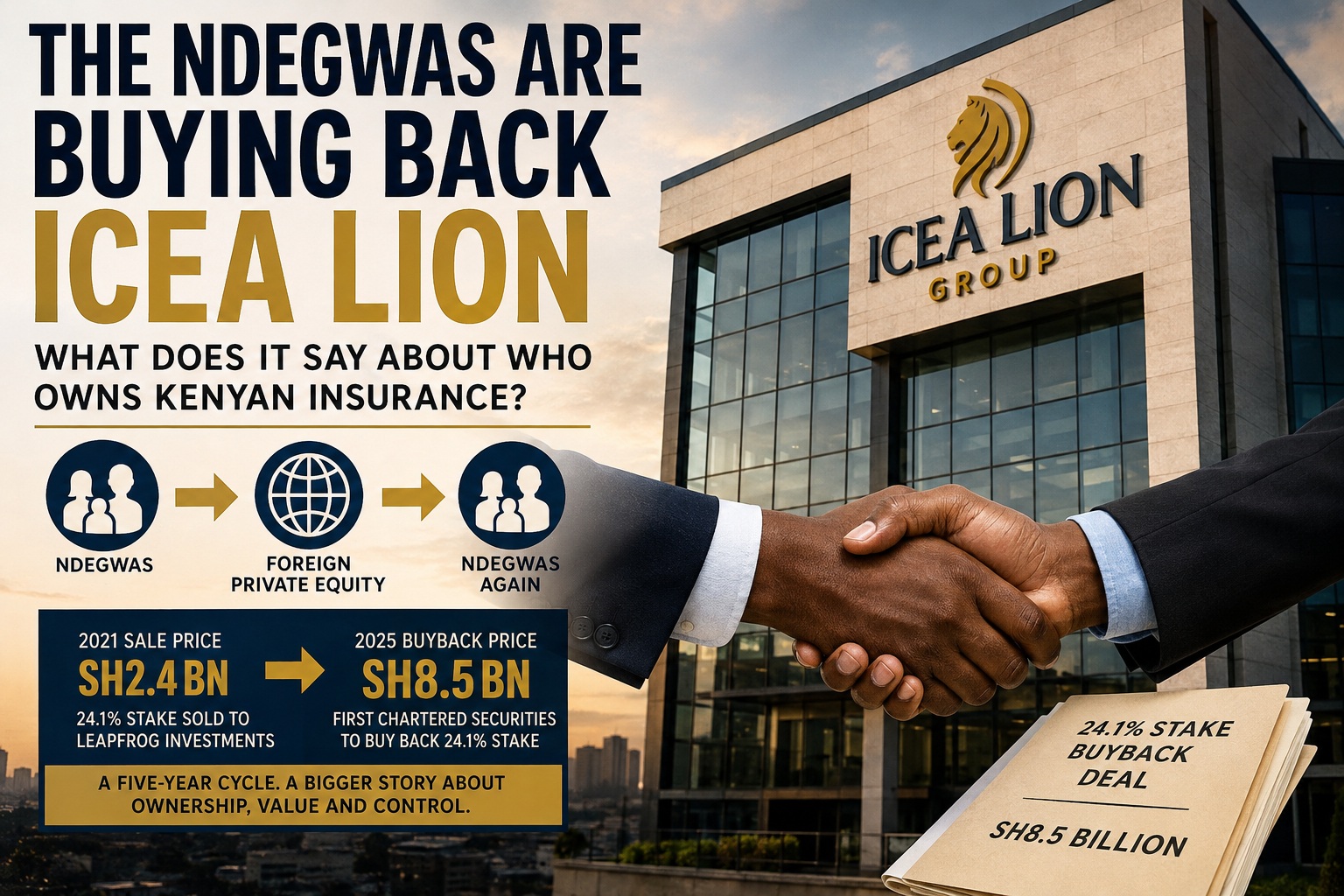
The Ndegwa family’s decision to buy back a 24.1% stake in ICEA Lion for KSh8.5 billion is more than a corporate transaction. It is a revealing statement about ownership, capital and the value of controlling a major Kenyan financial institution.
First Chartered Securities, the family’s investment vehicle, already owns 75.9% of ICEA Lion Insurance Holdings. Once the transaction is completed, the Ndegwas will regain full ownership of a business they partially sold to foreign private equity five years ago.
What makes the deal particularly interesting is not simply the price. It is the cycle.
The Ndegwas sold part of ICEA Lion to LeapFrog Investments, backed by Prudential Financial, in a transaction agreed in 2020 and completed around 2021. Now the family is paying more than three times what it received to take the same stake back.
That sequence deserves to be examined carefully because it tells us something important about how ownership of Kenyan businesses is evolving.
The ownership cycle
In 2021, the Ndegwas were willing to bring in an international investor.
The 24.1% stake was sold for about Sh2.4 billion, valuing ICEA Lion at roughly Sh10 billion at the time. LeapFrog Strategic Africa Investments acquired the interest through Eastern Africa Holdings, with the investment designed to bring additional capital, insurance expertise, technology and growth capabilities to the group.
Five years later, the same minority stake is reportedly changing hands for Sh8.5 billion.
That implies a value of roughly KSh35 billion for the whole company, assuming the 24.1% stake represents the same economic interest.
The arithmetic is striking.
LeapFrog and Prudential appear to have multiplied their original investment several times. The Ndegwas, meanwhile, are paying a substantial premium to regain an asset they once considered valuable enough to partially sell.
It is tempting to describe this simply as a successful private equity exit.
But that would miss the bigger story.
The more consequential question is why the Ndegwas now want the asset back.
Foreign capital did its job
Private equity is often misunderstood in public debate.
There is a tendency to view foreign ownership as a permanent transfer of valuable African companies away from local hands. But private equity does not generally operate that way. Its model is based on entering businesses, helping increase their value and eventually exiting.
That appears to be precisely what happened at ICEA Lion.
When LeapFrog entered, the partnership was expected to support customer connectivity, innovation, digitisation, new products and operating synergies across the group.
The exit therefore does not necessarily mean the foreign investor failed.
Quite the opposite.
For a private equity investor, an exit at a significantly higher valuation is the point of the exercise.
The interesting question is what happened to the business during the period between entry and exit.
The value question
The reported numbers suggest a dramatic increase in the value of ICEA Lion.
In 2020, the 24.1% stake generated Sh2.4 billion for the Ndegwa family. At the reported buyback price of Sh8.5 billion, the same percentage is worth about 3.5 times as much.
That is a remarkable change in only a few years.
It would be too simplistic, however, to attribute the entire increase to LeapFrog.
Insurance companies are affected by many variables, including profitability, investment returns, capital strength, premiums, asset values, distribution networks and the broader economic environment.
But the timing is significant.
ICEA Lion has continued operating as a diversified financial services group with interests spanning life insurance, general insurance, asset management and related services in East Africa. Its history also gives it something that cannot easily be built from scratch: an established brand, distribution infrastructure and decades of customer relationships.
This is where the transaction becomes more than a private equity story.
It becomes a story about the value of ownership.
Why buy it back?
The obvious question is why sell 24.1% in the first place if the family ultimately wanted complete control.
The answer may be that the circumstances were different.
Businesses do not operate in a vacuum. Owners sometimes sell minority stakes because they need capital, strategic expertise, technology or a partner capable of helping the business enter its next phase.
A minority investor can also provide discipline and an external perspective without displacing the founding shareholders.
That arrangement can make sense when the objective is growth.
But ownership priorities can change.
Five years can make a considerable difference to a business and to its owners. A company that was once being prepared for expansion with a strategic financial partner may later become attractive as a long-term family asset.
The Ndegwas already control 75.9% of ICEA Lion. Buying the final 24.1% therefore does not represent a rescue or a takeover of an unfamiliar company.
It represents consolidation.
The family is effectively paying to remove the last significant outside shareholder.
Control has a price
This is perhaps the most important lesson from the transaction.
A minority stake is not always worth the same to every buyer.
For LeapFrog, 24.1% was an investment.
For the Ndegwas, the same 24.1% completes control.
That distinction matters.
The family already has substantial influence over ICEA Lion. But 100% ownership provides a different degree of flexibility over capital allocation, dividends, strategic direction, succession and the eventual future of the company.
In private businesses, control can command a premium precisely because it cannot be replicated by simply buying a small financial interest.
The Sh8.5 billion price should therefore not be viewed only as a valuation of shares.
It is also a price for certainty.
A return to local ownership
There is another dimension that deserves attention.
For years, African economies have wrestled with a familiar contradiction. Local entrepreneurs build substantial companies, but as those companies grow, they often need capital that is easier to find abroad.
Foreign investors provide that capital.
They also provide expertise, networks and credibility.
But when the company becomes significantly more valuable, the original owners can face a difficult choice: continue sharing ownership with outside investors or buy them out.
The ICEA Lion transaction shows that the second option is possible.
The Ndegwas are not selling the company to foreign capital this time.
They are using significant local capital to bring foreign capital to an end.
That does not mean Kenya has suddenly solved its shortage of domestic investment capital. It does, however, provide an important example of local wealth being recycled into ownership of a major financial institution.
The deeper Kenyan question
This is where the ICEA Lion deal becomes relevant beyond the Ndegwa family.
Who owns Kenya’s financial institutions?
And perhaps more importantly, who will own them in another 20 years?
Kenya has produced some of the continent’s strongest private financial businesses. Yet many of these institutions have needed international shareholders, strategic investors or development capital to finance expansion.
There is nothing inherently wrong with that.
Capital has no nationality when a company needs to grow.
But ownership determines where strategic decisions are ultimately made.
The return of ICEA Lion to full Ndegwa ownership therefore sits within a much larger debate about economic sovereignty.
Local ownership does not automatically make a company better.
Nor does foreign ownership automatically make it worse.
The more meaningful issue is whether the ownership structure produces a well-capitalised, professionally managed and competitive institution that can serve customers while creating long-term value.
Private equity leaves a footprint
There is also an uncomfortable lesson for families that bring private equity into their businesses.
An investor may arrive as a minority partner, but its presence can change the trajectory of a company.
Private equity investors typically push for stronger governance, clearer performance metrics, technology investment, operational efficiency and eventually an exit.
Those changes can remain after the investor leaves.
That means the Ndegwas may be buying back more than the shares they sold.
They may be buying back a more valuable institution.
The irony is important.
Foreign capital may have helped increase the value of a company that is now returning entirely to local ownership.
That is not necessarily a contradiction. It is how capital markets are supposed to work.
The price tells another story
The reported KSh8.5 billion price also sends a message about how investors now view established Kenyan financial businesses.
If the implied valuation of approximately Sh35 billion is accepted, ICEA Lion has moved a long way from the roughly Sh10 billion valuation associated with the 2020 transaction.
That is not merely inflation.
It suggests that the market’s perception of the company’s earnings potential, assets, strategic position or future prospects has changed materially.
The Ndegwas are therefore not simply reclaiming something they once owned.
They are buying it back at a much higher valuation because they appear to believe the business is worth owning at that price.
That is perhaps the strongest vote of confidence available from an existing shareholder.
What happens next?
The important issue now is what the Ndegwas do with complete ownership.
Full control creates opportunity, but it also creates responsibility.
ICEA Lion operates in sectors where trust is central. Insurance companies manage long-term obligations to customers, while asset managers and related businesses handle other people’s savings and investments.
Ownership concentration therefore makes governance even more important.
The family will need to demonstrate that control does not mean complacency.
If anything, the return to full ownership should increase the pressure for professional management, strong governance and continued investment.
A privately controlled institution can move quickly.
But it can also become too dependent on the decisions of a small group of shareholders.
The strongest version of family ownership is not simply about keeping an asset in the family.
It is about building an institution capable of outliving the family members who currently control it.
The real meaning of the deal
The Ndegwa family’s ICEA Lion buyback is therefore best understood as a story about capital completing a circle.
First came local ownership.
Then came foreign private equity.
Now comes a return to full local control.
The first transaction provided the company with an international financial partner and gave the Ndegwas liquidity. The second transaction gives the family back complete ownership after the company’s value has increased substantially.
That is an unusually clear illustration of how local and foreign capital can interact without one necessarily replacing the other permanently.
For LeapFrog and Prudential, ICEA Lion appears to have become a successful investment exit.
For the Ndegwas, it is a bet on the next chapter.
And for Kenya, the more profound question is not whether the Ndegwas can afford to buy back ICEA Lion.
It is whether more Kenyan capital can eventually become strong enough to do the same across other strategic businesses.
Because ownership is ultimately about more than who holds the shares.
It is about who has the patience to build, who has the capital to wait, who controls the next decision and who benefits when an African company becomes substantially more valuable.
The ICEA Lion story shows that foreign capital can help create that value.
But it also shows something equally important: when local capital becomes deep enough, ownership can come home.
The Ndegwas are not simply buying back 24.1% of an insurer.
They are buying back the final piece of control.
And that may be the most interesting part of the entire transaction.

More from Business
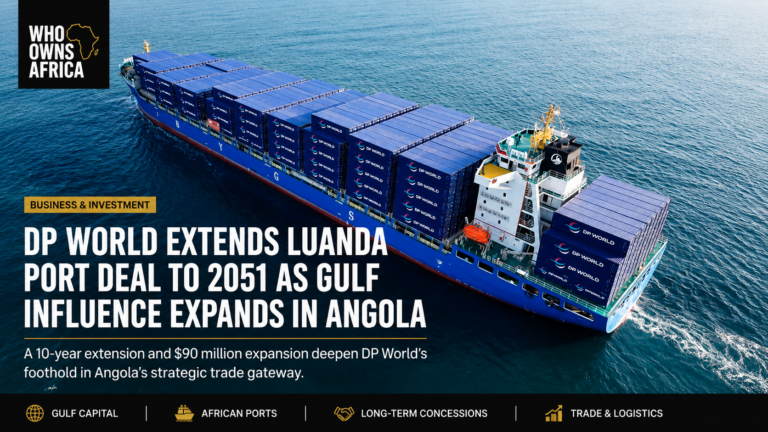
DP World extends Luanda port deal to 2051 as Gulf influence expands in Angola
DP World’s Luanda extension reveals how Gulf capital is reshaping African trade infrastructure through long-term concessions, logistics and strategic access.

Egypt is building a new African business network: Here’s who stands to gain
Egypt is turning African diplomacy into a commercial network linking manufacturers, farmers, financiers and markets across the continent.
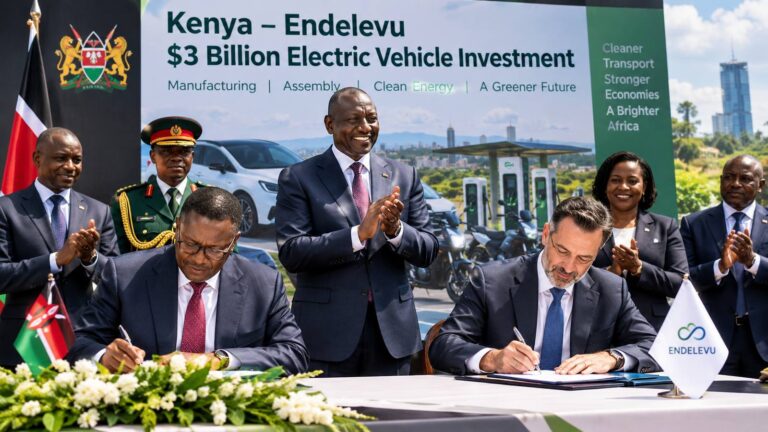
Kenya wants to build Africa’s electric-car future: Inside the $3 billion EV bet
Kenya’s electric vehicle ambition is becoming an industrial strategy, testing whether Africa can move beyond importing technology to building it.