


Africa has spent decades debating who owns its resources, industries and economic future. The Dangote Petroleum Refinery’s $1.6 billion initial public offering presents a more practical question: when a transformative African business invites the public to become shareholders, can ordinary Africans from other countries actually participate?
The answer reveals a troubling gap between the continent’s ambitions for economic integration and the financial systems through which ownership is distributed. The refinery’s share sale is more than a corporate milestone. It is a test of whether Africa can turn industrial ambition into broadly accessible wealth.
Ownership beyond the headlines
The Dangote refinery represents an important shift in Africa’s industrial story. Built in Nigeria, the facility demonstrates the scale of investment required to establish major industrial capacity on a continent that has historically relied heavily on imported refined petroleum products.
Its public offering creates an opportunity to examine another dimension of development: who benefits financially when African companies become larger, more valuable and more deeply connected to regional markets?
For years, conversations about African ownership have focused on foreign control of natural resources, multinational corporations and the export of profits beyond the continent. Those concerns remain relevant. Yet ownership is also shaped by decisions made within African economies, including how companies raise capital, how governments regulate investment and how easily citizens can buy stakes in businesses operating beyond their national borders.
An African-owned industrial giant does not automatically create widely distributed African wealth. That outcome depends partly on whether participation extends beyond founders, institutional investors and wealthy individuals to households that want to invest their savings in productive enterprises.
The Dangote IPO brings that distinction into focus. Its significance lies not simply in the money it hopes to raise, but in the possibility of connecting African household savings with African industrial development.
A continental ambition meets national borders
The refinery’s public offer opened on September 14, 2026, and is scheduled to close on October 13. The sale could raise approximately $1.6 billion, equivalent to about 2.15 trillion naira, if fully subscribed, according to reporting by Reuters.
The company has also set an ambitious goal of attracting 10 million retail investors, signalling a desire to widen participation beyond the traditional pool of large shareholders.
That ambition deserves attention. African economies need more channels through which households can invest in businesses, share in their growth and build assets over time. Public ownership can help connect ordinary savings with productive enterprise, provided investors understand the risks and receive meaningful protection.
However, the offer has exposed a fundamental contradiction. Although the investment opportunity has continental significance, the transaction is rooted in Nigeria’s regulatory and financial infrastructure. Investors elsewhere in Africa cannot assume that an offer available in one market will automatically be accessible in another.
Reuters reported that fragmented regulations, limited cross-border investment channels and differences between national financial systems created obstacles for prospective investors outside Nigeria.
This is not a minor administrative inconvenience. It is a structural weakness in the way African economies interact.
Goods may move across borders under regional trade arrangements, while capital encounters separate approval processes, brokerage requirements, custody arrangements and settlement systems. A business may attract interest across the continent, yet the practical ability to invest in it can depend on where a potential shareholder lives.
The result is a continent that often speaks of one economic future while operating through disconnected financial systems.
Kenya’s opening, and its limitations
Kenya’s response illustrates both the possibilities and the shortcomings of the current system.
On October 5, the Capital Markets Authority approved a short-form prospectus submitted by Renaissance Capital (Kenya) Limited, enabling eligible Kenyan investors to participate in the Nigerian refinery offering through a global depositary receipt arrangement.
A global depositary receipt, or GDR, represents shares in a company based in another market. It can provide investors with a locally accessible route to foreign securities without requiring them to purchase the underlying shares directly through a foreign exchange.
Under the approved arrangement, Renaissance Capital Kenya is to establish appropriate custody arrangements for investor funds and work with its Nigerian affiliate. Following the offer and confirmation of share allocations, the GDRs are intended to be listed on the Nairobi Securities Exchange, subject to the necessary Nigerian regulatory approval.
The Kenyan regulator’s announcement is important because it establishes a formal mechanism for participation in a major African industrial investment. It also offers a potential model for future transactions linking African exchanges.
Yet the timing matters.
Kenya’s approval came eight days before the scheduled October 13 closing date. Investors still needed to understand the instrument, examine the offer documentation, assess the risks and complete the required procedures within a limited period.
The approval therefore highlights a wider problem: access created late in an investment process is not equivalent to access designed into that process from the beginning.
For a sophisticated institutional investor, navigating unfamiliar documentation and cross-border arrangements may be manageable. For an individual investor with limited experience in international securities, the same process can be intimidating.
The lesson is not that Kenya should have bypassed regulation. Investor protection is essential. It is that cross-border mechanisms should be developed early enough for regulation, communication and investor education to work together.
Integration cannot remain a slogan
The African Continental Free Trade Area is built around the ambition of expanding trade and economic cooperation across national boundaries. But economic integration is incomplete if companies and products can reach regional markets more easily than citizens can invest in regional businesses.
Capital-market integration deserves a more prominent place in that conversation.
When investors in one African country cannot readily purchase securities issued in another, businesses lose access to a potentially broader pool of savings. Investors lose opportunities to diversify their portfolios. Regional exchanges miss opportunities to deepen liquidity and attract new participants.
These limitations reinforce the tendency for African companies to depend on a narrow domestic investor base or seek substantial financing from outside the continent.
Foreign investment is not inherently undesirable. International capital can provide expertise, financing and access to global markets. The concern is the absence of equally effective mechanisms for mobilising African capital.
If African households, pension funds, insurance companies and institutional investors have savings available for investment, financial integration should help connect those resources with viable African enterprises.
That requires more than political declarations. It requires compatible rules, reliable settlement systems, transparent disclosure standards and cooperation among regulators.
It also requires a change in mindset. A major company based in Nigeria should not be treated as an investment opportunity exclusively relevant to Nigerian financial institutions. Nor should a Kenyan investor have to overcome disproportionate procedural obstacles simply because the business operates under another African jurisdiction.
A genuinely integrated market would preserve national oversight while making participation across borders more predictable.
The missing link between savings and industry
Africa’s ownership debate frequently concentrates on who controls existing wealth. Less attention is paid to how new wealth can be created and distributed through investment.
The distinction matters because ownership is not determined only by the location of factories, mines or headquarters. It is also determined by who owns the shares, receives dividends when declared and benefits if the value of a business increases.
A household that owns shares in a productive company has a different relationship with economic growth from one that participates only as a consumer. That relationship does not guarantee profits, and equity investments can lose value. But it creates a potential channel through which business performance can translate into household wealth.
The Dangote offering raises the prospect of bringing more retail investors into a major industrial enterprise. If participation becomes broader and more accessible, it could help demonstrate how domestic savings can support industrial development.
However, affordability alone does not create inclusion.
Investors need clear information about the business, the offering price, the risks, the allocation process and the rights attached to their securities. They also need confidence that the institutions handling their money are authorised and accountable.
For smaller investors, transaction costs and minimum subscription requirements can determine whether an opportunity is realistic. Currency movements, liquidity constraints and unfamiliar investment structures can introduce additional risks.
A financial product may be legally available without being practically accessible.
This is why the success of African investment initiatives should not be measured solely by the amount of money raised. It should also be assessed by the diversity of participating investors, the quality of investor protection and the durability of the channels created to connect markets.
Technology can widen the door
Digital financial services offer one route towards making cross-border ownership less complicated.
Mobile banking, digital identity verification and electronic investment platforms can reduce the paperwork and physical travel traditionally associated with opening accounts and transferring funds. Properly regulated digital systems can also help investors receive disclosures, monitor holdings and access information in familiar formats.
But technology cannot solve every problem.
A seamless application cannot compensate for incompatible regulations, unclear legal rights or weak arrangements for custody and settlement. Nor does an attractive digital interface make a risky investment suitable for every household.
The priority should be to combine technology with sound financial infrastructure.
African exchanges and regulators could work towards standardised digital onboarding, clearer disclosure requirements and more consistent procedures for recognising authorised intermediaries across participating jurisdictions. They could also improve coordination on investor complaints, fraud prevention and the enforcement of securities rules.
Fintech companies can contribute by reducing the practical barriers faced by retail investors, but they must operate within appropriate regulatory safeguards.
The objective should not be to encourage every African to buy every available share. It should be to ensure that geography and administrative complexity do not needlessly prevent informed investors from considering legitimate opportunities.
Ownership must come with accountability
There is another reason to approach the Dangote IPO as more than a fundraising exercise: public participation changes the expectations surrounding corporate governance.
When a company invites a large number of outside shareholders, it assumes responsibilities that extend beyond its founders and principal investors. Transparency, timely disclosure and fair treatment become central to maintaining confidence.
Prospective shareholders need to understand what they are buying. They should not confuse an ambitious industrial project with a guaranteed financial return, or assume that a company’s strategic importance necessarily makes its shares attractively priced.
The refinery’s size and significance do not remove commercial risks. Performance depends on operating efficiency, demand, input costs, financing conditions, regulation and the wider energy market.
Investors also need clarity about their rights, the treatment of dividends, the conditions governing share transfers and the arrangements for holding the securities through depositary receipts.
Kenya’s Capital Markets Authority has expressly cautioned that its approval of the relevant prospectus is not a recommendation to invest. That distinction is important. Regulatory permission establishes a framework for participation; it does not certify that an investment will be profitable.
Broad ownership must therefore be accompanied by financial literacy and effective investor protection. Otherwise, an initiative intended to distribute opportunity could expose inexperienced households to risks they do not fully understand.
The deeper objective is not simply to increase the number of shareholders. It is to create a credible system in which shareholders can make informed decisions and trust that the rules apply fairly.
From a single IPO to a continental system
The most consequential outcome of the Dangote offering may ultimately be what African financial institutions learn from it.
A single transaction cannot resolve the fragmentation of the continent’s capital markets. But it can demonstrate the demand for regional investment and expose the institutional weaknesses that prevent that demand from being met efficiently.
Regulators should use such experiences to identify where approval procedures can be coordinated, where documentation can be standardised and where investors need clearer guidance. Stock exchanges should explore practical links that allow securities issued in one market to be accessed through another without sacrificing oversight.
Governments also have a role in establishing predictable rules and supporting cooperation between national institutions. Regional bodies can help provide the framework for sustained coordination, while private financial institutions can develop the brokerage, custody and settlement services needed to make cross-border investment routine.
These reforms will take time. Different legal systems, currencies, levels of market development and regulatory priorities cannot be harmonised overnight.
But progress need not wait for a perfect continental financial architecture. Each well-designed cross-border offering can help establish procedures, build institutional experience and improve investor confidence.
The test is whether those lessons become lasting infrastructure rather than temporary arrangements created for a single high-profile deal.
The real meaning of African ownership
The Dangote refinery IPO forces Africa to confront a question that extends beyond one entrepreneur, one company or one stock exchange.
Can the continent build industrial enterprises of global significance while developing financial markets that allow Africans across different countries to share in their growth?
The answer will depend on choices made by regulators, governments, exchanges, companies and investors themselves.
African ownership should not mean merely that a company has an African founder or operates within African borders. It should also mean that Africans have meaningful opportunities to participate in the creation of productive assets, subject to fair rules and informed financial decisions.
That ambition requires a shift from celebrating ownership in principle to building the systems that make it possible in practice.
Kenya’s approval of a route into the Dangote offering is a constructive step. Its late timing, however, demonstrates why individual regulatory breakthroughs cannot substitute for a more integrated investment environment.
The next major African industrial offering should not require investors and intermediaries to improvise cross-border access at the final stage. The necessary arrangements should be anticipated, tested and communicated well before subscriptions open.
Ultimately, the question is not whether Africa can produce industrial giants. The Dangote refinery has already demonstrated the scale of ambition possible.
The question is whether African financial systems can evolve quickly enough to allow a much wider range of Africans to become informed participants in that ambition.
If Africa wants its economic future to be owned by Africans, it must make investing across Africa an ordinary possibility, not an exceptional administrative achievement.

More from Business

ICEA Lion: The Ndegwas buy back what they once sold
The ICEA Lion buyback is more than a family deal; it exposes the changing balance between local capital, foreign investors and control.
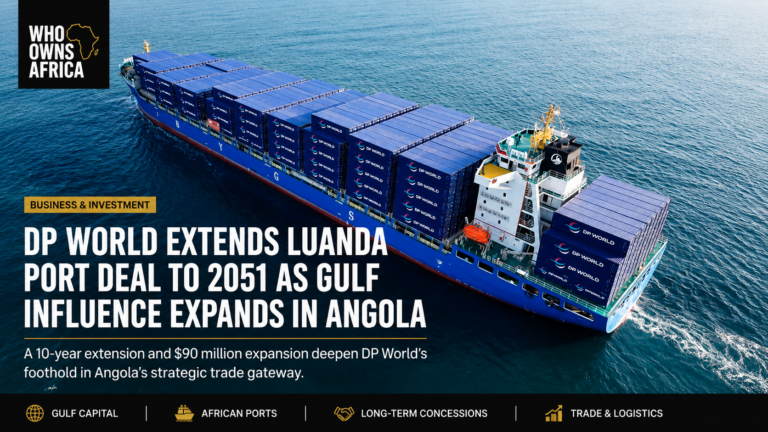
DP World extends Luanda port deal to 2051 as Gulf influence expands in Angola
DP World’s Luanda extension reveals how Gulf capital is reshaping African trade infrastructure through long-term concessions, logistics and strategic access.

Egypt is building a new African business network: Here’s who stands to gain
Egypt is turning African diplomacy into a commercial network linking manufacturers, farmers, financiers and markets across the continent.