

ACCRA — African retailers across categories from food and consumer goods to clothing, electronics and building materials have faced intensifying competition from imported products over the past decade, as improving trade infrastructure, currency movements, and the growth of e-commerce channels through which Asian goods reach African consumers directly have each increased the competitive pressure on domestically produced and locally sourced merchandise. The responses that African retailers have developed illuminate important dimensions of how African commercial markets are evolving and what strategies are proving effective for businesses competing in an increasingly international market environment.
The Chinese manufactured goods challenge has been most acute in sectors where Chinese production scale, technical efficiency and export orientation have created price points that African manufacturers and traditional importers cannot match. Consumer electronics, mobile phones, clothing, footwear, household goods, power tools and building materials have all experienced significant import penetration, with the combination of lower unit production costs and improving logistics connectivity making these goods accessible to African consumers at prices that compete successfully against both local production and traditional higher-cost import alternatives. African retailers in these categories have navigated the challenge through several strategic adaptations: moving toward agency distribution arrangements with Chinese manufacturers rather than competing against them, focusing on product categories where value-added services provide competitive differentiation, and using private label arrangements to offer Chinese-manufactured goods under local brand identities that carry better consumer recognition and trust.
Supermarket and formal grocery retail has experienced rapid expansion across African cities alongside growing middle-class consumer demand for organized retail environments offering consistent product quality, reliable cold chain, broader product range and the shopping experience standards that urban consumers increasingly expect. South African supermarket groups — Shoprite, Pick n Pay, Woolworths Food and SPAR — have led continental expansion, competing against both local formal retailers and the vast informal market. The expansion of formal grocery retail has intensified competition for local fresh produce and consumer goods suppliers, requiring them to meet quality consistency, packaging, labeling and delivery reliability standards that formal retail demands.
Informal retail remains dominant by volume in most African consumer markets, with kiosk shops, roadside stalls, open-air markets and roving hawkers collectively accounting for the large majority of consumer goods sales. Informal retail’s competitive advantages are genuine and not simply a function of avoiding regulatory compliance: proximity to consumers, convenience in small transaction sizes, credit relationships with regular customers and operational costs calibrated to the price sensitivity of lower-income consumers that formal retail’s infrastructure costs cannot match.
E-commerce competition from both pan-African platforms and direct-from-Asia purchasing has created a new competitive dimension. Consumers with smartphones and mobile money access in major African cities can increasingly purchase goods directly from Chinese platforms at prices that physical retail, with its real estate, staffing and supply chain overhead, cannot match for comparable products. The e-commerce price transparency that digital platforms create has also made physical retailers more price-accountable.
Private label merchandise — goods produced to retailer specification and sold under retailer brands rather than manufacturer brands — has become an increasingly important strategic tool for African formal retailers seeking to differentiate their offering and improve their margins. Retailers including Shoprite, Pick n Pay and several mid-market African retail chains have expanded their private label ranges, working with both local manufacturers and Asian manufacturers who can produce to specification at competitive prices. Private label provides retailers with higher gross margins, stronger differentiation from competing retailers who carry the same branded products, and greater flexibility to respond to price competition.
The FMCG distribution revolution underway in several African markets — driven by digital ordering, route optimization and direct-to-retail delivery — is reshaping the relationships between manufacturers, distributors and retailers. Digital distribution platforms specifically designed for the African informal retail context — including Twiga Foods in Kenya, TradeDepot in Nigeria and similar models in other markets — have built technology-enabled distribution businesses that improve the economics of supplying informal retailers while creating demand pattern data that traditional distribution channels could not generate.

More from Business

Who gets to own Africa’s biggest industrial projects? The Dangote IPO reveals the barriers
Africa’s biggest refinery share sale raises a fundamental question about wealth creation: can Africans invest across borders as easily as capital moves across continents?

ICEA Lion: The Ndegwas buy back what they once sold
The ICEA Lion buyback is more than a family deal; it exposes the changing balance between local capital, foreign investors and control.
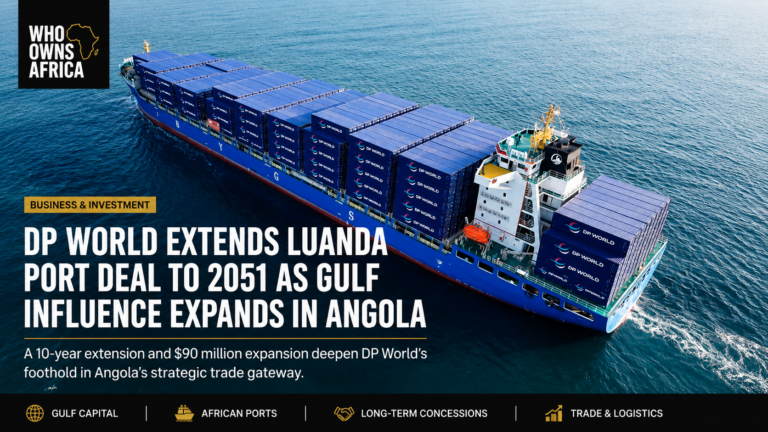
DP World extends Luanda port deal to 2051 as Gulf influence expands in Angola
DP World’s Luanda extension reveals how Gulf capital is reshaping African trade infrastructure through long-term concessions, logistics and strategic access.