

ADDIS ABABA — Chinese investment in Africa has been one of the most discussed, most contested and most consequential economic relationships of the past two decades, attracting analysis ranging from enthusiastic celebration of South-South development partnership to pointed concern about debt dynamics, governance influence, labor practice and the strategic implications of Chinese infrastructure financing for African sovereignty. The reality, evidenced by decades of operational experience and growing research, is considerably more complex than either the promotional or the alarmist narrative suggests, and honest assessment requires distinguishing among the diverse actors, instruments and sectors that the broadly labeled Chinese investment category actually encompasses.
Chinese official development finance — including concessional loans from China Exim Bank, grants through Chinese government aid programs and financing from China Development Bank — has funded major infrastructure projects across the continent, with roads, railways, ports, airports, hydroelectric dams, government buildings and stadium construction being the most visible outputs. The scale of Chinese infrastructure financing in Africa has no parallel in the history of bilateral development finance, with cumulative commitments running to hundreds of billions of dollars across multiple decades. The terms, conditions and development impact of this financing have been subjects of ongoing evaluation, with assessments ranging from recognition of the genuine infrastructure assets delivered to criticism of non-transparent procurement, tied contracting requirements that reduce economic benefit to host country industries, and in specific cases debt terms that have created sustainability concerns when project revenues or fiscal conditions deteriorated.
Chinese private commercial investment in Africa is a distinct category from official infrastructure finance, involving private Chinese companies making commercial investment decisions about African markets. Chinese manufacturers have established operations in African countries across sectors including construction materials, consumer goods, garment manufacturing, agribusiness processing and light industry, attracted by African market access, resource proximity and labor cost advantages relative to rising wages in Chinese coastal manufacturing regions. These private commercial investments have generated direct employment, manufacturing capacity and technology transfer alongside legitimate concerns about local content, employment practices and competitive displacement of domestic producers.
The debt sustainability concerns associated with Chinese infrastructure financing have been most acute in cases where loan terms were not fully transparent and where project revenues proved insufficient to service debt. The Zambia debt crisis, while not attributable solely or even primarily to Chinese financing, included a significant Chinese lending component that complicated the restructuring process given China’s preference for bilateral rather than multilateral debt treatment. The debt renegotiations that several African countries have pursued with China have generally produced extensions and refinancing rather than significant haircuts, reflecting both Chinese financial institutions’ limited experience with sovereign debt restructuring and the political complexity of imposing losses on Chinese state-sponsored lending programs.
The Belt and Road Initiative’s African dimension has provided a framing for Chinese infrastructure engagement that emphasizes connectivity, trade facilitation and shared development goals, while the political and strategic dimensions have drawn scrutiny from Western governments and multilateral institutions. The African response has been pragmatic — most African governments have engaged with Chinese financing where it is available on acceptable terms for projects they want to build, while negotiating with other partners including US, European and multilateral development finance for complementary investment.
Looking at the trajectory over the coming decade, Chinese official infrastructure financing has declined from its peak as China has reassessed the financial returns and reputational outcomes of several flagship BRI projects, with more selective and commercially rigorous project evaluation replacing the rapid deployment that characterized the peak period. Chinese private commercial investment has continued and in some sectors expanded, particularly in manufacturing and consumer sectors where African market growth prospects align with Chinese companies’ search for new markets. The governance quality of Chinese engagement — the transparency of financing terms, the quality of environmental and social standards, the breadth of local economic benefit — is progressively being shaped by both African government negotiating capacity and international pressure for higher standards, making the future trajectory of Chinese investment in Africa more likely to converge toward international norms than to define a sustained alternative paradigm.

More from Business

Who gets to own Africa’s biggest industrial projects? The Dangote IPO reveals the barriers
Africa’s biggest refinery share sale raises a fundamental question about wealth creation: can Africans invest across borders as easily as capital moves across continents?

ICEA Lion: The Ndegwas buy back what they once sold
The ICEA Lion buyback is more than a family deal; it exposes the changing balance between local capital, foreign investors and control.
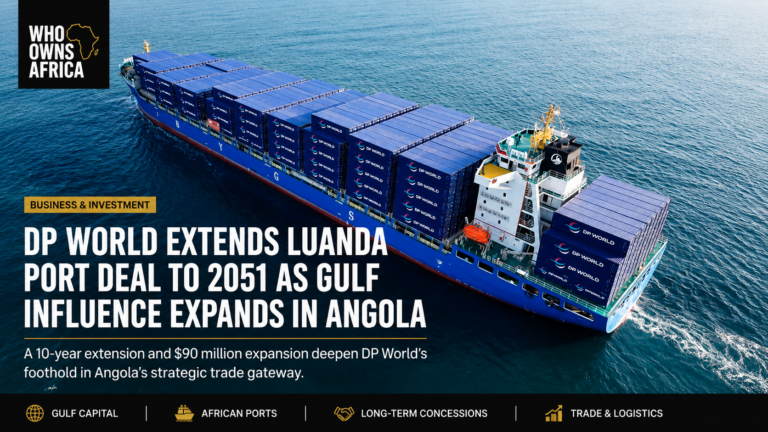
DP World extends Luanda port deal to 2051 as Gulf influence expands in Angola
DP World’s Luanda extension reveals how Gulf capital is reshaping African trade infrastructure through long-term concessions, logistics and strategic access.