

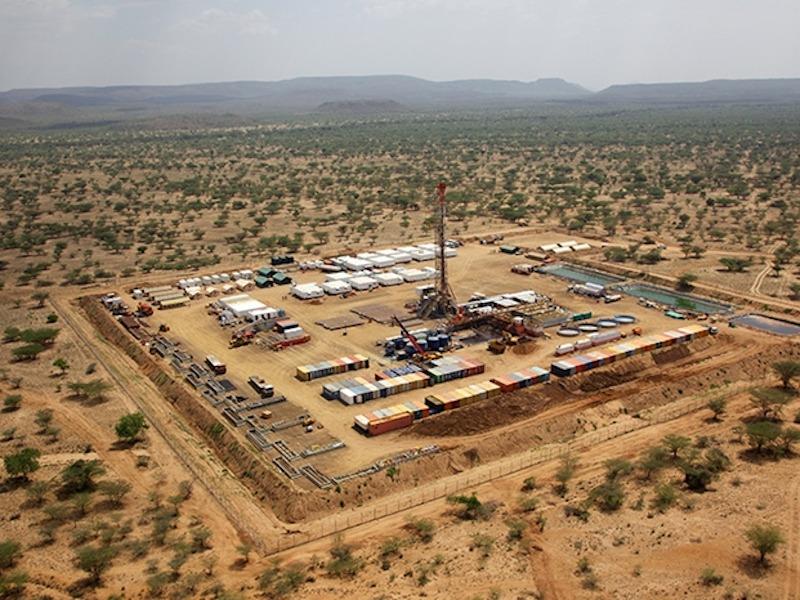
When Kenya begins exporting crude oil from Turkana, the most important question will not be how many barrels leave the country. It will be how much wealth remains in Kenya, who controls its distribution and whether the communities that surrendered land for petroleum development will experience a meaningful improvement in their lives.
For more than a decade, Kenya’s oil story has been defined by discovery, delays, investor uncertainty and political promises. Now, the South Lokichar Basin is approaching a decisive moment. Commercial production is targeted to begin in December 2026, with the first exports expected in 2027.
The transition is significant. Kenya is moving from being a country with commercially promising petroleum discoveries to one preparing to participate in the international crude oil market.
But the emerging ownership structure raises questions that extend beyond production. Gulf Energy has taken control of the project previously operated by British-listed Tullow Oil. The Kenyan government retains an important role through petroleum agreements, regulation and taxation, while Turkana County and affected communities have statutory claims to a portion of the government’s petroleum profits.
These arrangements create the foundation for distributing oil wealth. Whether they translate into broad economic benefits will depend on the transparency of the contracts, the management of public revenue and the government’s willingness to enforce local development commitments.
From Discovery to Commercial Production
Kenya’s petroleum ambitions gained momentum in March 2012, when Tullow Oil announced a significant oil discovery at the Ngamia-1 well in Turkana County.
The discovery generated expectations that Kenya could become an important petroleum producer in East Africa. Additional discoveries followed, including Amosing, Twiga, Ekales, Agete and Etom.
However, commercial development proved considerably more complicated than exploration.
The waxy characteristics of Turkana crude, infrastructure limitations, financing requirements and disagreements over commercial arrangements delayed the transition to large-scale production.
Kenya also explored an ambitious pipeline project linking the oilfields to the coast. The proposed Lokichar-Lamu crude oil pipeline became part of the broader Lamu Port-South Sudan-Ethiopia Transport Corridor vision.
The economics of developing the fields and constructing the necessary infrastructure remained challenging.
The latest development strategy has adopted a phased approach. The initial phase targets approximately 20,000 barrels per day, with a subsequent expansion towards 50,000 barrels per day from around 2032.
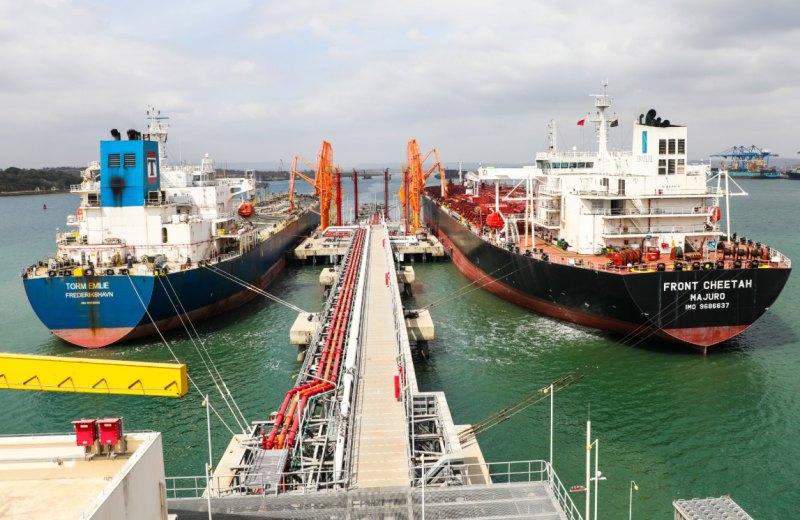
The current plan uses road transportation for the initial production phase, with rail transportation envisaged for the later expansion. Crude will be stored and handled at facilities connected to the Port of Mombasa before export.
This is an important departure from earlier infrastructure expectations. It also illustrates a broader lesson about African petroleum development: commercial viability depends not only on underground resources but also on the cost of transporting, processing and selling them.
Who Owns Kenya’s South Lokichar Oil?
The ownership question has become particularly important following the departure of Tullow Oil.
For years, Tullow was the principal company associated with the development of the South Lokichar discoveries. Its original partnerships included international oil companies Africa Oil Corporation and TotalEnergies, which subsequently withdrew from the project.
By 2023, Tullow had become the sole owner of its working interests in the Kenyan petroleum assets.
That position changed in September 2025, when Tullow completed the sale of its entire Kenyan working interest to Auron Energy E&P Limited, an affiliate of Gulf Energy Limited.
The transaction had a minimum consideration of $120 million, structured in instalments.
Importantly, Tullow retained certain financial interests. These include conditional royalty payments and a right to participate, at no cost, in 30% of potential future development phases.
This means the departure of Tullow did not necessarily eliminate every future financial connection between the former operator and Kenya’s oil industry.
The new controlling project company is associated with Gulf Energy, a Kenyan energy and infrastructure group. Its acquisition represents a significant shift from an internationally operated exploration project towards one led by a domestic corporate group.
However, it is important to distinguish between a Kenyan company’s involvement and the ultimate beneficial ownership of its corporate structure. The public acquisition announcements establish the relationship between Auron Energy and Gulf Energy, but do not, by themselves, provide a complete picture of every ultimate shareholder or financing interest.
That information deserves greater public scrutiny.
For investors, the distinction matters because the nationality of a company does not automatically establish where its capital originates, who ultimately controls it or where its profits are distributed.
The Foreign Investor Question
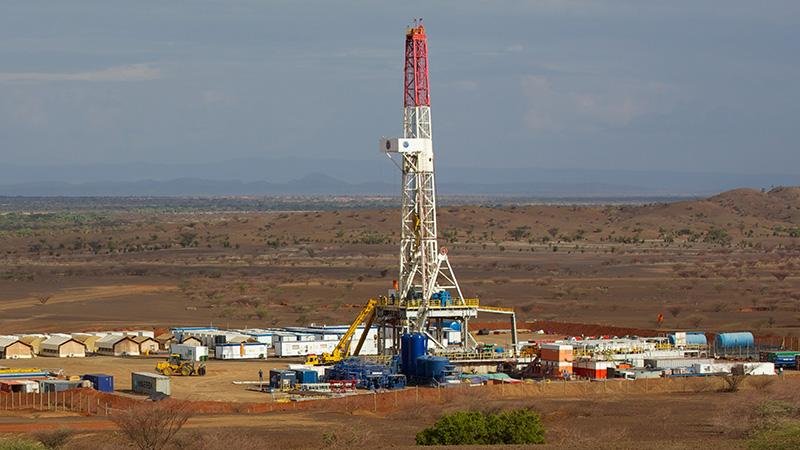
Kenya’s oil industry is not developing in isolation from international capital.
Even with a Kenyan-linked project operator, the development requires international equipment suppliers, specialist contractors, technical expertise, financial resources and access to global petroleum markets.
The drilling equipment brought into Mombasa for the South Lokichar project, for example, was leased from Great Wall Drilling Company in the United Arab Emirates.
This illustrates the international relationships supporting domestic petroleum development.
Foreign participation is not necessarily a disadvantage. Countries developing complex natural resources often require partnerships with international companies possessing the technology, experience and capital that domestic businesses may not yet have.
The real question is whether these partnerships strengthen Kenya’s long-term industrial capacity or create an economy that remains dependent on external expertise.
Kenya needs more than oil extraction. It needs a domestic supply chain capable of providing engineering services, equipment maintenance, logistics, environmental monitoring, professional consultancy and other specialised services.
Without a deliberate national-content strategy, much of the commercial activity surrounding petroleum production could remain outside local businesses.
The opportunity is therefore to use foreign investment as a mechanism for transferring skills and building domestic industrial capacity, rather than simply importing services and exporting crude.
The Government’s Share: Understanding the Petroleum Revenue Formula
The Kenyan government is not simply a spectator in the South Lokichar project.
Its financial participation is governed by petroleum agreements and the Petroleum Act, 2019.
Under Section 57 of the Act, profits from upstream petroleum operations are shared between the contractor and the National Government according to the applicable petroleum agreement.
This is an important distinction.
The government does not automatically receive a percentage of every dollar generated from gross crude oil sales. Petroleum operations involve development expenditure, operating costs, cost recovery arrangements and contractual profit-sharing provisions.
Consequently, the actual amount available to the government depends on production volumes, international oil prices, project costs and the applicable fiscal terms.
Section 58 establishes the framework for distributing the National Government’s share of upstream petroleum profits.
The statutory allocation is:
- 75%: National Government.
- 20%: County Government.
- 5%: Local community.
These percentages refer to the government’s share of petroleum profits, not the total value of crude oil exports.
The local community allocation is particularly important. It is intended to be paid into a trust fund managed by a board of trustees established by the county government in consultation with the affected community.
The law also requires the county government to legislate on the establishment of the trust and the prudent utilisation of the funds for present and future generations.
On paper, the arrangement provides a framework for ensuring that petroleum-producing areas receive a direct financial benefit.
In practice, its effectiveness will depend on transparent accounting, functioning institutions, public participation and independent oversight.
A statutory percentage cannot guarantee development if the institutions responsible for distributing the money are ineffective.
Turkana: The People Behind the Oil Wealth
The most consequential dimension of the South Lokichar project may ultimately be its relationship with the people of Turkana.
For local communities, petroleum development is not simply an investment opportunity. It involves land access, compensation, environmental protection, employment and the potential transformation of traditional livelihoods.
Residents have previously experienced the arrival of exploration companies, temporary employment opportunities and promises of improved infrastructure.
Yet prolonged delays in commercial production have made it difficult for communities to translate those expectations into lasting economic security.
The renewed development programme has also brought compensation questions back into focus.
A September 2026 report by the Daily Nation highlighted approximately 3,600 project-affected persons facing compulsory land acquisition in connection with the project. Residents have raised concerns about compensation for land and property.
This is not a secondary issue.
Land is an economic asset, a source of livelihood and, for many pastoralist communities, an essential component of social and cultural identity.
If compensation is inadequate, delayed or poorly administered, the costs of petroleum development can fall disproportionately on the people living closest to the extraction sites.
The government and the developer therefore face an important responsibility: ensuring that affected households are not left economically worse off because of a national development project.
There is also a broader question about employment.
Oil production is capital-intensive. A project generating billions of dollars in investment does not necessarily create employment on a comparable scale.
Many technical positions require specialised training and experience.
Turkana residents will need access to vocational training, engineering education, business opportunities and procurement programmes if they are to participate meaningfully in the petroleum economy.
Otherwise, the region risks becoming a location where valuable resources are extracted while much of the economic value is captured elsewhere.
The Economics of Kenya’s Oil Exports
Kenya’s oil ambitions have implications beyond Turkana County.
The country spends substantial foreign exchange importing petroleum products. Crude oil exports could introduce a new source of foreign currency earnings, strengthen the balance of payments and diversify export revenue.
The government’s development plan targets initial production of approximately 20,000 barrels per day, eventually rising to 50,000 barrels per day.
However, production targets should not be confused with guaranteed national wealth.
At 20,000 barrels per day, Kenya would remain a relatively modest producer by international standards.
The economic contribution would depend heavily on the international crude price, the quality of the oil, transportation expenses, production costs and the fiscal arrangements negotiated with the contractor.
The country must also recognise that crude oil exports do not automatically translate into cheaper fuel for Kenyan consumers.
Kenya’s domestic petroleum prices are influenced by international markets, exchange rates, refining and transportation costs, taxation and regulatory decisions.
Exporting locally produced crude while continuing to import refined petroleum products may still make commercial sense, depending on the economics of production and domestic refining.
But it raises a legitimate strategic question about whether Kenya can capture more value by developing complementary industrial capacity.
The objective should not simply be to export an unprocessed natural resource. It should be to strengthen the country’s broader energy, manufacturing, logistics and industrial sectors.
A Major Infrastructure Opportunity
One of the less appreciated aspects of the South Lokichar development is the economic significance of the infrastructure supporting crude exports.
In August 2026, Kenya Pipeline Company announced a 25-year crude oil storage and handling arrangement involving Gulf Energy through Kenya Petroleum Refineries Limited.
The projected gross revenue associated with the agreement was approximately KSh93.68 billion over its contractual period.
This figure is a projection, not guaranteed income.
Nevertheless, it demonstrates that the economic opportunities surrounding oil production extend beyond the company extracting the resource.
Storage, transportation, handling, logistics and port services can create additional business opportunities for Kenyan institutions and private enterprises.
The agreement also places public infrastructure at the centre of the emerging petroleum value chain.
This makes transparency especially important. Long-term agreements involving public infrastructure should be subject to appropriate disclosure, scrutiny and accountability.
The economic benefits must be evaluated not only by the revenue they promise but also by the commercial terms, risks and obligations attached to them.
A petroleum industry that creates competitive opportunities for domestic companies could have a broader economic impact than one focused exclusively on extraction.
The Environmental Cost of Petroleum Development
Oil wealth also carries environmental responsibilities.
Turkana is an environmentally sensitive region where water availability, grazing land and pastoral livelihoods are particularly important.
Petroleum operations require water, roads, drilling infrastructure, waste management and careful handling of potentially hazardous materials.
Environmental damage could impose costs on communities long after production revenues have been spent.
The project must therefore operate under credible environmental monitoring, transparent reporting and effective enforcement of environmental standards.
The government has already recognised the importance of environmental oversight, with the South Lokichar environmental and social impact assessment receiving approval in October 2025.
However, approval should be understood as the beginning of regulatory responsibility, not its conclusion.
Continuous monitoring, public access to environmental information and meaningful community participation will be essential.
Kenya must also plan for the eventual decommissioning of petroleum facilities. The economic benefits of oil production should not be achieved at the expense of future generations.
The Lessons Kenya Should Learn from Africa’s Oil Producers
Kenya has an opportunity to learn from the experiences of other African petroleum-producing countries.
Nigeria demonstrates how substantial petroleum wealth can coexist with environmental challenges, institutional weaknesses and disputes over the distribution of resource revenues.
Angola illustrates the importance of understanding the relationship between oil exports, government finances and economic diversification.
Ghana provides another useful case study in managing petroleum revenues through dedicated institutional and fiscal frameworks.
These experiences demonstrate that oil discoveries are not synonymous with economic transformation.
The quality of governance, public financial management, institutional independence and economic diversification often matters more than the size of the resource itself.
Kenya has several advantages, including an established financial sector, a relatively diversified economy, a functioning devolved government structure and an active civil society.
But these advantages will only matter if they are reflected in the management of petroleum revenues.
The country should establish clear public reporting standards covering production volumes, export prices, government receipts, contractor payments, taxes and community allocations.
It should also ensure that petroleum income is invested in productive sectors rather than absorbed by recurrent expenditure and short-term political priorities.
Who Will Ultimately Control the Economic Benefits?
The emerging structure of Kenya’s petroleum industry reveals three different forms of ownership and influence.
First is control of the petroleum operations. Gulf Energy, through its affiliate Auron Energy E&P, is now the principal private-sector participant in the acquired Kenyan interests.
Second is the government’s fiscal and regulatory authority. The state determines the legal framework, supervises petroleum operations and receives its contractual share of petroleum profits.
Third is the public’s statutory entitlement to benefits through national and county government allocations and the community trust mechanism.
These interests are not necessarily equal.
The contractor has commercial incentives to recover its investment and generate returns. The government must balance attracting investment with securing an appropriate public share. Local communities need tangible development outcomes and protection against the social and environmental costs of extraction.
There is also a transparency issue surrounding corporate ownership. Public access to beneficial ownership information, petroleum agreements and material financial arrangements would help citizens understand the relationships between investors, contractors and government institutions.
Kenya should not wait until substantial revenues begin flowing before strengthening these disclosure mechanisms.
The time to establish accountability is before the industry becomes financially and politically entrenched.
What Kenya Must Get Right Before the Oil Money Arrives
There are several priorities that will determine whether South Lokichar becomes an economic success.
First, strengthen revenue transparency. Production volumes, export receipts, taxes, royalties and government petroleum profits should be independently verified and publicly reported.
Second, operationalise community benefit-sharing. Turkana’s statutory entitlement must translate into a functioning, accountable trust mechanism. Community representatives should participate meaningfully in deciding how the funds are invested.
Third, protect local economic participation. Procurement policies, technical training and supplier-development programmes should enable Kenyan companies and workers to compete for opportunities throughout the petroleum value chain.
Fourth, protect public infrastructure. Agreements involving public storage, transportation and export facilities should be transparent, commercially defensible and subject to appropriate public scrutiny.
Finally, diversify the economy. Petroleum revenues should support agriculture, water infrastructure, education, healthcare, manufacturing and renewable energy. Oil should finance broader economic capacity rather than become a substitute for it.
These priorities are particularly important because petroleum prices are volatile. A government that builds its spending commitments around optimistic oil-price assumptions risks creating fiscal difficulties when international markets weaken.
Kenya must treat petroleum income as temporary and unpredictable wealth, not a permanent guarantee of prosperity.
The Real Test of Kenya’s Oil Revolution
Kenya’s entry into the international oil market will represent an important moment in its economic history. It could strengthen foreign exchange earnings, attract investment, expand infrastructure development and create new opportunities for domestic businesses.
But the most important measure of success will not be the first tanker leaving Mombasa or the international market price of Kenyan crude.
It will be the economic conditions experienced by the people of Turkana, the quality of public institutions managing the proceeds and the extent to which petroleum development strengthens the wider Kenyan economy.
The ownership debate must therefore go beyond identifying the company operating the oilfields. It must examine the complete chain of financial interests, contractual obligations, public revenues and community entitlements.
Gulf Energy’s acquisition of the project has changed the commercial leadership of South Lokichar. It has not removed the government’s responsibility to protect the national interest or its obligation to ensure that affected communities receive the benefits provided by law.
Kenya now has an opportunity to establish a different relationship between natural resource wealth and public development.
If the country succeeds, South Lokichar could become more than an oil-producing basin. It could demonstrate how an African nation can attract private capital, retain meaningful public benefits and build local economic capacity around its natural resources.
If it fails, Kenya could find itself exporting valuable petroleum while continuing to debate who truly benefited from its discovery.
The first barrel will establish Kenya’s arrival in the oil market. What happens to the wealth generated by every barrel thereafter will determine whether that arrival becomes a national achievement or simply another missed opportunity.

More from Business
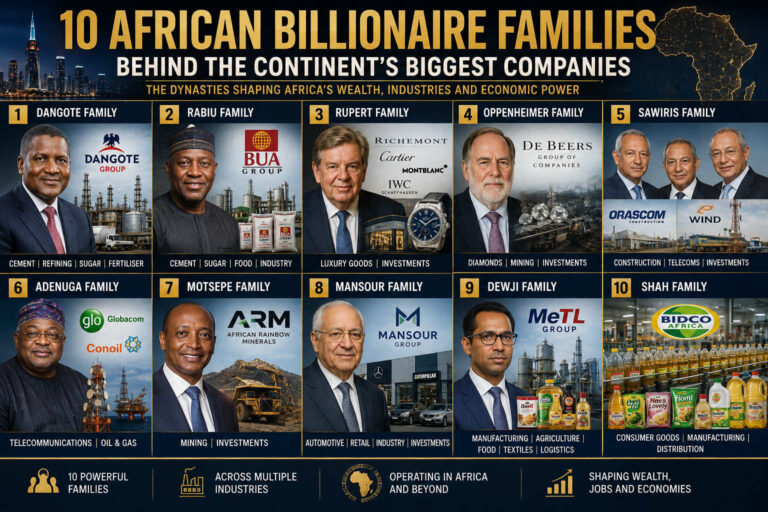
10 African billionaire families behind the continent’s biggest companies
From cement and luxury goods to banking, mining and telecommunications, these families have turned capital into lasting corporate power across Africa.

Who gets to own Africa’s biggest industrial projects? The Dangote IPO reveals the barriers
Africa’s biggest refinery share sale raises a fundamental question about wealth creation: can Africans invest across borders as easily as capital moves across continents?

ICEA Lion: The Ndegwas buy back what they once sold
The ICEA Lion buyback is more than a family deal; it exposes the changing balance between local capital, foreign investors and control.