

MOMBASA — African traders, manufacturers and farmers consistently cite logistics costs as the single largest barrier to their competitive participation in both domestic and international markets — a finding replicated across surveys, competitiveness assessments and enterprise studies for decades and that remains stubbornly true despite significant infrastructure investment, regulatory reform effort and private sector logistics industry development across the continent. The cost of moving goods within Africa and between African countries and international markets is not merely an inconvenience for business operators; it is a structural competitiveness handicap that undermines the economics of African manufacturing, constrains the market reach of African agriculture, and imposes a tax on African consumers whose cost of goods includes transport markups that similar consumers in more logistics-efficient markets do not pay.
Port costs and efficiency are the most visible manifestation of African logistics challenges for international trade. Port charges — handling fees, storage costs, documentation charges and the various levies that accumulate during clearance — are significantly higher at most African ports than at comparable facilities in Southeast Asia, Europe and North America, reflecting limited competition among port operators, less automated cargo handling, longer dwell times that generate storage costs, and in some cases rent-seeking by officials whose cooperation is required for cargo clearance. Average African port dwell times significantly exceed developed market equivalents, generating storage charges and cargo delay costs that accumulate across the millions of containers moving through African ports annually.
The road transport sector’s cost structure reflects infrastructure quality, fuel cost, regulatory burden and market concentration factors that together produce freight rates significantly above those achievable in better-functioning transport markets. On poorly maintained roads, vehicle operating costs increase substantially as fuel consumption rises, tire wear accelerates and mechanical stress on trucks generates more frequent breakdowns. Regulatory checkpoints — customs posts, police checks and weighbridge stations — add time and informal cost to road freight that legitimate operators must manage in ways that honest transport companies cannot easily avoid without competitive disadvantage.
Cold chain infrastructure — the network of temperature-controlled storage and transport needed for perishable goods — represents one of the most significant logistics gaps affecting African food systems and agribusiness competitiveness. Post-harvest losses of perishable produce, estimated at thirty to fifty percent in some country assessments, are driven in large part by inadequate cold chain access between farm and consumer market. For agricultural exporters seeking to serve temperature-sensitive premium markets in Europe and the Middle East, reliable cold chain access from farm to export port is a prerequisite that many African agricultural production areas cannot fully provide, limiting the range of produce that can be competitively exported.
Trade facilitation — the simplification and modernization of customs procedures — has been one of the most productive areas of logistics improvement, with several countries making significant progress through electronic customs management systems, risk-based inspection regimes and single-window systems that allow traders to complete all border clearance documentation through a single electronic interface. Kenya, Rwanda, Mauritius and Morocco are consistently cited among Africa’s best performers on trade facilitation metrics, demonstrating that regulatory and process reform can achieve meaningful logistics cost reduction without requiring large infrastructure investment.
The private logistics sector has grown and professionalized significantly across major African markets, with both pan-African logistics companies building continental presence and international freight forwarding groups expanding their African operations. DHL, Maersk, Bolloré Logistics and several African-founded logistics companies have built networks that provide international standard services in African cities, though at price points that reflect the genuine cost of operating in African logistics environments and that therefore remain significantly above what comparable services cost in more logistics-efficient markets. The fundamental cost structure challenges that make African logistics expensive relative to international benchmarks ultimately require infrastructure improvement, regulatory reform and competitive market development rather than simply better logistics management by individual companies — and addressing them comprehensively will require the kind of sustained, coordinated public and private investment that has transformed logistics landscapes in other emerging market regions over comparable development timelines.

More from Business

Who gets to own Africa’s biggest industrial projects? The Dangote IPO reveals the barriers
Africa’s biggest refinery share sale raises a fundamental question about wealth creation: can Africans invest across borders as easily as capital moves across continents?

ICEA Lion: The Ndegwas buy back what they once sold
The ICEA Lion buyback is more than a family deal; it exposes the changing balance between local capital, foreign investors and control.
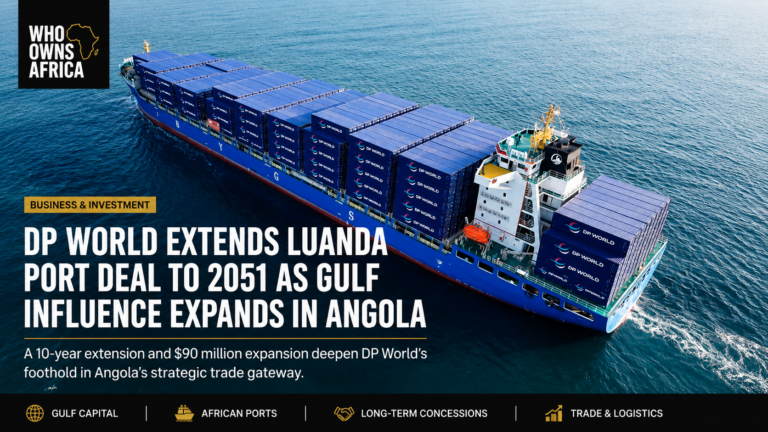
DP World extends Luanda port deal to 2051 as Gulf influence expands in Angola
DP World’s Luanda extension reveals how Gulf capital is reshaping African trade infrastructure through long-term concessions, logistics and strategic access.