

ACCRA — The regional economic communities that structure Africa’s economic integration architecture — ECOWAS in West Africa, the East African Community, SADC in Southern Africa, COMESA spanning East and Southern Africa, and ECCAS in Central Africa among others — have long been characterized by an implementation gap between their ambitious integration goals and the fragmented, expensive trade reality of the regions they nominally integrate. That gap has not been eliminated. Yet the context in which regional integration matters has changed significantly, and the case for effective regional economic integration is in several respects stronger in the current global economic environment than it was during the earlier decades when most African regional blocs established their foundational agreements.
The changing global trade context that makes African regional integration more urgent begins with the structural shifts in global trade policy that have reduced the reliability of market access that African exporters have historically counted on from developed country partners. The erosion of rules-based multilateral trade governance at the WTO, the proliferation of preferential trade agreements that benefit countries with the negotiating capacity to conclude them, and the increasing use of trade policy as a geopolitical instrument by major powers have all created a more uncertain external trade environment for African exporters than the relatively stable multilateral trade order of the pre-2000 period provided. In this environment, the development of a large, integrated African market reduces African economies’ dependence on any single external market relationship.
The EAC has achieved deeper practical integration than most other African regional bodies, driven by geographic proximity, language commonality, political relationships among founding member heads of state, and economic complementarity of the East African economies that makes trade benefits from integration more immediate and visible than in less complementary regional groupings. The Common Market for Eastern and Southern Africa has progressively extended the zone of tariff preference across a larger set of overlapping EAC and SADC member states, though the multiplicity of overlapping regional membership creates the complexity of the African integration architecture’s notorious spaghetti bowl problem — the same country belonging to multiple regional blocs with different tariff schedules, rules of origin and regulatory frameworks, creating compliance complexity that traders find burdensome.
SADC has provided the framework within which several significant regional economic relationships have developed — the SADC Free Trade Area, the electricity trading arrangements through the Southern African Power Pool, and the regional infrastructure programs connecting Southern African economies through roads, railways and logistics networks. South Africa’s economic dominance within the SADC region creates both an organizing principle for regional integration — South African firms’ regional expansion drives commercial integration more rapidly than formal trade agreements alone — and a source of tension, as smaller SADC member states have often been concerned about the terms on which they integrate with an economy significantly larger and more industrially developed than their own.
Infrastructure investment at regional scale represents one of the most concrete contributions that regional economic institutions can make to integration outcomes. Regional transport corridors — the North-South Corridor connecting South Africa to the Great Lakes region, the Lamu Port South Sudan Ethiopia Transport Corridor serving East African landlocked states, the Abidjan-Lagos Corridor in West Africa — have received development finance from multilateral and bilateral sources channeled through regional coordination frameworks that individual country programs could not have attracted or managed independently.
Trade facilitation — the harmonization of customs procedures, the mutual recognition of standards, the simplification of border crossing documentation — is an area where regional institutions have achieved some of the most concrete and measurable progress toward integration, with initiatives like the ECOWAS single administrative document for customs clearance, EAC single customs territory arrangements and SADC customs harmonization reducing the administrative burden of cross-border trade at specific crossing points. The relationship between AfCFTA and the existing regional economic communities is one of the more nuanced institutional dynamics in African economic governance: AfCFTA is being progressively built alongside existing regional arrangements rather than immediately replacing them, making regional economic institutions indispensable partners rather than redundant predecessors for the continental integration process.

More from Business

Who gets to own Africa’s biggest industrial projects? The Dangote IPO reveals the barriers
Africa’s biggest refinery share sale raises a fundamental question about wealth creation: can Africans invest across borders as easily as capital moves across continents?

ICEA Lion: The Ndegwas buy back what they once sold
The ICEA Lion buyback is more than a family deal; it exposes the changing balance between local capital, foreign investors and control.
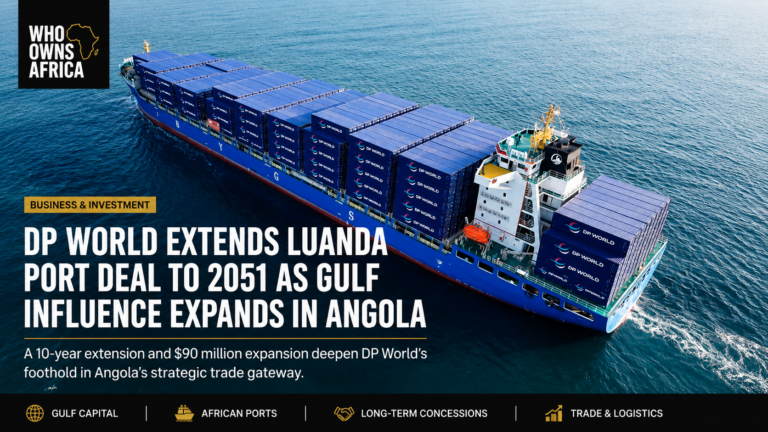
DP World extends Luanda port deal to 2051 as Gulf influence expands in Angola
DP World’s Luanda extension reveals how Gulf capital is reshaping African trade infrastructure through long-term concessions, logistics and strategic access.