

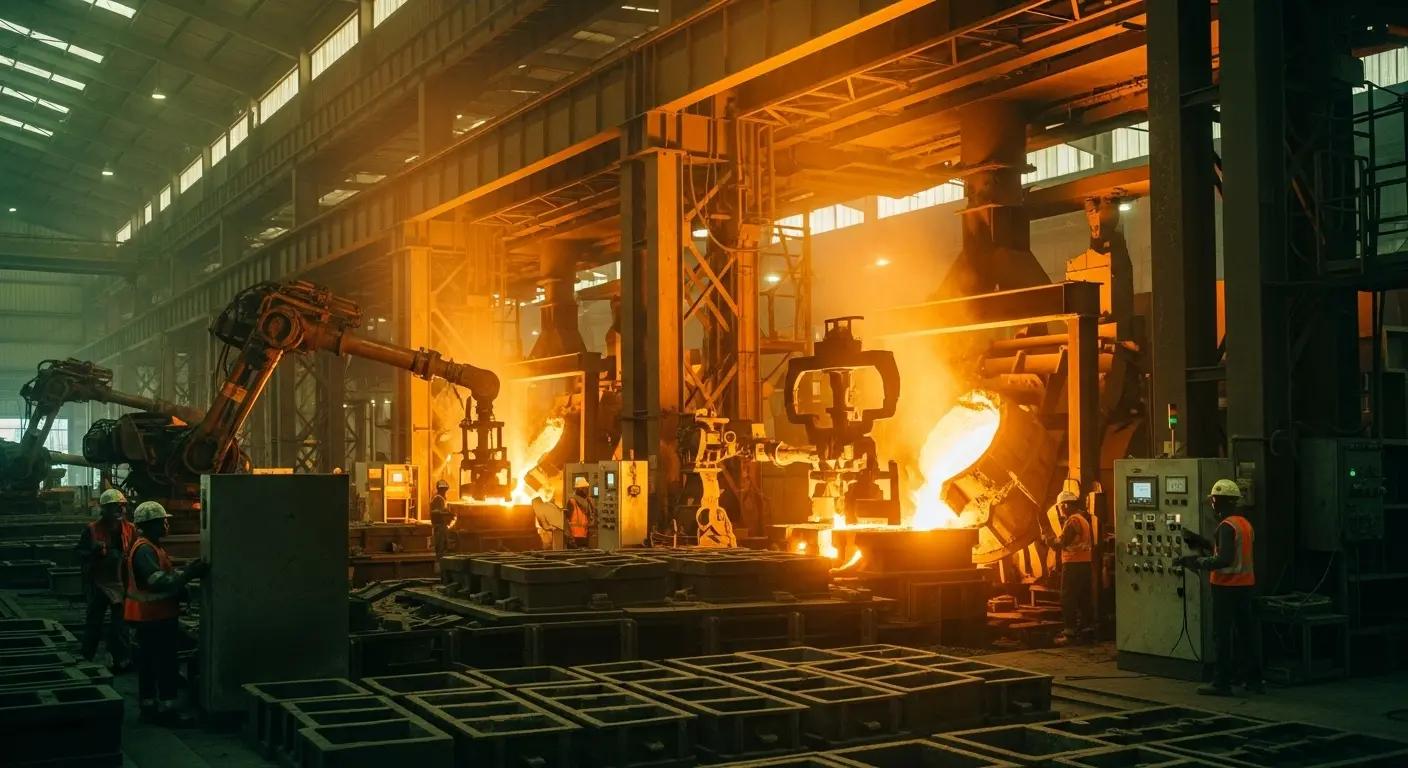
The capital Africa already has
The Africa financing debate is often framed around what the continent lacks: foreign direct investment, concessional loans, infrastructure financing, development partners and access to international capital markets.
But this framing overlooks an increasingly important resource sitting within African financial systems: domestic institutional savings.
Pension funds, insurance companies and asset managers collect money over extended periods and invest it according to financial obligations that may stretch decades into the future. Their investment horizons potentially make them well suited to financing infrastructure, industrial projects and businesses that require years to mature.
The OECD’s Africa Capital Markets Report 2025 estimated that African pension funds and insurance companies held approximately $775 billion in assets, including roughly $455 billion held by pension funds. It also identified the concentration of investment in government securities as a constraint on the development of deeper domestic capital markets.
The scale is significant, although it is unevenly distributed. South Africa dominates the continent’s institutional investment landscape, while countries such as Kenya, Nigeria, Botswana, Ghana and others have developed substantial, though differently sized, pools of retirement capital.
The important distinction is that these assets are not government money waiting to be spent. They belong to workers, employers and pension beneficiaries. Their primary responsibility is to provide retirement security.
But that responsibility does not necessarily conflict with economic development.
The opportunity lies in investments that can generate competitive returns while supporting productive capacity.
Kenya’s pension industry is becoming a financial heavyweight

Kenya provides one of the clearest examples of the scale of this opportunity.
By June 2026, Kenya’s retirement benefits industry had grown to approximately KSh3.17 trillion in assets, crossing the KSh3 trillion threshold for the first time, according to the Retirement Benefits Authority. The industry reported year-on-year growth of approximately 25.13%, reflecting increased contributions and investment performance.
The significance of this growth extends beyond retirement planning. Kenya is accumulating a substantial pool of long-term capital inside its own financial system.
However, the destination of that capital tells a more complicated story.
The Retirement Benefits Authority reported that government securities accounted for approximately 47.22% of pension assets by June 2026. Guaranteed funds accounted for about 18.85%, listed equities 13.87%, and property 8.15%. Investments in private equity represented approximately 1.36%, while infrastructure debt instruments accounted for just 0.02%.
| Asset category | Share |
|---|---|
| Government securities | 47.22% |
| Guaranteed funds | 18.85% |
| Quoted equities | 13.87% |
| Property | 8.15% |
| Other investments | 11.91% |
The allocation illustrates a fundamental tension.
Kenya has accumulated considerable retirement capital, but only a relatively small portion is directly exposed to private businesses, infrastructure financing and alternative investments capable of expanding productive capacity.
Government securities remain attractive because they offer relatively predictable returns, liquidity and established risk frameworks. They also allow pension managers to fulfil their obligations without depending on the uncertain performance of individual companies.
But when institutional investors repeatedly favour government debt, private businesses compete for a much smaller pool of financing.
The issue is not that pension funds are failing to invest. It is whether the structure of investment opportunities available to them is sufficiently diversified to serve both retirement security and the wider economy.
Why governments attract pension money
There is a reason pension managers gravitate towards government securities.
Governments issue bonds with defined payment schedules. These instruments are easier to evaluate, trade and incorporate into portfolio risk management than an investment in an unfamiliar manufacturing company.
African governments also have significant borrowing requirements. Infrastructure spending, public wages, debt refinancing and budget deficits create a steady demand for domestic financing.
Pension funds become natural buyers.
The relationship can be beneficial. Governments obtain financing in local currency, reducing dependence on external borrowing and foreign exchange exposure. Pension schemes receive income from instruments designed to provide relatively predictable cash flows.
However, the relationship can become structurally restrictive.
When governments absorb a large share of available domestic savings, businesses may find themselves competing against the sovereign for capital. Banks, pension funds and other investors may consider government debt more attractive than lending to enterprises whose financial records are incomplete, collateral insufficient or business models difficult to evaluate.
The government becomes the easiest borrower, not necessarily the borrower that creates the most productive economic activity.
This is particularly important in countries where businesses need capital to expand manufacturing, agricultural processing, logistics, technology, pharmaceuticals and export production.
Pension funds buying government bonds is not inherently unproductive. Government borrowing can finance roads, electricity, transport systems and other infrastructure that supports private enterprise.
The question is what the borrowed money ultimately finances, how efficiently it is deployed and whether the growing appetite for sovereign debt crowds out other forms of investment.
The financing problem facing African businesses
For many African entrepreneurs, the biggest barrier to growth is not the absence of demand. It is the cost and availability of capital.
A small manufacturer may have customers, orders and a viable production model but lack financing to acquire machinery, expand premises, purchase raw materials or meet the cost of larger contracts.
Commercial banks often require collateral, established cash flows, audited accounts and a borrowing history. These requirements are understandable from a risk-management perspective, but they exclude many businesses with genuine growth potential.
The problem becomes particularly acute for enterprises seeking to transition from small-scale operations to industrial production.
A company manufacturing food products, furniture, packaging, agricultural equipment or building materials may require several years to establish stable production, expand distribution and generate sufficient cash flow.
Short-term commercial lending is not always suitable for that journey.
Africa’s businesses therefore face a financing mismatch. Their growth ambitions often require long-term, patient capital, while the financing available to them can be expensive, restrictive or structured around repayment schedules that do not reflect the realities of expanding production.
Pension funds, in theory, could help address this mismatch.
Their long investment horizons offer an opportunity to finance assets and businesses that need time to produce returns. But the opportunity requires financial instruments that translate business growth into measurable, manageable investment risk.
Could pension money build Africa’s industrial giants?

The most transformative use of pension capital may not be financing individual small businesses directly. It could be helping build the financial structures that allow businesses to grow into large, competitive industrial enterprises.
African economies need companies capable of manufacturing at scale, processing local raw materials, developing regional supply chains and competing beyond domestic markets.
That requires more than startup funding.
It requires investment in production facilities, industrial parks, energy systems, logistics, warehousing, technology, skilled labour and research. These investments are interconnected, and their returns often emerge over extended periods.
Pension capital could help finance such development through professionally managed private equity funds, infrastructure funds, corporate bonds, project finance vehicles and carefully structured SME investment platforms.
Rather than pension schemes independently selecting and financing hundreds of small businesses, specialised fund managers could pool investments, conduct due diligence, monitor performance and diversify risk.
For example, an investment fund could finance a collection of agricultural processors operating across several regions rather than placing its entire exposure in one company.
A separate vehicle could finance industrial equipment leasing, allowing manufacturers to access machinery without immediately taking on expensive conventional debt.
Another could support established businesses seeking to expand production, acquire competitors or enter regional markets.
The objective would not be to turn pension funds into charitable lenders.
It would be to build investable opportunities capable of delivering financial returns alongside measurable economic value.
Who decides where pension money goes?
Pension investment decisions are not controlled by a single institution.
Depending on the country and scheme, trustees, pension administrators, investment managers, regulators, custodians and other service providers perform different roles within the investment process.
In Kenya, the Retirement Benefits Authority provides regulatory oversight, while trustees and appointed investment managers operate within applicable investment rules, mandates and fiduciary responsibilities.
This distinction matters because calls to mobilise pension capital often focus on governments changing regulations or encouraging funds to invest in designated sectors.
But regulations alone cannot create attractive investments.
A pension manager cannot responsibly commit workers’ savings to a business simply because it manufactures a locally desirable product or promises to create jobs.
Investments must be assessed against expected returns, risk, liquidity, governance, valuation, diversification and the scheme’s obligations to members.
The strongest policy approach is therefore not to compel pension funds to finance politically selected projects.
It is to develop credible investment opportunities, strengthen market infrastructure, improve transparency and create structures that allow institutional capital to participate without compromising fiduciary duties.
The danger of turning retirement savings into development money
The enthusiasm surrounding domestic capital mobilisation carries a risk that should not be ignored.
Pension savings are among the most sensitive pools of money in an economy. Workers contribute over decades in the expectation that their money will be available when employment income ends.
If governments treat pension funds as convenient sources of financing for politically attractive projects, the distinction between prudent investment and policy-directed lending can quickly become blurred.
Poorly governed infrastructure projects, politically connected companies, unrealistic valuations and inadequate oversight could expose retirement savings to losses.
This is not a theoretical concern. Long-term investment does not mean investors can afford to ignore liquidity, project execution or market risk.
A road, factory or energy project may have economic value but still fail financially because of cost overruns, weak demand, corruption, delayed construction or poorly negotiated contracts.
The answer is not to abandon productive investment.
It is to ensure that investment decisions remain independent, professionally managed and based on credible financial assessments.
African governments should focus on creating the conditions that make productive investment commercially viable rather than asking pension funds to compensate for failures in public policy.
South Africa, Nigeria and the wider African opportunity

The pension investment challenge is not confined to Kenya.
South Africa has the continent’s largest institutional investment pool, making it a central player in the African capital markets conversation. Its pension industry is significantly deeper relative to the size of its economy than most African markets.
Nigeria has a substantial pension system, but its investment landscape is also shaped by sovereign borrowing, capital market constraints and the need to expand investment opportunities beyond traditional assets.
Botswana offers another example of a relatively developed pension market within a smaller economy, demonstrating that the size and sophistication of institutional capital need not depend exclusively on the size of a country’s population.
The OECD’s 2026 Africa Capital Markets Report highlights how concentrated institutional assets remain across the continent, with nearly 85% of pension assets held in four countries. This concentration means that the ability to mobilise domestic capital varies dramatically between African economies.
Regional integration could help address some of these disparities.
A Kenyan pension fund investing in a professionally managed regional infrastructure fund, for example, could potentially gain exposure to projects in several African countries without bearing the full risk of a single local investment.
Such arrangements could support cross-border infrastructure, regional manufacturing supply chains, renewable energy, transport and logistics.
But regional investment requires reliable legal frameworks, currency risk management, investor protections and credible institutions. Without these, the promise of a continental capital market may remain largely rhetorical.
The missing link is investable opportunity
Africa’s pension capital will not automatically transform its businesses because money alone does not build an industrial economy.
The continent needs more investment-ready enterprises, transparent financial reporting, stronger corporate governance, reliable infrastructure, predictable regulation and functioning capital markets.
It also needs financial intermediaries capable of translating institutional savings into productive investments without excessive fees, poor oversight or unnecessary complexity.
The development of corporate bond markets could allow established African companies to raise long-term financing without relying exclusively on banks. Private equity and venture capital could support business expansion. Infrastructure funds could finance assets with predictable cash flows. Credit guarantees and blended-finance structures could help make certain investments commercially viable without transferring excessive risk to pension beneficiaries.
The objective should be to expand the pipeline of credible investments, not to artificially redirect capital into projects that cannot demonstrate financial sustainability.
That is a more difficult undertaking than simply changing investment limits. It requires building the institutions, instruments and businesses that make productive investment possible.
Africa’s savings should have a stake in its future
Africa’s pension funds represent an important shift in the continent’s economic possibilities.
For generations, the financing of major African development projects has been associated with external lenders, foreign investors and governments borrowing from international markets.
The growth of domestic institutional savings introduces another possibility: African workers and citizens, through professionally managed retirement funds, could become meaningful long-term investors in the businesses and infrastructure shaping their economies.
That possibility must be approached carefully. Pension funds are not development budgets, and workers’ savings should never become a substitute for responsible government spending or sound commercial investment.
But neither should the continent overlook the economic potential of its own financial resources.
The next generation of African industrial companies may not be built solely on foreign investment or bank loans. Some could emerge from a financial ecosystem in which domestic savings support productive enterprises, infrastructure and regional markets.
The real measure of Africa’s pension wealth will not be how quickly assets accumulate, or how impressive the numbers appear on financial statements.
It will be whether the continent can create a system in which retirement savings remain secure, earn competitive returns and, where investment opportunities justify it, help finance the factories, companies and infrastructure that give future generations more opportunities than the present one.
Africa does not need its pension funds to take reckless bets on its future.
It needs to make its future worth investing in.

More from Economy

Senegal’s $13 billion debt reckoning: Who really owns Africa’s future?
Senegal’s debt restructuring is testing whether oil wealth can restore economic sovereignty or deepen dependence on external creditors and markets.
Nigeria says it is breaking free from oil, but who will own the new economy?
Nigeria’s post oil economy could create a new industrial elite, deepen foreign influence, or finally widen ownership among ordinary Nigerians.

Uganda’s shilling is falling. Who is paying the price?
Uganda’s currency weakness and soaring fuel costs expose the deeper economic burden carried quietly by households, traders and small businesses.