

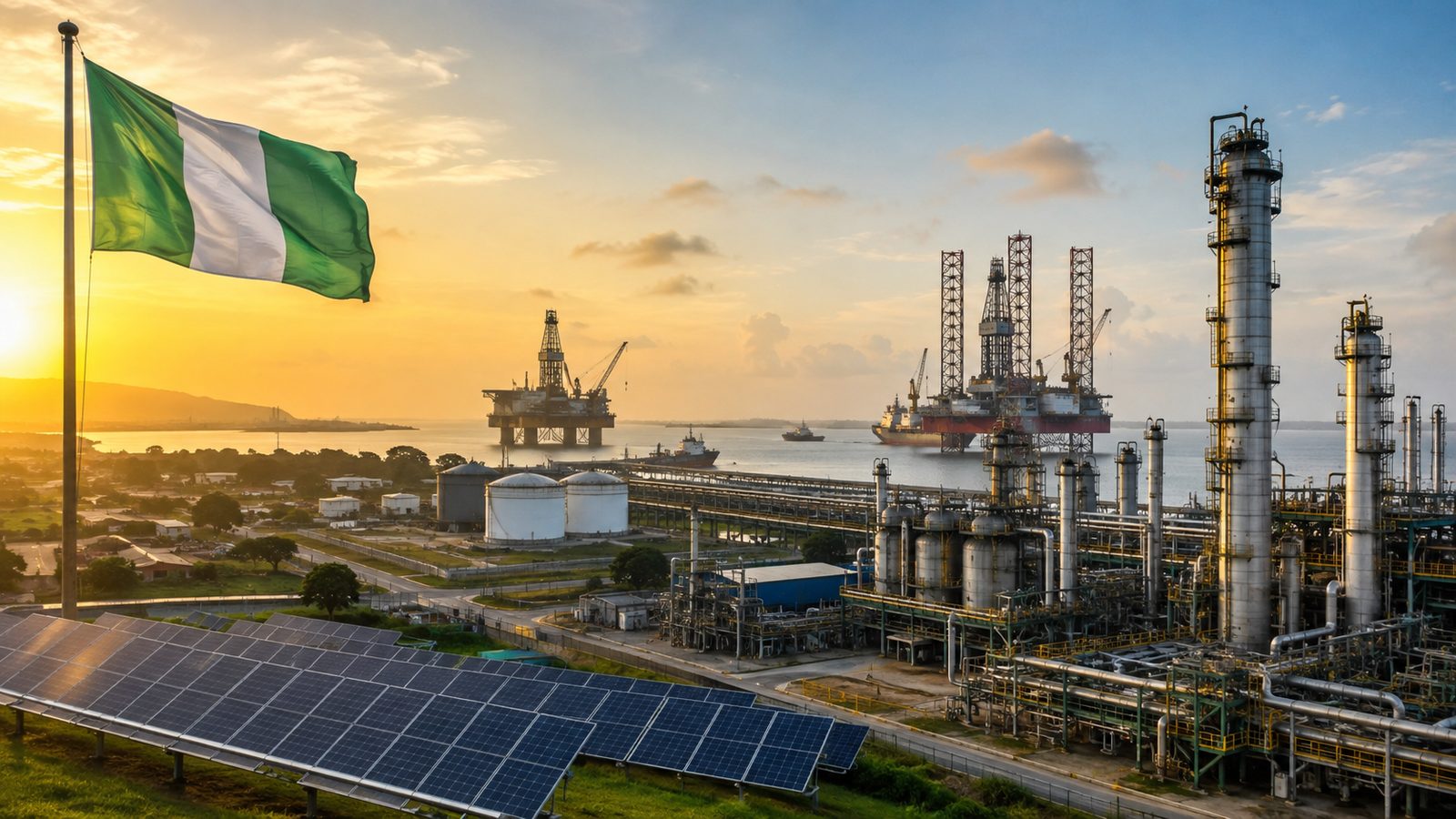
Nigeria has formally begun its partnership with the International Energy Agency, opening a new channel for investment, technical cooperation and energy policy as Africa’s most populous country seeks to expand oil, gas, electricity and renewable energy development.
The agreement signed in Abuja marks the operational start of Nigeria’s status as an IEA Association Country and gives the country closer access to the agency’s expertise, data and international energy networks.
The partnership comes as Nigeria seeks to attract more capital into an energy sector that remains central to its economy but has struggled with infrastructure constraints, production disruptions, unreliable electricity supplies and investment uncertainty. IEA Executive Director Fatih Birol said Nigeria could potentially double energy investment within five years, a projection that raises expectations for what closer cooperation with the Paris-based agency could deliver.
A new energy partnership
Nigeria’s admission into the IEA family was unanimously approved by the agency’s Governing Board in July, making it one of the latest countries to join the Association programme. The IEA said the move deepens its cooperation with a major oil and gas producer while bringing greater attention to Nigeria’s challenges around energy access, affordability and the transition toward cleaner energy systems.
The agreement signed in Abuja establishes a Joint Work Programme covering several areas of Nigeria’s energy economy. These include energy data, policy development, investment, gas, electricity, energy efficiency, renewable energy and energy security.
For Nigeria, the significance extends beyond membership itself. Better energy data could help policymakers and investors assess production, consumption and infrastructure needs more accurately, while technical cooperation could support reforms intended to make projects more attractive to private capital.
Vice President Kashim Shettima described the country’s admission as a significant milestone and linked the development to the government’s broader economic reform programme. President Bola Tinubu’s administration has sought to attract investment by changing fuel subsidy policy, restructuring the energy market and improving the operating environment for oil and gas companies.
Investment at the centre
The prospect of higher investment is perhaps the most immediate economic opportunity created by the partnership.
Birol said Nigeria could double energy investment over the next five years, pointing to the country’s large oil, gas and renewable energy resources and the growing international demand for reliable energy suppliers. He also argued that the current global energy environment has increased the value of dependable producers as disruptions linked to geopolitical conflicts continue to affect markets.
Nigeria has already begun attracting major investment commitments. The Petroleum Resources Ministry said the country had secured more than $10 billion in Final Investment Decisions over the previous three years, reflecting renewed interest in its oil and gas industry.
The challenge will be turning announced commitments into sustained production, infrastructure and jobs. Nigeria’s energy sector has long attracted investors because of its large reserves, but companies have also faced problems including crude theft, pipeline damage, regulatory uncertainty and delays in project development.
The IEA relationship could help address some of these weaknesses by providing policy advice and internationally comparable energy data. For investors, stronger information and clearer policy signals can reduce uncertainty when assessing long-term projects.
Nigeria targets 3 million barrels
Oil remains central to Nigeria’s ambitions despite growing attention to gas and renewable energy.
The government is targeting crude oil production of around 3 million barrels per day by the end of the decade. That would represent a substantial increase from recent production levels. Nigeria’s oil output rose to about 1.72 million barrels per day in the second quarter of 2026, up from 1.55 million barrels per day in the previous quarter, according to the National Bureau of Statistics data cited by Reuters.
Achieving the 3 million barrel target will require more than new investment. Nigeria must maintain production from existing fields while bringing new projects online and reducing losses caused by theft, sabotage and operational disruptions.
Security is therefore likely to remain an important part of the energy partnership. Higher output cannot be sustained if producers are unable to move crude reliably from fields to export terminals or refineries.
The government has also said it wants to increase gas production to 10 billion standard cubic feet per day by the end of the decade. That objective reflects Nigeria’s effort to use its substantial gas resources not only for exports but also to improve domestic electricity generation and industrial development.
Gas offers another opportunity
Nigeria’s gas industry could become one of the biggest beneficiaries of deeper international cooperation.
The country holds some of Africa’s largest natural gas resources, yet insufficient infrastructure has limited its ability to fully commercialise them. Expanding gas processing, pipelines and liquefied natural gas capacity could provide additional export earnings while supplying domestic industries with more reliable energy.
Nigeria is also pursuing regional gas infrastructure projects, including the Trans-Saharan Gas Pipeline, the Africa-Atlantic Gas Pipeline and the expansion of the West African Gas Pipeline network. These projects could strengthen Nigeria’s role as a regional energy supplier if financing and construction challenges are overcome.
The IEA partnership could provide technical and policy support as Nigeria attempts to balance gas development with pressure to reduce methane emissions and prepare for a changing global energy market.
That balance will be increasingly important. International investors are becoming more selective about fossil fuel projects, while African countries continue to argue that natural gas remains necessary to support industrialisation and expand electricity access.
Electricity remains a major test
Nigeria’s ambition to become an energy powerhouse will ultimately depend on whether it can provide reliable electricity to households and businesses.
The country’s large oil and gas resources have not translated into universally dependable power supplies. Generation capacity, transmission constraints and distribution problems have repeatedly limited economic activity.
The IEA has identified electricity access as one of Nigeria’s major energy challenges, alongside clean cooking and affordability. The agency says Nigeria is also one of the world’s fastest-growing markets for decentralised solar solutions, highlighting the role renewable energy could play in reaching communities underserved by the national grid.
This gives the new partnership a broader significance than oil production alone.
Nigeria can potentially use increased investment to develop gas-fired generation, transmission networks, distributed solar systems, battery storage and other technologies. Greater diversification could make the energy system more resilient while helping businesses reduce their dependence on expensive and unreliable alternatives.
Renewables will shape the transition
Nigeria’s energy strategy is also evolving as the global economy moves toward cleaner technologies.
Solar power has expanded rapidly in Nigeria, particularly through decentralised systems that provide electricity outside the traditional grid. The IEA has highlighted the country’s growing renewable energy market as an important part of its future energy mix.
For Nigeria, the transition presents both an opportunity and a challenge. The country wants to monetise its oil and gas resources while also expanding renewable energy and improving energy efficiency.
The IEA Association framework is designed to cover precisely this wider energy landscape. The agency’s modern mandate extends beyond traditional oil security to include clean energy technology, energy efficiency and critical minerals needed for the energy transition.
Nigeria’s participation therefore gives it a platform to engage in global energy discussions while pursuing its own development priorities.
Can Nigeria become an energy powerhouse?
Nigeria has the resources to become one of Africa’s most influential energy economies. It has substantial oil and gas reserves, a large domestic market, a growing renewable energy sector and a strategic position within West Africa.
The more difficult question is whether it can consistently convert those advantages into investment, production and reliable electricity.
The IEA partnership cannot solve those problems by itself. Nigeria will still need to maintain policy stability, strengthen infrastructure, improve security and ensure that energy reforms translate into commercially viable projects.
But the relationship provides an important new source of technical expertise and international credibility at a time when Nigeria is seeking to reposition its energy industry.
The country is also entering the partnership at a significant moment. Global energy markets are being reshaped by geopolitical tensions, changing investment patterns, energy transition policies and growing demand for secure supplies.
Birol’s prediction that Nigerian energy investment could double within five years will therefore be closely watched. If the country can sustain its reforms and deliver the infrastructure needed to support new projects, the additional capital could accelerate development across oil, gas, electricity and renewables.
For Nigeria, the goal is not simply to produce more crude. It is to build an energy system capable of powering industrial growth, supporting exports and expanding access to affordable electricity.
The IEA partnership gives that ambition a stronger international platform. Whether it becomes a turning point for Nigeria’s energy sector will depend on what happens after the agreement is signed, when investment decisions, production targets and infrastructure projects must move from policy commitments to results.
For a country seeking to become Africa’s energy powerhouse, that implementation will be the real measure of success.

More from Energy

Somalia oil and gas: Why global energy companies are watching the Horn of Africa
Turkish drillship Çağrı Bey pushes deep offshore Somalia as global energy companies watch Mogadishu's oil exploration bets to revive its fragile economy.
South Africa’s fuel shock: Who really profits?
South Africa’s fuel shock exposes the companies, supply chains and investment choices shaping Africa’s energy security and economic future.
Africa has the sun. Who owns the solar boom?
Africa’s solar boom is reshaping energy markets as investors, governments and African businesses compete for ownership, profits and influence continentwide.