
How to Stay Fit Without a Gym: A Practical Fitness Guide for Africans
For millions of Africans, gym membership is either unavailable or financially out of reach. But staying physically active does not require fancy equipment or a monthly subscription. Across the continent, people have maintained remarkable physical fitness through traditional activities, community sports, and everyday movement. This guide offers practical, no-cost fitness strategies tailored to African lifestyles.
Why Physical Activity Matters
The World Health Organization recommends at least 150 minutes of moderate-intensity aerobic activity per week for adults. Regular physical activity reduces the risk of chronic diseases such as type 2 diabetes, hypertension, and heart disease — all of which are increasingly prevalent across sub-Saharan Africa and North Africa. Beyond physical health, exercise significantly improves mental wellbeing, reduces anxiety, and boosts energy levels.
Bodyweight Exercises You Can Do at Home
Bodyweight training requires zero equipment and can be done in a small space — your bedroom, courtyard, or rooftop. Here is a simple weekly routine:
Monday, Wednesday, Friday — Strength Circuit (30 minutes)
- Push-ups — 3 sets of 10–15 reps (builds chest, shoulders, and triceps)
- Squats — 3 sets of 15–20 reps (targets thighs, glutes, and core)
- Lunges — 3 sets of 10 reps per leg (improves balance and leg strength)
- Plank — Hold for 30–60 seconds (strengthens the core and back)
- Mountain Climbers — 3 sets of 20 reps (combines cardio with core work)
- Glute Bridges — 3 sets of 15 reps (targets the lower back and glutes)
Tuesday, Thursday — Cardio Day (30–45 minutes)
- Brisk walking or jogging in your neighbourhood
- Jump rope (skipping) — one of the most effective cardiovascular exercises available
- Dancing to African music — surprisingly effective and highly enjoyable
- Cycling if a bicycle is available
Saturday — Active Rest
- Light stretching or yoga
- A leisurely walk with family or friends
- Traditional games such as wrestling, football, or community sports
Leverage African Traditions for Fitness
Many traditional African activities are outstanding forms of physical exercise:
- Farming and gardening — Digging, planting, and harvesting are forms of full-body strength training
- Traditional dance — Whether it is Gwara Gwara, Afrobeats, or Sabar, dancing elevates the heart rate and improves coordination
- Community sports — Football (soccer), basketball, and volleyball are free and widely accessible
- Water carrying — In many rural communities, carrying water engages the core, back, and legs
Tips for Staying Consistent
The biggest challenge in any fitness journey is consistency. Here are practical strategies that work:
- Exercise in the early morning or evening — Avoid the midday heat in tropical climates
- Work out with a friend or group — Accountability dramatically improves long-term adherence
- Set small, realistic goals — Aim to exercise three times per week before increasing frequency
- Track your progress — Even a simple notebook to record workouts can keep you motivated
- Rest and recover — Sleep 7–9 hours per night and allow muscles time to recover between sessions
Nutrition to Support Your Fitness Goals
Exercise alone is not enough — what you eat matters enormously. Focus on:
- Adequate protein from legumes (beans, lentils, cowpeas), eggs, fish, or lean meat
- Complex carbohydrates from sorghum, millet, fonio, sweet potatoes, and plantains
- Staying well hydrated — drink at least 2 litres of water daily, more if exercising in the heat
- Including vegetables and fruits at every meal for micronutrients and fibre
When to Seek Medical Advice
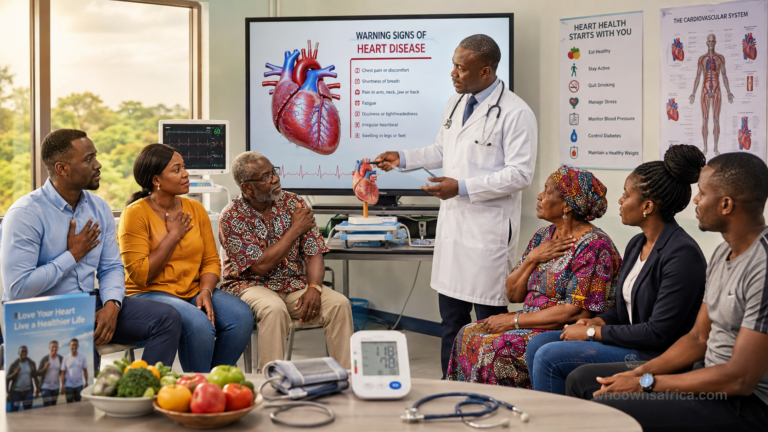
Before starting a new exercise routine, especially if you are over 40, have a chronic condition, or have been inactive for a long time, consult a healthcare professional. Stop exercising and seek medical attention if you experience chest pain, severe shortness of breath, dizziness, or unusual pain.
Disclaimer: This content is for general informational purposes only and is not a substitute for professional medical or fitness advice. Consult a qualified healthcare provider before starting any new exercise programme.