

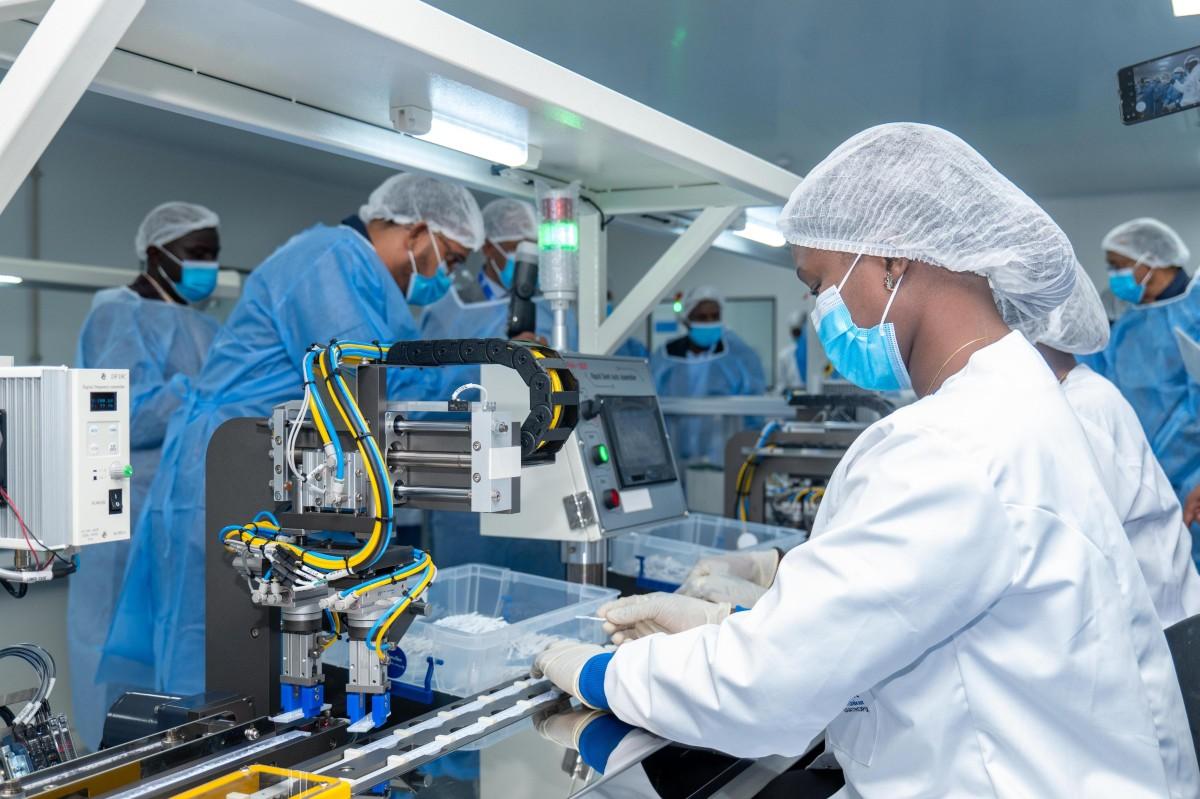
Africa’s greatest weakness in healthcare may not be its shortage of hospitals, doctors or medical research. It is the fact that a continent of more than a billion people still depends overwhelmingly on other regions to manufacture the vaccines and medicines that keep its population alive. That dependence is not simply a public health problem. It is an industrial, economic and strategic vulnerability that African governments can no longer afford to ignore.
As African leaders, scientists, policymakers and international development partners gather in Addis Ababa, Ethiopia, for the Fifth International Conference on Public Health in Africa (CPHIA 2026), a bigger question deserves attention than the conference’s diplomatic declarations: can Africa build a pharmaceutical industry capable of supplying its own population, competing internationally and protecting the continent during the next global health emergency?
The ambition is substantial. The African Union wants the continent to manufacture at least 60% of its vaccine requirements locally by 2040. Yet Africa currently produces only around 1% of the vaccines it uses, according to Africa CDC.
The distance between those figures reveals the scale of the challenge. It also exposes an opportunity that extends far beyond hospitals and vaccination programmes. If pursued intelligently, pharmaceutical manufacturing could become one of Africa’s most important industrial development projects.
The question is no longer whether Africa needs greater control over its medicines. It is whether its governments can build the institutions, markets, infrastructure and scientific capabilities required to achieve it.
The cost of depending on imported medicines
Africa’s dependence on imported medical products did not emerge overnight. It reflects decades of industrial underinvestment, fragmented markets, limited research financing and pharmaceutical supply chains historically concentrated in Europe, North America and Asia.
The World Health Organization’s African Region reported in 2024 that countries in the region import between 70% and 100% of finished pharmaceutical products. Dependence is even more pronounced in vaccines, with approximately 99% sourced from outside the region.
These figures illustrate a structural weakness.
A country may have an established immunisation programme, qualified medical professionals and functioning hospitals, but its ability to protect citizens can still depend on decisions made by pharmaceutical manufacturers thousands of kilometres away.
The COVID-19 pandemic demonstrated the consequences. When global demand for vaccines increased, wealthier countries secured substantial supplies while many African countries struggled to obtain timely access.
The problem was not simply that Africa lacked money to purchase vaccines. It lacked sufficient domestic manufacturing capacity and bargaining power within an international market experiencing extraordinary pressure.
That experience changed the conversation about healthcare independence.
African governments increasingly recognise that access to essential medicines cannot depend entirely on the goodwill, commercial priorities or production schedules of external suppliers.
Pharmaceutical manufacturing has consequently become a matter of national security, economic resilience and continental sovereignty.
Why the 2040 vaccine target matters
The African Union’s ambition to manufacture 60% of the continent’s vaccine requirements locally by 2040 represents one of the most significant industrial objectives in African healthcare.
Africa CDC established the Partnerships for African Vaccine Manufacturing (PAVM) in 2021 to accelerate this transformation.
The ambition is not to eliminate international pharmaceutical partnerships. Rather, it is to develop sufficient African capacity to ensure that the continent is not permanently positioned at the end of global supply chains.
The distinction matters.
Manufacturing vaccines involves much more than constructing factories. It requires scientific research, biological materials, specialised production equipment, quality assurance, regulatory approval, skilled personnel and reliable distribution systems.
A vaccine manufacturer must demonstrate that its products are consistently safe, effective and manufactured to internationally recognised standards.
This means African countries must invest simultaneously in industrial infrastructure and scientific institutions.
The 2040 deadline should therefore be understood as a continental development programme rather than an isolated healthcare target.
Addis Ababa and the politics of health sovereignty
Addis Ababa is hosting CPHIA 2026 from November 23 to 27 under the theme of African health security and sovereignty.
Co-hosted by Africa CDC and the Ethiopian government, the conference is expected to bring together more than 30,000 participants, including policymakers, researchers, healthcare professionals, innovators and development partners.
Its agenda covers local manufacturing, sustainable health financing, pandemic preparedness, digital health, artificial intelligence and the reform of global health institutions.
The timing is important.
African healthcare systems face competing pressures. Governments must finance essential services, manage recurring disease outbreaks, address infrastructure shortages and respond to growing demands from expanding populations.
Meanwhile, international health financing is becoming less predictable.
This creates an uncomfortable reality: countries that depend heavily on external financing and imported medical products have limited control over the continuity of essential healthcare services.
However, health sovereignty must mean more than replacing foreign donors with domestic government expenditure.
It should involve African institutions deciding priorities, building productive capacity, strengthening scientific research and negotiating international partnerships from a position of greater strength.
The Addis Ababa conference provides an opportunity to advance that agenda. But the real measure of success will be what happens after the delegates leave.
Africa has started building the manufacturing foundation
It would be misleading to suggest that Africa is starting from nothing.
Several countries have established pharmaceutical industries, research institutions and vaccine manufacturing initiatives that could contribute to a continental production network.
South Africa has an established pharmaceutical manufacturing base, including companies involved in vaccine and biological product development. Its experience provides an important foundation for expanding regional manufacturing capacity.
Senegal is another important example. The Institut Pasteur de Dakar has been involved in vaccine production for decades and is developing its capacity to manufacture vaccines at greater scale, including through the Madiba vaccine manufacturing facility.
Rwanda has also positioned itself as an emerging biotechnology and pharmaceutical manufacturing hub, pursuing international partnerships to develop advanced vaccine production capabilities.
Meanwhile, Ghana is among the countries participating in the expansion of African vaccine manufacturing.
These developments matter because they demonstrate that vaccine production is not beyond Africa’s technological or scientific capabilities.
A June 2026 assessment by the Clinton Health Access Initiative (CHAI) identified six manufacturers with facilities and active technology transfers underway. It also reported that 11 African-made vaccines were expected to reach the continental market within five years.
That is encouraging progress, but it should not be confused with an established, self-sustaining pharmaceutical industry.
Building a factory is one achievement. Producing vaccines consistently, securing international regulatory approval, attracting customers and competing on price are considerably more difficult.
Africa’s next challenge is to move from manufacturing announcements to commercially viable production.
The missing link is a sustainable pharmaceutical market
One of the least discussed obstacles to African pharmaceutical independence is the economics of manufacturing.
Pharmaceutical factories require substantial capital investment. They also need predictable orders, reliable supplies of raw materials, specialised equipment, trained personnel and continuous quality-control operations.
A manufacturer cannot remain competitive if its production facilities operate below capacity because governments purchase medicines and vaccines inconsistently.
This is particularly important in Africa, where individual national markets may be too small to support expensive manufacturing operations.
A factory producing vaccines for a single country could struggle to achieve the economies of scale required to compete with established international manufacturers.
The solution lies partly in regional integration.
Through the African Continental Free Trade Area (AfCFTA), African countries have an opportunity to create larger markets for locally manufactured medical products.
Governments could also strengthen pooled procurement arrangements, allowing countries to combine purchasing requirements and negotiate longer-term supply agreements with African manufacturers.
This would provide businesses with greater certainty when deciding whether to invest in new facilities.
It could also strengthen the negotiating position of African governments when purchasing products from international suppliers.
However, regional trade agreements alone will not solve the problem. Governments must address customs barriers, product registration delays, inconsistent standards and restrictions that prevent medicines from moving efficiently across borders.
The underlying lesson is straightforward: Africa needs a continental pharmaceutical market, not 55 disconnected national markets.
The African Medicines Agency could change the industry

Another important part of the pharmaceutical independence debate concerns regulation.
A medicine that is manufactured in one African country may still face lengthy approval procedures before it can be sold in another.
Different national regulatory requirements increase administrative costs and create uncertainty for manufacturers seeking to expand across borders.
This is where the African Medicines Agency (AMA) becomes particularly important.
Established through an African Union treaty that entered into force in November 2021, the agency is intended to strengthen regulatory cooperation, improve medicine safety and harmonise regulatory processes across the continent.
By October 2026, 33 African Union member states had ratified its founding treaty.
In November 2026, the World Health Organization reported that 10 African national medicines regulatory authorities had achieved Maturity Level 3, demonstrating established and functioning regulatory systems.
These developments are important because international confidence in African pharmaceutical products depends on credible scientific oversight.
Manufacturers must demonstrate that medicines meet stringent safety, quality and efficacy requirements. Regulators must also be able to inspect factories, monitor adverse reactions and prevent counterfeit or substandard products from entering markets.
AMA could make the regulatory environment more predictable, but its effectiveness will depend on national governments supporting its work and respecting common standards.
Regulatory harmonisation should not become a shortcut that compromises patient safety. Its purpose should be to make rigorous oversight more efficient and consistent.
Pharmaceutical independence is also an economic opportunity
The strongest argument for African pharmaceutical manufacturing may ultimately be economic.
The continent’s healthcare requirements represent a substantial market. UN Trade and Development (UNCTAD) has highlighted the concentration of pharmaceutical manufacturing in a relatively small number of African countries.
Its research indicates that eight countries account for approximately 85% of the continent’s roughly 690 pharmaceutical manufacturing plants.
This concentration reveals an opportunity to distribute industrial capacity more strategically.
Developing pharmaceutical manufacturing clusters could generate employment for chemists, pharmacists, engineers, laboratory technicians, software specialists and supply-chain professionals.
It could also stimulate demand for supporting industries, including packaging, industrial equipment, logistics, laboratory services and specialised infrastructure.
The benefits would extend into higher education and scientific research.
Universities could develop stronger partnerships with manufacturers, creating pathways for graduates to move from academic research into commercial pharmaceutical development.
African technology companies could contribute through laboratory automation, pharmaceutical data management, supply-chain tracking and artificial intelligence-assisted research.
This would help create a more sophisticated industrial economy.
There is also an opportunity for African manufacturers to become suppliers to other developing markets, particularly where regional production can improve the availability of affordable generic medicines and essential vaccines.
But this opportunity requires careful industrial policy. Governments should avoid spending public money on factories that cannot compete, operate efficiently or deliver affordable products.
The objective should be commercially sustainable manufacturing that produces measurable public health benefits.
Why medicines deserve as much attention as vaccines
The vaccine manufacturing debate is important, but Africa’s pharmaceutical independence cannot be measured by vaccine production alone.
Millions of Africans require regular access to antibiotics, malaria treatments, medicines for hypertension, diabetes treatments and other essential pharmaceutical products.
Dependence on imported active pharmaceutical ingredients, the substances responsible for the therapeutic effects of medicines, creates another vulnerability.
Even when a medicine is packaged or assembled locally, its essential ingredients may still originate from overseas suppliers.
This means that domestic packaging does not necessarily represent genuine pharmaceutical independence.
Africa must gradually develop capabilities across the pharmaceutical value chain, including research, formulation, production of active ingredients, quality testing, packaging and distribution.
The WHO’s regional framework for 2025 to 2035 recognises this wider challenge. It establishes ambitions for increasing local medicine production, strengthening regulatory institutions, expanding the pharmaceutical workforce and developing technology-transfer partnerships.
The distinction between producing finished products and controlling critical parts of the supply chain deserves greater attention from policymakers.
A continent that manufactures tablets but imports nearly every essential ingredient remains exposed to international supply disruptions.
The difficult questions governments must answer
The road towards 2040 will involve significant obstacles.
Reliable electricity is essential for pharmaceutical production, particularly for facilities requiring tightly controlled temperatures and uninterrupted manufacturing processes.
Access to affordable long-term financing is another concern. Pharmaceutical investments often require substantial capital and extended periods before companies become profitable.
Governments must therefore create financing arrangements that attract private investors without transferring excessive commercial risks to taxpayers.
There is also a shortage of specialised technical expertise in several areas of advanced pharmaceutical production.
Africa will need to invest in scientific education, research institutions, clinical trials, laboratory infrastructure and professional training.
Technology transfer must also be approached strategically.
International partnerships can accelerate progress, but agreements should provide opportunities for African institutions to develop their own technical knowledge rather than remain permanently dependent on foreign expertise.
Intellectual property arrangements, licensing conditions and access to production technologies will influence how quickly African manufacturers can develop independent capabilities.
Finally, affordability must remain central.
Local production is not automatically cheaper than imported medicines. Factories operating below capacity, expensive financing, imported ingredients and inefficient procurement can make locally manufactured products more expensive.
Governments must evaluate manufacturing investments according to their long-term public health and economic benefits, rather than assuming that every domestic factory represents progress.
What Africa must do before 2040
Achieving pharmaceutical independence will require more than ambitious targets. It will require coordinated decisions across government, business, science and regional institutions.
Five priorities deserve particular attention.
- Establish regional manufacturing hubs: Countries with stronger industrial infrastructure should develop specialised production facilities serving multiple African markets.
- Guarantee predictable demand: Governments should introduce transparent, long-term procurement agreements that give qualified African manufacturers confidence to invest.
- Strengthen scientific research: Universities and research institutions need greater investment in biotechnology, vaccine development, clinical trials and pharmaceutical innovation.
- Accelerate regulatory integration: The African Medicines Agency and national regulators must create a trusted system that supports efficient approvals without compromising quality.
- Mobilise African capital: Governments, development banks, pension funds and private investors should explore responsible financing models for pharmaceutical infrastructure and research.
These priorities should be accompanied by measurable milestones. Governments should publish information about manufacturing capacity, production volumes, local procurement, product quality, prices and employment.
Without transparent reporting, the 2040 ambition risks becoming another continental development target that receives political attention without sufficient implementation.
Kenya and East Africa’s opportunity
For East Africa, pharmaceutical manufacturing offers an opportunity to become an important contributor to Africa’s healthcare transformation.
Kenya has an established pharmaceutical manufacturing sector, research institutions and a regional position that could support distribution across neighbouring markets.
However, its long-term potential will depend on moving beyond conventional pharmaceutical formulation and packaging towards more sophisticated manufacturing capabilities.
Kenya could strengthen its position by investing in active pharmaceutical ingredients, biotechnology, vaccine research, specialised laboratory infrastructure and pharmaceutical skills development.
Regional cooperation with Uganda, Tanzania, Rwanda and other East African Community members could create a larger market for manufacturers.
The region could also benefit from coordinated procurement, shared research facilities and more consistent regulatory requirements.
For Kenyan businesses, the opportunity extends beyond manufacturing medicines. Logistics companies, technology firms, packaging businesses, laboratory service providers and specialist engineering companies could all participate in the emerging pharmaceutical value chain.
This is an opportunity for African industrial policy to create businesses that serve essential public needs while generating commercial returns.
The real test begins after Addis Ababa
CPHIA 2026 arrives at an important moment in Africa’s healthcare development.
The conference offers African governments an opportunity to examine the relationship between healthcare financing, pharmaceutical manufacturing, scientific innovation and continental economic integration.
But conferences do not manufacture vaccines. Political declarations do not produce antibiotics. Investment announcements do not automatically create functioning pharmaceutical industries.
The real work will happen in laboratories, manufacturing facilities, universities, regulatory institutions and government procurement departments.
It will also happen in the financial decisions governments make when allocating scarce public resources.
The continent must resist the temptation to measure progress through the number of factories announced or partnerships signed. What matters is how many quality-assured products are actually manufactured, how reliably they reach patients and whether ordinary Africans can afford them.
There is also a need for international cooperation. Africa does not have to reject foreign pharmaceutical companies, technology providers or development partners to become more independent. It needs partnerships that transfer knowledge, develop local expertise and create genuine African ownership of productive capacity.
Who Owns Africa’s perspective: Pharmaceutical independence should become a central pillar of Africa’s industrial development strategy. The ability to manufacture vaccines and medicines is not merely a healthcare achievement. It represents scientific capability, economic competitiveness, bargaining power and the ability to protect populations during periods of international uncertainty.
By 2040, Africa should aspire to be more than a large market for medicines manufactured elsewhere. It should be a continent capable of researching, developing, producing and distributing a substantial share of the medical products its people need.
The 60% vaccine manufacturing target provides a measurable ambition. But the larger objective is to build an industry that can survive beyond political cycles, attract investment, support scientific innovation and deliver affordable healthcare.
Ultimately, the question is not whether Africa can manufacture its own medicines. The continent has already demonstrated important elements of that capability.
The more consequential question is whether African governments will cooperate sufficiently, invest consistently and create the conditions for that capability to become an enduring continental industry.
The next pandemic, medicine shortage or international supply disruption will not wait until 2040. Africa’s pharmaceutical independence must therefore begin with decisions made today.

More from Health

Zambia draws a line on data and still secures $1.5 billion from Washington
Zambia's health deal with Washington shows how African states can demand development finance while protecting data, resources and negotiating sovereignty.

Ebola reaches Kenya: Is America’s retreat from Africa making the crisis worse?
Kenya's Ebola case exposes how weakened global solidarity, shrinking health diplomacy and Africa's interconnected borders can turn local outbreaks into regional emergencies.

Kenya’s new invisible front: Ebola puts East Africa’s borders under pressure
Kenya’s first imported Ebola case exposes the limits of border screening and challenges East Africa to rethink health security, mobility and preparedness.