

Kenya’s first confirmed Ebola case is not simply a Kenyan health emergency. It is a warning about what happens when a virus moves faster than the political willingness to confront it.
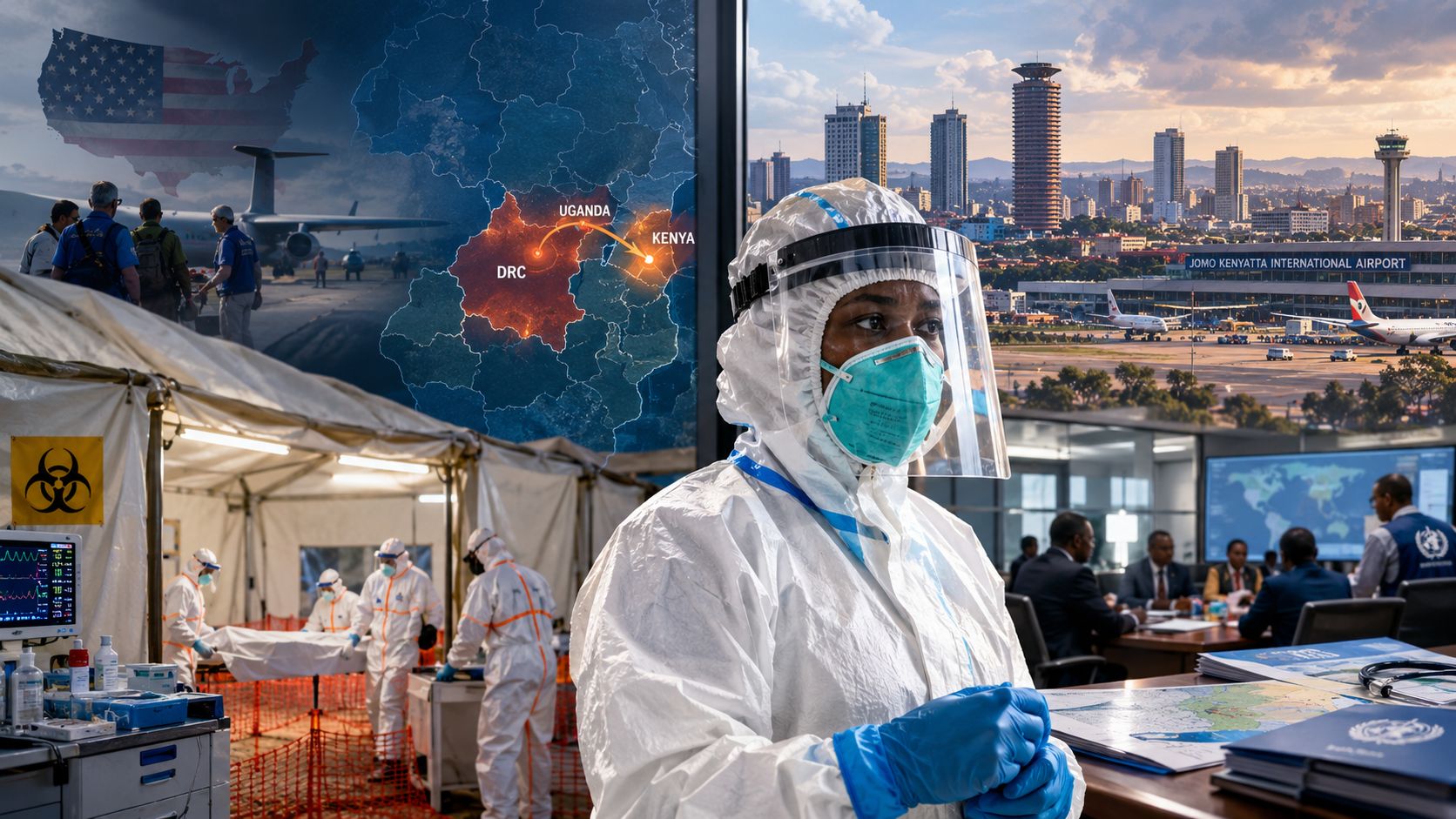
A Kenyan citizen who had lived in the Democratic Republic of Congo for seven years became ill, travelled by road from Congo through Uganda and eventually flew to Nairobi. He died after being admitted to a Nairobi hospital, prompting Kenyan authorities to begin contact tracing and identify 28 contacts while also working to trace passengers and crew on his flight.
That chain of movement matters.
Ebola does not understand borders, customs posts or foreign-policy doctrines. It follows people. It travels through families, hospitals, roads, airports and commercial networks. And in eastern and central Africa, those networks are deeply interconnected.
Kenya is therefore not an isolated endpoint on an epidemiological map. Nairobi is a regional transport and commercial hub. Uganda sits between Kenya and Congo. Congo’s eastern provinces are tied to neighbouring countries through trade, migration, displacement and humanitarian movement.
The virus has already demonstrated this logic.
The current outbreak began in Congo and spread into Uganda, where imported cases were followed by secondary transmission among contacts and health workers. Uganda subsequently moved toward ending its outbreak after 20 confirmed cases and two deaths, but the country’s experience showed how quickly cross-border movement can turn an outbreak in one country into a problem for another.
Kenya’s case now makes that lesson impossible to ignore.
This is bigger than Ebola
The instinct in an outbreak is to focus on the pathogen.
That is understandable, but incomplete.
The more revealing story is the infrastructure surrounding the pathogen.
The Ebola outbreak in Congo has become the country’s largest and deadliest recorded Ebola epidemic. By early October, government data showed more than 8,300 confirmed cases and more than 4,000 deaths.
Those numbers are not merely a measure of disease.
They are a measure of the consequences of delayed detection, insecurity, weak health infrastructure, community mistrust, inadequate funding and the enormous difficulty of delivering healthcare in territory where armed conflict continues to disrupt access.
That is why Kenya’s case should not be interpreted simply as a failure of Kenyan border screening.
The patient passed routine screening at Jomo Kenyatta International Airport and was later taken to hospital, where he was isolated after showing serious symptoms. Kenyan officials then moved quickly into contact tracing and surveillance. Kenya has trained thousands of health workers for Ebola preparedness.
In other words, the important question is not whether Kenya could have created an invisible wall around itself.
It is whether Africa and its international partners built enough capacity to stop the fire before it reached the next room.
America First meets an African epidemic
This is where the American dimension becomes uncomfortable.
The Trump administration’s “America First” approach has not meant that the United States disappeared completely from the Ebola response. Washington has continued to provide money, including additional funding for international epidemic preparedness.
The United States also retains personnel on the ground.
But money and personnel are not the same thing as leadership.
Recent reporting has highlighted how the administration has changed the way Washington handles American medical workers exposed to Ebola in Congo. Instead of routinely bringing exposed Americans back to U.S. facilities, the administration has increasingly directed them toward treatment or quarantine arrangements outside the United States.
A major quarantine facility in Kenya was established, but its limited use has raised questions about whether the strategy is actually strengthening the wider response.
The policy has also affected the willingness of American medical workers to serve in Congo.
Americans once accounted for a substantial share of staff at some Ebola treatment centres in Congo. That presence has fallen considerably, while quarantine requirements have made deployment more difficult and expensive.
This is the paradox.
A policy designed to keep Ebola away from America can make it harder to put experienced American health workers where Ebola is already spreading.
And the most effective border control may not be a border control at all.
It may be a doctor in Bunia.
The price of stepping back
There is a legitimate argument for protecting the American public.
No responsible government should casually expose its population to a dangerous infectious disease. Governments have a duty to manage risk, protect healthcare systems and prevent avoidable transmission.
But epidemics create an unusual strategic reality.
Distance is an illusion.
The United States can restrict flights. It can quarantine citizens. It can build facilities. It can tighten entry procedures.
None of those measures changes the conditions in an overcrowded treatment centre in eastern Congo.
None stops an infected person from crossing an African border before symptoms are recognised.
None replaces a laboratory in a remote community.
None substitutes for a trained local health worker who can persuade a frightened family to accept treatment.
The fundamental lesson of Ebola is that containment works best near the source.
That was the logic behind the American response to the West African Ebola crisis in 2014. The United States then treated stopping the virus in West Africa as part of protecting Americans at home, deploying substantial resources and personnel to support containment.
The contrast with today’s approach is therefore striking.
America once treated disease control abroad as part of American security.
The emerging question is whether Washington now sees it primarily as somebody else’s responsibility.
Africa cannot outsource its security
But there is another uncomfortable truth.
Africa cannot permanently depend on Washington, Brussels or Geneva to finance its health security.
The continent’s dependence on external assistance has always been a vulnerability.
When donors move, priorities change. When elections occur, budgets shift. When geopolitical attention moves elsewhere, programmes can disappear.
A disease does not care.
That is why the Ebola response should also be understood as an argument for African strategic autonomy.
Africa CDC exists precisely because the continent needs institutions capable of coordinating disease surveillance, laboratory capacity, emergency response and cross-border preparedness.
Yet the funding problem remains severe.
Donors have pledged hundreds of millions of dollars toward the Ebola response in Congo and Uganda, but a much smaller amount has actually reached affected regions.
That gap between pledges and money is one of the most consequential numbers in this crisis.
Governments announce solidarity easily.
Viruses test whether that solidarity has a budget.
Kenya’s strategic test
For Kenya, this outbreak arrives at a particularly important moment.
Nairobi is one of Africa’s most important diplomatic, commercial and humanitarian centres. It hosts international organisations, regional institutions and a large aviation network connecting East Africa with the rest of the continent and the world.
That makes Kenya vulnerable.
It also makes Kenya indispensable.
The country cannot isolate itself from Congo without damaging the movement of people and goods that supports the region. Nor can it afford to treat every traveller from an affected area as a threat.
The smarter response is stronger surveillance, faster diagnosis, transparent communication and regional coordination.
Kenya’s existing preparedness will now be tested under real conditions.
The identified contacts are only the beginning of that process. Authorities must establish the full chain of exposure, monitor people for the appropriate period and communicate clearly enough to prevent panic without minimising the risk.
That balance is crucial.
Ebola thrives in fear as much as it exploits weak systems.
When communities stop trusting authorities, contact tracing becomes harder. When healthcare workers fear infection, hospitals become dangerous places. When rumours replace credible information, families may hide sick relatives.
The response therefore has to be medical and political at the same time.
The deeper lesson for Africa
The most profound lesson from Kenya’s first case may have little to do with Kenya itself.
It is that Africa’s health security is continental security.
A crisis in Ituri can reach Kampala.
A case in Kampala can reach Nairobi.
A flight from Nairobi can connect the story to another continent.
The boundaries of African states remain politically real, but epidemics operate through networks rather than borders.
That should force a rethink of what African security means.
Security cannot only mean soldiers, weapons, intelligence and border posts.
It must also mean laboratories.
It must mean functioning hospitals.
It must mean disease surveillance.
It must mean paid health workers.
It must mean trusted public institutions.
And it must mean the ability to manufacture vaccines, diagnostics and medical equipment rather than waiting for wealthy countries to decide when Africa’s emergency deserves attention.
Washington should look beyond the border
The American retreat, if that is what the emerging policy ultimately becomes, should concern Washington for reasons that go beyond humanitarian principle.
Africa is not geographically remote from America’s interests.
The continent is home to rapidly growing populations, strategic minerals, major shipping routes, expanding cities and increasingly influential political institutions.
A weakened public-health system can become a humanitarian crisis, an economic crisis and eventually a geopolitical crisis.
The cost of prevention is usually measured in millions.
The cost of uncontrolled epidemics is measured in lives, lost trade, disrupted travel, weakened institutions and years of economic damage.
The United States therefore has a strategic reason to remain engaged.
But engagement should not mean returning to an old model in which Washington arrives with money and expertise while African governments remain dependent recipients.
The better model is partnership.
Africa needs the United States, Europe and other international partners.
But Africa also needs institutions that can act before outsiders arrive.
Kenya’s warning to the world
It would be wrong to claim that America’s policy caused Kenya’s Ebola case.
There is no evidence for that.
The patient travelled from Congo through Uganda before arriving in Nairobi. His journey reflects the movement of people across a region connected by roads, trade and aviation.
But it is equally wrong to pretend that international policy choices do not matter.
They determine how many doctors are willing to deploy.
They determine whether laboratories have supplies.
They determine whether vaccines are developed quickly.
They determine whether frightened health workers receive protection.
They determine whether an outbreak is confronted where it begins or managed only after it has travelled.
That is the real significance of Kenya’s first Ebola case.
It is not evidence that Africa has failed.
It is evidence that Africa’s interconnectedness has outgrown the old model of fragmented health security.
The cost of looking away
The world has repeatedly learned the same lesson from Ebola and repeatedly forgotten it.
Outbreaks are cheapest to control before they become regional crises.
The Democratic Republic of Congo has been carrying an extraordinary burden. Uganda demonstrated how quickly imported cases can test national systems. Kenya is now confronting its first confirmed case.
The question is what happens next.
If the response is fast, coordinated and properly funded, Kenya’s case could remain a contained event.
If resources arrive late, if health workers become scarce, if communities lose trust and if international partners retreat further behind their own borders, the consequences could be far greater.
That is why the debate over America’s role in Africa should not be reduced to whether Washington is giving enough money.
The more important question is whether the world’s most powerful countries understand that African health security is part of their own security.
Ebola has crossed into Kenya.
The virus did not ask for a visa.
Perhaps policymakers should stop thinking as though epidemics do.
For Who Owns Africa, that is the larger story: not simply where Ebola has travelled, but what the outbreak reveals about who is prepared to stand with Africa when the next crisis begins.

More from Health
Kenya’s new invisible front: Ebola puts East Africa’s borders under pressure
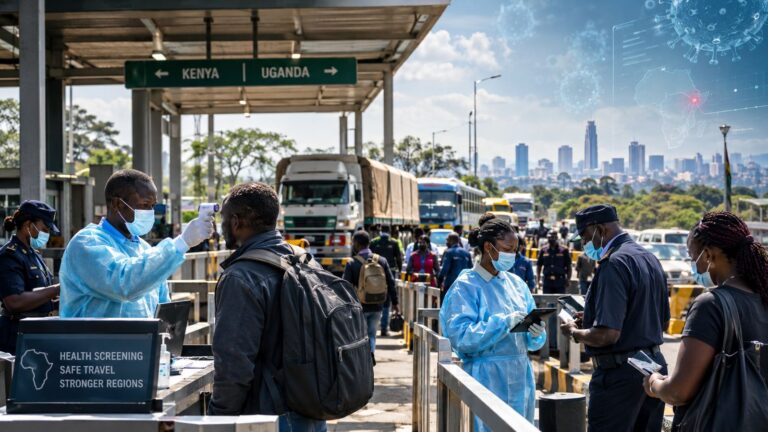
Kenya’s first imported Ebola case exposes the limits of border screening and challenges East Africa to rethink health security, mobility and preparedness.

Does health insurance in Africa really matter?
Across the continent, insurance schemes promise protection from medical bills, yet most people still pay from their own pockets.
DR Congo Ebola: Who controls the data behind Africa’s health security?
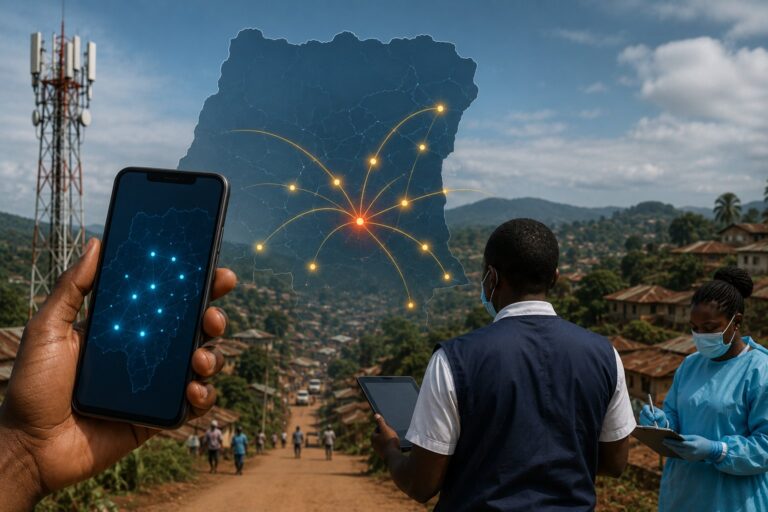
Congo’s Ebola response is turning telecom data into a public-health tool, raising questions over ownership, sovereignty, privacy and foreign influence.