

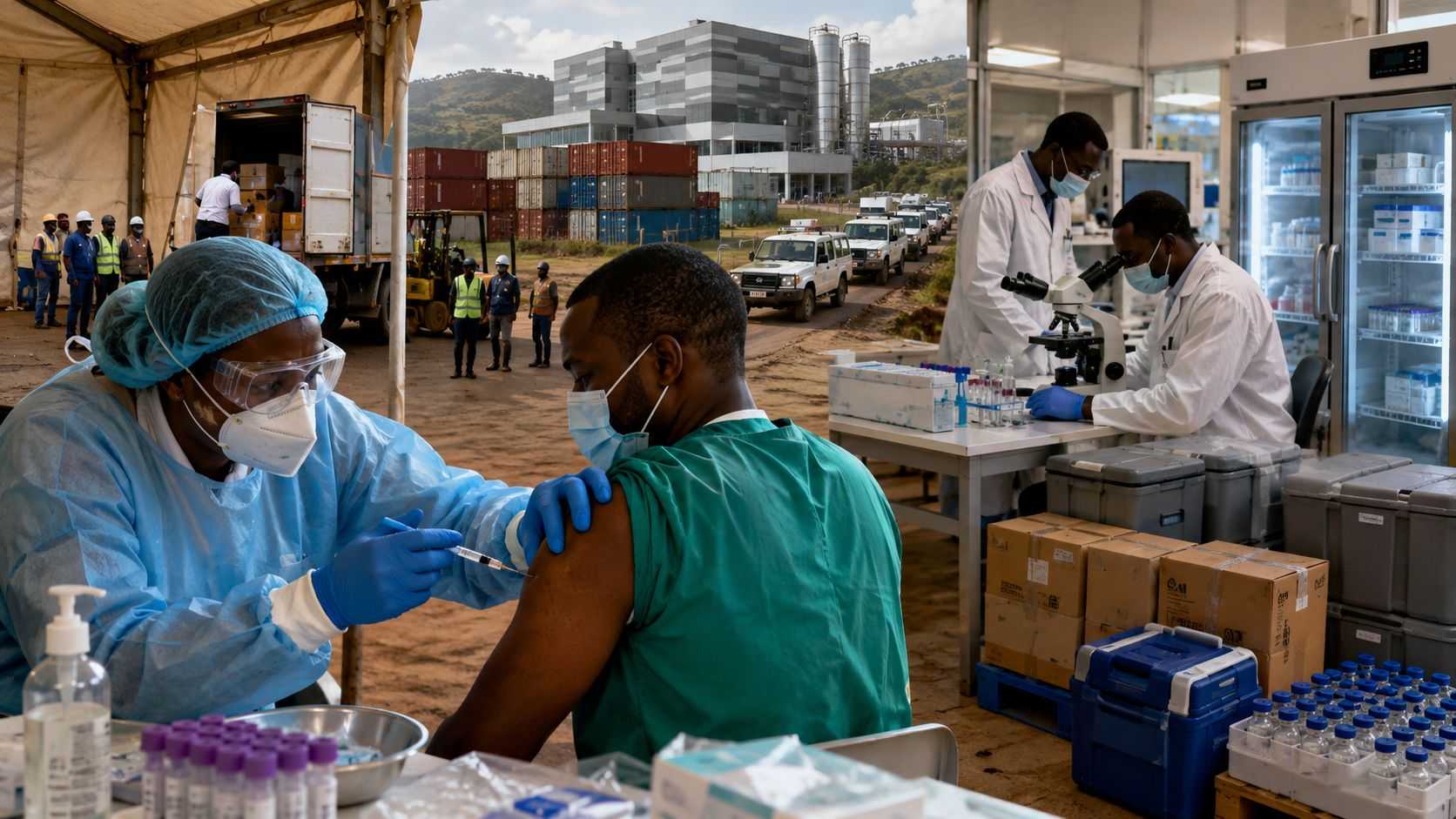
The Democratic Republic of Congo’s latest Ebola outbreak has once again placed Africa’s fragile health security under intense scrutiny. While emergency vaccination campaigns have begun to protect frontline health workers, the response has also exposed a deeper structural challenge that extends far beyond the current epidemic.
The continent remains heavily dependent on foreign governments, international donors and overseas pharmaceutical companies for vaccines, diagnostics, funding and emergency medical logistics. As African health authorities race to contain the outbreak, policymakers and industry leaders are asking a broader question. Who owns Africa’s vaccine supply chains and emergency health infrastructure, and what will it take for the continent to control them?
Emergency response
Health authorities in the Democratic Republic of Congo, supported by the World Health Organization, Africa CDC and international partners, have launched emergency vaccinations targeting frontline healthcare workers. The campaign uses Merck’s Ervebo vaccine, which is licensed for the Zaire strain of Ebola but is being deployed under special arrangements because no approved vaccine currently exists for the Bundibugyo strain driving the present outbreak. Authorities hope the campaign will provide protection for those most exposed while researchers continue studying vaccines designed specifically for Bundibugyo Ebola.
The rollout demonstrates both the strength and weakness of Africa’s public health system. International cooperation has enabled vaccines to reach affected areas within weeks, but almost every critical component of the response, from vaccine supplies and laboratory equipment to logistics and emergency funding, originates outside the continent. This dependence means African governments remain vulnerable to global supply shortages, export restrictions and shifting donor priorities whenever major health emergencies emerge.
The supply chain question
The Ebola outbreak has once again exposed a long standing imbalance in the global pharmaceutical industry. Africa is home to nearly one fifth of the world’s population yet produces only a small fraction of the vaccines it consumes. Most routine immunizations and emergency vaccines are imported from Europe, North America and Asia.
This dependence became painfully clear during the COVID-19 pandemic when wealthier nations secured vaccine contracts months before African countries gained meaningful access. Although international organizations eventually helped close that gap, the delays reinforced calls for greater pharmaceutical independence across the continent. The latest Ebola outbreak has revived those concerns because access to lifesaving vaccines still depends largely on production decisions made outside Africa.
Beyond vaccines, Africa also imports many diagnostic kits, protective equipment, laboratory reagents and medical technologies needed to respond to infectious disease outbreaks. During emergencies, countries with greater purchasing power frequently receive supplies first, leaving lower income nations waiting for deliveries as outbreaks continue spreading.
Manufacturing ambitions
African governments have increasingly recognized that long term health security requires stronger local manufacturing capacity. Countries including South Africa, Senegal, Rwanda and Egypt are investing in vaccine production facilities, pharmaceutical research and biotechnology partnerships designed to reduce reliance on imported medicines.
A major boost came when the Coalition for Epidemic Preparedness Innovations announced funding of up to $16.5 million for Egypt based pharmaceutical company Minapharm to advance an experimental Bundibugyo Ebola vaccine into human clinical trials in Africa. The investment reflects growing confidence that African manufacturers can become active developers of vaccines instead of remaining largely dependent on imported technology.
These projects represent an important shift in thinking. Rather than treating pharmaceutical manufacturing as simply another industrial sector, governments increasingly view vaccine production as strategic infrastructure that strengthens both public health and national security.
Beyond factories
Building vaccine factories alone will not guarantee pharmaceutical independence. Experts say manufacturing depends on an entire ecosystem that includes advanced research laboratories, skilled scientists, strong regulatory agencies, reliable electricity, quality assurance systems and sustained government procurement.
Many African countries continue facing shortages of biomedical researchers, clinical trial infrastructure and investment capital needed to commercialize scientific discoveries. Without long term demand and predictable financing, new manufacturing facilities could struggle to compete against established multinational producers with decades of experience and larger economies of scale.
Developing regional supply chains for glass vials, syringes, cold storage equipment and specialized medical packaging will also be essential if African manufacturers hope to produce vaccines competitively.
Donor dependence
International organizations remain central to Africa’s epidemic response. WHO, Gavi, CEPI, UNICEF and numerous bilateral partners have financed disease surveillance, laboratory networks, vaccination campaigns and emergency operations across the continent for decades. Their support has undoubtedly saved millions of lives.
However, donor dependence carries risks. Funding priorities often shift according to global political and economic conditions rather than Africa’s long term health needs. When budgets shrink or international attention moves elsewhere, disease surveillance and preparedness programmes can suffer.
The current Ebola outbreak illustrates this reality. As cases increased rapidly, international agencies mobilized vaccines, treatment supplies and emergency financing. Yet many experts argue that stronger domestic investment could allow African countries to respond faster without waiting for external assistance.
Investing in African biotechnology
The Democratic Republic of Congo has produced internationally respected scientists who have spent decades studying Ebola. Institutions such as the National Institute for Biomedical Research have contributed significantly to disease surveillance and outbreak investigations.
Despite this expertise, African research often struggles to secure the sustained investment needed to transform laboratory discoveries into commercially available vaccines and medicines. Venture capital funding for biotechnology remains limited compared with North America, Europe and Asia.
Supporters argue that governments should treat biotechnology as a strategic economic sector by supporting startup companies, expanding university research partnerships and encouraging technology transfer agreements with global pharmaceutical firms. Stronger biotechnology ecosystems would not only improve epidemic preparedness but also create highly skilled employment and strengthen local innovation.
Infrastructure gap
Vaccines alone cannot stop Ebola. Successful outbreak control depends equally on hospitals, trained health workers, laboratories, transport systems and community trust.
In eastern Congo, insecurity, armed conflict, poor road networks and population displacement continue to complicate response efforts. Healthcare workers often struggle to reach remote communities while misinformation and fear discourage some residents from reporting symptoms or accepting medical assistance. Violence against health workers has further disrupted surveillance and treatment activities.
These challenges demonstrate that strengthening emergency health infrastructure requires investment far beyond vaccine manufacturing. Reliable electricity, digital disease surveillance, refrigerated transport, emergency communication systems and a well trained workforce are equally important if vaccines are to reach vulnerable populations quickly.
The ownership question
The Democratic Republic of Congo’s Ebola outbreak has become more than a public health emergency. It has become a measure of Africa’s progress toward greater health sovereignty.
Today, ownership of the continent’s vaccine supply chains remains concentrated among multinational pharmaceutical companies, international donors and global health organizations. African governments are working to change that balance through investments in manufacturing, biotechnology research and regional cooperation, but significant gaps remain.
Achieving pharmaceutical independence will require sustained political commitment, larger domestic health budgets and closer collaboration between governments, universities and private industry. International partnerships will continue playing an important role, but many policymakers argue those relationships should increasingly focus on technology transfer and equal collaboration rather than long term aid dependence.
For now, the Ebola vaccination campaign offers hope that transmission can be slowed and healthcare workers protected. Yet the larger lesson extends well beyond the current outbreak. Africa’s future health security will depend not only on responding to epidemics but on controlling the industries, research institutions and infrastructure that produce lifesaving vaccines and medicines. Until that transformation is complete, every major outbreak will continue raising the same fundamental question about who truly owns Africa’s health security.

More from Health

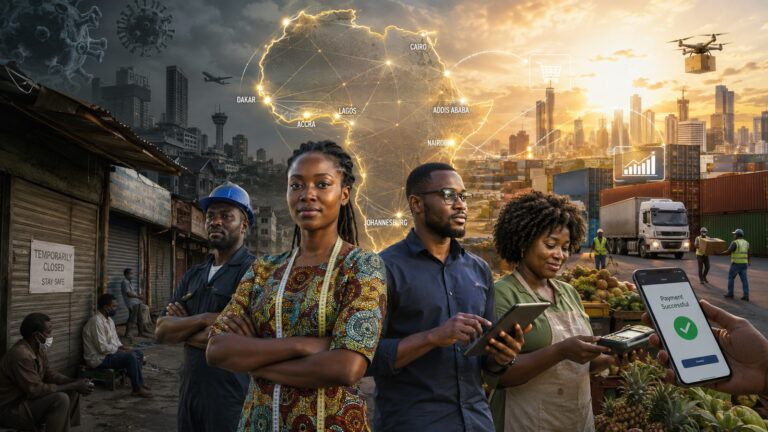
How COVID-19 changed the way businesses operate across Africa
The pandemic exposed deep weaknesses in Africa’s business environment while accelerating digital commerce, financial technology and new ideas about economic resilience.