


African economies are attracting renewed interest from development finance institutions, sovereign wealth funds and private investors as governments across the continent accelerate infrastructure development, expand renewable energy capacity and strengthen industrial production. The renewed flow of capital reflects growing confidence in Africa’s long-term economic prospects despite persistent global uncertainty, tighter financial conditions and geopolitical tensions affecting international markets.
Investment activity has gathered momentum throughout 2026 as countries seek to modernise transport networks, improve electricity access, expand manufacturing and position themselves to benefit from regional trade opportunities. Governments are increasingly working with development finance institutions and private investors to mobilise capital for projects that can generate employment, improve productivity and strengthen economic resilience.
The renewed interest comes as many African economies continue implementing reforms designed to improve the business environment, strengthen public finances and encourage private sector participation in strategic industries. Investors are responding positively to these reforms, particularly where governments have demonstrated policy consistency, transparent procurement systems and a commitment to improving infrastructure.
Across the continent, infrastructure remains one of the largest investment opportunities. Roads, ports, airports, railways, electricity transmission lines and water projects continue to dominate national development plans as governments seek to reduce logistics costs, improve trade and support industrialisation.
Economists say closing Africa’s infrastructure gap is essential for sustaining long-term economic growth. Better transport networks reduce the cost of moving goods across borders, improve market access for farmers and manufacturers and increase competitiveness for exporters. Improved infrastructure also attracts new industries by lowering operating costs and improving supply chain reliability.
Many governments are increasingly adopting blended finance models that combine public funding with concessional loans, commercial financing and private equity. These structures help reduce investment risks while allowing governments to undertake larger projects without placing excessive pressure on public finances.
Development finance institutions are playing a central role by providing long-term financing, guarantees and technical expertise that encourage commercial investors to participate in projects that might otherwise struggle to secure funding.
Investment analysts say this approach is creating stronger partnerships between governments, multilateral lenders and private investors while improving the financial sustainability of major infrastructure programmes.
Infrastructure remains the priority
Infrastructure investment continues to receive the largest share of development financing across Africa as governments seek to improve regional connectivity and stimulate economic activity.
Major transport corridors linking ports with inland markets are attracting substantial investment because they support regional trade and reduce the cost of doing business. Modern highways, railway upgrades, logistics centres and border facilities are expected to improve the movement of goods while supporting implementation of the African Continental Free Trade Area.
Urban infrastructure is also receiving increased attention as cities expand rapidly. Governments are investing in mass transit systems, affordable housing, water supply networks and sanitation projects to accommodate growing urban populations while improving living standards.
Airports are undergoing expansion in several countries as authorities seek to strengthen tourism, facilitate international trade and improve regional connectivity.
Port developments are also gathering pace as governments modernise cargo handling facilities and expand container capacity to support rising import and export volumes.
Infrastructure specialists say these investments are expected to produce long-term economic benefits by improving productivity and encouraging greater private sector investment.
Renewable energy attracts global capital
Renewable energy has become one of Africa’s fastest-growing investment sectors as governments seek cleaner, more reliable and affordable sources of electricity.
Solar power projects continue to dominate new investment because of declining technology costs and Africa’s abundant sunshine. Utility-scale solar farms, rooftop installations and mini-grid systems are expanding rapidly across several countries.
Wind energy is also attracting growing investor interest, particularly in regions with favourable climatic conditions.
Hydropower projects remain important in countries with significant water resources, while geothermal energy continues to offer opportunities in parts of East Africa.
Battery storage systems are becoming increasingly important as renewable energy capacity expands. These technologies improve grid stability while allowing electricity generated during peak production periods to be stored for later use.
Energy experts say renewable investment is helping diversify electricity generation while reducing dependence on imported fossil fuels.
The expansion of renewable energy is also supporting industrial growth by improving access to reliable electricity for factories, mining operations and commercial enterprises.
Governments are introducing regulatory reforms designed to encourage independent power producers, simplify licensing procedures and improve electricity market transparency.
These measures have helped increase investor confidence while creating more competitive energy markets.
Electricity access remains a development priority
Despite steady progress, electricity access remains one of Africa’s most significant development challenges.
Millions of households and businesses continue to experience unreliable electricity supply, limiting economic growth and reducing productivity.
Development finance institutions are increasing support for projects that extend electricity access to underserved communities through national grid expansion, mini-grids and standalone solar systems.
Rural electrification programmes are particularly important because they improve education, healthcare and economic opportunities while supporting small businesses.
Reliable electricity also enables greater adoption of digital technologies, supports agricultural processing and improves manufacturing competitiveness.
Investment in electricity transmission and distribution infrastructure is becoming increasingly important as countries add new generation capacity.
Without stronger transmission networks, many renewable energy projects cannot deliver their full economic benefits.
Governments are therefore prioritising investments that strengthen national grids while improving cross-border electricity trading through regional power pools.
Manufacturing gains momentum
Manufacturing is emerging as another major destination for investment as African governments pursue industrialisation strategies that encourage value addition and reduce dependence on imported goods.
Industrial parks, export processing zones and special economic zones are expanding across several countries.
These developments aim to attract manufacturers by providing reliable infrastructure, streamlined regulations and improved access to transport networks.
Governments are also encouraging local processing of agricultural products, minerals and other raw materials before export.
The objective is to increase domestic value creation, expand employment opportunities and strengthen industrial competitiveness.
Investors are responding positively to sectors including food processing, pharmaceuticals, textiles, automotive assembly, construction materials and consumer goods manufacturing.
Growing regional markets under the African Continental Free Trade Area are providing additional incentives for manufacturers to establish production facilities capable of serving multiple countries.
Industrial development is also creating demand for logistics services, warehousing, financial services and supporting industries.
Critical minerals strengthen investor interest
Africa’s vast reserves of critical minerals continue attracting international investment as global demand for clean energy technologies accelerates.
Copper, cobalt, lithium, manganese, graphite and rare earth minerals are increasingly viewed as strategic resources supporting the global energy transition.
Governments are seeking to capture greater economic value by encouraging domestic processing rather than exporting raw materials.
Several countries are introducing policies designed to support mineral refining, battery component manufacturing and related industries.
These initiatives aim to create higher-value employment while increasing export revenues.
Investors say long-term demand for critical minerals is expected to remain strong as electric vehicle production, renewable energy deployment and battery manufacturing continue expanding worldwide.
However, governments are emphasising responsible mining practices, stronger environmental standards and greater community participation to ensure investment contributes to sustainable development.
Digital infrastructure expands
Digital transformation is creating another significant investment opportunity across Africa.
Rapid growth in mobile connectivity, e-commerce, digital payments and cloud computing is driving demand for telecommunications infrastructure and data centres.
Governments are investing in fibre optic networks while encouraging private companies to expand broadband coverage into underserved areas.
Financial technology companies continue attracting investment as digital banking and mobile money services expand across the continent.
Technology hubs are emerging in several African cities, supporting innovation in software development, artificial intelligence, cybersecurity and digital services.
Investors believe Africa’s youthful population and increasing internet penetration provide strong long-term growth opportunities for technology businesses.
Digital infrastructure is also improving public service delivery through electronic government platforms, digital identity systems and online business registration.
These investments are expected to improve efficiency while strengthening transparency and reducing administrative costs.
Private capital plays a larger role
Private investors are becoming increasingly important in financing Africa’s development as governments seek to reduce pressure on public budgets while accelerating economic growth.
International infrastructure funds, pension funds, sovereign wealth funds and private equity firms are allocating more capital to African projects, particularly in sectors that offer stable long-term returns. Renewable energy, transport, digital infrastructure and logistics continue to rank among the most attractive investment destinations.
Institutional investors are increasingly viewing Africa as a long-term growth market rather than a high-risk frontier. Although challenges remain, many fund managers believe improving governance, economic reforms and stronger regulatory frameworks are gradually changing investment perceptions.
Investment bankers say large infrastructure projects are increasingly being structured to meet international financing standards, making them more attractive to global investors.
Public-private partnerships continue to expand as governments invite private companies to finance, construct and operate major infrastructure assets under long-term concession agreements.
These partnerships are helping accelerate project implementation while allowing governments to spread costs over longer periods.
Development finance institutions deepen support
Development finance institutions continue to play a critical role in mobilising investment across Africa.
Rather than financing projects independently, many institutions are increasingly using guarantees, risk-sharing mechanisms and blended finance structures to attract larger volumes of private capital.
This approach allows commercial lenders and institutional investors to participate in projects that may otherwise be considered too risky.
Guarantees against political risk, currency volatility and credit losses have become important tools for encouraging investment in large infrastructure developments.
Development finance institutions are also providing technical assistance to governments during project preparation, procurement and implementation.
Experts say improving project preparation is essential because well-designed projects are more likely to attract commercial financing and achieve successful implementation.
Many institutions are supporting governments in strengthening regulatory frameworks, improving environmental safeguards and enhancing financial management.
These measures help improve investor confidence while increasing the quality and sustainability of infrastructure investment.
Governments pursue investment reforms
Across Africa, governments continue introducing reforms aimed at improving the investment climate.
Efforts include simplifying licensing procedures, digitising government services, strengthening tax administration and improving customs operations.
Several countries are modernising investment laws to provide greater legal certainty while enhancing protections for domestic and international investors.
Authorities are also expanding one-stop investment centres that reduce administrative delays and simplify business registration.
Improving transparency has become a priority as governments seek to strengthen investor confidence.
Digital procurement systems, electronic tax filing and online licensing platforms are helping reduce bureaucracy while improving efficiency.
Many governments are also reviewing public-private partnership legislation to encourage greater private sector participation in infrastructure development.
Investment promotion agencies are increasingly targeting sectors that generate employment and support industrial development.
Rather than focusing solely on foreign investment volumes, policymakers are placing greater emphasis on investment quality and its contribution to long-term economic growth.
Regional trade creates new opportunities
The continued implementation of the African Continental Free Trade Area is strengthening the case for investment across multiple industries.
Businesses increasingly view Africa as a single expanding market rather than a collection of separate national economies.
Reduced trade barriers are encouraging manufacturers to establish production facilities capable of serving consumers across several countries.
Improved regional integration is also supporting investment in logistics, warehousing, transport and cross-border distribution networks.
Companies involved in consumer goods, pharmaceuticals, construction materials and food processing are expanding regional operations to take advantage of growing demand.
Economists say increased regional trade could significantly strengthen industrial development by allowing businesses to achieve greater economies of scale.
Improved transport infrastructure is expected to further support regional commerce by reducing delivery times and lowering transportation costs.
Agriculture remains a strategic investment sector
Agriculture continues attracting investment as governments seek to improve food security while increasing exports and rural incomes.
Development financing is supporting irrigation projects, storage facilities, cold chain logistics and agricultural processing industries.
Private investors are also expanding investment in commercial farming, seed production, fertiliser manufacturing and agricultural technology.
Modern farming techniques, improved irrigation systems and digital advisory services are helping increase productivity across several agricultural value chains.
Food processing is becoming increasingly important as governments encourage domestic value addition before agricultural products are exported.
This approach creates employment opportunities while reducing dependence on imported processed foods.
Investment in agricultural logistics is helping reduce post-harvest losses and improve market access for farmers.
Development experts believe agriculture will remain one of Africa’s most important sectors because it supports livelihoods for millions of people while providing opportunities for industrial growth.
Financial markets continue to evolve
Africa’s financial sector is also benefiting from increased investor interest.
Commercial banks are expanding lending to businesses involved in infrastructure, renewable energy and manufacturing.
Capital markets are gradually becoming more active as governments and companies issue bonds to finance development projects.
Green bonds and sustainability-linked financing are emerging as important sources of capital for renewable energy and climate-related investments.
Stock exchanges in several African countries continue introducing reforms aimed at improving liquidity and attracting new investors.
Financial technology companies are expanding access to banking services through mobile platforms, helping increase financial inclusion among individuals and small businesses.
Digital payment systems are supporting commerce while improving efficiency throughout the economy.
Analysts say stronger financial markets will be essential for mobilising domestic savings to finance long-term investment.
Tourism investment returns
Tourism is gradually attracting renewed investment as international travel continues to recover.
Hotel developments, eco-tourism projects, conference facilities and airport upgrades are supporting the sector’s expansion.
Governments are promoting tourism alongside conservation initiatives that protect natural resources while generating employment.
Improved transport infrastructure and digital marketing are helping African destinations reach broader international audiences.
Investment in tourism also benefits local businesses through increased demand for transport, food production, handicrafts and hospitality services.
Countries with strong wildlife resources, coastal attractions and cultural heritage sites continue attracting international tourism investors seeking long-term growth opportunities.
Climate finance gains momentum
Climate finance is becoming an increasingly important source of development funding across Africa.
International climate funds are supporting projects that strengthen resilience against droughts, floods and extreme weather while promoting low-carbon economic development.
Governments are integrating climate adaptation into infrastructure planning to ensure roads, bridges, ports and energy systems remain resilient against changing weather patterns.
Nature-based solutions, sustainable agriculture and water conservation projects are also attracting growing financial support.
Investors increasingly evaluate environmental, social and governance performance before committing capital to major projects.
Companies demonstrating strong sustainability practices are finding it easier to access international financing.
Climate-related investment is expected to continue expanding as governments strengthen national climate strategies while pursuing sustainable economic growth.
Challenges remain
Despite growing optimism, investors continue monitoring several risks across African markets.
High global interest rates continue increasing borrowing costs for governments and businesses.
Exchange rate fluctuations remain a concern in some countries, particularly where imports account for a large share of industrial production.
Debt sustainability also remains an important consideration as governments seek to balance development spending with prudent fiscal management.
Political uncertainty and regulatory inconsistency can delay investment decisions in some markets.
Project preparation remains another challenge because infrastructure developments require detailed feasibility studies, environmental assessments and strong financial structures before construction can begin.
Industry experts say strengthening institutions and improving governance will remain essential for sustaining investor confidence over the long term.
Sustainable investment shapes future growth
Sustainability has become a central consideration for investors evaluating opportunities across Africa. Development finance institutions, commercial lenders and private equity firms are placing greater emphasis on projects that deliver measurable environmental and social benefits alongside financial returns.
Renewable energy, climate-resilient infrastructure, sustainable agriculture and affordable housing are increasingly viewed as sectors capable of generating long-term economic value while supporting inclusive development.
Governments are also strengthening environmental regulations and encouraging developers to adopt international standards during project planning and construction.
The growing focus on sustainability is helping attract institutional investors that manage pension funds, insurance assets and other long-term investments.
Market analysts say environmental, social and governance standards are becoming increasingly important in determining access to international capital.
Projects demonstrating strong governance, community engagement and environmental protection are generally considered more attractive to global investors seeking stable, responsible investment opportunities.
Innovation drives investment opportunities
Innovation is becoming an increasingly important driver of economic growth across Africa.
Technology companies are developing solutions that improve financial inclusion, healthcare delivery, education, agriculture and logistics.
Artificial intelligence, cloud computing and digital platforms are enabling businesses to operate more efficiently while expanding access to new markets.
Start-up ecosystems continue to mature in several African cities, supported by venture capital funds, incubators and technology accelerators.
Governments are also investing in digital infrastructure and innovation policies designed to encourage entrepreneurship and support small and medium-sized enterprises.
Improved access to digital technologies is helping businesses reach customers more efficiently while increasing productivity across multiple industries.
Innovation is also strengthening financial services through digital lending, online banking and mobile payment systems that continue transforming the way individuals and businesses conduct transactions.
Employment remains a priority
Job creation remains one of the principal objectives behind Africa’s investment drive.
Governments are prioritising projects capable of creating both direct and indirect employment opportunities across construction, manufacturing, agriculture, energy and services.
Infrastructure projects generate significant demand for engineers, technicians, construction workers, transport operators and suppliers.
Manufacturing investments support skilled employment while encouraging technology transfer and workforce development.
Renewable energy projects are creating new opportunities in engineering, equipment installation, maintenance and technical services.
Agriculture continues providing employment for millions of people, while investment in processing industries is helping create additional jobs beyond primary production.
Education and vocational training programmes are also expanding to ensure workers possess the skills required by emerging industries.
Development experts say investment that creates sustainable employment will play an essential role in reducing poverty and supporting long-term economic growth.
Small businesses benefit from investment
The expansion of infrastructure and industrial development is also creating opportunities for small and medium-sized enterprises.
Local suppliers are increasingly participating in construction projects by providing building materials, transport services, catering, equipment maintenance and professional services.
Improved transport infrastructure enables smaller businesses to reach new markets while lowering distribution costs.
Reliable electricity allows manufacturers and service providers to operate more efficiently and reduce production interruptions.
Access to digital payment systems and financial services is helping entrepreneurs expand their businesses while improving access to working capital.
Governments are introducing policies that encourage participation by local businesses in major infrastructure projects to maximise domestic economic benefits.
Business associations say stronger linkages between large investors and local enterprises can significantly increase the broader impact of foreign investment.
Regional cooperation strengthens confidence
Regional cooperation continues to strengthen investor confidence across Africa.
Governments are working more closely on cross-border infrastructure, customs harmonisation and trade facilitation to improve regional competitiveness.
Regional power pools are helping countries share electricity resources while improving energy security.
Cross-border transport corridors are reducing travel times and supporting regional commerce.
Joint investment initiatives involving neighbouring countries are becoming increasingly common as governments seek to maximise the economic benefits of shared infrastructure.
Development finance institutions continue supporting regional projects because they generate benefits that extend beyond national boundaries.
Economists believe stronger regional integration will improve market efficiency while making African economies more attractive to international investors.
Investors remain cautiously optimistic
Although global economic uncertainty continues to influence investment decisions, market participants generally remain optimistic about Africa’s long-term outlook.
Population growth, rapid urbanisation and rising consumer demand continue supporting investment across multiple sectors.
The continent possesses abundant renewable energy resources, extensive mineral reserves and expanding digital markets that provide significant opportunities for long-term investors.
Improving macroeconomic management in several countries has also strengthened confidence among international lenders and development partners.
Investment managers say diversification remains important because economic conditions vary considerably across African markets.
Countries that maintain stable macroeconomic policies, strengthen institutions and improve the business environment are expected to attract a growing share of investment over the coming years.
Looking ahead
Investment activity across Africa is expected to remain resilient during the remainder of 2026 as governments continue implementing economic reforms and advancing major infrastructure programmes.
Renewable energy is likely to remain among the fastest-growing sectors as countries seek to improve electricity access, reduce emissions and strengthen energy security.
Infrastructure investment is expected to continue expanding through public-private partnerships, blended finance and increased participation by development finance institutions.
Manufacturing, logistics, agriculture and digital technology are also projected to attract increasing levels of domestic and international investment as businesses position themselves to benefit from expanding regional markets.
Analysts believe the successful implementation of the African Continental Free Trade Area will further strengthen investor confidence by creating larger markets, improving regional supply chains and encouraging industrial development.
At the same time, governments will continue facing the challenge of ensuring that investment delivers broad economic benefits through employment creation, technology transfer and stronger local industries.
Continued improvements in governance, regulatory transparency and project preparation are expected to play an important role in sustaining investor confidence.
For development finance institutions, the priority will remain mobilising greater volumes of private capital to complement public investment and accelerate economic transformation.
Private investors, meanwhile, are expected to continue focusing on sectors that combine commercial returns with measurable development impact, particularly infrastructure, renewable energy, manufacturing, agriculture and digital technology.
While risks related to global economic conditions, financing costs and geopolitical uncertainty remain, Africa’s long-term investment story continues to strengthen.
A young and rapidly growing population, expanding cities, abundant natural resources and increasing regional integration continue providing powerful foundations for future growth.
As governments deepen reforms and strengthen partnerships with development finance institutions and private investors, the continent is positioning itself to capture new opportunities arising from the global transition toward cleaner energy, digital innovation and more resilient supply chains.
The renewed flow of investment into African economies reflects more than confidence in individual projects. It signals growing recognition that the continent is becoming an increasingly important destination for long-term capital. If current reforms continue and investment is matched with effective implementation, Africa could strengthen its position as one of the world’s most dynamic regions for sustainable economic development, industrial expansion and inclusive growth over the coming decades.

More from Investments

Seychelles turns to Saudi Arabia for new investment and tourism opportunities
Seychelles Vice-President Sebastien Pillay met Saudi Arabia's foreign minister in Riyadh to discuss stronger investment, tourism and bilateral economic ties.
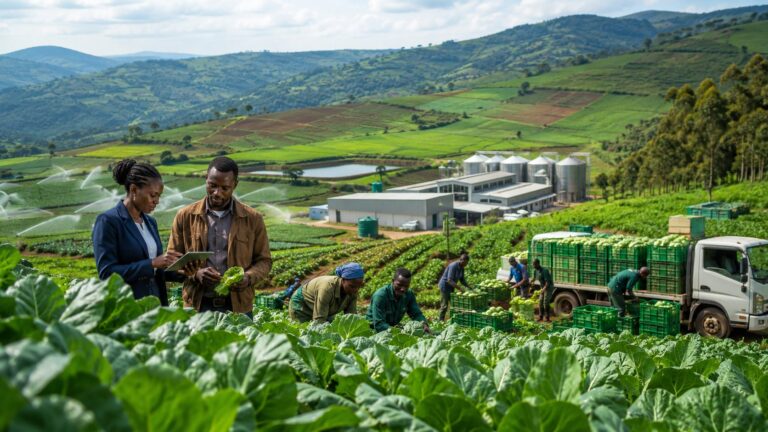
Rwanda’s $400 million agriculture bet: Who will own the next food economy?
Rwanda’s agricultural investment surge is opening a new battle for ownership, capital, technology, processing capacity and Africa’s growing food economy.

Who will own South Africa’s railways? The private capital moving into transnet
Private operators, mining companies and global investors are entering Transnet, challenging traditional state control over South Africa’s strategic railway infrastructure.