
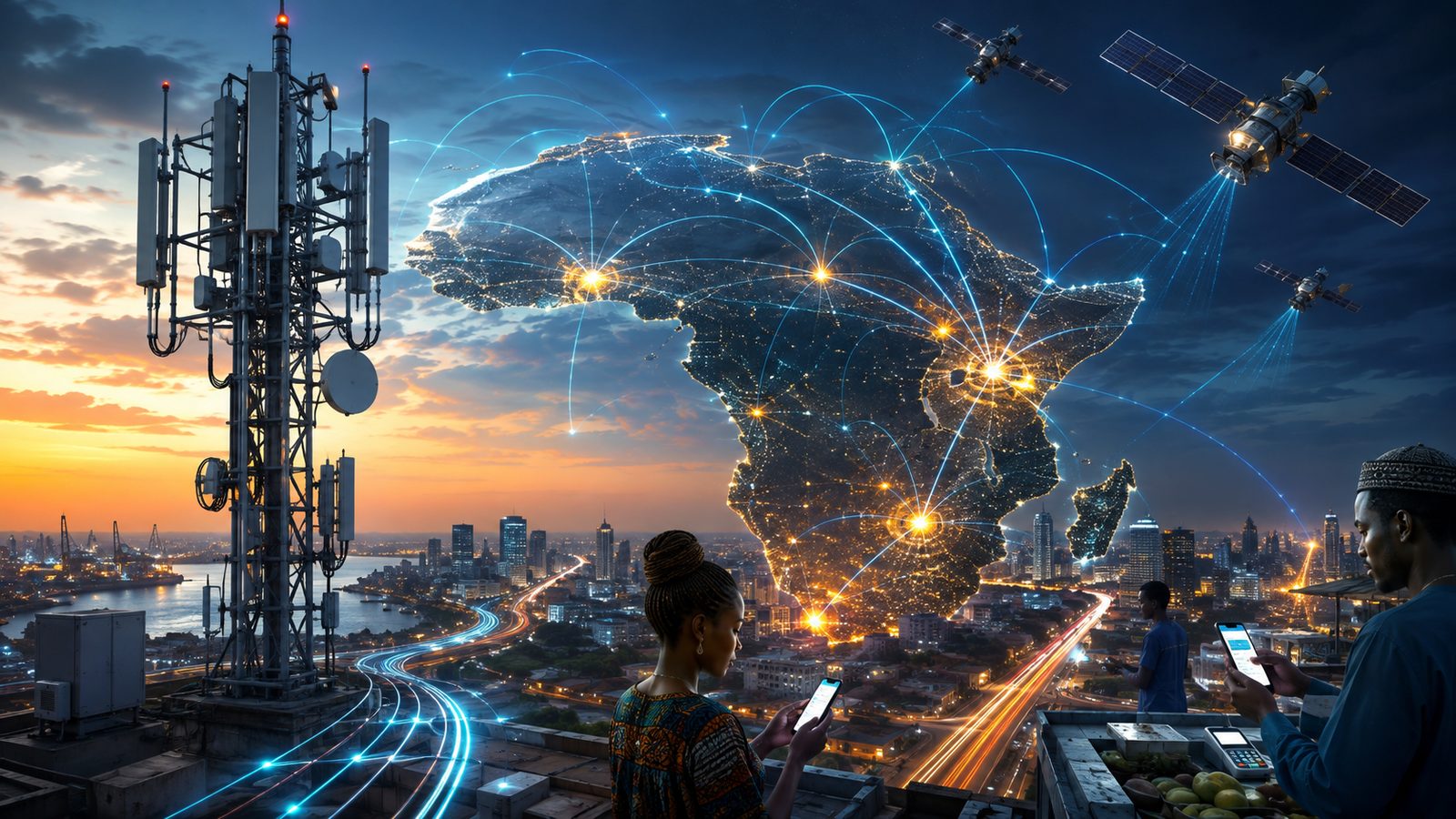
Africa’s mobile industry is entering a new phase in which owning the network may no longer be enough to control the customer. Mobile virtual network operators, fintech companies and satellite connectivity providers are creating new routes into a market dominated for decades by a handful of telecom groups.
The scale of the opportunity is considerable. GSMA estimates that mobile technologies and services generated $240 billion in economic value across Africa in 2025, equal to 7.8% of the continent’s GDP. That contribution is expected to reach $290 billion by 2030 as 4G, 5G and digital services expand.
A new 2026 MVNO market report points to an even more concentrated opportunity, projecting that South Africa, Nigeria, Kenya and Uganda could account for about 85% of Africa’s MVNO market.
That forecast, if realised, makes these four markets the front line of a new ownership contest.
The old telecom order
For years, Africa’s mobile business has largely been a story of network ownership.
MTN built one of the continent’s biggest telecommunications groups from South Africa, stretching across markets from Nigeria and Ghana to Uganda, Rwanda and Zambia. Airtel Africa, controlled indirectly by India’s Bharti Airtel, operates across 14 African markets serving a combined population of about 679 million.
Vodacom, majority-owned by Vodafone, has developed a similarly powerful African footprint. The group now operates across South Africa, Tanzania, Mozambique, the Democratic Republic of Congo, Lesotho, Egypt, Ethiopia and Kenya through Safaricom. Vodacom is 65.1% owned by Vodafone.
But the competitive battlefield is changing.
The question is increasingly not simply who owns the spectrum, towers and fibre. It is who owns the customer relationship, the payments account, the data, the digital platform and the services layered on top of the network.
That is where MVNOs become important.
MVNOs open the network
A mobile virtual network operator does not normally own the radio network it uses. Instead, it purchases network capacity from a mobile network operator and sells services to customers under its own brand.
The model has existed for years in Europe and other developed markets, but Africa is only beginning to unlock its wider potential.
GSMA counted 63 MVNOs operating across 11 African countries as of September 2025. South Africa accounted for 61% of them, demonstrating how far ahead the country is in developing the model.
South Africa therefore provides a useful preview of what could happen elsewhere.
An MVNO can target a customer segment that a major operator may struggle to serve efficiently. It can build a brand around low-cost data, financial services, youth, migrants, business customers, entertainment or specific communities without having to spend billions of dollars building a nationwide network.
The economics can be attractive.
The network operator monetises excess or wholesale capacity. The MVNO focuses on marketing, customer acquisition, product development and specialised services.
For consumers, the result can be more choice.
For investors, it creates a new layer of companies that can participate in Africa’s mobile economy without owning the physical infrastructure.
South Africa is the laboratory
South Africa is likely to remain the continent’s most important MVNO laboratory.
Its relatively mature telecommunications market, sophisticated financial sector and established regulatory framework provide fertile ground for companies experimenting with alternative mobile business models.
The country’s large network operators, including MTN and Vodacom, have the infrastructure. Newer players can build customer propositions on top of it.
That distinction matters.
The next generation of telecom competition could resemble the relationship between banks and fintechs. Banks own much of the regulated infrastructure and customer deposits, while fintech companies build products that make use of those underlying systems.
Telecoms could evolve in a similar direction.
The network remains essential, but the most valuable customer interface may sit somewhere else.
Nigeria brings scale
Nigeria offers a different prize: scale.
It is Africa’s largest telecommunications market by population and one of the most important markets for both MTN and Airtel Africa.
For MVNOs, Nigeria presents an enormous potential customer base and a rapidly expanding digital economy. For fintech companies, mobile connectivity is increasingly inseparable from payments, lending, commerce and financial services.
That creates a natural overlap.
A fintech that already has millions of customers may have little reason to remain only a payments company if mobile connectivity can be bundled into its platform.
A customer who uses an app to transfer money could also receive a mobile number, data package, insurance product or credit facility from the same company.
The telecom operator becomes the infrastructure provider while the fintech owns more of the daily customer relationship.
That is potentially more disruptive than an ordinary price war between mobile operators.
Kenya’s ownership story
Kenya may offer the clearest example of how telecommunications and financial services have merged.
Safaricom’s importance extends well beyond mobile calls and data because of M-Pesa, its hugely influential mobile money platform.
The company’s ownership structure also changed significantly this year.
Vodacom completed the acquisition of an additional 20% stake in Safaricom in June, taking its holding to 55%. The transaction involved buying 15% from the Kenyan government and 5% from Vodafone. The Kenyan government retained 20%, while public investors own 25%.
The transaction gives Vodafone and Vodacom greater control over one of Africa’s most important telecom and financial-services businesses.
For the MVNO story, Kenya is significant for another reason.
The country demonstrates how mobile connectivity can become a gateway to an entire digital ecosystem. The most valuable asset may not be the SIM card itself but what sits behind it: payments, merchant services, credit, insurance, commerce and identity.
MVNOs entering such a market would therefore be competing not only on network prices but for a place inside an increasingly sophisticated digital economy.
Airtel and the fintech frontier
Airtel Africa illustrates the same convergence from another direction.
The company has built a substantial mobile money operation alongside its telecommunications business. In July, Airtel Africa announced plans to list its mobile money business on the London Stock Exchange later in 2026. Reuters reported that the proposed listing could help investors value the financial-services operation separately from the telecommunications business.
The significance goes beyond a potential IPO.
It suggests that Africa’s telecom companies increasingly view connectivity and financial services as related but separately valuable businesses.
Airtel Africa’s 2026 annual report shows just how much capital is still required for the underlying network. The company invested $884 million in capital expenditure in 2025/26, mainly in networks, adding more than 3,250 infrastructure sites.
That infrastructure creates the platform on which smaller companies can build.
The fintech challenge
Fintech companies may ultimately become some of the most important potential MVNO entrants.
Africa’s financial technology sector has expanded rapidly because mobile phones allow companies to reach consumers without traditional banking infrastructure.
The same logic can be applied to telecoms.
A fintech with a large user base already possesses something valuable: distribution.
Instead of acquiring a customer from scratch, it can potentially add connectivity to an existing relationship.
The strategic question becomes whether telecom companies can prevent these businesses from taking control of the customer interface.
This is why the boundary between telecoms, banking and technology is becoming increasingly difficult to define.
Satellites change the equation
Then there is space.
Satellite connectivity is introducing another potential disruption to Africa’s telecommunications structure.
Companies such as Starlink are expanding satellite internet services into African markets, while established telecom operators are exploring partnerships and satellite-to-mobile technologies.
The attraction is obvious.
Africa’s geography makes universal terrestrial coverage expensive. Vast rural areas, islands, deserts and remote communities can be difficult to serve profitably with conventional towers and fibre.
Satellite technology could reduce some of those barriers.
It does not necessarily replace mobile networks. Instead, it can fill coverage gaps and provide an additional layer of connectivity.
For traditional operators, that is both an opportunity and a threat.
Who owns the future?
The answer may be more complicated than the names printed on SIM cards.
MTN, Airtel Africa, Vodacom and Safaricom remain enormously powerful because they control physical networks, spectrum, infrastructure and large customer bases.
But their dominance is being surrounded by a growing ecosystem of fintechs, MVNOs, cloud companies, digital platforms and satellite operators.
The ownership battle is therefore moving up the stack.
Who owns the tower?
Who owns the spectrum?
Who owns the SIM?
Who owns the mobile wallet?
Who owns the app?
Who controls the customer data?
And, ultimately, who controls the customer?
GSMA says Africa still has a massive mobile internet usage gap. In 2025, almost 1 billion people were not using mobile internet despite living in areas with mobile broadband coverage.
That gap represents the industry’s biggest opportunity and its biggest challenge.
The companies capable of bringing more people online while building profitable digital ecosystems will have enormous influence over Africa’s next economic phase.
The old model was simple: build the network and acquire subscribers.
The new model is more complicated.
Build the network, open it to partners, integrate payments, sell digital services, connect remote communities and keep the customer inside your ecosystem.
Africa’s mobile future may therefore belong neither entirely to the network owners nor entirely to the newcomers.
It will belong to whoever can control the space between them.
And with South Africa, Nigeria, Kenya and Uganda expected to dominate the emerging MVNO opportunity, the next battle for Africa’s mobile customer is already taking shape.

More from Magazine
Inside Ethiopia’s $12.5 billion bet to build Africa’s next aviation hub
Ethiopia’s massive Bishoftu airport aims to transform Ethiopian Airlines into Africa’s dominant aviation hub while attracting global investment and technology.
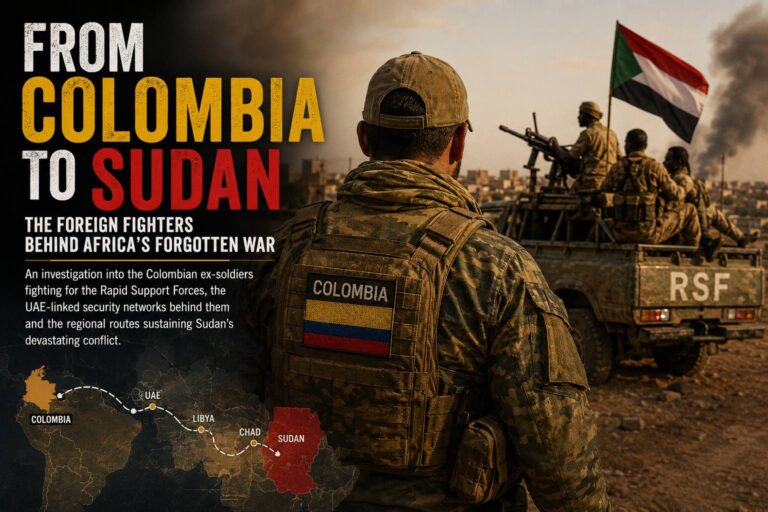
From Colombia to Sudan: The foreign fighters behind Africa’s forgotten war
How Colombian veterans, private security networks and regional supply routes have drawn distant foreign fighters into Sudan’s devastating civil war.
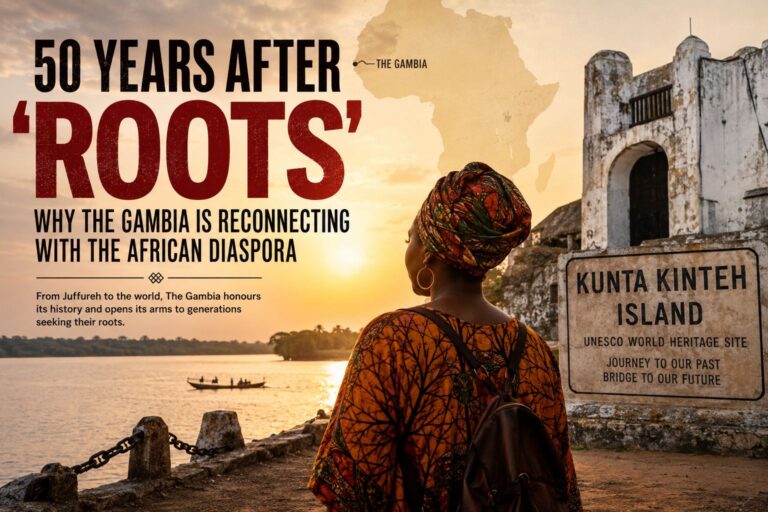
50 Years After ‘Roots’: Why The Gambia is reconnecting with the African Diaspora
Fifty years after Roots, The Gambia is strengthening historic ties with the African diaspora through heritage, culture and remembrance.