

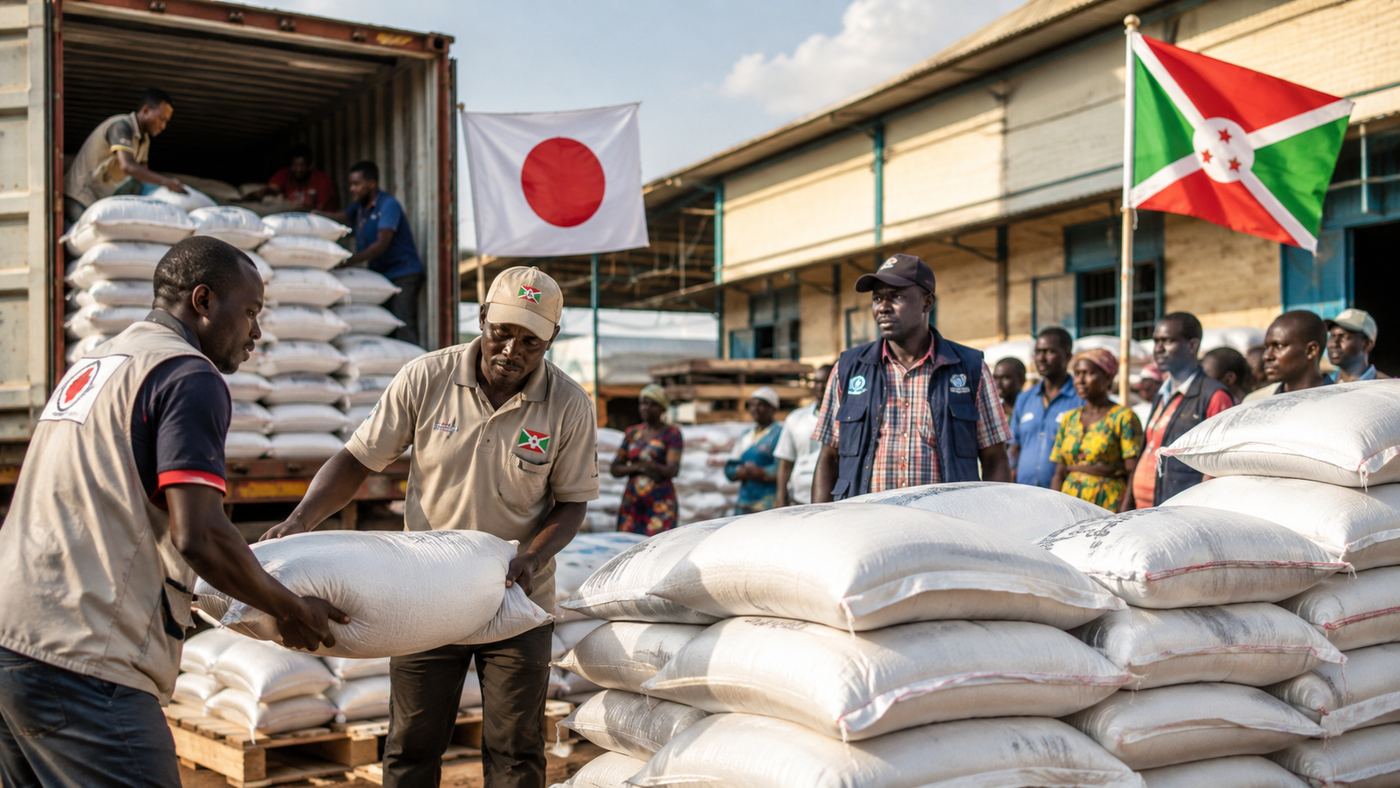
Japan has agreed to provide Burundi with about 2,500 tonnes of rice worth roughly 350 million Japanese yen, or about $2.2 million, in a move that puts food security and Japan’s growing development engagement with the country in sharp focus. The agreement was signed in Burundi on September 3, 2026, according to Burundian reporting on the deal.
The donation comes at a time when food prices, weather shocks and pressure on household incomes remain important concerns across Burundi. For a country where agriculture is central to livelihoods and rice is an increasingly important food crop, the arrival of thousands of tonnes of rice could provide short-term relief while also opening a broader conversation about how international assistance can support longer-term agricultural resilience.
The agreement is significant beyond the quantity of food involved. It is another indication of Japan’s continued engagement in Burundi, where Tokyo has previously supported food assistance and development initiatives. Japan’s assistance has included contributions through international humanitarian organisations as well as direct food-related cooperation with the Burundian government. In 2025, Japan contributed to emergency food assistance for families affected by floods and droughts in Burundi through the World Food Programme.
A major food security intervention
The 2,500-tonne shipment is substantial, but its importance is best understood against Burundi’s wider food system. Rice production has expanded in the country, particularly in irrigated areas, yet farmers remain exposed to climate shocks, infrastructure constraints, high input costs and disruptions that can affect harvests and market supplies.
Data from the International Rice Research Institute shows that Burundi produced an average of about 369,000 tonnes of rice annually between 2019 and 2023, using roughly 192,000 hectares. Rice is cultivated in areas including the Imbo plain, the Moso region and high-altitude marshlands, with production taking place across two main growing seasons.
Against that production base, 2,500 tonnes may appear modest at national scale. But food aid is not necessarily designed to replace domestic production. Its immediate purpose is to help protect vulnerable households, ease shortages and strengthen food availability during periods when communities face higher risks.
That distinction matters. A food donation can help people today, while agricultural investment is needed to ensure that fewer people require assistance tomorrow.
Burundi faces persistent food pressures
Burundi remains heavily dependent on agriculture, leaving rural households particularly vulnerable when rainfall patterns change, crops fail or the cost of agricultural inputs rises. Recent food security assessments have warned that high food prices and crop losses continue to put pressure on vulnerable communities.
A July 2026 food security update for Burundi said seasonal improvements were being slowed by high food prices and bean crop losses. The assessment pointed to the possibility of worsening conditions in parts of the country between October and December.
Those pressures make the timing of Japan’s contribution important. Food assistance can act as a buffer for households facing rising costs, particularly where income opportunities are limited and families spend a large share of their resources on food.
The broader regional environment is also becoming more complicated. The World Food Programme has warned that climate-driven shocks could significantly worsen food insecurity in vulnerable countries during 2026 and into 2027. Its August assessment said an expected El Niño event could increase drought, flooding and extreme temperature risks in several regions, with eastern Africa among the areas facing significant exposure.
For Burundi, where many farmers depend directly or indirectly on weather-sensitive agriculture, such risks make food reserves and reliable supply chains increasingly important.
More than a donation
Japan’s relationship with Burundi has increasingly combined humanitarian assistance with development cooperation. That approach is important because food aid can have effects beyond the immediate distribution of commodities.
Burundi’s government has previously used a model in which donated rice is sold on the local market and the proceeds are directed towards development projects. In 2025, Burundi’s Ministry of Foreign Affairs said a Japanese rice donation valued at 150 million yen was provided in the form of rice to be sold locally, with the resulting revenue used to finance development projects.
That mechanism means the value of a rice donation can extend beyond the food itself. If carefully managed, it can support public investment while putting additional supplies into the market.
However, the model also requires strong transparency and oversight. Authorities need to ensure that donated commodities reach intended markets and beneficiaries, that pricing remains reasonable and that revenues generated from sales are accounted for properly.
The experience is not entirely new. In 2019, a Japanese rice donation to Burundi involving more than 5,700 tonnes generated public debate after authorities said proceeds from the sale would be used to finance development projects, including infrastructure.
Japan’s wider role in Africa
For Japan, food assistance in Burundi also fits into a wider African engagement strategy focused on development, resilience and human security.
Japan has used food assistance as one element of its cooperation with African countries, often linking emergency support with longer-term development priorities. Its engagement comes through government-to-government programmes, international organisations and development institutions.
The approach is particularly relevant at a time when African governments are seeking to strengthen domestic food production while managing immediate humanitarian needs.
Rice occupies an interesting position in this equation. It is both a staple food and a strategic agricultural commodity. Countries across Africa are investing in rice production because of rising consumption and concerns about import dependence.
Burundi is also seeking to improve its own rice productivity. Recent agricultural initiatives have demonstrated that improvements in farming practices, irrigation and access to inputs can significantly raise yields. A July 2026 report from the China International Development Cooperation Agency said Burundi had recorded major gains in average rice yields in a hybrid rice programme, with yields reported to have risen from about three tonnes per hectare to between 10 and 13 tonnes in the areas involved.
That progress suggests that food security policy cannot stop at importing or receiving food. The longer-term challenge is creating conditions under which Burundian farmers can consistently produce enough food for domestic consumers and potentially generate surpluses.
What the donation means for Burundi
The immediate benefit of the Japanese rice donation will depend heavily on how the rice is distributed and managed. If it reaches households facing the greatest food pressures, it can help reduce the burden of food costs and improve access to a staple commodity.
There is also a market dimension. Additional rice supplies can help moderate pressure when availability is tight. That could be particularly valuable for poorer households, which are more exposed to food price increases.
But the donation should not be viewed as a substitute for domestic agricultural reform.
Burundi needs continued investment in irrigation, rural roads, storage facilities, agricultural inputs, extension services and market access. Improving productivity is especially important because food security is ultimately about more than having food available for a single season. It is about creating a resilient system capable of absorbing droughts, floods, price shocks and other disruptions.
The government will therefore face a familiar policy challenge: using immediate international assistance to address current needs while ensuring that external support contributes to stronger domestic capacity.
The bigger Africa story
The Japan-Burundi agreement also reflects a broader shift in the way food security is viewed across Africa. Food assistance is increasingly connected to climate resilience, agricultural productivity, trade and international diplomacy.
For donor countries, food aid provides an immediate way to respond to humanitarian pressures. For recipient governments, it can create breathing space while longer-term policies are implemented. For farmers, however, the most important question is whether these interventions eventually help make agricultural production more reliable and profitable.
That is where Burundi’s experience will be worth watching.
The country has demonstrated potential in rice production, but gains in productivity must be matched by investment throughout the agricultural value chain. Higher yields mean little if farmers cannot access markets, store harvests safely or earn enough from production to invest in the next planting season.
Japan’s latest contribution therefore arrives at an important intersection between immediate relief and long-term development.
A partnership to watch
The 2,500 tonnes of rice will not resolve Burundi’s food security challenges on their own. But the donation provides timely support while highlighting the importance of international partnerships as the country navigates food prices, climate risks and the demands of agricultural development.
For Japan, the agreement reinforces a relationship that has already included humanitarian and development assistance. For Burundi, the priority will be ensuring that the contribution delivers tangible benefits to vulnerable communities while complementing efforts to increase domestic food production.
The wider lesson is clear: food security cannot be built through emergency assistance alone. It requires productive farms, reliable infrastructure, functioning markets and policies that allow rural households to withstand shocks.
Japan’s rice donation offers Burundi a valuable short-term resource. The more consequential question is what both countries build around it.

More from News

Who was King Oyo Nyimba? Uganda bids farewell to Tooro’s long-serving monarch
Uganda mourns King Oyo Nyimba, who became monarch at three and spent nearly three decades as a symbol of Tooro identity.

Foreign powers and mercenaries fueling Sudan’s war: Who is really influencing the conflict?
Sudan’s war is increasingly shaped by foreign weapons, drones, mercenaries and supply networks stretching across Africa, the Gulf and Latin America.
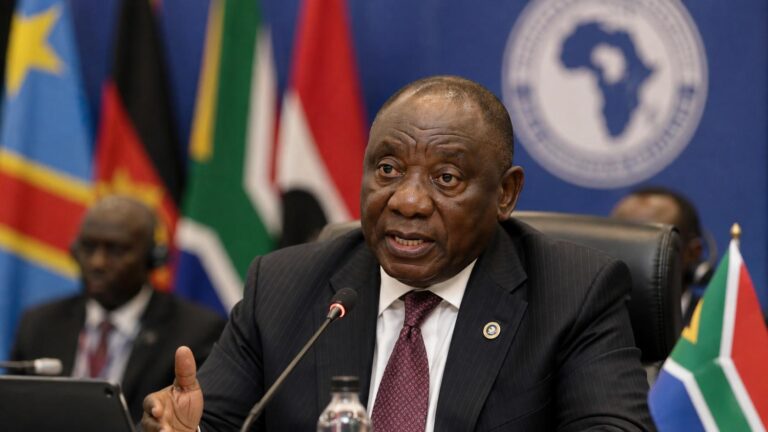
South Africa’s anti-migrant backlash puts SADC unity to the test
Ramaphosa urges Southern African leaders to cooperate on migration as protests and migrant departures expose regional tensions.