
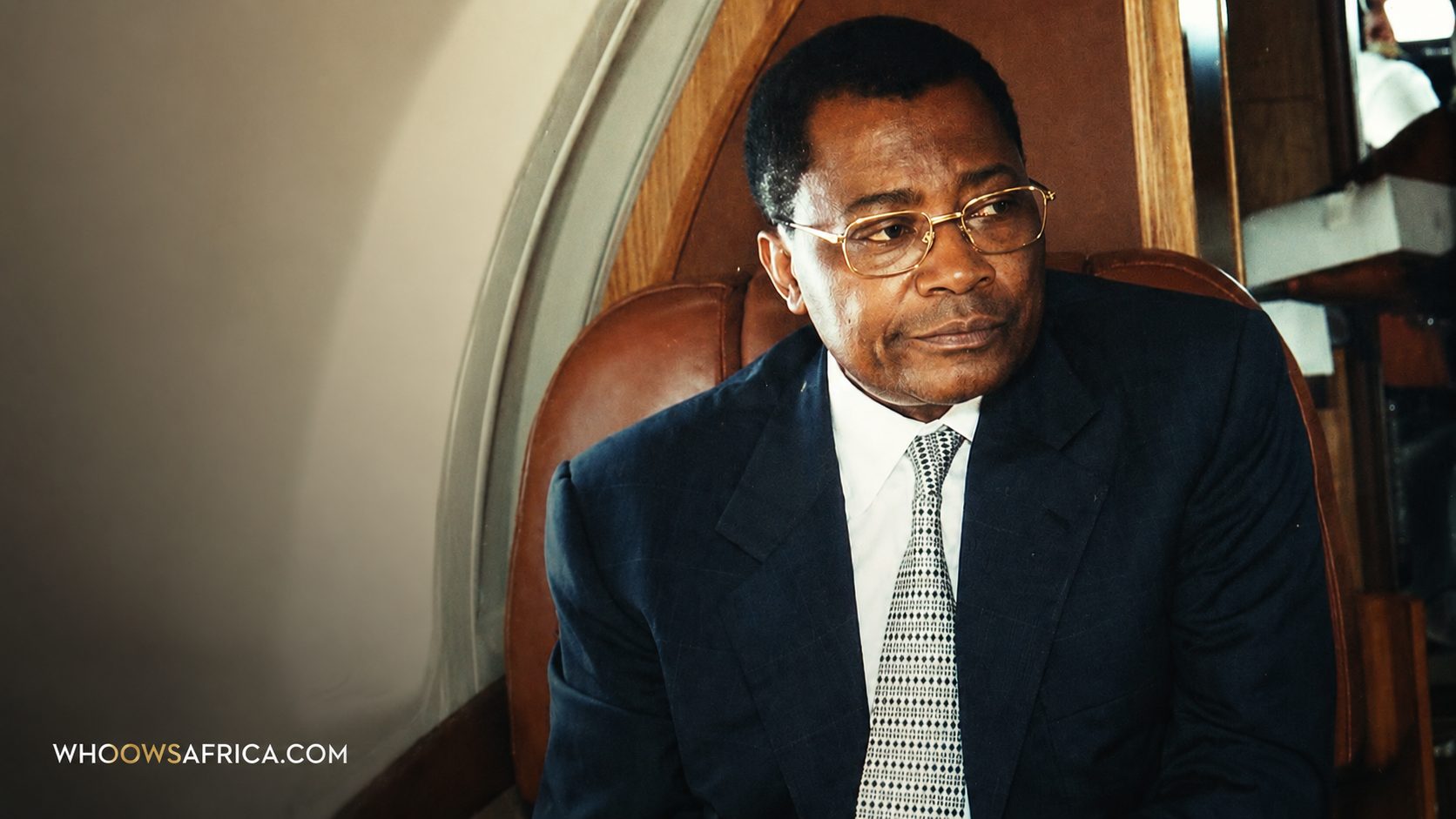
Samuel Dossou-Aworet, a Benin-born oil executive who spent thirteen years running Gabon’s national hydrocarbons agency, has built stakes in two Nigerian energy companies now worth a combined $1.43 billion.
The holdings, in Seplat Energy and Aradel Holdings, were accumulated quietly over two decades through his Geneva-based Petrolin Group, and they place the 81-year-old among the largest individual shareholders in Nigeria’s oil and gas sector, a business he entered from the outside and has never controlled from a boardroom in Lagos.
An apprenticeship in Libreville
Dossou-Aworet was born in Porto-Novo, Benin, in November 1944 and trained as a chemical engineer in Marseille before taking a second qualification at the French Institute of Petroleum in 1972. His path into the oil business ran not through his own country but through Gabon, where he arrived in the mid-1970s to work for the state oil company set up by President Omar Bongo. He rose to become Gabon’s Director General of Hydrocarbons in 1978, a post he held for thirteen years, and he later chaired the OPEC Board of Governors, giving him a rare vantage point over the continent’s oil economics at a formative moment for the industry.
Those years inside Gabon’s petroleum ministry gave him something more durable than a title. He came away with a working knowledge of how African governments negotiate with international oil majors, who controls what within OPEC, and where the industry’s structural weaknesses lay. When he left government service in 1991, he carried that knowledge into the private sector rather than into retirement.
From state adviser to independent trader
In 1992, Dossou-Aworet founded Petrolin Group in London, an oil trading and investment company that he has run for more than three decades as chairman. Operating out of Geneva, Petrolin grew from a trading desk into a group spanning exploration, production, refining and logistics across West and Central Africa, according to the Africa Business Roundtable, an organization he later chaired. He built relationships across more than a dozen African oil-producing states, from Congo and the Democratic Republic of Congo to Nigeria, Namibia and Uganda, positioning Petrolin as an intermediary between local interests and international capital rather than as an operator competing head-on with the majors.
It was through this network that Dossou-Aworet first took a position in Seplat Energy, an independent Nigerian producer founded in 2009 by Ambrosie Bryant Orjiako and Austin Avuru. His wholly owned vehicle, Petrolin Trading Ltd, acquired a stake early in the company’s life, well before Seplat’s 2014 dual listing on the Nigerian Exchange and the London Stock Exchange, and has held onto it through more than a decade of swings in Nigerian oil policy and global crude prices.
The stake that outgrew its price tag
That patience has paid off unevenly but substantially. Petrolin Trading now holds 81,015,319 shares in Seplat, a position of roughly 13.9 percent that has become Nigeria’s largest listed oil and gas company by market value. In April 2026, Seplat became the first stock in the 65-year history of the Nigerian Exchange to close above 10,000 naira a share, a threshold that instantly reset the value of every major shareholder’s position, Dossou-Aworet included. At Friday’s closing price of 13,552.60 naira, his Seplat shares alone are worth about 1.098 trillion naira, or roughly $830.7 million.
The rally was not simply a matter of sentiment. Seplat reported a 144 percent jump in full-year revenue to $2.73 billion, with adjusted earnings up 137 percent, and the stock has since been supported by FTSE Russell’s decision to reclassify Nigeria from an unclassified market to Frontier Market status, effective September 2026, a change that is expected to draw new institutional capital into Nigerian equities as index funds adjust their holdings.
A second, growing bet on Aradel
Seplat is not Dossou-Aworet’s only Nigerian position. A separate Petrolin entity has built up a stake in Aradel Holdings, a smaller but fast-growing integrated energy company, and has added to it steadily rather than all at once. In September 2025, Petrolin Ocean Limited bought 173.79 million additional Aradel shares at an average price of 555 naira, spending about 96.45 billion naira, or roughly $64.4 million, and lifting the combined Petrolin stake in Aradel to 13.77 percent from 8.31 percent just three months earlier.
That buying spree has made Dossou-Aworet Aradel’s largest individual shareholder. At Friday’s closing price of 1,489.80 naira, the stake, held through 532,693,719 shares, is worth about 793.6 billion naira, or roughly $600.5 million. Seplat’s far higher share price, trading at roughly nine times Aradel’s, means the Seplat position remains the larger of the two in dollar terms even though the Aradel share count is more than six times greater.
The Shell deal that redrew the Niger Delta
Dossou-Aworet’s most consequential recent move came through a joint venture rather than a stock purchase. Petrolin was one of five partners, alongside Aradel Energy, Waltersmith Group, ND Western and First E&P, in the Renaissance consortium that agreed in January 2024 to buy Shell’s Nigerian onshore subsidiary, the Shell Petroleum Development Company, in a deal worth up to $2.4 billion. The transaction, reported at the time by Reuters and Bloomberg, closed a century of Shell operations onshore in the Niger Delta after the company had struggled for years with spills, sabotage and litigation tied to the region.
The sale was not straightforward. Nigeria’s oil regulator blocked the deal in October 2024, questioning whether the Renaissance consortium could manage assets holding an estimated 6.73 billion barrels of oil and condensate and more than 56 trillion cubic feet of gas. The government reversed course and approved the transaction two months later, handing Renaissance, and by extension Dossou-Aworet, a 30 percent operating interest in a joint venture that also includes Nigeria’s state oil company, TotalEnergies and Eni. The deal reinforced a broader pattern in the Niger Delta, where Western majors including ExxonMobil and Equinor have also sold onshore assets to Nigerian-led consortia in recent years.
A low profile in a widening portfolio
Despite the scale of his holdings, Dossou-Aworet has kept a lower public profile than many of Nigeria’s best-known oil billionaires, rarely giving interviews and running his business from Geneva rather than Lagos or Abuja. His public disclosures show a portfolio that extends beyond Seplat and Aradel to a stake of about 16.8 percent in London-listed Tullow Oil, though Gabon’s state oil company agreed in 2025 to buy out Tullow’s Gabonese assets, narrowing that part of his footprint. He also chairs ND Western, one of the Renaissance partners, and has held advisory roles with companies including Hess and South Africa’s Engen.
His marriage to Honorine Dossou Naki, who served as Gabon’s ambassador to France and later as the country’s vice prime minister, tied his personal history to Gabonese politics as closely as his professional one, and Gabon granted him honorary citizenship in recognition of his years running its hydrocarbons directorate. That dual identity, Beninese by birth and Gabonese by naturalization, has shaped a career that runs through the boardrooms of at least a dozen African states without settling permanently in any single national industry.
What the numbers suggest next
Whether Dossou-Aworet’s Nigerian bet keeps growing depends heavily on factors outside his control, including the naira’s exchange rate, the pace of foreign inflows tied to Nigeria’s new Frontier Market status, and the trajectory of oil and gas prices through the rest of 2026. Petrolin has also been negotiating the sale of its 40 percent stake in ND Western to Aradel Energy, a transaction still awaiting regulatory approval that would further reshape how his interests are distributed across the two listed companies. For now, the combined $1.43 billion valuation stands as one of the clearer examples of how a career built inside another country’s oil ministry can convert, decades later, into one of the largest individual stakes in Africa’s most valuable energy market.
How the calculations were reached
The $1.43 billion figure is not a single reported number but a sum of two separately disclosed positions, converted at prevailing exchange rates and checked against Friday’s closing prices on the Nigerian Exchange. Seplat and Aradel both publish shareholding disclosures that identify Petrolin’s vehicles by name, which is how outside analysts can track a stake that Dossou-Aworet himself has never publicized. Because the naira has been volatile against the dollar over the past two years, the dollar value of both positions has moved for reasons that have nothing to do with the underlying companies, a reminder that paper wealth denominated in a floating currency can swing sharply even when nothing changes on the ground in the Niger Delta.

More from Oil & Gas
Uganda approves Dangote refinery IPO: Who can invest and what it means
Uganda approves Dangote Refinery IPO access for wealthy investors, raising crucial questions about ownership, investment and Africa’s energy future.
Who will own Dangote refinery after the IPO?
Nigeria's SEC-approved offer sets the stage for Africa's largest share listing, reshaping ownership at the world's biggest single-train oil refinery.
Libya’s $40 billion oil plan: Who will control its next energy boom?
Libya wants billions in new investment to unlock oil wealth, but security, politics and ownership could determine who benefits.