
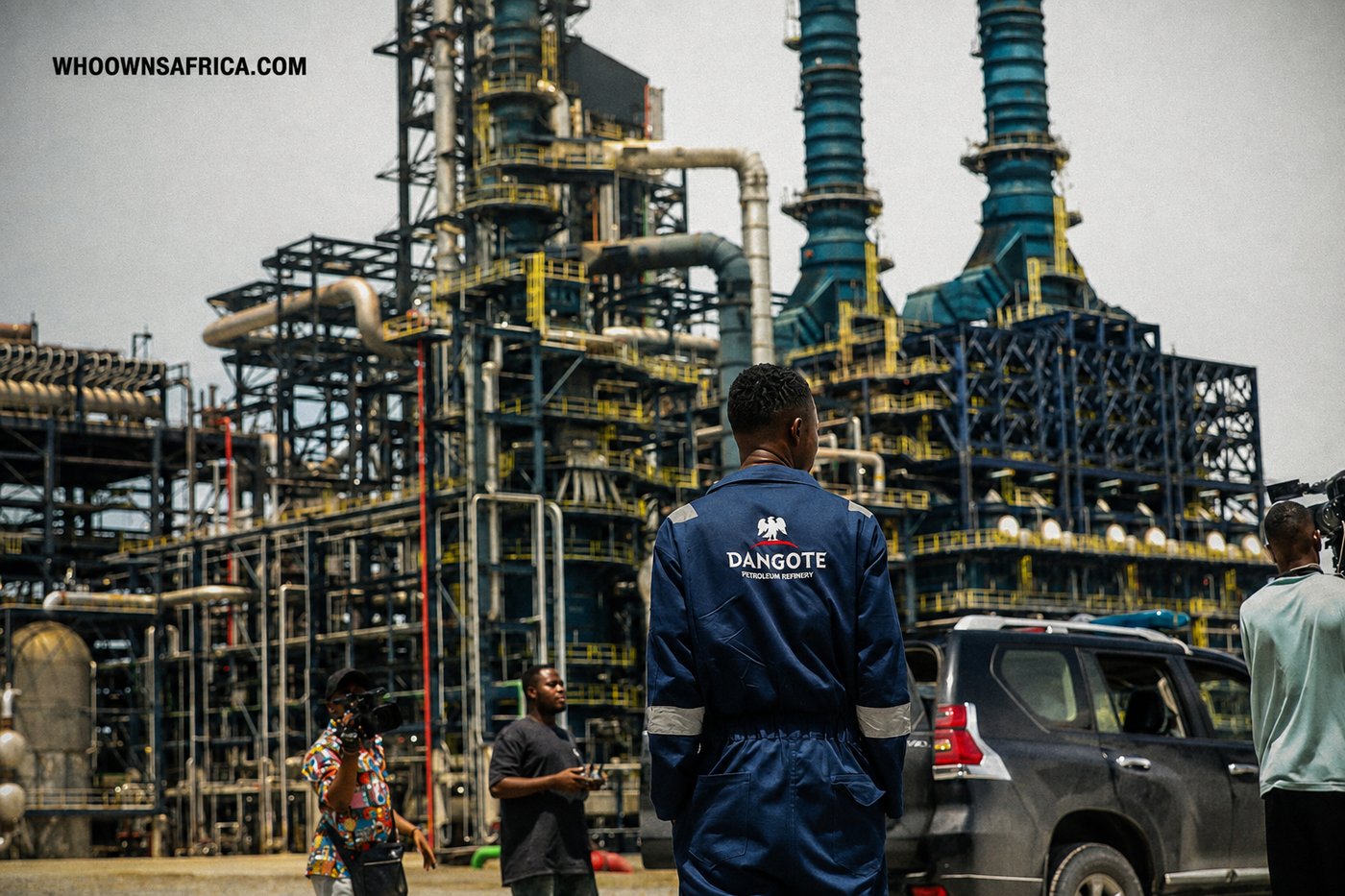
Aliko Dangote’s refinery is preparing to sell shares to the public for the first time, and the numbers behind the offer show just how tightly Africa’s richest man intends to keep his grip on the asset.
Nigeria’s Securities and Exchange Commission has approved an initial public offering priced at 525 naira per share, valuing the Lagos mega-refinery at roughly 47 billion dollars and setting up what could become the largest stock sale in African history.
The listing has drawn attention well beyond Nigeria, partly because of its sheer size and partly because it opens a rare window into who actually owns one of the continent’s most strategically important industrial assets. Behind the headline figures sits a shareholding structure that is more layered than it first appears, involving the founder, a state oil company, and a new class of retail and institutional investors.
How the Offer Is Structured
The IPO involves 4.1 billion new ordinary shares priced at 525 naira each, sitting at the midpoint of an indicative range of 500 to 595 naira. According to regulatory filings reviewed by Nigeria’s Securities and Exchange Commission, the offer could raise about 2.15 trillion naira, or close to 1.55 billion dollars, if fully subscribed. The order book opens on September 14 on the Nigerian Exchange Limited, and the deal carries a 15 percent green shoe option to absorb any excess demand from institutional buyers.
The SEC has also registered the company’s existing 120.13 billion ordinary shares, which is the figure that reveals how the new public shares will sit alongside the stock already held by insiders. Once the new shares are added to that base, the refinery’s enlarged share count will approach 124 billion units in total.
Aliko Dangote’s Stake Before and After
Aliko Dangote currently controls about 92.3 percent of the refinery, equivalent to roughly 110.88 billion shares. At the IPO price, that stake is worth close to 58.21 trillion naira, or about 41.88 billion dollars, a figure that has pushed his personal fortune toward the upper tier of global rich lists.
Once the new shares are issued, his holding is expected to dilute only modestly, from 92.3 percent to about 89.25 percent. That is a small drop for a listing of this size, and it reflects a deliberate choice to sell a relatively thin slice of the company rather than a broad chunk of equity.
The NNPC Stake in the Mix
The refinery’s ownership table also includes Nigeria’s state oil company. NNPC originally agreed to buy a 20 percent stake for 2.76 billion dollars, but Dangote has said the state firm’s holding has since shrunk to 7.2 percent after it failed to pay the balance owed on the deal. A separate wire report on the dispute noted that NNPC was still in talks over financing arrangements at the time.
That leftover gap in payment matters for the IPO conversation, because it means the state’s exposure to Africa’s biggest refinery is smaller today than originally announced, and it leaves more of the pre-IPO equity concentrated with Dangote himself rather than spread toward government ownership.
Dangote Industries and the Corporate Holding Structure
Dangote’s stake in the refinery does not sit in his personal name in a simple sense. It runs through the wider Dangote Industries corporate structure, the holding vehicle that also controls Dangote Cement and Dangote Sugar. That structure allows the founder to keep centralized control across multiple listed and unlisted businesses while raising capital for specific units, such as the refinery, without giving up control of the group as a whole.
This layered ownership is common among Nigeria’s largest conglomerates, and it is one reason the refinery IPO is being watched as a template for how family-controlled industrial giants can access public capital markets without diluting founder control.
Who Are the New Public Shareholders?
The 4.1 billion new shares on offer are aimed at a mix of retail investors, domestic pension funds, and regional African buyers. Nigerian retail investors will be able to apply for shares directly through the NGX offer process, while pension fund administrators are expected to be among the larger domestic buyers given the size of the deal.
An unusual feature of the offer is its currency structure. Dangote has proposed letting investors buy shares in naira while receiving dividends in US dollars, a model designed to shield local shareholders from currency volatility by tying payouts to the refinery’s dollar-denominated export earnings from fuel and petrochemical sales.
Institutional Investors and the Green Shoe Option
Beyond retail participation, the deal is structured to attract larger institutional money. The 15 percent green shoe option gives underwriters room to allocate additional shares if institutional demand outstrips the base offer, a common mechanism in large IPOs designed to stabilize the share price after listing.
The refinery has also already tested institutional appetite through a 2.5 billion dollar private placement that was heavily oversubscribed ahead of the public offer, along with a 1 billion dollar underwriting programme completed in August. Both moves suggest the company was testing demand before setting the final IPO price.
What the Free Float Really Means
Free float refers to the portion of a company’s shares that are available for public trading rather than locked up with insiders. On paper, the 4.1 billion new shares represent only around 3 to 4 percent of the refinery’s enlarged share base of roughly 124 billion shares, once the green shoe option and existing registered stock are factored in.
Dangote Group has separately indicated it plans to float between 5 and 10 percent of the refinery’s total equity over time, which suggests this IPO may be an opening tranche rather than the company’s final word on how much of the business will eventually trade publicly. A thin free float at listing is not unusual for a controlling family that wants to raise capital while limiting how much of the company changes hands in one transaction.
Valuing Africa’s Biggest Refinery
Based on the 525 naira offer price and the enlarged share count, the refinery’s implied valuation works out to roughly 47 billion dollars, a figure that would make it one of the most valuable single industrial assets ever listed on an African exchange. That valuation sits well above the refinery’s original construction cost of about 20 billion dollars, reflecting the market’s view of its earnings potential now that the plant has reached full operational capacity.
The 650,000 barrel-per-day facility reached its nameplate capacity earlier this year, and proceeds from the IPO are earmarked to help fund an expansion toward 1.4 million barrels per day, which would further widen the gap between the refinery’s construction cost and its market value.
Dilution Versus Control
The gap between dilution and control is really the story of this IPO. Selling roughly 3 to 4 percent of an enlarged company is enough to raise over a billion dollars given the refinery’s scale, but it is nowhere near enough to threaten Dangote’s grip on decision-making. Shareholders buying into the offer are effectively buying economic exposure to the refinery’s cash flows and dividends, not a meaningful say in how the business is run.
That trade-off is typical of large emerging-market listings involving founder-controlled companies, where the priority is capital access rather than a broad transfer of ownership.
Voting Power After the Listing
With Dangote’s stake settling at close to 89 percent after the offer, voting control at annual general meetings will remain firmly with him and the Dangote Industries structure behind his holding. NNPC’s diluted position, expected to sit close to 7 percent once its stake is adjusted for the enlarged share base, keeps the state as a minority voice rather than a counterweight to founder control.
New public shareholders, holding a combined single-digit percentage, will have limited ability to influence board composition or major strategic decisions, at least until any future share sales meaningfully widen the free float.
How Much Will Dangote Still Control?
Put simply, Aliko Dangote is expected to remain the dominant shareholder of Africa’s biggest refinery long after the IPO closes, holding close to 89 percent of the enlarged company. That level of control means the listing functions primarily as a capital-raising exercise and a validation of the refinery’s market value, rather than a shift in who runs the business day to day.
What Comes Next
The order book opens on September 14, and investors will be watching both the level of retail demand and how heavily the green shoe option gets used. Dangote has also flagged plans for a secondary listing of Dangote Cement on the London Stock Exchange and a separate coastal refinery project in Kenya, signaling that this IPO is one piece of a broader push to internationalize the group’s capital base.
For now, though, the answer to who will own Dangote Refinery after the IPO looks much like the answer before it. Aliko Dangote will still hold the wheel, the state will keep a minority seat at the table, and a small but historic slice of Africa’s biggest industrial asset will, for the first time, belong to the public.

More from Oil & Gas
Uganda approves Dangote refinery IPO: Who can invest and what it means
Uganda approves Dangote Refinery IPO access for wealthy investors, raising crucial questions about ownership, investment and Africa’s energy future.
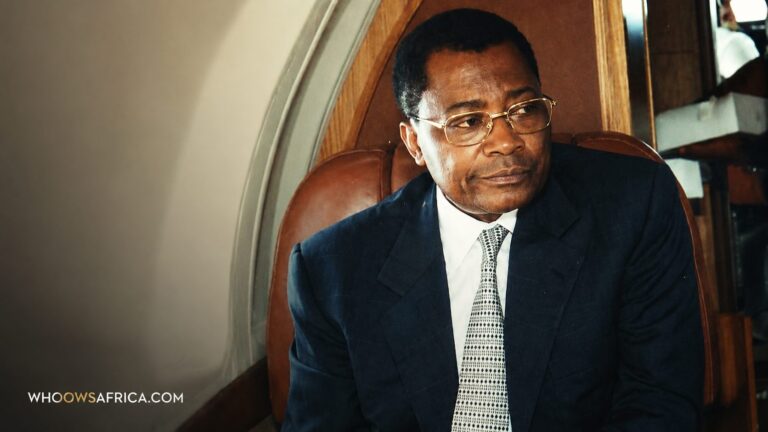
How Samuel Dossou-Aworet built a $1.43 billion stake in Nigeria’s oil industry
A Benin-born engineer who once ran Gabon's national oil sector has quietly assembled one of Nigeria's largest energy fortunes today.
Libya’s $40 billion oil plan: Who will control its next energy boom?
Libya wants billions in new investment to unlock oil wealth, but security, politics and ownership could determine who benefits.