

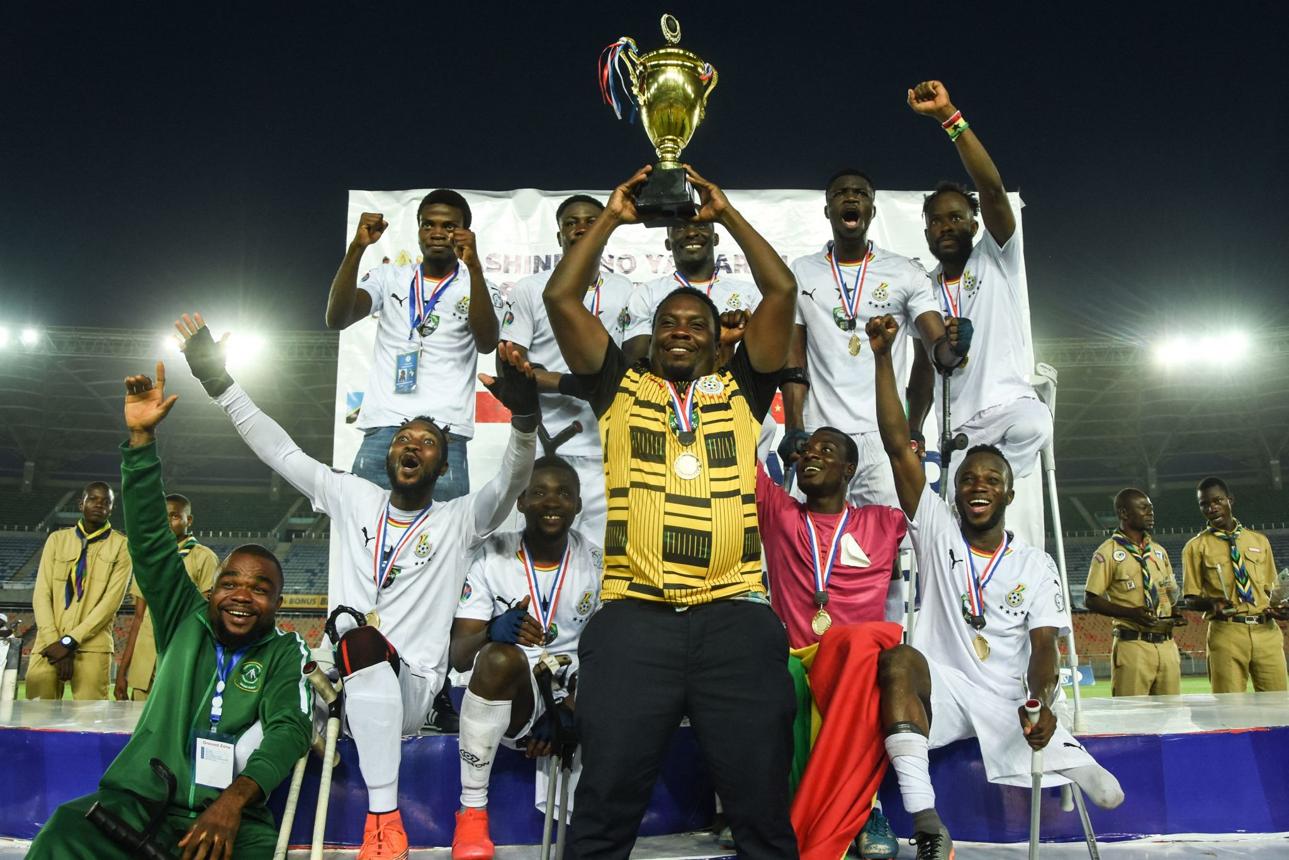
Ghana’s victory in the 2026 World Amputee Football World Cup is more than a sporting achievement. It is a powerful statement about African athletic ability, the possibilities of disability inclusion and the continent’s largely overlooked sporting talent. By defeating Morocco 1–0 in Mexico, the Black Challenge have placed Ghana at the summit of international amputee football and given African disability sports a moment of global visibility. But the significance of this achievement extends beyond the trophy. It raises a bigger question: can Africa turn exceptional performances by athletes with disabilities into a sustainable sporting movement supported by institutions, investment and opportunity?
A historic victory that changes the conversation
On November 22, 2026, Ghana defeated Morocco in the final of the World Amputee Football Federation (WAFF) World Cup in San Juan de los Lagos, Mexico.
The 1–0 victory delivered Ghana’s first world title in amputee football and made the country only the second African nation to win the competition, following Angola’s triumph in 2018.
The final was historic for another reason. It was the first time two African nations had contested the world championship final, demonstrating the growing competitiveness of the continent in a sport traditionally receiving limited international attention.
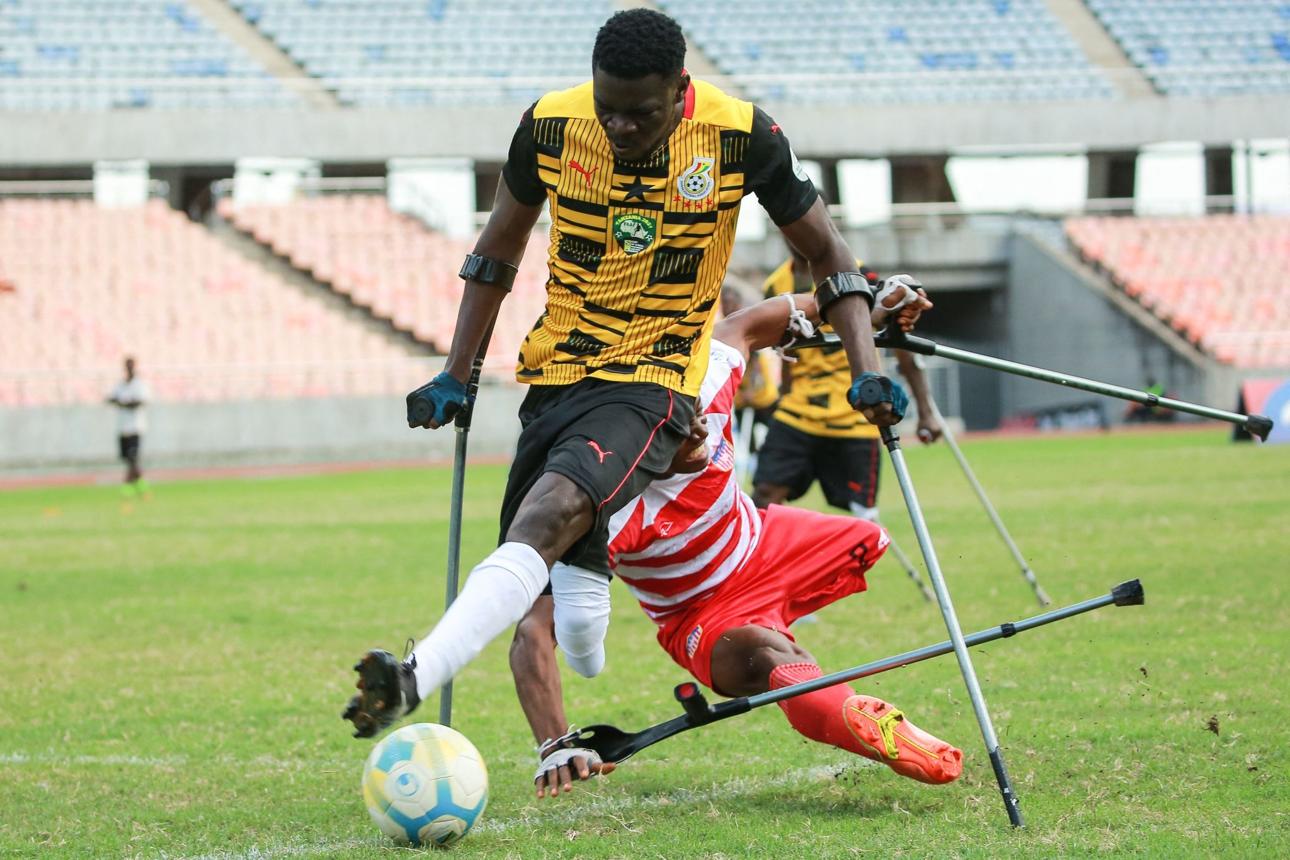
Ghana’s Black Challenge did not arrive at the final through an easy route. After a difficult group-stage beginning, including a defeat against Angola and a draw with Colombia, the team recovered with a convincing 6–0 victory over Iraq.
The knockout campaign demonstrated their growing confidence. Ghana defeated the United States in the round of 16, overcame Egypt in the quarter-finals and eliminated defending champions Türkiye in a tense semi-final decided by penalties after a 1–1 draw.
The victory against Morocco completed an impressive championship campaign.
Individual recognition followed the collective achievement. Ghanaian forward Mohammed Mubarik finished as the tournament’s leading scorer with seven goals, earning the Golden Boot.
The results established something important: African amputee football is not simply participating in international competition. It is capable of winning it.
Africa’s sporting potential beyond mainstream football
African sporting success is frequently measured through established competitions such as the FIFA World Cup, the Africa Cup of Nations, athletics championships and the Olympic Games.
These competitions attract substantial media coverage, commercial sponsorship and political attention. Disability sports, however, rarely receive comparable visibility.
This imbalance reflects a wider problem in the global sporting industry. Athletes with disabilities are often discussed through the language of inspiration and overcoming adversity rather than recognised primarily as professional competitors.
Ghana’s achievement challenges that perception.
The Black Challenge succeeded because of footballing ability, tactical organisation, preparation, discipline and teamwork. These are the same qualities expected of any national football team competing at the highest level.
Their achievement deserves recognition on sporting merit, not merely because the players compete with physical impairments.
The World Amputee Football Federation’s 2026 tournament brought together 24 national teams from four continents. Seven African countries qualified: Algeria, Angola, Egypt, Ghana, Liberia, Morocco and Nigeria.
That representation matters. It shows that amputee football has an established competitive presence across several African countries, creating opportunities for stronger regional rivalries and international development.
It also challenges the assumption that elite disability sport is primarily the preserve of wealthier countries with more developed sporting infrastructure.
Africa’s athletes have demonstrated that competitive excellence can emerge despite resource constraints. The next challenge is ensuring that their achievements receive the institutional support they deserve.
Ghana’s success is the product of sustained continental competition
Ghana’s world championship should not be treated as an isolated sporting miracle.
The country has developed a competitive record in African amputee football over several years.
The Black Challenge won the African Amputee Football Championship in 2021, secured gold at the 2023 African Para Games in Accra and defended their continental title in Cairo in 2024.
Their 2024 victory over Morocco was particularly significant because it established a rivalry that would eventually extend to the global stage.
The 2026 World Cup final represented another chapter in that competition. Ghana once again defeated Morocco, demonstrating the value of continuity, experience and sustained preparation.
There is an important lesson here for African sporting authorities.
International success rarely emerges from a single tournament. It is usually built through domestic competition, coaching, athlete development, institutional support and repeated exposure to high-level opponents.
Ghana’s progress suggests that disability sports can benefit from the same development principles applied to mainstream football.
The country’s experience also offers a model for other African nations seeking to establish stronger para-sport programmes.
Rather than viewing international tournaments as occasional opportunities to showcase athletes, governments and sporting federations should develop year-round structures that identify talent, provide coaching and support competitive progression.
The global disability inclusion debate has a sporting dimension
The significance of Ghana’s achievement becomes clearer when viewed against the wider global disability landscape.
The World Health Organization estimates that approximately 1.3 billion people, representing around 16% of the world’s population, experience significant disability.
This makes disability inclusion an important issue for governments, businesses, educational institutions and sporting organisations worldwide.
Yet participation in sport remains unequal.
In many societies, people with disabilities encounter barriers involving transportation, inaccessible facilities, inadequate equipment, limited financial resources and social attitudes that discourage participation.
These barriers are particularly important in developing countries, where public infrastructure and specialised services may already be under pressure.
The United Nations Convention on the Rights of Persons with Disabilities addresses this issue through Article 30, which recognises the right of persons with disabilities to participate in recreational, leisure and sporting activities on an equal basis with others.
The provision also calls for opportunities to develop disability-specific sporting activities, access appropriate training and resources, and participate in sporting venues.
Ghana’s championship therefore represents more than a sporting milestone. It demonstrates what becomes possible when athletes who are frequently excluded from mainstream sporting opportunities receive the chance to compete internationally.
However, winning a world championship does not automatically remove the barriers experienced by millions of people with disabilities.
The real measure of progress will be whether the achievement encourages wider participation and improves access to sport at community level.
Why African governments should pay attention
Ghana’s victory presents African governments with an opportunity to reconsider how national sporting resources are distributed.
In many countries, disability sports receive considerably less public attention than mainstream sporting competitions.
This can affect everything from access to training facilities and qualified coaches to international travel, medical support, equipment and sponsorship.
The problem is not necessarily a lack of talent. It is often a lack of systems capable of identifying and developing that talent.
For governments, investment in disability sports should be understood as part of broader social and economic development.
Accessible sporting facilities create opportunities for participation among children and adults with disabilities. Community competitions can strengthen social connections, improve physical wellbeing and help challenge discriminatory attitudes.
They can also create professional pathways for athletes, coaches, sports administrators, physiotherapists and technical specialists.
There is an economic dimension too.
International disability sporting events attract audiences, sponsors, broadcasters and tourism opportunities. Countries that invest in competitive para-sport can strengthen their international sporting profiles while developing industries around events, equipment and athlete services.
Ghana’s success offers an opportunity to make that case.
However, policymakers should resist the temptation to celebrate the national team while leaving the wider sporting environment unchanged.
A world champion emerging from a country does not necessarily mean that children with disabilities in that country have equal access to sports facilities.
The distinction between national success and widespread inclusion is essential.
The commercial opportunity Africa is overlooking
One of the least discussed aspects of disability sports is its commercial potential.
African businesses have traditionally concentrated sports sponsorship around mainstream football, high-profile athletes and competitions with established television audiences.
This creates a cycle in which sports receiving sponsorship become more visible, while less commercially developed disciplines struggle to attract investment.
Amputee football offers an opportunity to rethink that approach.
The sport combines competitive football, international representation and compelling sporting narratives. Ghana’s victory has created a story with potential appeal to broadcasters, telecommunications companies, financial institutions, sportswear manufacturers and international development organisations.
For brands, supporting disability sports can provide a meaningful opportunity to demonstrate corporate responsibility while reaching audiences interested in inclusion and sporting excellence.
But sponsorship should go beyond occasional publicity campaigns.
Businesses could support youth academies, provide adaptive sporting equipment, finance domestic competitions and establish long-term partnerships with national disability sporting associations.
Media organisations also have an important role.
African disability sports need consistent coverage, professional storytelling, accessible broadcasts and dedicated sports journalism.
A championship that receives international attention for a few days but disappears from the media afterwards does little to build a sustainable sporting industry.
Ghana’s achievement should therefore encourage broadcasters and digital publishers to treat amputee football as a legitimate competitive sport with continuing audiences and commercial potential.
What other African countries can learn from Ghana
Ghana’s success arrives at a moment when several African countries are developing their own amputee football programmes.
Angola’s 2018 world championship demonstrated that African teams could compete for the highest global honour. Ghana’s victory in 2026 reinforces that achievement and adds another example of African excellence.
The presence of Algeria, Egypt, Liberia, Morocco and Nigeria at the tournament also demonstrates the potential for a stronger continental sporting network.
Regional cooperation could help expand the sport through shared coaching programmes, international friendlies, technical exchanges and more regular competitions.
The African Union and national sporting authorities could also explore ways to integrate disability sports more systematically into youth development and broader sports policies.
Schools, community organisations and rehabilitation centres are particularly important.
Children and young people with disabilities should have opportunities to discover sporting interests before elite competition becomes the only visible pathway.
That requires accessible facilities, trained instructors, affordable equipment and programmes that recognise different forms of disability.
It also requires the involvement of people with disabilities in decision-making.
Athletes and disability organisations should not simply be recipients of sporting programmes designed by others. They should help shape the policies, funding priorities and development structures that affect their participation.
Ghana’s victory can provide the political momentum for these conversations.
The challenges behind the celebration
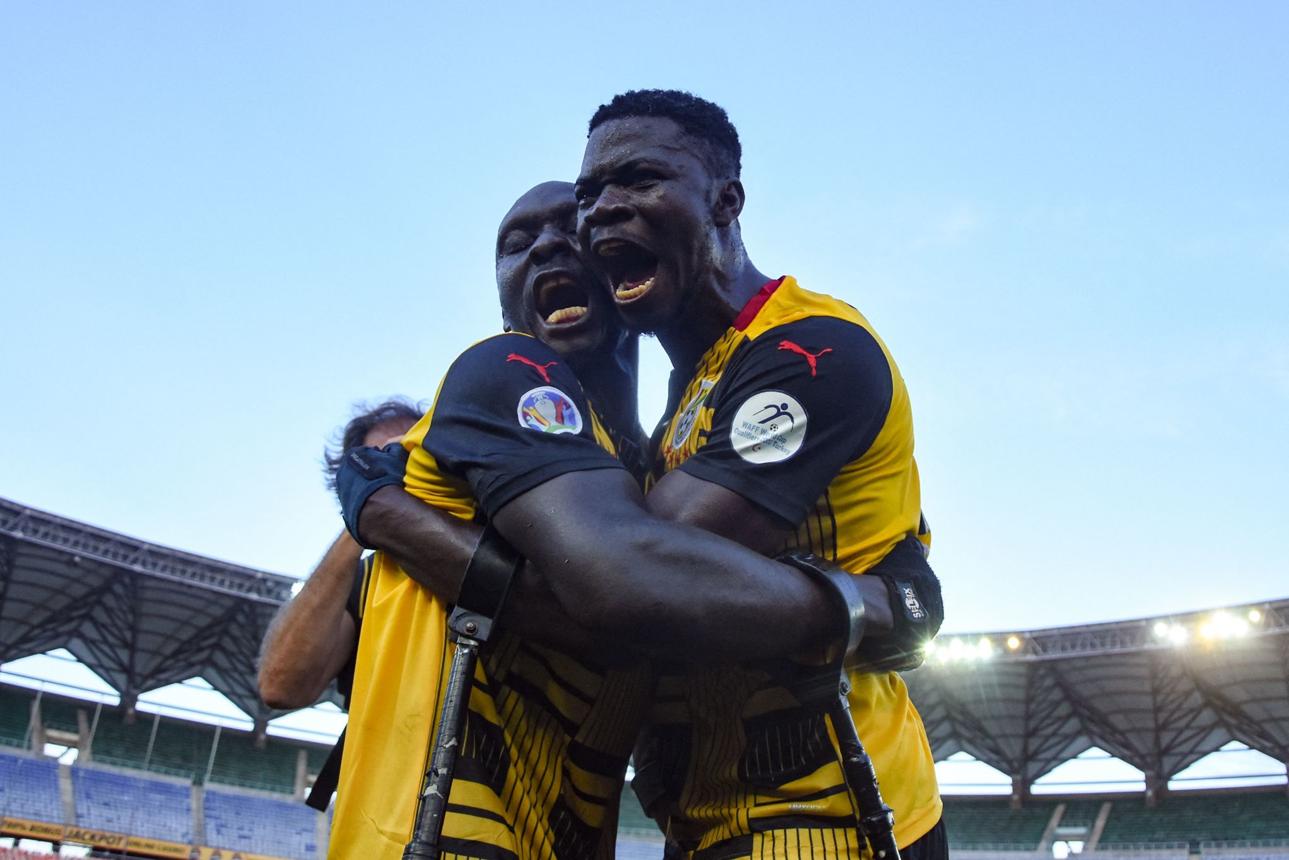
Despite the historic achievement, significant challenges remain.
The first is financial sustainability. Elite sporting programmes require regular funding for coaching, equipment, travel, accommodation, medical services and competition preparation.
Without predictable financial support, national teams can struggle to maintain the standards necessary to remain internationally competitive.
The second challenge is the development of domestic talent.
A national team cannot depend indefinitely on a relatively small group of established players. Sustainable success requires youth development programmes, local competitions and pathways through which new athletes can progress.
The third is visibility.
Disability sports often receive attention when athletes win major competitions, but consistent media coverage remains essential for building public interest and attracting sponsors.
There is also a need to improve accessibility beyond the sporting arena. Transport, public facilities and community infrastructure influence whether people with disabilities can participate in sport in the first place.
These challenges cannot be solved by athletes alone.
They require coordinated action from governments, sporting federations, private businesses, educational institutions and disability organisations.
Ghana must also recognise that winning a world title creates new expectations. Remaining competitive will require the same determination and organisation that delivered the championship.
Turning a world title into a lasting African legacy
The most important question following Ghana’s victory is what happens next.
Will the championship lead to greater investment in amputee football? Will more African children with disabilities gain access to organised sport? Will businesses recognise para-sport as an opportunity worthy of sustained sponsorship? Will sporting institutions provide athletes with the professional structures they need?
These questions matter more than the celebrations surrounding a single final.
Ghana has demonstrated that African disability sports can compete at the highest international level. The achievement also offers a broader challenge to a continent where sporting talent is frequently judged by the resources available to athletes rather than the opportunities they could achieve with proper support.
The Black Challenge have earned their place in sporting history. Their victory should not be reduced to a story about overcoming physical limitations. It should be recognised as a demonstration of elite sporting ability and the value of giving athletes equal opportunities to develop their potential.
For Ghana, the responsibility is to protect and build on this achievement. For other African governments, the opportunity is to recognise disability sport as an essential part of national sporting development.
The world championship trophy belongs to Ghana. But the bigger opportunity belongs to Africa.
If the continent can transform this moment into stronger institutions, accessible facilities, competitive leagues and sustainable investment, Ghana’s victory may eventually be remembered not simply as the day an African team became world champions, but as a turning point in the development of African disability sports.

More from Sports
Rwanda’s $1 billion bet on Formula 1: Who will own Africa’s next global racing hub?
Rwanda’s Formula 1 ambition is about more than racing, it is a calculated attempt to turn Bugesera into Africa’s next investment and luxury destination.
How Yan Diomandé became the most expensive African soccer player in history
From dirt pitches in Abidjan to a record-breaking move to Real Madrid, the 19-year-old Ivorian winger has risen through football with remarkable speed, talent and resilience.
Senegal appoint Patrick Vieira as head coach with AFCON qualifiers looming
Dakar-born Vieira takes charge after World Cup disappointment, with Senegal targeting AFCON qualification and renewed continental success.