

Data centres — the facilities housing the computing servers, networking equipment, storage systems, and power infrastructure on which digital services depend — are foundational physical infrastructure for the digital economy. Every cloud computing service accessed by an African business, every mobile money transaction processed, every streaming video watched, and every government digital service delivered depends ultimately on data centre infrastructure to function. The rapid growth of digital activity across Africa has driven significant investment in data centre capacity, with both domestic and international investors building a new generation of facilities that are reshaping the continent’s digital infrastructure landscape.
The Digital Economy Infrastructure Foundation
The relationship between data centre infrastructure and digital economy development is direct and consequential. When data centre infrastructure is absent or inadequate locally, African digital activity is served by facilities in other regions — primarily Europe — with several consequences: higher latency (slower application response times) that degrades user experience; data sovereignty concerns when sensitive data about African citizens and businesses is stored outside Africa; foreign exchange costs for international bandwidth and cloud services; and limited domestic economic activity from data centre operations. Investment in African data centre capacity addresses all these concerns simultaneously, reducing latency for locally served applications, keeping data within African legal jurisdictions, reducing international bandwidth dependence, and creating domestic economic activity from construction, operations, and the ecosystem of services that cluster around data centre infrastructure.
Growth of African Data Centre Market
The African data centre market has grown substantially over recent years, driven by the rapid expansion of mobile internet usage, the growth of cloud computing adoption by African businesses and governments, the expansion of streaming services to African consumers, and the growth of financial technology services requiring low-latency local processing. South Africa has historically led the continent in data centre capacity, hosting large-scale facilities from both domestic operators and international cloud and colocation providers. Nigeria, Kenya, and Egypt have emerged as the other significant data centre markets, with growing capacity in Côte d’Ivoire, Ghana, Tanzania, Morocco, and several other countries expanding the geographic distribution of African data centre infrastructure beyond its historical concentration in a small number of countries.
Hyperscale Cloud Data Centres
The establishment of hyperscale cloud data centre regions by major global cloud providers — large-scale facilities providing cloud computing services directly from African infrastructure rather than requiring traffic to route through European or other out-of-region facilities — represents a significant development for African digital infrastructure. These hyperscale facilities bring enterprise-grade cloud computing capabilities with local data residency to African markets, enabling businesses and governments to use cloud services with lower latency, better reliability, and compliance with data sovereignty requirements than routing through out-of-region infrastructure allows. The presence of a major cloud provider’s regional data centre in a market also tends to stimulate broader digital ecosystem development, as the cloud platform becomes a foundation on which local digital businesses and services are built.
Power and Cooling Challenges
Data centres are among the most energy-intensive commercial buildings, requiring large, reliable, and high-quality power supplies operating continuously with minimal interruption to serve the computing equipment they house. In African markets where grid electricity reliability is limited and power outages are common, providing the power quality and reliability that data centres require necessitates significant investment in backup generation, uninterruptible power supply systems, and in some cases dedicated renewable energy generation. Cooling — removing the heat generated by dense computing equipment — is another significant operational challenge, with cooling systems accounting for a large share of total data centre energy consumption. The hot climates in many African locations increase cooling energy requirements compared to data centres in temperate climates, though innovations in cooling technology and data centre design are reducing the cooling energy penalty of operating in warmer environments. The high energy cost and the sustainability implications of data centre power consumption are significant considerations for operators in an environment of both constrained grid supply and growing corporate sustainability expectations.
Connectivity and the Submarine Cable Foundation
The value of African data centre investment depends critically on the international connectivity infrastructure — submarine fibre optic cables connecting Africa to global internet networks — that links African data centres to the broader internet. The substantial expansion of submarine cable capacity serving the African coast over the past fifteen years has dramatically reduced the cost and improved the reliability of international bandwidth, and has been a necessary prerequisite for the commercial viability of African data centre investment. Data centres that are not well-connected to multiple submarine cable landing stations face reliability and competitive disadvantages, making connectivity infrastructure a key consideration in data centre location decisions and in the planning of data centre ecosystems in specific markets.
Edge Computing and Distributed Infrastructure
Beyond large-scale centralised data centres, the concept of edge computing — bringing processing and storage closer to the users and devices generating and consuming data, rather than routing all traffic to centralised facilities — is gaining relevance in African contexts as a way of addressing latency and connectivity challenges in markets where access to centralised cloud data centres may be slow or unreliable. Small-scale edge computing infrastructure deployed in cities, at mobile network base stations, or at commercial premises can process time-sensitive applications locally while maintaining connectivity to centralised cloud systems for less latency-sensitive functions. Edge computing applications in African contexts include local processing of video surveillance and IoT sensor data, content caching for streaming services to reduce bandwidth requirements, and support for applications in areas with intermittent connectivity to centralised infrastructure.
Looking Ahead
African data centre investment is likely to continue growing rapidly, driven by the structural demand growth of digital adoption, cloud computing expansion, and streaming service penetration. The geographic distribution of capacity will gradually broaden beyond the current leading markets as secondary cities and countries develop the business case for local data centre investment. Sustainability — particularly the energy and water footprint of data centre operations in resource-constrained environments — will be an increasingly important dimension of data centre development decisions, driving adoption of renewable energy, improved cooling efficiency, and responsible resource management in the African data centre sector’s next phase of growth.

More from Tech

How Nigeria is building Africa’s next AI talent powerhouse
Nigeria is combining public investment, university programmes and private-sector infrastructure to turn its large technology workforce into an AI-driven economic advantage.
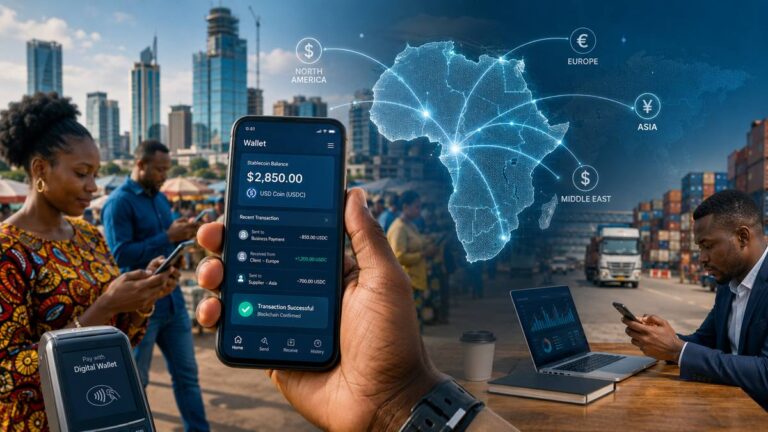
Why Stablecoins could transform Africa’s $1 trillion payments market
Africa’s growing digital economy is creating demand for faster, cheaper cross-border payments, putting stablecoins at the centre of a new financial infrastructure race.

Who owns Africa’s internet? Big tech’s new scramble for the continent
Global tech giants are pouring money into cables, cloud infrastructure and satellites, reshaping who controls Africa's digital future.