

LAGOS — The energy transition debate intersects with Africa’s oil and gas sector in ways that are simultaneously economically consequential and morally complex, touching questions of development justice, historical equity, resource sovereignty and the pace of global decarbonization that have no easy resolution. The practical question facing African oil and gas-producing countries — Nigeria, Angola, Algeria, Libya, Mozambique, Senegal, Ghana, Uganda and others — is how long the global demand and price environment for their primary export will remain favorable enough to justify the continued investment needed to develop and maintain production, and what the revenue trajectory from hydrocarbons means for their fiscal planning over the next two to three decades.
The energy transition has not yet materially reduced African hydrocarbon export revenues. Global oil demand has remained stronger than several earlier transition forecasts projected, sustained by transportation fuel demand in Asia and developing markets that have not yet achieved the vehicle electrification penetration levels changing demand patterns in North America and Europe. Natural gas demand has been additionally supported by the European energy shock following Russia’s Ukraine invasion, which accelerated the development of liquefied natural gas export infrastructure in Mozambique and Senegal that might otherwise have proceeded more slowly.
Nigeria’s response to the energy transition challenge has been complicated by the structural fiscal problems that have made it difficult to translate oil revenue into development investment even during periods of favorable prices. The country’s long-standing challenge of oil revenue financing consumption rather than capital accumulation — reflected in infrastructure deficits, human development gaps and industrial underdevelopment persisting alongside decades of substantial hydrocarbon export revenue — means that the energy transition threat compounds a prior failure of resource wealth conversion rather than threatening an otherwise well-managed development trajectory.
Mozambique’s natural gas development represents a case study in the complexity of resource development in low-income, fragile-state contexts. The Rovuma basin gas fields attracted major international oil company investment commitments including TotalEnergies, ExxonMobil and ENI. The subsequent insurgency in Cabo Delgado province created security conditions that caused TotalEnergies to declare force majeure on its onshore LNG project and suspend construction in 2021, delaying a resource development that had been expected to transform Mozambique’s fiscal position. The episode illustrated that resource wealth development in fragile security environments carries risks that the financial calculations of resource investment models may underweight.
The natural gas versus coal policy debate within Africa’s energy transition is contested. Several African countries have argued that natural gas — a lower-carbon fossil fuel than coal — should be treated as a transition fuel eligible for climate finance support, given that the electricity access and energy security problems facing African countries require firm baseload power that current renewable and storage technology cannot fully provide at competitive cost across all African grid configurations. The response from international climate finance institutions has been mixed, with several major development banks having adopted policies limiting financing for natural gas projects even in African contexts where the alternative is continued coal use or no electricity generation at all — a policy stance that African governments have criticized as applying developed-world energy transition assumptions to countries at very different development stages.
The resource governance reforms needed to ensure that Africa’s remaining hydrocarbon development period delivers maximum developmental benefit — transparent revenue collection, efficient resource management, robust anti-corruption frameworks and investment of revenue in productive assets rather than current consumption — are as important as any commercial or geological factor in determining what the oil and gas sector’s remaining productive period means for African development outcomes. Countries that use the remaining window of hydrocarbon revenue to invest in the human capital, infrastructure and institutional quality that will sustain economic activity after hydrocarbons are less commercially attractive will be in a fundamentally different position in the 2040s than those that allow resource revenue to maintain current consumption patterns without building productive foundations for a post-hydrocarbon economy.

More from Business

Who gets to own Africa’s biggest industrial projects? The Dangote IPO reveals the barriers
Africa’s biggest refinery share sale raises a fundamental question about wealth creation: can Africans invest across borders as easily as capital moves across continents?

ICEA Lion: The Ndegwas buy back what they once sold
The ICEA Lion buyback is more than a family deal; it exposes the changing balance between local capital, foreign investors and control.
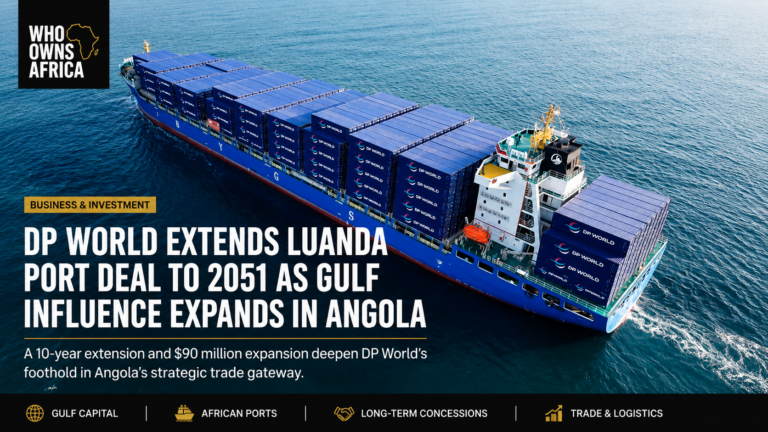
DP World extends Luanda port deal to 2051 as Gulf influence expands in Angola
DP World’s Luanda extension reveals how Gulf capital is reshaping African trade infrastructure through long-term concessions, logistics and strategic access.