
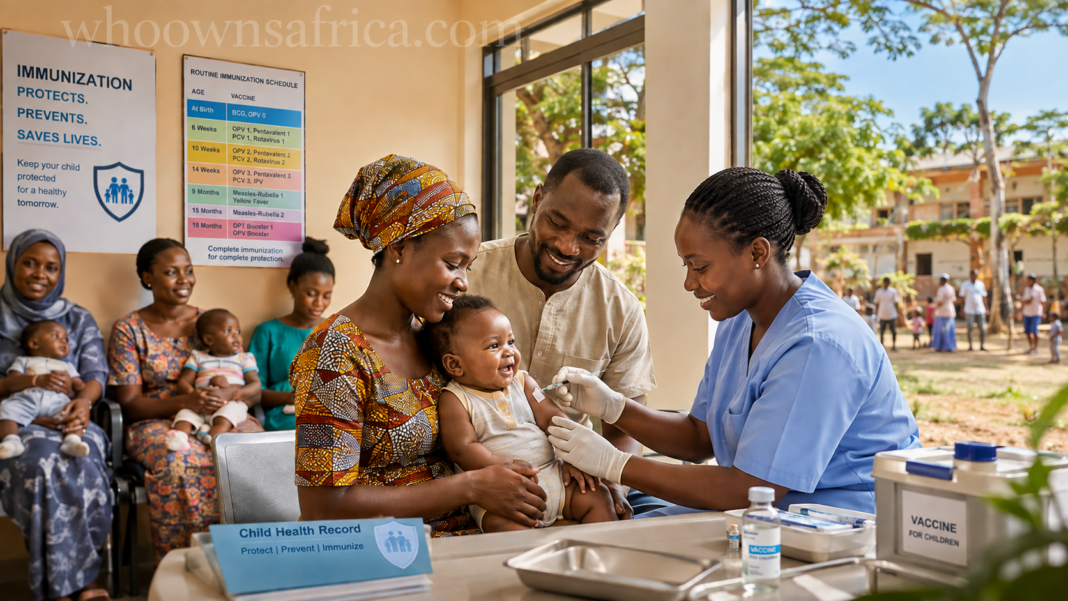

Vaccination has eradicated smallpox, nearly eliminated polio, and dramatically reduced deaths from measles, diphtheria, and pertussis. Yet vaccine hesitancy — fuelled by misinformation — is a growing threat in several African communities. Every African parent deserves accurate, complete information about childhood immunisation.
How Vaccines Work
Vaccines train the immune system to recognise and fight specific pathogens without causing the disease itself. They introduce a harmless form of the pathogen — killed or weakened organism, a key surface protein, or mRNA instructions. The immune system produces antibodies and memory cells. If the vaccinated person later encounters the actual pathogen, their immune system responds rapidly and powerfully.
Core EPI Schedule for African Children
At Birth: BCG (severe TB protection), Oral Polio Vaccine (first dose), Hepatitis B (prevents mother-to-child transmission).
6, 10, and 14 Weeks: Pentavalent vaccine (diphtheria, tetanus, pertussis, hepatitis B, Hib meningitis) in three doses; Oral Polio additional doses; Pneumococcal Conjugate Vaccine (PCV) — protects against pneumonia and meningitis; Rotavirus vaccine — oral, prevents severe childhood diarrhoea.
9 Months: Measles-Rubella first dose; Yellow Fever (single dose, lifelong protection); Meningitis A vaccine (critical in the Sahel meningitis belt).
15–18 Months: Measles-Rubella second dose — catches children who didn’t mount full response to first dose.
Malaria Vaccine (RTS,S): Now being rolled out in high-burden countries. Given in four doses; significantly reduces severe malaria cases in young children.
Addressing Common Concerns
“Vaccines cause the disease.” False for the vast majority. Live attenuated vaccines use weakened forms that cannot cause disease in healthy people. Mild reactions (slight fever, soreness) are signs the immune system is responding — not signs of disease.
“My child is healthy — they don’t need vaccines.” Healthy children still get sick from and die from vaccine-preventable diseases. Vaccination protects before exposure, not after illness begins.
“Traditional herbs can replace vaccines.” No herbal remedy provides the specific, durable immunity against dangerous pathogens that vaccines provide. Herbs can complement healthcare but cannot replace immunisation.
Missed Vaccines
It is never too late to catch up. Contact your nearest health facility for a catch-up schedule. Partial vaccination provides partial protection — completing the schedule restores full protection.
Disclaimer: Follow your national immunisation schedule and consult your child’s healthcare provider for personalised vaccination guidance.

