

Construction — the planning, design, and building of structures including residential housing, commercial buildings, infrastructure, and industrial facilities — is one of the largest industries in Africa by employment and economic activity, and one of the most directly responsive to the continent’s most pressing economic needs. As urbanisation drives demand for housing and commercial space, as governments and development finance institutions invest in infrastructure, and as rising incomes create markets for better-quality commercial and residential buildings, the construction sector occupies a central position in African economic development. Yet significant constraints on contractor capacity, project finance availability, and technical skills limit the sector’s ability to fully meet the scale of demand it faces.
Infrastructure Construction
Infrastructure construction — roads, bridges, railways, airports, ports, power plants, water treatment facilities, and telecommunications towers — has been the most significant driver of large-scale construction activity across the continent, particularly in the major public investment programs of the past two decades. Governments and development finance institutions have invested heavily in infrastructure, recognising that infrastructure gaps are among the most binding constraints on economic competitiveness and development. Large infrastructure construction contracts are typically awarded through competitive procurement processes, with international contractors — particularly from China, Europe, and increasingly from other emerging market countries — winning a significant share of major contracts given their access to financing, large project management capacity, and competitive pricing. Domestic contractors have generally been more competitive on smaller to medium-scale projects where their local knowledge, established relationships, and lower overhead costs offset the scale and financing advantages of international firms.
Housing Construction
Residential housing construction — building the homes needed for the continent’s rapidly growing urban populations — is quantitatively one of the largest construction market segments, encompassing formal developer-built housing at various price points, government-sponsored affordable housing programs, and the large informal construction sector through which the majority of African urban housing is actually built. Informal self-construction — households building their own homes incrementally using cash savings and family labour without formal architectural or engineering involvement — accounts for a very large share of actual housing production in most African cities, reflecting the reality that formal developer-built housing at any price point is beyond the financial reach of most urban households, and that the formal construction sector has not developed products and delivery models suited to the cost constraints of lower-income urban markets.
Commercial and Industrial Construction
Commercial construction — office buildings, retail centres, hotels, warehouses, logistics facilities, and industrial plants — is driven by private sector investment and economic growth, with construction activity tracking the expansion of commercial and industrial activity in growing economies. Commercial construction markets have generally benefited from the same urbanisation and economic growth trends that drive housing demand, and in several major cities significant volumes of commercial real estate have been developed over the past decade. Industrial construction, including manufacturing facility development and the expansion of processing and production infrastructure, is growing as African manufacturing sector development strategies translate into actual investment, though it remains below its potential in most markets given the constraints on manufacturing sector development discussed elsewhere.
Contractor Capacity Constraints
A persistent challenge in African construction markets is the limited capacity of domestic contractors, particularly for large and complex projects. The most significant domestic construction companies in most African markets are competitive for medium-sized projects but often lack the project management capacity, equipment, specialist technical capability, and working capital needed to execute very large infrastructure and commercial construction contracts. This capacity constraint means that the largest contracts are frequently won by international contractors, limiting the employment and skills development benefits that construction investment generates domestically. Building domestic contractor capacity — through access to finance for equipment investment, technical training programs, mentorship relationships with larger contractors, and procurement policies that create opportunities for domestic firms — is an important dimension of maximising the developmental impact of construction investment.
Construction Finance
Access to construction finance — the working capital and bridge financing that contractors need to mobilise projects and maintain cash flow between payment milestones — is a significant constraint for many African construction companies, particularly domestic firms. Construction projects typically require contractors to incur significant upfront costs — for materials, equipment mobilisation, and labour — before receiving progress payments from clients, creating a working capital gap that must be financed. Commercial bank lending for construction working capital is available in most markets but is typically expensive and subject to collateral requirements that many contractors find difficult to meet, particularly smaller and growing domestic firms. Late payment by government clients — a chronic issue in several countries, where budget constraints or administrative inefficiencies delay progress payments to contractors — exacerbates the working capital challenge and in some cases creates financial distress for otherwise viable construction businesses.
Skills and Technology
The construction sector requires a broad range of technical skills — from basic masonry, carpentry, and electrical work through to civil engineering, project management, and quantity surveying — and skills development is an important enabler of both construction sector productivity and employment quality. Vocational training programs for construction trades, engineering university programs, and professional certification frameworks for project managers and engineers all contribute to building the human capital base the sector needs. Technology adoption in construction — including building information modelling for design and construction management, prefabricated construction systems that improve speed and quality consistency, and digital project management tools — is gradually improving productivity in more sophisticated construction companies, though adoption remains limited to a minority of firms in most markets.
Looking Ahead
Construction demand across Africa is likely to remain strong for the foreseeable future, driven by urbanisation, infrastructure investment programs, and commercial development, providing a large and growing market for both local and international construction businesses. Maximising the development impact of this construction activity — through building domestic contractor capacity, improving payment practices, developing affordable housing delivery models, and building the skilled construction workforce the continent needs — will require deliberate policy effort and sustained investment alongside market-driven growth in the sector itself.

More from Business

Who gets to own Africa’s biggest industrial projects? The Dangote IPO reveals the barriers
Africa’s biggest refinery share sale raises a fundamental question about wealth creation: can Africans invest across borders as easily as capital moves across continents?

ICEA Lion: The Ndegwas buy back what they once sold
The ICEA Lion buyback is more than a family deal; it exposes the changing balance between local capital, foreign investors and control.
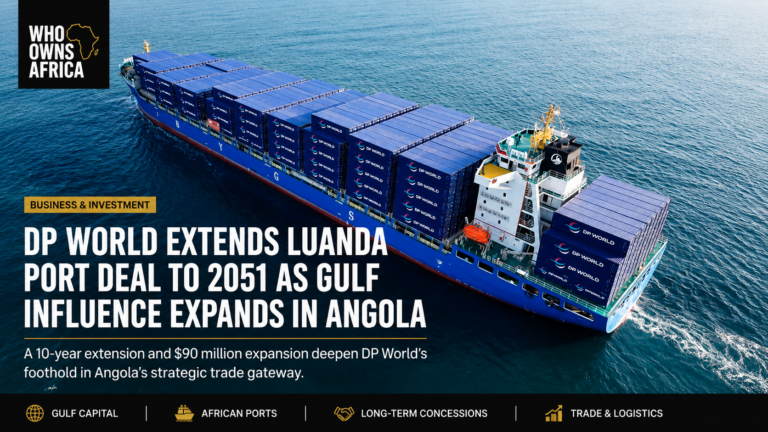
DP World extends Luanda port deal to 2051 as Gulf influence expands in Angola
DP World’s Luanda extension reveals how Gulf capital is reshaping African trade infrastructure through long-term concessions, logistics and strategic access.