

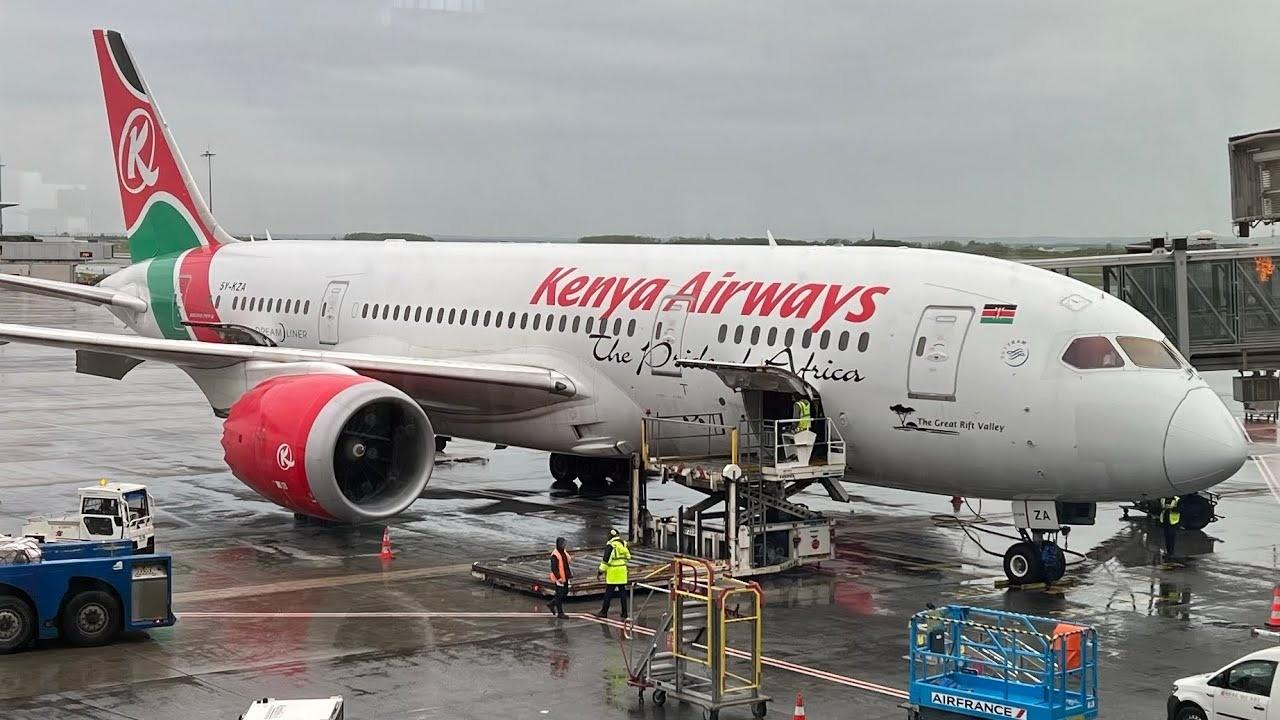
Kenya Airways is searching for $1.5 billion in fresh investment, but the bigger question is whether new capital will rescue the airline or fundamentally change who controls one of East Africa’s most strategic businesses.
The battle behind the $1.5 billion
Kenya Airways is looking for more than a financial lifeline. Its search for a strategic investor represents a potentially defining moment in the ownership of one of Africa’s most important aviation businesses. Behind the proposed $1.5 billion capital raise lies a complicated contest involving government interests, existing creditors, international investors and the future of Nairobi as a regional aviation gateway.
The airline’s financial difficulties have become increasingly difficult to separate from its strategic ambitions. High fuel prices, aircraft maintenance problems, shortages of spare parts and substantial debt have weakened its ability to compete effectively, even as demand for international air travel remains important to Kenya’s economic ambitions.
On November 27, 2026, Reuters reported that Kenya Airways intended to raise $1.5 billion through a combination of equity and debt from a strategic investor by the middle of 2027. Chairman Kiprono Kittony said the airline wanted a long-term partner with patient capital and was no longer limiting its search to other airlines. Sovereign wealth funds and other financial investors could also participate.
That change in approach deserves attention. Kenya Airways is effectively broadening the search from an aviation partnership into a much larger investment exercise.
The central question is no longer simply who can provide the money. It is who will have sufficient influence over the airline’s future after providing it.
A national airline with a complicated ownership structure
To understand the significance of the proposed investment, it is necessary to examine who currently owns Kenya Airways.
The airline is publicly listed, but its ownership structure reflects years of financial restructuring and government intervention.
According to its 2025 annual report, the Kenyan National Treasury held 48.90 per cent of the company’s shares at December 31, 2025. KQ Lenders Company 2017 Limited held 37.91 per cent, while Dutch airline KLM held 7.76 per cent. The remaining shares were distributed among employees and other investors.
These figures reveal an important feature of Kenya Airways: its ownership is already divided between the state, creditors and an international aviation partner.
The government’s substantial position gives it considerable influence over the airline’s strategic direction. Meanwhile, the lenders’ shareholding reflects the consequences of previous financial restructuring.
The proposed fundraising could therefore alter an ownership arrangement that has already been shaped by successive rescue efforts.
However, it would be premature to assume that the government intends to surrender control or that a foreign investor will automatically become the majority shareholder. The final outcome will depend on the amount of equity offered, the investment structure, shareholder agreements and the conditions attached to new financing.
For investors, these details will matter as much as the headline valuation.
Why the airline needs another financial rescue
Kenya Airways’ financial position illustrates why the search for capital has become urgent.
Its 2025 annual report recorded revenue of approximately KSh161.5 billion, compared with KSh188.5 billion in 2024. The airline moved from a net profit of KSh5.4 billion in 2024 to a net loss of approximately KSh17.2 billion in 2025.
Passenger numbers also declined from approximately 5.23 million to 4.56 million.
The deterioration continued into 2026.
Reuters reported on November 27 that the airline expected its 2026 earnings to decline by at least 25 per cent year-on-year. Fuel prices had increased by approximately 70 per cent following the outbreak of the Iran war, while airlines had been able to increase fares by only around 20 per cent.
The pressure has extended beyond fuel.
Spare-parts shortages and maintenance difficulties have left 11 Boeing and Embraer aircraft grounded, reducing available capacity and limiting the airline’s ability to take advantage of passenger demand.
These problems expose the vulnerability of an airline operating in an industry where expensive aircraft, specialised maintenance and fuel purchases require substantial working capital.
The financial challenge is particularly serious because reduced fleet availability can create a damaging cycle. Fewer operational aircraft mean fewer available seats, potentially lower revenue and less capacity to spread fixed operating costs across flights.
Restoring aircraft to service is therefore not simply an engineering exercise. It is central to the airline’s financial recovery.
The debt problem behind the investment search
Perhaps the most important consideration for prospective investors is the scale of Kenya Airways’ financial obligations.
Reuters reported that the airline’s debt had reached approximately KSh328 billion against assets of KSh180 billion at the end of June 2026.
This imbalance makes the proposed fundraising more complicated than a conventional expansion investment.
An investor providing billions of dollars will want to understand how much of the money will finance growth, how much will address existing obligations and how much will be required to restore normal operations.
The Kenyan government has already approved significant financial support.
The measures include a proposed conversion of approximately KSh122 billion in government loans into an equity-qualifying financial instrument and a $350 million cash injection, with $100 million already disbursed, according to Reuters.
These measures are intended to strengthen the airline’s balance sheet and improve its ability to attract new capital.
However, converting existing debt into an equity-related instrument is not the same as generating new operating revenue. Nor does a government injection automatically resolve weaknesses in fleet management, maintenance, route economics or commercial performance.
The distinction is important.
Kenya Airways needs a stronger balance sheet, but it also needs a business model capable of generating sustainable returns without repeated emergency support from taxpayers.
Who could become Kenya Airways’ next strategic investor?
The airline has not publicly identified a successful investor or confirmed a final ownership arrangement. Nevertheless, its decision to widen the search beyond other airlines creates several possible investment pathways.
International airlines and aviation groups
An established airline could offer more than money. It could provide access to aircraft, maintenance networks, technical expertise, international partnerships, distribution systems and operational knowledge.
Such an arrangement could strengthen Kenya Airways’ competitive position and improve its ability to connect African destinations with international markets.
However, an airline investor would also have commercial interests of its own. Questions about route competition, network priorities, management autonomy and the allocation of traffic would need careful consideration.
A partnership should strengthen Nairobi’s position rather than turn Kenya Airways into a secondary extension of another carrier’s network.
Sovereign wealth funds
The possibility of sovereign wealth fund participation is particularly significant.
These investment institutions generally manage national wealth over longer periods and can potentially provide the patient capital required by businesses undergoing extensive restructuring.
Funds from the Gulf, Asia and other international markets could find Kenya Airways attractive because of its strategic position in East African aviation.
However, sovereign investment is not necessarily passive. Investors may demand board representation, commercial guarantees, influence over major decisions or other protections in exchange for substantial capital.
Kenya must therefore distinguish between investment that strengthens the airline and investment that creates new strategic dependencies.
Private equity and institutional investors
Private equity firms and other institutional investors could also consider the opportunity.
Their attraction would likely depend on whether Kenya Airways can demonstrate a credible route towards profitability, stronger governance and more predictable cash flows.
These investors may be less interested in the symbolism of owning a national airline and more concerned with whether the business can produce acceptable financial returns.
That difference could introduce greater commercial discipline, but it could also generate pressure to reduce costs, restructure operations and reconsider less profitable routes.
For Kenya, the challenge will be ensuring that commercial restructuring does not undermine the airline’s wider economic and regional responsibilities.
The Ethiopian Airlines comparison
Kenya Airways’ search for a strategic investor is also taking place against the background of an increasingly competitive African aviation industry.
The most significant regional comparison is Ethiopian Airlines.
Unlike Kenya Airways, Ethiopian Airlines has developed a strong combination of state backing, operational scale, expanding international connections and infrastructure investment.
Ethiopia’s proposed $12.5 billion Bishoftu International Airport project demonstrates the extent of its ambition to strengthen its aviation position.
The project is designed to support an airport capable of handling up to 110 million passengers annually when fully developed.
The contrast is instructive.
Kenya is trying to strengthen an established international airline while managing significant financial and operational constraints. Ethiopia is investing in an expanding aviation ecosystem built around a growing national carrier.
This does not mean Kenya Airways has lost its competitive advantages. Nairobi remains an important commercial, diplomatic, tourism and logistics centre.
However, geographical advantage alone cannot guarantee aviation leadership.
An airline requires reliable aircraft, competitive operating costs, efficient management and sufficient investment to maintain its international network.
Kenya Airways must address these fundamentals if it hopes to compete with increasingly ambitious continental rivals.
What is at stake for Kenya’s economy?
Kenya Airways is more than a passenger transport company.
Its operations are connected to tourism, international business, trade, employment, cargo transportation and the country’s wider investment reputation.
A strong national carrier can help attract international visitors, improve business connectivity and support exporters transporting time-sensitive products.
Its importance is particularly relevant to Kenya’s horticultural industry, which depends on reliable international transportation to reach markets in Europe and other destinations.
The airline also contributes to Nairobi’s position as an important regional gateway for multinational companies, international organisations and commercial institutions operating across East and Central Africa.
A prolonged decline could create opportunities for competing aviation hubs to capture more connecting passengers, cargo business and associated economic activity.
That is why the investment decision should not be evaluated solely through the amount of money raised or the percentage of shares sold.
Kenya must also consider what the transaction means for its wider economic infrastructure.
For additional context, readers can explore Who Owns Africa’s analysis of Ethiopia’s $12.5 billion aviation hub ambitions.
The danger of selling influence without securing value
One of the most difficult decisions facing Kenya’s policymakers will be determining how much control a new investor should receive.
A large equity injection could dilute existing shareholders and change the balance of influence within the company.
Alternatively, a predominantly debt-based arrangement could preserve the existing shareholding structure while adding further financial obligations.
Neither approach is automatically superior.
Equity can strengthen the balance sheet without creating conventional repayment obligations, but it may require existing shareholders to surrender part of their ownership.
Debt can provide financing without immediate dilution, but it introduces interest costs, repayment commitments and potentially restrictive financial conditions.
A mixed structure may offer greater flexibility, provided the airline can manage its obligations.
The government should therefore insist on transparency over valuation, investor selection, governance rights and the long-term economic implications of the transaction.
It must also guard against a situation in which public resources absorb the financial risks while private investors secure disproportionate control over the airline’s future commercial opportunities.
This is not an argument against foreign investment. Kenya needs international capital and expertise. It is an argument for negotiating from a position of informed national interest.
The wider debate about African ownership and investment is explored in Who Owns Africa’s feature on who gets to own Africa’s biggest industrial projects.
Can Kenya Airways become profitable again?
The answer will depend on whether new investment is accompanied by operational reform.
The airline must restore grounded aircraft, improve fleet utilisation, strengthen maintenance arrangements and manage fuel exposure more effectively.
It also needs to examine the profitability of its routes, the competitiveness of its fares, cargo opportunities and the efficiency of its commercial operations.
Fleet expansion alone will not guarantee recovery. Additional aircraft can increase revenue potential, but they also introduce leasing, maintenance, staffing and fuel costs.
The airline must ensure that capacity growth is supported by commercially sustainable demand.
Governance will be equally important.
Investors will want confidence that management decisions are based on commercial considerations, that procurement is transparent and that political intervention does not undermine operational discipline.
The government, meanwhile, must recognise that protecting a national carrier does not mean shielding it indefinitely from accountability.
A successful turnaround requires a balance between strategic national interests and the financial discipline expected of a competitive international business.
The ownership decision that could reshape African aviation
Kenya Airways’ $1.5 billion fundraising exercise is ultimately about more than rescuing an airline from financial pressure.
It is about determining who will finance, influence and potentially shape one of East Africa’s most strategically important businesses over the next generation.
The airline has a valuable international network, an established brand and a strategically important base in Nairobi. These strengths provide a foundation for recovery, but they cannot compensate indefinitely for debt, operational weaknesses and inadequate investment.
The emergence of a new investor could mark the beginning of a stronger commercial chapter. It could also create difficult questions about ownership, national influence and the distribution of economic value.
For Kenya, the objective should not be to find the wealthiest investor or simply to secure the largest cheque.
It should be to find a partner capable of improving the airline’s competitiveness while respecting the country’s long-term economic interests.
The most consequential decision will therefore not be how much Kenya Airways raises. It will be what Kenya agrees to give in return, what the investor is required to deliver and whether the resulting partnership creates an airline capable of standing on its own financial strength.
The future of Kenya Airways will not be decided by the $1.5 billion alone. It will be decided by who controls the decisions that follow it.

More from Business
Zimbabwe’s $1.3 billion airport cargo hub: A new battle for Africa’s logistics market
Harare’s cargo village could reshape Zimbabwe’s export economy, but infrastructure alone cannot secure regional logistics leadership or guarantee commercial success.

Kenya’s oil wealth: Who really benefits when South Lokichar starts exporting oil?
Kenya's emerging oil industry raises critical questions about ownership, foreign investment, government revenues and whether Turkana communities will finally benefit.

10 African billionaire families behind the continent’s biggest companies
From cement and luxury goods to banking, mining and telecommunications, these families have turned capital into lasting corporate power across Africa.