

Private education — schools, colleges, universities, and skills training providers operated by non-government entities — has expanded dramatically across Africa at every level of the education system over the past two decades, driven by capacity constraints in public education systems, rising middle-class demand for higher-quality and more employment-relevant education, and entrepreneurial recognition of the large and growing market for private educational services. From affordable low-fee private schools in urban informal settlements to premium international schools and private universities offering globally recognised qualifications, the private education sector spans a remarkable range of quality, cost, and market positioning.
Private Primary and Secondary Schools
Private school enrolment has grown rapidly across African countries at both primary and secondary level, and in some urban markets private schools now educate a substantial minority of the student population. The private school sector is internally diverse: at the top of the market, expensive independent and international schools offer curricula aligned with British, American, or International Baccalaureate standards and serve expatriate families and affluent domestic families seeking internationally recognised qualifications. At the middle market, mid-priced private schools offer perceived quality advantages over local government schools — smaller classes, better-resourced facilities, and more structured teaching — at fees accessible to urban middle-class families making significant investment in their children’s education. At the bottom of the market, low-fee private schools operate in urban informal settlements and lower-income areas, often in basic facilities, but attract families who prefer them to neighbourhood government schools despite their poverty of resources, based on perceptions of better discipline, teaching commitment, and school management.
Private Higher Education
Private universities and colleges have proliferated across many African countries, addressing the enormous unmet demand for higher education that public university systems — constrained by funding, infrastructure, and staff shortages — cannot accommodate. Private higher education institutions offer degree programs in a range of disciplines, with business, information technology, and applied fields attracting the largest enrolments given their perceived employability relevance. Quality varies enormously: some private universities provide genuinely valuable higher education, while others offer degrees of limited academic or professional value from institutions with minimal academic infrastructure. Regulatory quality assurance for private higher education — accreditation systems ensuring minimum standards of faculty qualifications, facilities, and program quality — is an important but variably effective mechanism for protecting students from enrolling in institutions that cannot deliver on their educational promises.
Vocational and Skills Training
Private vocational training providers — offering practical skills development in areas including information technology, hospitality, construction trades, healthcare support, and business skills — have grown substantially, partly filling gaps left by under-resourced public technical and vocational education systems and partly responding to employer demand for workers with specific practical skills that the general education system does not produce. The quality and employment relevance of private vocational training varies, with the most successful programs maintaining strong links to industry employers who input into curriculum design, provide workplace placements, and recruit graduates, while less well-connected programs may offer certificates of limited practical value. Short-course and bootcamp-format skills training, delivered digitally or in intensive in-person formats, has grown rapidly particularly in technology skills — coding, data analysis, digital marketing — where there is clear and growing employer demand and where the skills can be effectively taught in shorter, more intensive formats than conventional degree programs require.
Investment and Business Models
Private education has attracted significant private equity investment, driven by the large and growing market, the relatively stable revenue streams from tuition fees, and the potential for developing scalable multi-site school or university networks with shared curriculum and management infrastructure. Investment has been concentrated in the premium and mid-market segments where fee levels support commercial returns, with affordable and low-fee segments less attractive to conventional private equity given the thin margins at low price points. EdTech integration — using digital platforms to extend reach, reduce per-student delivery costs, and improve learning outcomes — is an important dimension of private education business model development, both for reducing the capital intensity of expansion and for adapting to hybrid learning models that the COVID-19 pandemic normalised across most education markets.
Quality, Accountability, and Regulation
The rapid expansion of private education has outpaced regulatory capacity in many African markets, with private schools and colleges operating under varying degrees of quality oversight. Concerns about the quality of some private education institutions — teachers without formal training, misleading marketing claims about qualifications recognised, inadequate facilities, and abrupt school closures leaving students without their investment in tuition — have generated calls for stronger regulatory oversight alongside recognition of private education’s contribution to expanding access. Effective quality regulation of private education requires accreditation systems with genuine standards, sufficient regulatory capacity to assess and monitor compliance, clear sanctions for non-compliance, and market information that allows prospective students and parents to make informed provider choices — capabilities that remain works in progress across most African education regulatory systems.
Equity and Access Implications
The expansion of private education raises important equity questions. Where private schools offer genuinely better education than public alternatives, their concentration among families who can afford fees means that educational advantage tracks socioeconomic status more directly, reinforcing inequality in educational outcomes and ultimately in economic opportunity. The resources that relatively affluent families direct to private school fees also reduce the political constituency for improved public education funding, since the families with most political voice are not dependent on public schools. At the same time, the expanded access that private education provides for the many students who could not otherwise attend post-secondary education represents a genuine inclusion contribution. Managing this tension — capturing the access benefits of private education while ensuring public education quality improves rather than deteriorating as political attention fragments — is one of the most important education policy challenges facing African governments.
Looking Ahead
Private education in Africa will continue growing as populations expand, incomes rise, and the demand for qualifications and skills that improve employment prospects intensifies. The quality of that private education — whether it genuinely prepares students for productive economic participation or primarily provides credentials of limited practical value — will be a major determinant of whether private education expansion contributes to or detracts from the human capital development that African economic transformation requires. Regulatory systems that effectively assure minimum quality standards while preserving space for genuine innovation in educational delivery represent the most important policy priority for a sector that will shape the skills and capabilities of Africa’s growing young population.

More from Business

Who gets to own Africa’s biggest industrial projects? The Dangote IPO reveals the barriers
Africa’s biggest refinery share sale raises a fundamental question about wealth creation: can Africans invest across borders as easily as capital moves across continents?

ICEA Lion: The Ndegwas buy back what they once sold
The ICEA Lion buyback is more than a family deal; it exposes the changing balance between local capital, foreign investors and control.
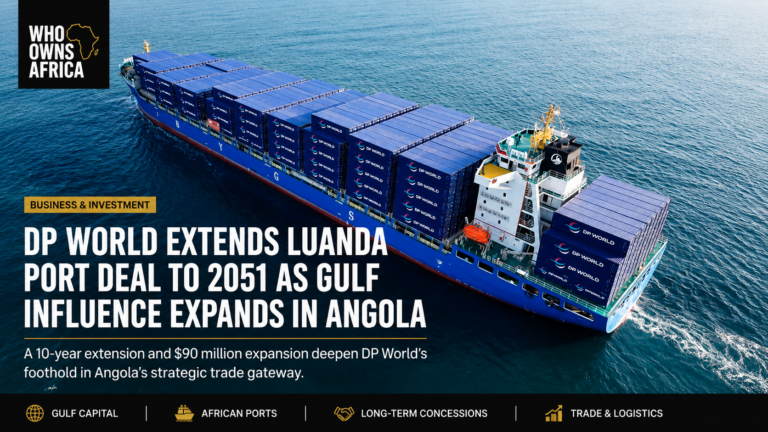
DP World extends Luanda port deal to 2051 as Gulf influence expands in Angola
DP World’s Luanda extension reveals how Gulf capital is reshaping African trade infrastructure through long-term concessions, logistics and strategic access.