

Private healthcare — medical services delivered by non-government, for-profit or not-for-profit providers including private hospitals, specialist clinics, diagnostic laboratories, pharmacies, and health technology companies — plays an increasingly significant role in African healthcare delivery alongside public sector health systems. For middle and upper-income urban populations who can afford private care, private providers often offer faster access, better facilities, and more consistent quality than overcrowded and under-resourced public facilities, creating a significant and growing market for healthcare business investment. Understanding the structure, economics, and development trajectory of private healthcare in Africa requires engaging with a sector that is both a major business opportunity and a critical public health infrastructure.
The Private Healthcare Market Structure
Private healthcare in Africa encompasses a broad spectrum of provider types and scales. At the large end of the market, private hospital groups — some publicly listed, some backed by private equity — operate networks of hospitals across multiple African countries, offering a range of specialist and general medical services at fees significantly above public sector costs. At the smaller end, individual private practitioners operating clinics or consulting rooms, small private hospitals serving specific local markets, and independently operated diagnostic laboratories collectively serve a large volume of patients. Pharmacy retail chains and independent pharmacies constitute another significant private healthcare segment, dispensing prescription and over-the-counter medicines and in many settings providing basic primary care advice. This diversity of private healthcare provision creates a complex ecosystem serving different income segments with different quality and service levels.
Drivers of Private Healthcare Demand
Several factors drive demand for private healthcare services across African markets. Overcrowding in public facilities — long waiting times, limited medicine availability, and in some cases substandard care quality — motivates patients who can afford alternatives to seek private care even for conditions that could in principle be treated in the public system. Middle-class income growth creates a larger population able to afford private care costs or private health insurance, expanding the addressable market for private providers. Urbanisation concentrates populations in cities where private healthcare infrastructure is more developed and accessible. And the growth of employer health benefit programs covering employees’ private healthcare costs creates an institutional demand that supports private provider business models independent of individual out-of-pocket affordability constraints.
Investment in Private Hospital Networks
Private equity investment in African healthcare, particularly in private hospital networks, has been one of the most active areas of healthcare sector investment over the past decade. Investors have been attracted by the combination of strong demand growth, the defensible competitive positions of established hospital brands, the ability to generate stable cash flows once facilities are operational, and the social impact narrative that healthcare investment provides alongside financial returns. Several significant pan-African private hospital groups have been assembled through organic growth and acquisition, providing a consolidated platform for healthcare delivery across multiple countries. International hospital management companies and medical device and pharmaceutical companies have also invested in African healthcare infrastructure as a means of securing market access to the growing patient base and building relationships with the healthcare professionals who influence treatment and product choices.
Public-Private Partnerships in Healthcare
The boundary between public and private healthcare is increasingly blurred through public-private partnership arrangements in which private providers deliver healthcare services using public facilities or under contract to public healthcare payers. Governments contracting private providers to deliver specific services — managing referral hospitals under performance-based management contracts, operating district health facilities on behalf of ministries of health, or providing specific specialist services not available in the public system — represent one important model for improving service quality and operational efficiency in public healthcare while leveraging private sector management expertise. Health insurance scheme contracting of private providers, allowing insured patients to access services from accredited private facilities under national insurance arrangements, represents another important mechanism through which private healthcare capacity contributes to broader healthcare access beyond the minority that can afford out-of-pocket private care costs.
Pharmaceuticals and Medical Supply Chain
The pharmaceutical retail and distribution sector is a large and growing component of the African private healthcare economy, with medicine availability and affordability having direct consequences for patient outcomes across both public and private healthcare settings. Private pharmaceutical distribution networks, wholesale distributors, and retail pharmacy chains collectively manage the last mile of medicine delivery to patients and healthcare facilities. The availability of affordable generic medicines — which provide the same therapeutic benefit as branded originator medicines at much lower cost — is critically important for healthcare access at scale, and private sector distributors and pharmacies play an important role in ensuring generic availability alongside branded products. Medicine counterfeiting and substandard quality are serious concerns in some markets, requiring robust quality assurance systems and regulatory enforcement to protect patients from ineffective or harmful products sold as medicines.
Diagnostics and Medical Technology
Private diagnostic services — pathology laboratories, radiology facilities, cardiac testing centres, and other diagnostic services — are an important complement to clinical medical care, and the quality and accessibility of diagnostics directly affects the quality of clinical decision-making and ultimately patient outcomes. Private diagnostic services have expanded significantly in several African markets, providing faster turnaround times and more comprehensive test menus than most public facility laboratories, at prices accessible to middle-class patients and to those with health insurance coverage that includes diagnostic benefits. Medical equipment companies and diagnostics businesses have invested in point-of-care testing technology specifically adapted to low-resource settings, reducing the reliance on centralised laboratory infrastructure for common tests and improving diagnostic access in facilities that cannot support full laboratory services.
Looking Ahead
Private healthcare in Africa is well-positioned for continued strong growth, supported by demographic and income trends, the persistent capacity gap in public healthcare systems, and growing health insurance market development that expands the financially accessible patient pool. The most significant challenges facing the sector — skilled healthcare workforce recruitment and retention, affordable capital access for facility expansion in some markets, and the regulatory and reimbursement frameworks governing public-private partnerships and insurance contracting — will shape how quickly and equitably private healthcare growth translates into improved population health outcomes rather than primarily serving a wealthier minority while the majority continue to depend on under-resourced public systems.

More from Business

Who gets to own Africa’s biggest industrial projects? The Dangote IPO reveals the barriers
Africa’s biggest refinery share sale raises a fundamental question about wealth creation: can Africans invest across borders as easily as capital moves across continents?

ICEA Lion: The Ndegwas buy back what they once sold
The ICEA Lion buyback is more than a family deal; it exposes the changing balance between local capital, foreign investors and control.
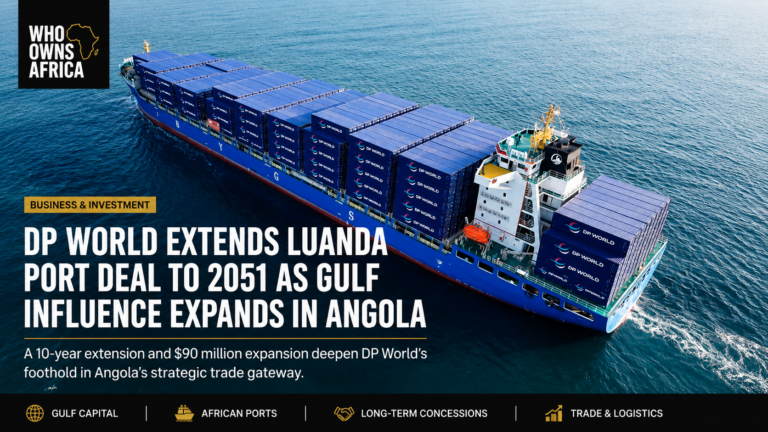
DP World extends Luanda port deal to 2051 as Gulf influence expands in Angola
DP World’s Luanda extension reveals how Gulf capital is reshaping African trade infrastructure through long-term concessions, logistics and strategic access.