

The rapid growth of African cities is generating dramatically increasing volumes of solid waste — household garbage, commercial waste, construction debris, electronic waste, and industrial byproducts — that existing waste management infrastructure and systems are in many cases severely insufficient to handle. The consequences of inadequate waste management are visible across much of the urban landscape: uncollected waste accumulating in public spaces and waterways, open dumping that contaminates soil and groundwater, burning of waste that degrades air quality, and the public health consequences of living environments contaminated by improperly managed waste. At the same time, growing volumes of waste represent a resource — materials that can be recovered, recycled, and reintroduced into the economy — and the circular economy opportunity embedded in Africa’s growing waste stream is beginning to attract business investment and entrepreneurial innovation.
The Waste Collection Gap
In many African cities, formal waste collection services reach only a portion of the population, typically concentrated in more prosperous central and residential areas where collection is economically viable at the tariff levels that households and businesses can pay. Peri-urban and informal settlement areas frequently have limited or no formal collection service, either because the road access needed for collection vehicles is inadequate or because the economic model of formal collection does not work at the low tariff levels that lower-income residents can afford. The result is that significant proportions of urban waste are not formally collected, instead accumulating or being informally disposed of in ways that create public health and environmental hazards. Informal waste management activities — small-scale collectors using carts or tricycles to collect and transport waste for a fee from households unserved by formal systems — partially fill this gap, representing a significant informal economy of waste services that formal systems need to work with rather than against.
The Informal Recycling Sector
Across African cities, large numbers of people work as informal waste pickers — collecting recyclable materials from waste streams including household collection points, dump sites, and public spaces — and selling those materials to scrap dealers and recyclers for processing. This informal recycling sector provides livelihoods for many people and plays an important practical role in material recovery, diverting significant volumes of metals, plastics, paper, and glass from disposal into recycling streams. The working conditions of informal waste pickers are often hazardous and the economic returns are typically very low, but the sector provides employment to people with limited alternative livelihood options and contributes meaningfully to urban material recovery in the absence of sufficient formal recycling infrastructure. Several cities have experimented with formal integration of waste pickers into solid waste management systems — providing training, protective equipment, improved market access for recovered materials, and in some cases formal collection contracts — with generally positive outcomes for both waste picker livelihoods and waste management system performance.
E-Waste: A Growing Challenge
Electronic waste — discarded phones, computers, televisions, batteries, and other electrical equipment — is one of the fastest-growing waste categories globally and is growing particularly rapidly across Africa as mobile phone penetration and consumer electronics adoption increase. E-waste contains both valuable recoverable materials — gold, copper, cobalt, and other metals — and hazardous substances including lead, mercury, and flame retardants that require careful management to prevent environmental and human health contamination. Informal e-waste processing — burning circuit boards and wires to recover metals — is widely practiced in some locations and creates serious environmental and health hazards. Developing formal e-waste collection and processing infrastructure, including producer responsibility schemes that require electronics manufacturers to fund end-of-life management of their products, is a growing policy priority across the continent as e-waste volumes continue to grow.
Business Opportunities in Waste
Growing waste volumes and increasing recognition of the value embedded in waste streams have attracted growing entrepreneurial and investment interest in waste-related businesses across Africa. Plastic waste collection and recycling businesses — converting post-consumer plastic waste into recycled plastic pellets for use in manufacturing — have become one of the most active areas of waste economy entrepreneurship, supported by both domestic demand for recycled plastics in local manufacturing and growing export markets for specific recycled plastic grades. Organic waste composting and biogas production from food and agricultural waste represent circular economy opportunities particularly relevant in African contexts given the high proportion of organic material in urban solid waste and the value of compost and biogas as agricultural inputs and energy sources respectively. Construction and demolition waste recycling, metal scrap collection and processing, and oil and solvent recycling are other waste economy business activities with established operations in several African markets.
Plastic Pollution and Policy Response
Plastic pollution — the accumulation of plastic waste in the environment, including rivers, coastal waters, and soils — has become one of the most visible and concerning environmental problems across many African countries, generating strong public concern and regulatory response. A growing number of African countries have introduced bans or levies on single-use plastic bags and, in some cases, other single-use plastic products, aimed at reducing the volume of lightweight plastics that are most likely to become environmental litter. These policy measures, while important for reducing pollution at source, have been accompanied by varying levels of enforcement and by questions about the economic impact on small businesses that use plastic packaging and consumers who rely on affordable plastic bags for everyday shopping. Integrated approaches that combine reduction measures with improved waste collection and recycling infrastructure are generally seen as more comprehensive responses to the plastic pollution challenge than single-measure interventions alone.
Extended Producer Responsibility
Extended producer responsibility — policy frameworks requiring producers of goods to take financial or operational responsibility for the end-of-life management of their products and packaging — is being introduced in a growing number of African countries as a mechanism for financing waste management and recycling infrastructure without placing the full burden on government or consumers. Producer responsibility schemes, in which companies that put packaging or products onto the market contribute to a fund or scheme that finances collection and recycling, can generate sustainable financing for waste management infrastructure from the value chain most able to incorporate these costs. Several African countries have introduced or are developing extended producer responsibility regulations covering packaging, electronics, and batteries, with the specific design of schemes varying considerably in terms of producer obligations, compliance verification, and how collected funds are managed and deployed.
Looking Ahead
Africa’s waste management sector is at an inflection point, with urbanisation-driven waste volume growth outpacing existing collection and disposal infrastructure in many cities while simultaneously creating growing opportunities for circular economy businesses and investment in waste processing infrastructure. Addressing both the immediate waste collection gap and the longer-term opportunity of material recovery will require a combination of public investment in collection infrastructure, enabling policy frameworks including extended producer responsibility and landfill regulations that incentivise recycling over disposal, support for the informal waste sector’s integration into formal systems, and continued growth of the waste economy business ecosystem that is emerging across the continent’s most active entrepreneurial markets.

More from Business

Who gets to own Africa’s biggest industrial projects? The Dangote IPO reveals the barriers
Africa’s biggest refinery share sale raises a fundamental question about wealth creation: can Africans invest across borders as easily as capital moves across continents?

ICEA Lion: The Ndegwas buy back what they once sold
The ICEA Lion buyback is more than a family deal; it exposes the changing balance between local capital, foreign investors and control.
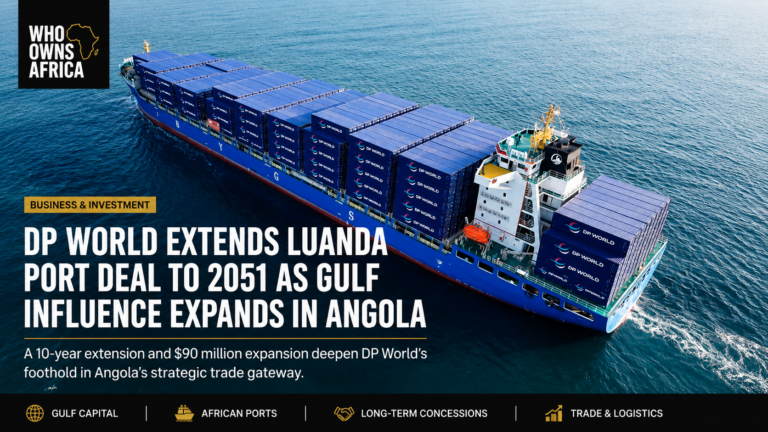
DP World extends Luanda port deal to 2051 as Gulf influence expands in Angola
DP World’s Luanda extension reveals how Gulf capital is reshaping African trade infrastructure through long-term concessions, logistics and strategic access.