

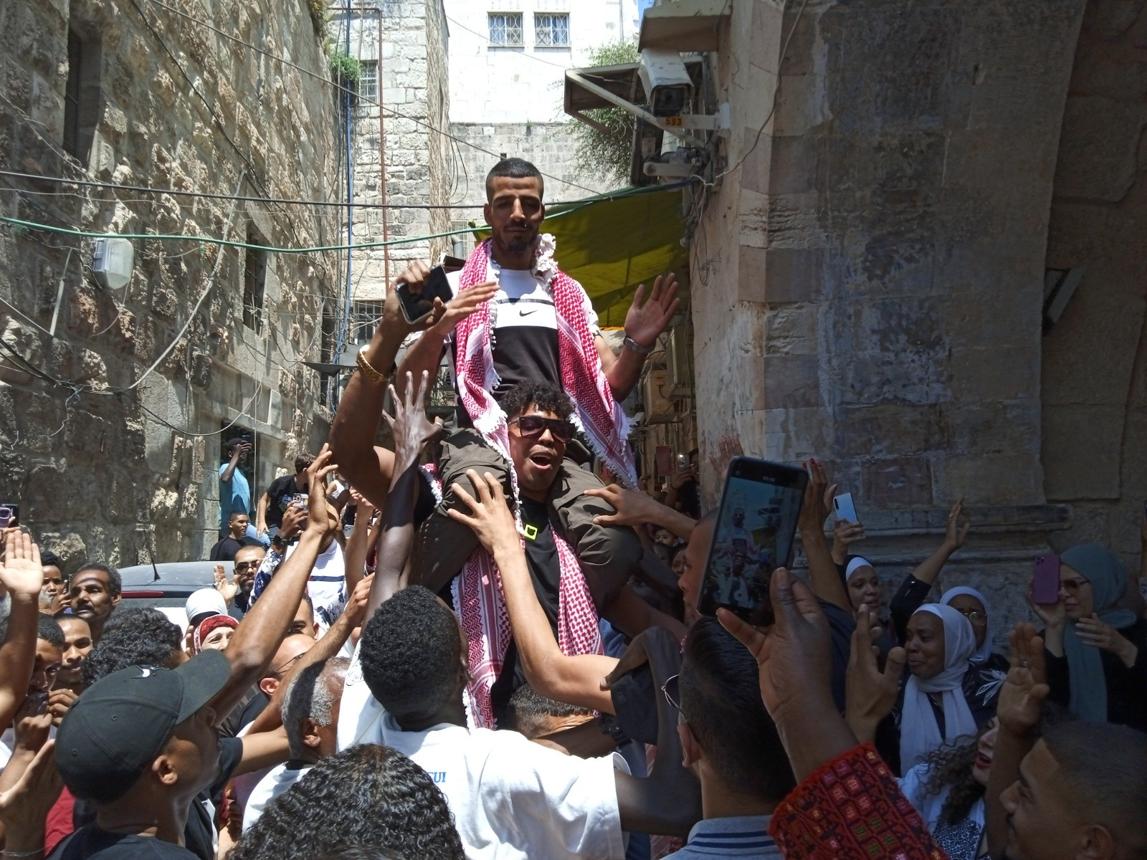
Within the ancient walls of Jerusalem, a small African community has preserved a remarkable connection to the continent for generations. Descendants of pilgrims from Chad, Nigeria, Sudan and Senegal have made the city their home, creating a distinct African Palestinian identity shaped by faith, migration, family and political struggle. Their story challenges the conventional understanding of the African diaspora, revealing that Africa’s historical connections extend far beyond the Atlantic world and into one of the most politically contested places on earth.
The African neighbourhood hidden inside Jerusalem
Jerusalem is commonly described through its four historic quarters: Muslim, Christian, Jewish and Armenian. Yet within the Muslim Quarter of the Old City exists another community whose history rarely features in international discussions about Africa or Palestine.
Known as the African Quarter, or Hai al-Afaarika, this neighbourhood is home to generations of Palestinians of African descent.
The community is concentrated around two historic buildings, Ribat al-Mansuri and Ribat al-Baseri, near Bab al-Majlis and the entrances to the Al-Aqsa Mosque compound. These buildings, originally constructed during the Mamluk period as accommodation for Muslim pilgrims, eventually became residential homes for African families.
The neighbourhood is not a separate official quarter in the same administrative sense as Jerusalem’s recognised historic quarters. It is a distinct community within the larger Muslim Quarter, with its own history, family networks and cultural traditions.
Its residents are not recent arrivals who happen to live in the Middle East. Many belong to families whose roots in Jerusalem stretch across several generations.
That distinction is important. The African presence in Jerusalem is not simply a story of migration. It is also a story of belonging, historical continuity and the ability of a community to maintain its identity while living far from its ancestral homelands.
How Africans found their way to Jerusalem
The history of African migration to Jerusalem predates the modern political boundaries that now define much of the Middle East.
For centuries, Jerusalem attracted Muslim pilgrims from across Africa, Asia and other parts of the Islamic world. Religious devotion, scholarship, trade and connections between Islamic centres encouraged movement between distant regions.
African Muslims travelled through established pilgrimage networks, with some making their way to Jerusalem after completing the Hajj in Mecca.
Among the African communities whose descendants are associated with Jerusalem today are families with origins in Chad, Sudan, Nigeria and Senegal.
Migration increased during the late Ottoman period and the British Mandate era. A 2025 academic study examining West African Muslims in late Ottoman and Mandatory Jerusalem traces the importance of pilgrimage networks, Sufi connections and religious institutions in sustaining this movement.
The study cites historical records indicating that the West African Muslim population in Jerusalem increased from approximately 74 people in 1929 to an estimated 3,000 in 1948. These historical estimates concern a wider population and should not be confused with the much smaller community living in the Old City’s African Quarter today.
The arrival of Africans was not driven by a single motive. Religious devotion was important, but employment, education, social connections and the opportunity to establish a permanent life also influenced decisions to remain.
Some worked as guards, caretakers and groundskeepers around the Al-Aqsa Mosque compound. Others became involved in the wider political and social life of Jerusalem.
Over time, marriages, children and community institutions transformed what had begun as a movement of pilgrims into a settled population.
From pilgrims to an established Palestinian community
One of the most significant developments in this history was the transformation of African visitors into permanent members of Jerusalem’s society.
The two historic compounds became central to this process.
Ribat al-Mansuri, associated with the Mamluk ruler Sultan Qalawun, was originally established as a religious hostel. Its companion, Ribat al-Baseri, also formed part of the historic accommodation infrastructure serving Muslim visitors.
During the late Ottoman period, the buildings were used as prisons. During the British Mandate, the compounds became associated with the African Muslim community.
Their proximity to Al-Aqsa made them particularly significant for Africans who had developed religious, professional and personal connections to Jerusalem.
By the middle of the twentieth century, African families had become part of the city’s social fabric.
The events of 1948, followed by the division of Jerusalem and the 1967 war, fundamentally changed the political environment in which they lived.
Some members of the wider African population moved elsewhere in East Jerusalem and the West Bank, while others remained in the Old City.
The community’s identity consequently developed alongside the Palestinian national experience.
Today, many residents identify as African Palestinians. This description expresses two connected realities: their Palestinian belonging and their African ancestral heritage.
It is a reminder that national identity does not necessarily erase cultural origins.
Why African Palestinian identity matters
The African Palestinian experience challenges a narrow understanding of what it means to be African or part of the African diaspora.
Popular discussions of African diaspora history often concentrate on the transatlantic slave trade, the Caribbean, Brazil, North America and Europe.
These histories are essential, but they do not represent the entirety of African migration and settlement outside the continent.
The African presence in Jerusalem reflects a different historical pathway, one shaped significantly by religious mobility, commercial connections and the movement of individuals across precolonial and colonial territories.
It also demonstrates that African identity can survive through cultural practices, family histories and collective memory even when communities become deeply integrated into another society.
The community’s members have maintained connections to ancestral traditions through food, family relationships, social gatherings and religious practices.
Sudanese and other African culinary traditions, for example, remain part of communal life. Shared meals, including dishes associated with Sudan and neighbouring regions, provide a practical connection between generations.
These traditions are not merely cultural decorations. They help preserve collective memory in a place where the surrounding political environment has repeatedly changed.
There is also an important distinction between African Palestinians and other African-descended populations in the region. Their histories are diverse, and the Jerusalem community should not automatically be described as a descendant population of enslaved Africans. Community members have emphasised that many of their ancestors arrived voluntarily as pilgrims.
Treating all African-descended communities as though they share one historical experience would erase the differences that make their individual stories important.
Jerusalem’s changing political landscape
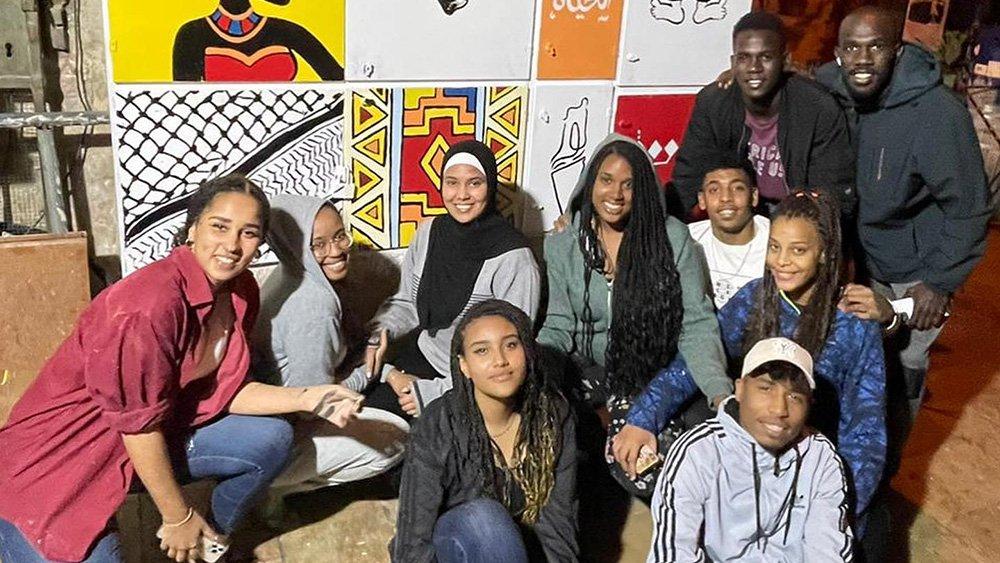
The African Palestinian community’s story cannot be separated from the political history of Jerusalem.
Following the 1948 Arab-Israeli war, Jerusalem was divided, with East Jerusalem coming under Jordanian administration. Israel occupied East Jerusalem in the 1967 war and subsequently annexed it, a move that has not been recognised internationally.
The resulting legal and administrative system has created enduring uncertainty for Palestinian residents.
Palestinians from East Jerusalem generally hold Israeli permanent residency rather than automatic Israeli citizenship. This status allows them to live and work in the city, but it is conditional and can be revoked under certain circumstances.
Human Rights Watch has documented how the Israeli authorities have used residency rules to remove the status of thousands of Palestinian Jerusalemites. Its 2022 submission to the United Nations Human Rights Committee reported that at least 14,701 Palestinians had lost East Jerusalem permanent residency between 1967 and the end of 2020.
For the African Palestinian community, these circumstances create an additional dimension of vulnerability.
Some families have historical connections to African countries but face difficult choices when considering formal citizenship, residence or long-term relocation. Acquiring another nationality or living outside Jerusalem for an extended period can have consequences under the applicable residency framework.
The result is a complicated relationship between ancestry, nationality and the right to remain in a city that several generations have called home.
Their experience illustrates how migration histories established before modern borders can become difficult to reconcile with contemporary immigration and citizenship systems.
The double challenge of race and belonging
Political uncertainty is not the community’s only challenge.
African Palestinians have also experienced forms of racial discrimination and social marginalisation within the wider Palestinian environment.
This creates a complicated identity question.
They are Palestinians through family history, social relationships and national experience, yet their African ancestry can distinguish them from other residents.
A November 2026 report by The Guardian described this tension, noting that members of the community identify as African Palestinians rather than defining themselves exclusively through racial terminology.
The distinction is significant because identity is not simply a matter of physical appearance.
For many residents, African heritage is rooted in family histories and connections to particular regions of the continent. Their Palestinian identity, meanwhile, reflects the society in which they have been raised and the political realities they experience.
The two identities are not necessarily competing.
Instead, they reveal how cultural belonging can develop through generations of migration and settlement.
The community has also experienced gradual recognition within wider Palestinian society. Its members have participated in political and social movements, and their presence forms part of Jerusalem’s diverse historical population.
Nevertheless, recognition does not automatically eliminate discrimination or economic hardship.
A diaspora story Africa should not overlook
For African governments and institutions, the Jerusalem community raises an important question: how far does Africa’s responsibility to its diaspora extend?
The African Union has recognised the global African diaspora as an important part of the continent’s wider development and cultural identity.
Yet diaspora engagement frequently concentrates on large communities in Europe, North America and the Caribbean.
Smaller historic communities in the Middle East often receive less attention.
The African Palestinian population demonstrates why this approach deserves reconsideration.
Their ancestral connections extend across several African countries. However, generations of settlement, intermarriage and political change have complicated their relationships with ancestral states.
Reconnecting these families with their historical origins could support cultural preservation, academic research and the documentation of African migration history.
Such engagement should not assume that every individual wishes to acquire African citizenship or relocate to an ancestral country. The objective should be to recognise heritage and expand voluntary cultural and institutional relationships.
There is also an opportunity for African universities, museums and historical research institutions to document the community’s experience.
Oral histories, family archives, photographs, religious records and historical correspondence could help preserve a story that remains underrepresented in African historical scholarship.
For countries such as Chad, Nigeria, Senegal and Sudan, this history offers another perspective on the international reach of their societies.
It also challenges the assumption that African influence outside the continent must always be measured through contemporary migration, business investment or political representation.
Sometimes, its most enduring evidence is found in families who have lived elsewhere for generations.
What the numbers reveal, and what they do not
Estimates of the African Palestinian population vary, partly because researchers use different geographical definitions and reporting periods.
The 2014 reporting by The Times of Israel described approximately 350 residents in the Old City’s African Quarter.
A 2026 Guardian report estimated around 450 African Palestinians in occupied East Jerusalem.
Meanwhile, a 2023 report submitted by the State of Palestine to the United Nations Committee on the Elimination of Racial Discrimination cited African Community Association figures of approximately 750 Afro-Palestinians in the wider Jerusalem area in 2020.
These figures should not be treated as contradictory measurements of precisely the same population. They refer to different dates and potentially different geographical coverage.
The wider lesson is that the community remains relatively small, but its historical importance cannot be measured by population alone.
A community of several hundred people can preserve centuries of migration history, maintain connections between continents and offer valuable evidence about the movement of people across religious and political boundaries.
Its significance is therefore historical and cultural as much as demographic.
Preserving a history that crosses continents
The future of Jerusalem’s African community will depend on more than its ability to preserve traditions within the Old City.
Housing pressures, economic restrictions, political instability, residency uncertainty and the challenges facing younger generations all influence the community’s long-term prospects.
Young African Palestinians must navigate a world in which their ancestral connections may be geographically distant while their immediate political and social realities are firmly rooted in Jerusalem.
The challenge is to preserve heritage without turning identity into a limitation.
There is a broader lesson for Africa’s approach to its diaspora. Recognition should extend beyond the communities that fit familiar historical narratives or possess large populations and strong institutional representation.
The African diaspora is not one uniform experience. It includes descendants of forced migration, voluntary settlers, traders, students, religious pilgrims and families whose histories have unfolded across several generations.
Jerusalem’s African Palestinians belong within that wider history.
Their story also offers a reminder that the relationship between Africa and the rest of the world was never shaped exclusively by European colonialism or the Atlantic slave trade. Religious networks, personal journeys and cultural exchange created connections that continue to influence societies today.
The Africans of Jerusalem may represent a small community, but their history carries a much larger message. Africa’s diaspora is not confined to the places that dominate international headlines or historical textbooks. It also survives in the narrow streets of Jerusalem, in family names, ancestral memories, shared meals and generations of people who have made a distant city their home. Their story deserves more than occasional international attention. It deserves a permanent place in the history of Africa and the global African diaspora.

More from Featured

Who owns East Africa? Inside Aliko Dangote’s expanding industrial empire
From cement factories in Tanzania and Ethiopia to ambitious energy and fertiliser investments, Aliko Dangote is reshaping Africa's industrial ambitions and regional economic ties.

DRC takes control of its mineral data as global powers race for Congo’s critical minerals
Kinshasa is locking down its geological archives, betting that owning the map matters more than owning the mine.
Who is fueling Sudan’s drone war? The foreign networks behind Africa’s forgotten conflict
Foreign weapons, contractors, technology and supply routes are transforming Sudan’s war, leaving civilians trapped between rival armies and outside interests.