


Airtel Money is preparing for a potentially landmark London IPO that could transform how investors value Africa’s mobile money industry. With the business expanding rapidly across the continent, the proposed listing is more than a corporate transaction. It is a test of whether Africa’s digital finance revolution can command the attention and valuation of global capital markets.
Airtel Africa has confirmed London as its preferred listing venue for Airtel Money in 2026, with the flotation expected in the second half of the year. The decision follows months of uncertainty around the timing and location of the transaction, including an earlier delay linked to market conditions.
For Africa’s fintech industry, the timing could hardly be more significant.
Mobile money has evolved from a convenient alternative to cash into a critical part of the continent’s financial infrastructure. Millions of people use their phones to send money, pay bills, receive salaries, pay merchants and access financial services.
Airtel Money is now trying to turn that enormous consumer network into a standalone investment proposition.
A fintech giant in the making
The scale of Airtel Money is central to the IPO story.
The business had more than 54 million customers at the end of Airtel Africa’s 2026 financial year and generated about $1.35 billion in revenue. Its transaction ecosystem has expanded rapidly as customers increasingly use mobile money for more than basic transfers.
That growth continued into the first quarter of Airtel Africa’s 2027 financial year.
Airtel Africa’s wider business reported strong growth in the quarter ended June 30, 2026, while mobile money remained one of the group’s important growth engines. Industry reports citing the company’s results said mobile money revenue increased strongly during the quarter.
The numbers help explain why investors are paying attention.
Airtel Money is no longer simply a feature attached to a telecoms subscription. It is becoming a financial platform with its own customers, transaction flows, agents, merchants and digital products.
That distinction could be crucial when the business reaches the public markets.
Why the London IPO matters
The proposed Airtel Money IPO could become one of the most closely watched African fintech transactions of 2026.
Airtel Africa already trades in London. Listing Airtel Money there would give the financial services business access to the same international capital-market ecosystem while allowing investors to value it separately from the telecoms operation.
That separation is important.
Telecom companies are traditionally valued according to factors such as subscriber numbers, average revenue per user, network investment and cash flow.
Fintech businesses can command different valuations because investors often place greater emphasis on digital transaction growth, platform economics, customer engagement and the potential to add new financial products.
A standalone Airtel Money listing could therefore answer a question that has remained difficult for African investors:
What is Africa’s mobile money infrastructure actually worth?
The $10 billion question
Reports have put a potential valuation of Airtel Money at around $10 billion, although the final figure will depend on the eventual IPO structure, investor demand and market conditions. The Financial Times has reported that the business is being prepared for a London listing at a valuation of about $10 billion.
Earlier reports have also suggested that the IPO could raise between $1.5 billion and $2 billion.
Those numbers are significant.
If the transaction reaches anything close to that scale, Airtel Money would become one of the largest new listings to reach London’s public markets in years.
That would put an African fintech business at the centre of a global capital-markets conversation.
It would also create a publicly traded benchmark for the valuation of mobile money businesses across Africa.
The dollar advantage
One of the most interesting elements of the proposed Airtel Money IPO is the possibility of pricing the shares in U.S. dollars.
For international investors, dollar pricing could make the company easier to compare with global fintech businesses and other emerging-market assets.
Airtel Africa itself reports its financial results in dollars, even though its operating companies generate revenue across numerous African currencies.
That creates a natural connection between the business and dollar-based international investors.
But dollar pricing would not make the underlying currency risks disappear.
Airtel Money will continue to operate in markets where exchange rates, inflation and monetary policy can have a major effect on consumer spending and corporate earnings.
For investors, the question will therefore be less about the currency displayed on the trading screen and more about how effectively Airtel Money can protect its earnings against those risks.
Africa’s digital financial revolution
The Airtel Money story is ultimately a story about how Africa is changing the way money moves.
Traditional banking infrastructure has not always reached consumers evenly across the continent.
Mobile networks have helped close part of that gap.
A basic mobile phone can become a financial tool. A small shop can become a payment point. A rural agent can connect consumers to a financial system that previously required a bank branch.
That model has changed consumer behaviour in many African markets.
It has also created a new layer of digital infrastructure on which banks, fintech companies, merchants and telecommunications companies can build.
Airtel Money is one of the major players in that ecosystem.
From transfers to financial services
The next phase of Airtel Money’s growth may be less about simply adding customers and more about increasing the value generated by each customer.
That means expanding the range of services available through the platform.
Payments remain fundamental, but mobile money platforms can also support credit, savings, insurance, merchant payments, international transfers and other digital financial products.
The more services customers use, the greater the potential revenue opportunity.
This is one reason investors are likely to scrutinise customer activity rather than simply looking at headline subscriber numbers.
A customer who sends one small transfer every month represents a different economic opportunity from a customer who uses mobile money daily for payments, transfers and other financial services.
The agent network still matters
The rise of smartphone applications has not made physical distribution irrelevant.
Across Africa, mobile money remains closely connected to extensive agent networks.
Agents provide cash-in and cash-out services and help consumers who may not have access to traditional bank branches or reliable digital payment infrastructure.
For Airtel Money, that network creates both an advantage and a cost.
A large agent footprint increases accessibility and customer confidence, but it also requires investment, management and strong controls.
As the business expands digitally, the challenge will be balancing physical distribution with increasingly sophisticated digital channels.
A new test for African fintech
The proposed IPO could have consequences far beyond Airtel Money.
African fintech companies have attracted substantial private investment over the past decade. But the transition from private startup to publicly traded company is a much more demanding test.
Public investors expect predictable reporting, transparent governance, strong controls and evidence that growth can eventually translate into sustainable returns.
Airtel Money already has something many younger fintech companies do not have: scale.
That could give it an advantage.
The business has millions of customers, an established brand, a large distribution network and the infrastructure of a major telecommunications group behind it.
The IPO will test whether those advantages translate into a valuation that global investors consider attractive.
Why London is betting on Airtel
London also has something to prove.
The city remains one of the world’s leading financial centres, but its public markets have struggled in recent years to attract large technology listings.
A successful Airtel Money flotation could therefore serve two purposes.
For Airtel, London offers access to a deep pool of international capital.
For London, an African fintech IPO could demonstrate that the exchange remains capable of attracting ambitious international growth companies.
The reported potential $10 billion valuation would make the transaction particularly notable. The Financial Times has described the potential deal as the largest London IPO since 2021 if it proceeds at that scale.
Investors will look beyond the hype
Despite the excitement, the Airtel Money IPO will not be without risks.
Investors will want to know how much of the company’s growth comes from higher transaction volumes and how much comes from new products.
They will examine profitability.
They will assess customer acquisition costs.
They will scrutinise regulatory exposure.
And they will want to understand how currency movements across Airtel Money’s markets could affect future earnings.
Competition will also matter.
Banks are becoming increasingly digital. Fintech startups continue to develop specialised payment and lending products. Other telecommunications companies have their own mobile money platforms.
Airtel Money will therefore need to prove that its scale can translate into a durable competitive advantage.
Regulation could shape the next chapter
Financial technology is one of the most heavily watched areas of Africa’s digital economy.
Governments and regulators want the benefits of financial inclusion, but they also need to protect consumers and maintain the integrity of financial systems.
Rules governing mobile money, digital lending, payments, data protection, taxation and cross-border transactions can change the economics of the business.
For a company operating across multiple African markets, regulatory complexity is unavoidable.
That makes compliance an important part of the investment case.
The stronger Airtel Money’s governance and regulatory relationships, the easier it may be for international investors to understand and price those risks.
What success would mean for Africa
A successful Airtel Money IPO could create something the African fintech ecosystem has lacked for years: a major public-market reference point.
Investors could compare Airtel Money’s valuation, growth and profitability with other financial technology companies.
African founders could point to the transaction as evidence that businesses built on the continent can reach global capital markets.
Private investors could gain another potential exit route.
And governments could see further evidence that digital financial infrastructure is becoming a strategic component of African economies.
The impact could therefore extend beyond one company.
The bigger story
There is a deeper significance to the Airtel Money IPO.
For years, much of Africa’s digital economy has been described through the language of potential.
The continent has a young population, rising smartphone penetration, expanding internet access and enormous demand for financial services.
But potential is not the same as value.
A public listing forces investors to put a number on that opportunity.
Airtel Money is now approaching that moment.
If the business secures a strong valuation in London, it could signal that global investors are prepared to place a meaningful premium on Africa’s digital financial infrastructure.
If the market takes a more cautious view, it could provide an equally important lesson about the limits of fintech valuations in emerging markets.
Either way, the IPO will be watched closely.
Africa’s fintech moment
The proposed Airtel Money London IPO arrives at a point when Africa’s financial system is increasingly moving from branches to phones, from cash to digital payments and from traditional banking relationships to platform-based finance.
Airtel Money sits directly in the middle of that transformation.
Its challenge is now to convince public-market investors that the enormous scale of Africa’s mobile money economy can produce long-term shareholder value.
The opportunity is equally large.
A successful listing could make Airtel Money one of the continent’s most important publicly valued fintech businesses and provide global investors with a new way to participate in Africa’s digital economy.
For Who Owns Africa, that is what makes the story bigger than an IPO.
It is about ownership.
Who owns Africa’s digital financial infrastructure? Who captures the value created when millions of Africans move money through their phones? And, increasingly, who gets to invest in that growth?
The answers may begin taking shape on the London Stock Exchange later this year.

More from Finance

Who will own Africa’s next trillion-dollar businesses?
Africa’s next corporate giants may emerge from AI, energy, finance, mining, logistics and consumer markets rather than traditional industries.
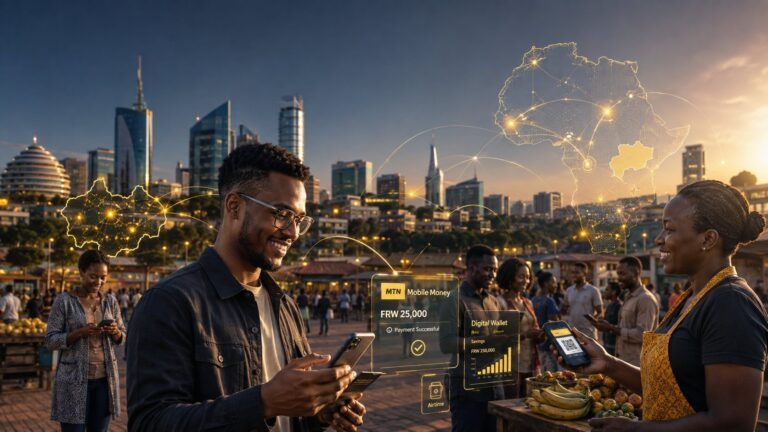
MTN Rwanda’s profit surge shows how mobile money is reshaping Africa’s digital economy
Rwanda’s mobile-money boom is turning telecom networks into financial infrastructure, creating a new investment frontier across Africa.
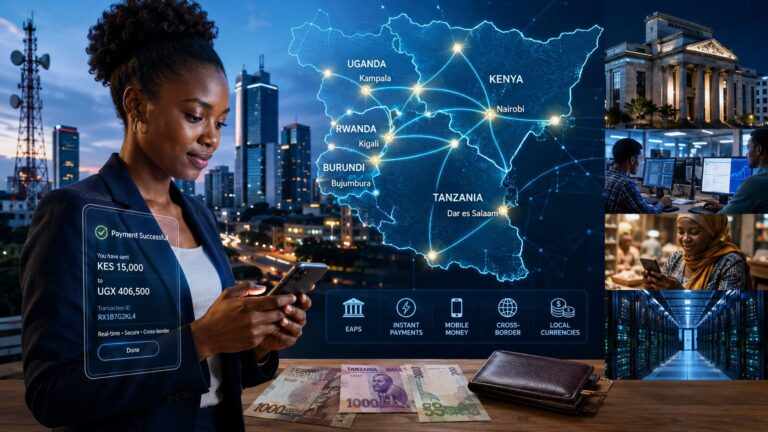
Who will control East Africa’s new digital payments network?
East Africa is building a faster, more connected payments ecosystem, opening a new contest among banks, fintechs, central banks and technology companies.