

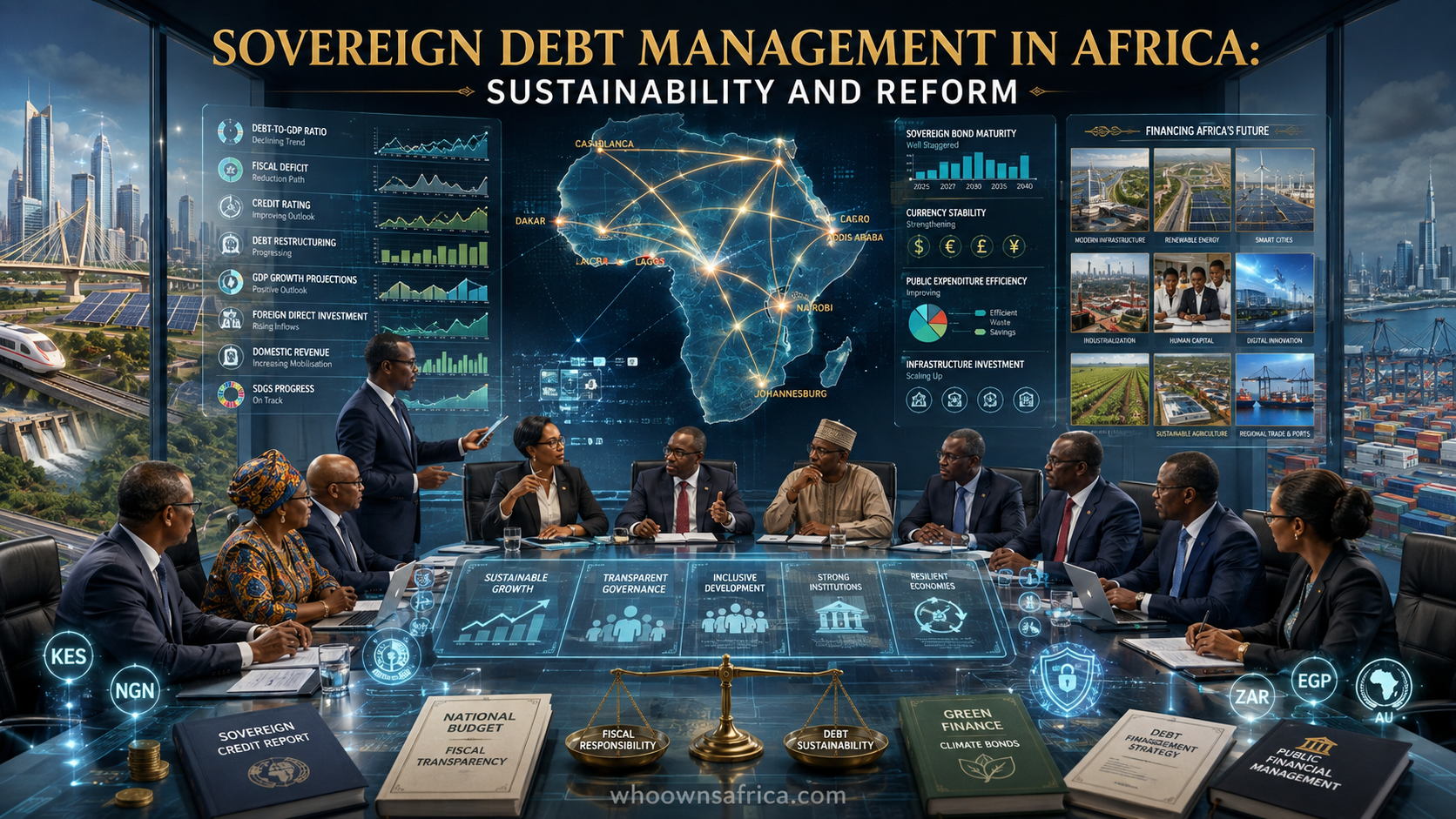
Sovereign debt — borrowing by national governments — is a normal and important feature of public finance, allowing governments to invest in infrastructure and public services today while spreading costs across future years when those investments generate returns. Over the past two decades, many African governments have significantly expanded borrowing, accessing new sources of international capital including commercial bond markets and bilateral loans alongside traditional multilateral financing. Managing the resulting debt levels sustainably has emerged as one of the continent’s most pressing fiscal policy challenges.
The Expansion of African Sovereign Borrowing
A significant shift in African sovereign borrowing occurred in the 2010s, when a number of governments accessed international commercial bond markets for the first time — issuing dollar-denominated Eurobonds sold to international institutional investors at market rates. This access allowed governments to raise larger amounts more quickly than traditional concessional lending processes allowed, with fewer conditionalities. Simultaneously, bilateral borrowing from China and other emerging economy partners expanded substantially, financing infrastructure construction through loans often tied to contractors from the lending country and sometimes secured against commodity exports.
What Drove Borrowing Growth
Several factors drove the expansion of government borrowing. Infrastructure investment needs are enormous, and borrowing to finance productive infrastructure has a strong economic logic if the resulting growth is sufficient to service the debt. Commodity price cycles created revenue volatility that led some governments to borrow to maintain spending during downturns. Electoral pressures contributed to borrowing beyond what was fiscally sustainable in some cases. And the availability of new financing sources during a period of historically low global interest rates made the cost of borrowing appear lower than the long-term debt service obligations it created.
Debt Distress and Its Causes
A number of African countries have experienced debt distress — situations where debt service absorbs a very large share of government revenue, leaving inadequate space for essential public services, or where a government is unable to meet debt service obligations on scheduled terms. Contributing causes vary between countries: commodity price downturns that reduced revenue without corresponding spending adjustment; currency depreciations increasing the local currency cost of foreign-currency debt; high commercial borrowing interest rates creating heavy debt service burdens; inadequate debt management capacity leading to unfavorable borrowing terms; and governance problems that diverted borrowed funds from productive investments.
The Eurobond Challenge
Commercial Eurobond debt presents particular restructuring challenges compared to traditional bilateral or multilateral debt. Eurobonds are held by a dispersed base of international institutional investors rather than a small number of identifiable creditors, making debt restructuring negotiations complex — requiring coordination of many bondholders with different mandates, time horizons, and risk tolerance. Collective action clauses facilitate restructuring by allowing a majority of bondholders to bind a minority to agreed terms, but the negotiation process remains substantially more complex than restructuring a loan with a single bilateral creditor.
The G20 Common Framework
In response to COVID-19’s economic impact and the debt distress it exacerbated, the G20 established a Common Framework for Debt Treatments, intended to coordinate restructuring negotiations between debtor countries and both traditional Paris Club creditors and newer bilateral creditors. The framework has produced mixed results: complexity in coordinating creditor groups with different interests, disagreements about comparability of treatment between creditor classes, and lengthy timelines have limited the speed and effectiveness of debt relief delivery, prompting calls for reform.
Debt Transparency
A significant challenge in sovereign debt management has been limited transparency in the terms of borrowing, particularly for bilateral loans from non-traditional creditors. Confidentiality clauses in some loan agreements have prevented public disclosure of interest rates, collateral arrangements, and other terms, limiting the ability of parliaments, civil society, and analysts to assess debt sustainability. Improving sovereign debt transparency through parliamentary approval requirements, public disclosure of loan terms, and independent audit of debt management operations is an important governance dimension of sustainable debt management.
Domestic Resource Mobilization
Strengthening domestic resource mobilization — improving tax collection efficiency and broadening the tax base — is widely advocated as an alternative to continued debt expansion. African countries on average collect a lower share of economic output in tax revenue than peer economies in other regions. Improving tax administration through digitization, strengthening anti-avoidance measures, and broadening the tax net to capture informal economic activity could substantially increase government revenue without additional borrowing. The political economy of domestic revenue mobilization — raising taxes is generally unpopular — makes reform difficult in some contexts, even where the fiscal case is clear.
Looking Ahead
Addressing sovereign debt sustainability requires near-term debt relief in distressed cases, medium-term fiscal consolidation and improved debt management, and longer-term structural strengthening of domestic revenue bases. Achieving this while maintaining space for development investment requires both improved policy frameworks within African countries and a more supportive international financial architecture — including better mechanisms for coordinating debt restructuring between diverse creditor groups — than currently exists.

More from Finance

Who will own Africa’s next trillion-dollar businesses?
Africa’s next corporate giants may emerge from AI, energy, finance, mining, logistics and consumer markets rather than traditional industries.

MTN Rwanda’s profit surge shows how mobile money is reshaping Africa’s digital economy
Rwanda’s mobile-money boom is turning telecom networks into financial infrastructure, creating a new investment frontier across Africa.

Who will control East Africa’s new digital payments network?
East Africa is building a faster, more connected payments ecosystem, opening a new contest among banks, fintechs, central banks and technology companies.