

Sovereign wealth funds — state-owned investment funds created to manage a country’s surplus savings, typically derived from natural resource revenues, foreign exchange reserves, or fiscal surpluses — represent a specific class of long-term public investment vehicle with significant relevance for several African resource-producing economies. The fundamental rationale for establishing a sovereign wealth fund is to convert a finite or volatile natural resource revenue stream into a more durable long-term asset base, either saving for future generations after the resource is exhausted, stabilizing government revenue against commodity price volatility, or both simultaneously.
The Resource Revenue Management Challenge
Countries that derive significant government revenue from natural resource extraction face a distinctive fiscal management challenge: resource revenues are inherently temporary, since finite resources will eventually be depleted; highly volatile, since commodity prices fluctuate substantially with global market conditions beyond any individual country’s control; and potentially distorting, since large inflows of resource revenue can appreciate exchange rates and crowd out other economic sectors in a dynamic sometimes called Dutch disease. Sovereign wealth funds are one institutional response to these challenges, providing a mechanism to steward resource revenue toward long-term national benefit rather than allowing it to flow entirely into current government spending where it may fuel inflationary booms during commodity price highs, leaving economies exposed and governments financially stretched when prices fall.
African Sovereign Wealth Funds
A number of African countries have established sovereign wealth funds, though the scale, governance quality, and operational track record of these funds varies considerably. Botswana’s Pula Fund, established decades ago as a vehicle for managing the country’s diamond revenues, is among the continent’s oldest and most professionally managed sovereign wealth funds and has been cited internationally as a model of resource revenue management in a developing economy context. Angola, Nigeria, and Ghana have established sovereign wealth funds linked to their oil revenues, with each reflecting different design choices in terms of fund objectives, investment mandates, and governance structures. Several other African resource-producing countries have established or are in the process of establishing funds as new resource discoveries — particularly natural gas finds in East Africa — raise questions about how to manage anticipated revenue flows responsibly.
Fund Objectives and Design
Sovereign wealth funds can serve several distinct objectives that influence their design and investment approach. Stabilization funds aim to smooth government revenue by saving during high commodity price periods and drawing down to maintain public spending during price downturns, acting as a fiscal buffer against commodity volatility. Savings or intergenerational funds aim to convert depleting resource wealth into a financial asset base that generates returns for future generations after the resource itself is exhausted. Development funds direct investment toward domestic infrastructure or strategic industries, using resource revenue to build productive capacity within the domestic economy. Many funds blend multiple objectives, aiming to simultaneously stabilize revenue, save for the future, and support domestic development.
Governance as the Critical Variable
The effectiveness of a sovereign wealth fund in achieving its stated objectives depends critically on governance quality — the rules, institutions, and practices governing how fund assets are managed, invested, and protected from political interference. A fund with excellent governance: maintains clear investment policies based on defined risk-return objectives rather than political considerations; operates with genuine independence from day-to-day government interference in investment decisions; maintains transparent reporting of fund assets, returns, and investment activities to the public; and is protected by legal frameworks that prevent unauthorized withdrawals or politically motivated investment decisions. Several African sovereign wealth funds have faced governance challenges, including allegations of politically directed investments, inadequate reporting transparency, and in some cases outright misappropriation of fund assets, highlighting the importance of robust institutional design and political commitment to genuine fund independence.
Investment Strategies and Asset Allocation
The investment strategies of African sovereign wealth funds vary with their objectives and the maturity of their governance frameworks. Stabilization funds typically hold highly liquid assets — short-term government bonds and deposits in major currencies — since their primary function is quick drawdown when needed rather than long-term return maximization. Long-term savings funds typically pursue more diversified investment strategies including global equity, fixed income, and alternative assets, seeking returns that grow the fund’s real value over time. Development-oriented funds may invest in domestic infrastructure, regional equity, and other development-linked assets, accepting potentially lower or more uncertain returns in exchange for domestic economic development objectives. Professional investment management, whether in-house or through external asset managers, is an important determinant of whether fund investment strategies are implemented effectively.
Transparency and the Santiago Principles
Internationally, sovereign wealth fund governance is benchmarked against the Santiago Principles — a set of voluntary best practices for generally accepted principles and practices developed through a multilateral process involving sovereign wealth fund managers and international financial institutions. These cover governance structures, investment policy transparency, risk management frameworks, and accountability mechanisms. Adherence to these principles, while voluntary, signals a fund’s commitment to international governance standards and improves the confidence of domestic publics, international investors, and trading partners in how national wealth is being managed.
New Resource Discoveries and Emerging Funds
Recent years have seen significant natural gas discoveries in East African countries that previously had limited natural resource revenues, creating a new generation of policy questions about how to establish appropriate fiscal frameworks and savings mechanisms ahead of revenue flows materializing from these new resources. The experience of existing African sovereign wealth funds — both the successes of well-governed examples and the governance failures of poorly managed ones — provides important lessons for these newly resource-prospective countries in designing institutions and frameworks that can withstand the governance pressures that come with managing large natural resource revenue flows.
Looking Ahead
The long-term contribution of sovereign wealth funds to African economic development will be determined less by the scale of resources flowing into them than by the quality of governance frameworks protecting those resources and ensuring their deployment genuinely serves long-term national benefit. Strengthening the legal, institutional, and accountability frameworks within which African sovereign wealth funds operate is therefore one of the most important dimensions of resource revenue management policy for the continent’s resource-producing economies.

More from Finance

Who will own Africa’s next trillion-dollar businesses?
Africa’s next corporate giants may emerge from AI, energy, finance, mining, logistics and consumer markets rather than traditional industries.

MTN Rwanda’s profit surge shows how mobile money is reshaping Africa’s digital economy
Rwanda’s mobile-money boom is turning telecom networks into financial infrastructure, creating a new investment frontier across Africa.
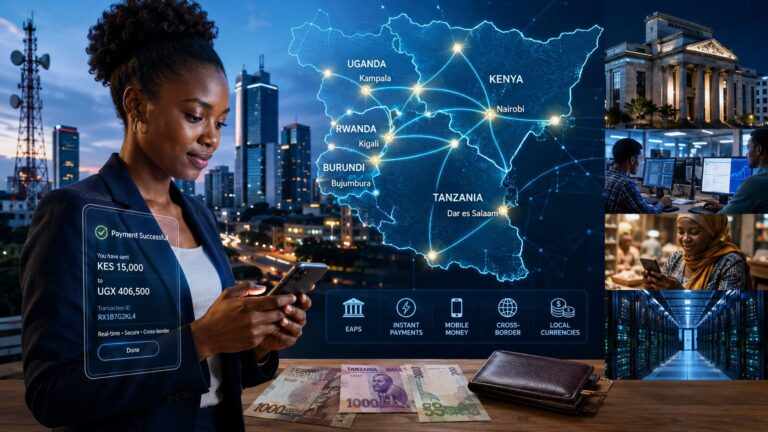
Who will control East Africa’s new digital payments network?
East Africa is building a faster, more connected payments ecosystem, opening a new contest among banks, fintechs, central banks and technology companies.