
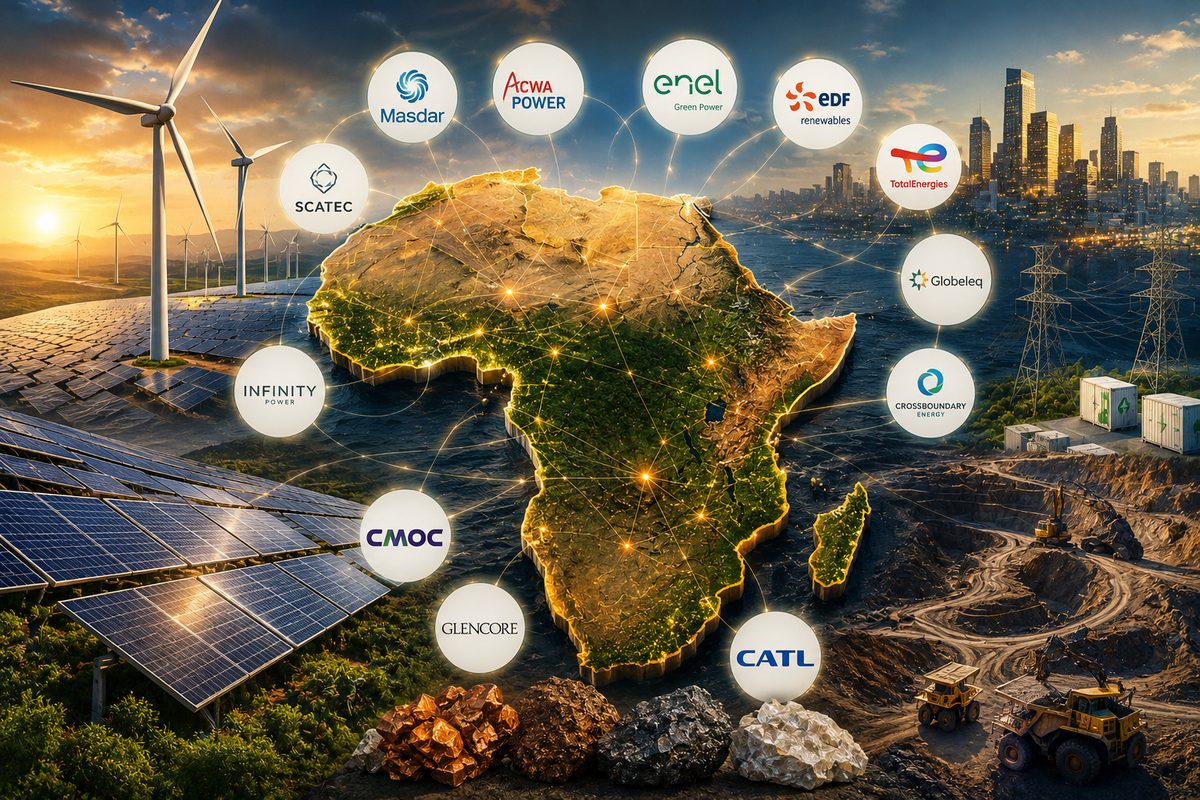
Africa’s green energy revolution is attracting some of the world’s most powerful corporations, sovereign wealth-backed investors, mining giants and technology manufacturers. But behind the solar panels, wind turbines, lithium mines and battery ambitions lies a question that could define the continent’s economic future: who actually owns the infrastructure, technology and supply chains that will power the next industrial era?
Africa’s energy transition is often presented as a story of opportunity. The continent has enormous solar potential, significant wind resources, critical minerals, young populations, expanding cities and growing demand for electricity. Governments are competing for investment, signing renewable energy agreements and promoting industrial projects designed to position their economies within the global transition.
Yet the companies building, financing and supplying these projects are not all African.
Some are backed by governments in the Middle East. Others are controlled by European utilities, international development finance institutions, global private equity funds, Chinese industrial groups or publicly traded multinational corporations.
African companies are also emerging as developers, investors, operators and energy service providers, but their ability to compete for large-scale assets is often constrained by access to capital, financing costs, technology and the size of their balance sheets.
Understanding who controls Africa’s green energy future therefore requires looking beyond project announcements. It requires examining ownership, investment sources, strategic partnerships, major assets and the position African companies occupy within the value chain.
This is not a ranking of the largest companies. It is an examination of 20 influential corporations and investment platforms whose decisions are shaping the continent’s renewable energy, mineral and industrial landscape.
PART I: THE GLOBAL POWER PLAYERS
1. Masdar, United Arab Emirates
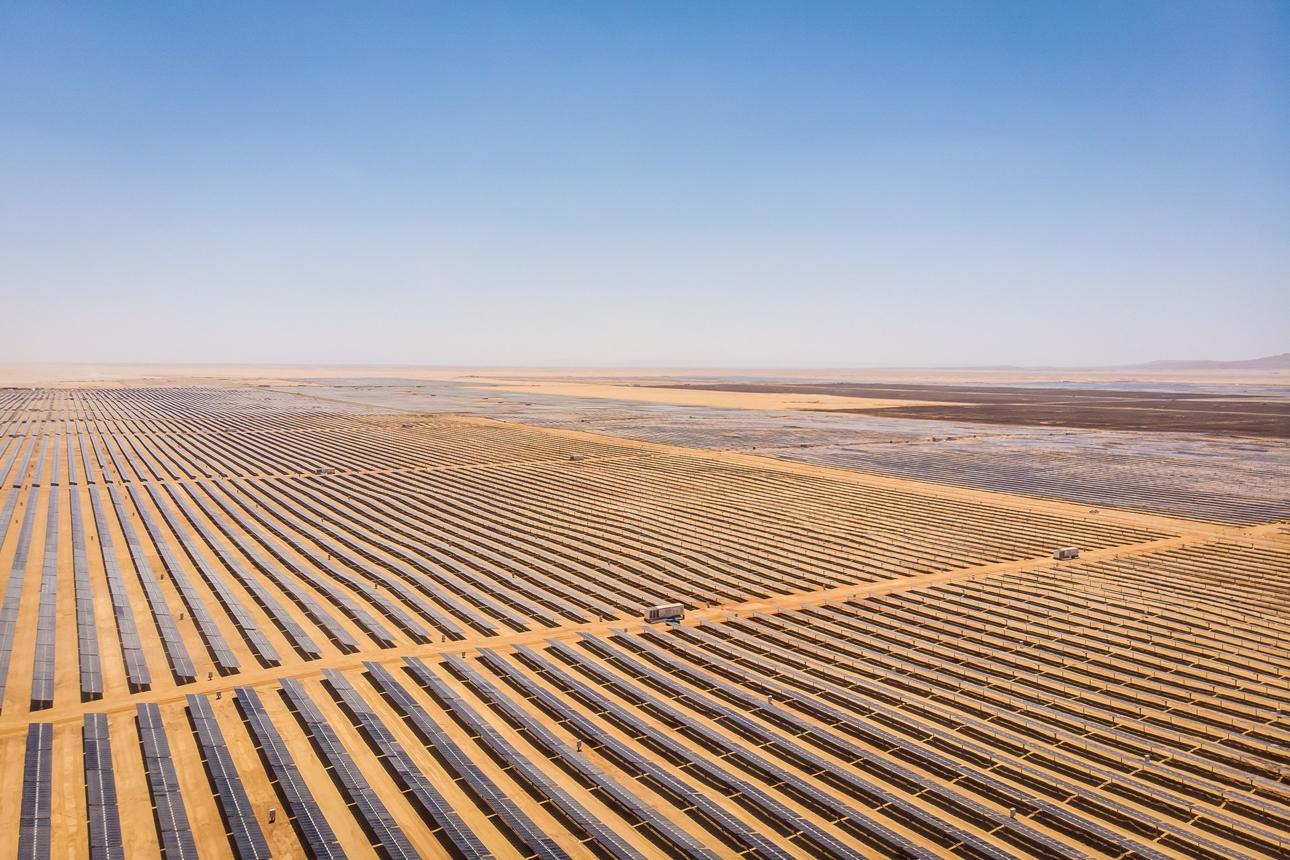
Ownership: Abu Dhabi-backed company with strategic shareholders Mubadala, TAQA and ADNOC.
Major African markets: Egypt, Morocco, South Africa and other markets through development partnerships.
Strategic influence: Utility-scale renewable energy, solar, wind, green hydrogen, energy storage and infrastructure investment.
Masdar is one of the most strategically positioned renewable energy companies operating internationally. Its backing from Abu Dhabi’s major investment and energy institutions gives it access to capital, government relationships and the ability to pursue large infrastructure projects.
Its African strategy is closely connected to the continent’s emerging solar, wind and green hydrogen opportunities.
Masdar’s influence extends beyond individual power plants. It participates in investment platforms, project partnerships and renewable energy ecosystems that connect electricity production to future industrial development.
The company represents a broader trend in which Gulf capital is positioning itself not only as an investor in Africa’s resources but also as a major participant in the global energy transition.
Ownership significance: African governments seeking renewable energy investment are increasingly negotiating with capital-rich sovereign-linked corporations capable of financing projects at a scale that many domestic companies cannot yet match.
2. ACWA Power, Saudi Arabia
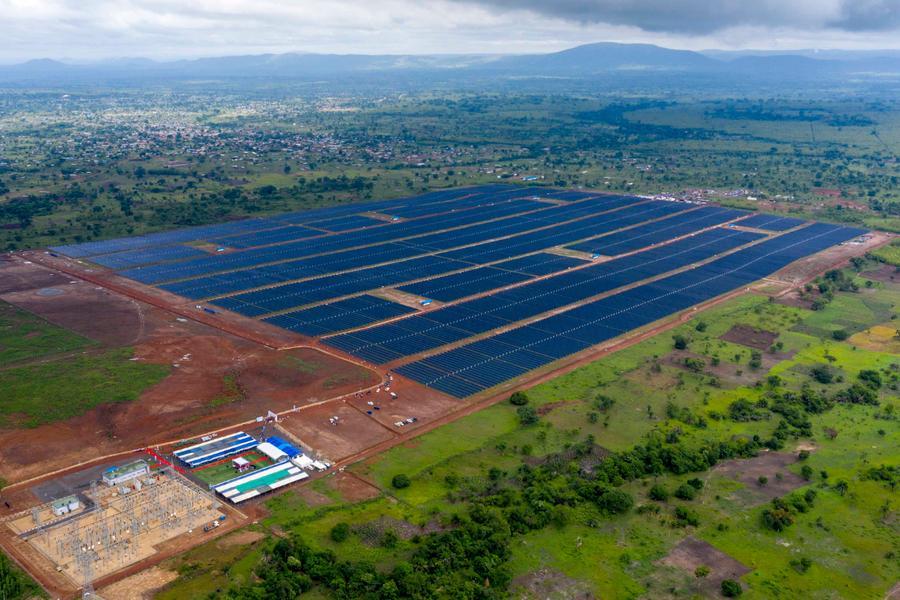
Ownership: Saudi-listed company, with the Saudi Public Investment Fund as its principal strategic shareholder.
Major African markets: Morocco, Egypt and South Africa.
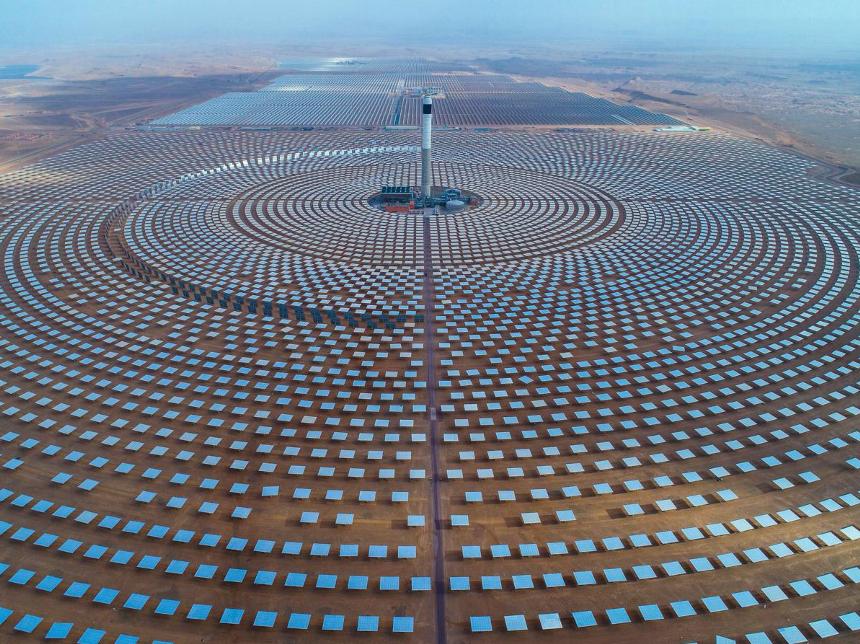
Major projects: Noor Ouarzazate solar complex participation, Bokpoort concentrated solar power in South Africa and renewable energy investments in Egypt.
ACWA Power has become one of the most prominent international power developers in Africa.
Its business model combines project development, financing, construction, ownership and long-term operation of power and water infrastructure. The company is particularly influential in markets requiring large-scale capital mobilisation.
In Morocco, ACWA Power has participated in the Noor solar programme, one of Africa’s most internationally recognised renewable energy developments. In South Africa, its interests include the Bokpoort concentrated solar power facility.
ACWA’s Saudi backing gives it access to financial and strategic resources that can support projects involving substantial investment and long development timelines.
Ownership significance: ACWA Power demonstrates how state-backed strategic capital can build influence across Africa’s energy infrastructure through long-term asset ownership, investment and project partnerships.
3. Infinity Power, Egypt and the UAE
Ownership: Joint venture between Egypt’s Infinity and UAE-based Masdar.
Major African markets: Egypt, Senegal, South Africa and other African markets.
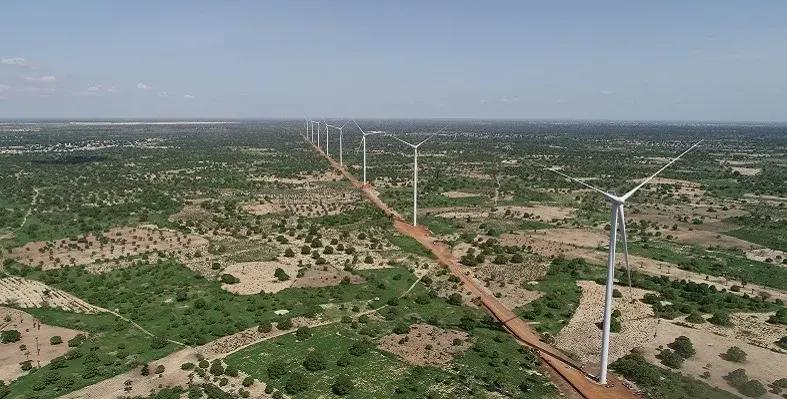
Major projects: Benban solar investments, West Bakr wind farm in Egypt, Taiba N’Diaye wind farm in Senegal and multiple South African wind assets.
Infinity Power is among the most significant African-focused renewable energy platforms.
Its acquisition of Lekela Power substantially expanded its wind portfolio and strengthened its position across multiple markets. The company operates solar and wind projects and is developing additional capacity in renewable energy, storage and green hydrogen.
The company is particularly important because it combines an African-founded business platform with the investment capabilities of a major international renewable energy investor.
Its expansion illustrates how African companies can build scale through partnerships, acquisitions and institutional financing rather than relying exclusively on organic growth.
Ownership significance: Infinity Power is an example of an Africa-based platform capable of becoming a continental player through strategic partnerships and the acquisition of established renewable energy assets.
4. AMEA Power, United Arab Emirates
Ownership: Privately held renewable energy company associated with UAE investor and founder Hussain Al Nowais.
Major African markets: Egypt, Kenya, South Africa, Uganda, Ethiopia, Côte d’Ivoire and other markets.
Business focus: Solar, wind, energy storage, renewable energy development and power infrastructure.
AMEA Power is expanding across African markets where electricity demand, industrial growth and power reliability create opportunities for new generation capacity.
Its investment strategy includes developing, financing, constructing and operating projects, with an emphasis on utility-scale and commercial renewable energy.
The company has attracted substantial international financing and guarantee support for its investment portfolio, including renewable energy and battery storage projects.
Ownership significance: AMEA Power illustrates the growing influence of Gulf-based private energy investors who are building long-term positions in African power generation and energy infrastructure.
5. Scatec, Norway
Ownership: Norwegian publicly listed renewable energy company.
Major African markets: Egypt, South Africa, Mozambique and other markets.
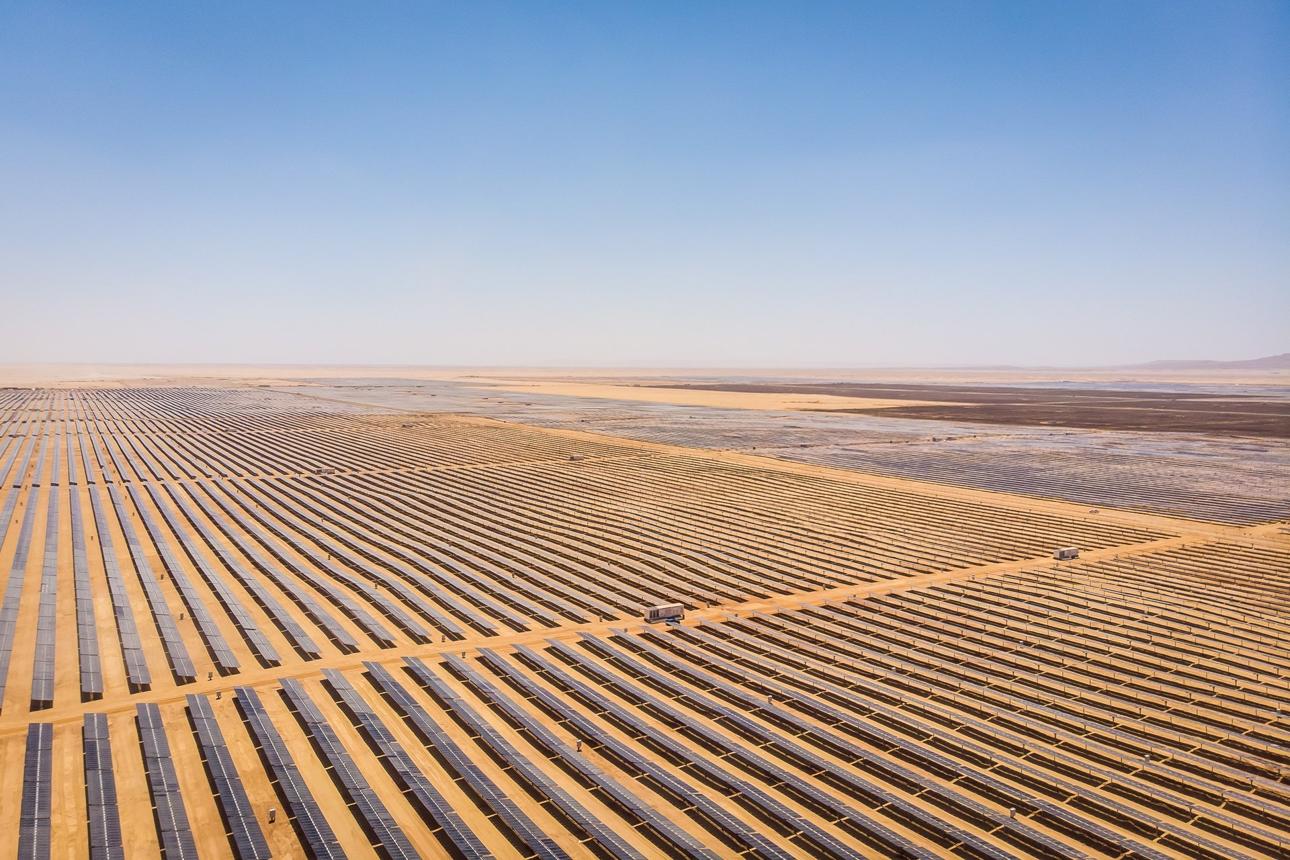
Major projects: Obelisk solar and battery project in Egypt, solar projects in Egypt and renewable energy investments in South Africa.
Scatec is one of the international renewable energy developers with a significant presence in African markets.
Its project model includes developing assets, bringing together equity partners, arranging project financing and operating renewable energy infrastructure.
The Obelisk project in Egypt is a major example of its strategy. The hybrid development combines a 1.1-gigawatt solar plant with battery storage. Scatec has structured partnerships involving Norfund, EDF power solutions and the National Bank of Egypt.
The project also demonstrates how international renewable energy ownership can evolve. African financial institutions are increasingly participating as equity partners rather than remaining solely lenders or electricity buyers.
Ownership significance: Scatec’s projects illustrate the role of international developers in assembling capital and technical capacity, but also the importance of introducing African investors into the equity structure of major infrastructure assets.
6. Enel Green Power, Italy
 Ownership: Subsidiary of Enel, the Italian multinational energy group.
Major African markets: South Africa, Morocco and Zambia.
Business focus: Solar, wind, energy development, electricity generation and industrial renewable power contracts.
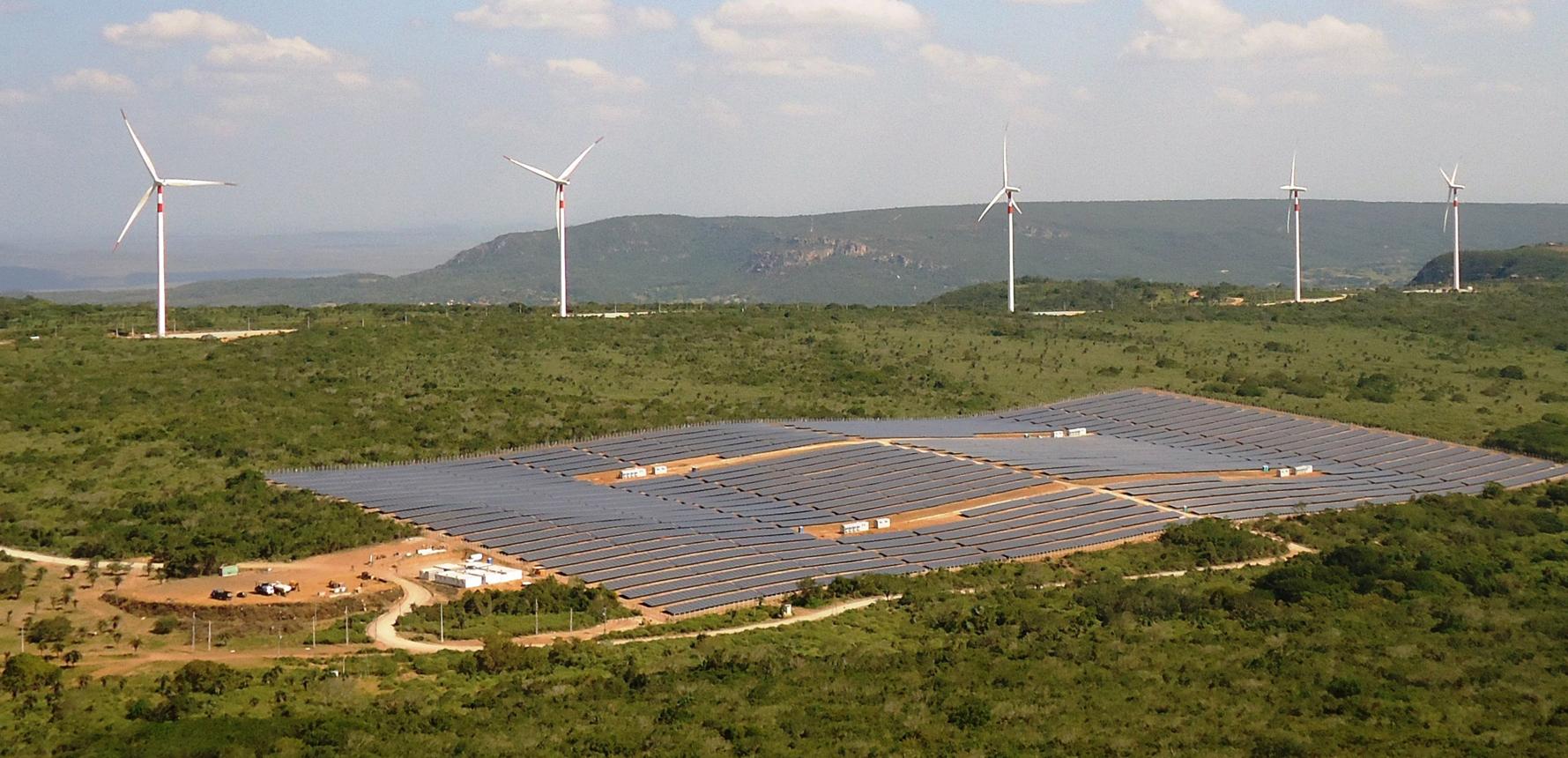
Enel Green Power is one of Europe’s major renewable energy developers and operates within a multinational energy group with access to substantial capital and global technical expertise.
Its African footprint includes renewable projects in South Africa and Morocco, where the company has participated in large wind and solar developments. Its portfolio has also included projects in Zambia.
Enel’s strategy is increasingly influenced by industrial customers seeking reliable renewable electricity rather than relying solely on conventional grid supply.
This creates opportunities for long-term power contracts involving mining, manufacturing and other energy-intensive businesses.
Ownership significance: Enel represents the influence of established European energy companies that can combine global financing, technical expertise, industrial customers and renewable energy development across African markets.
7. EDF Renewables, France
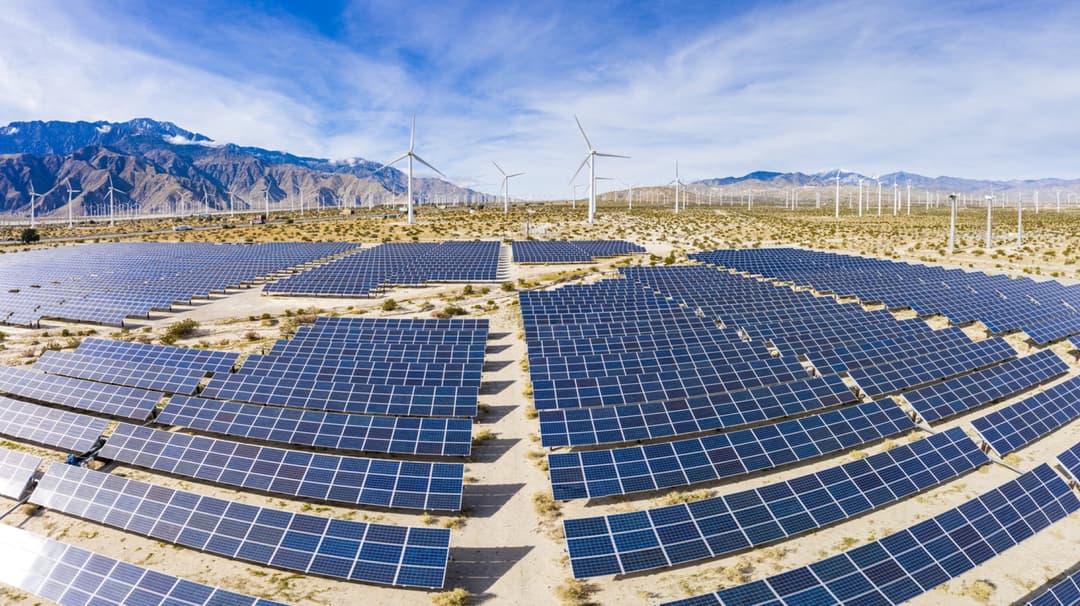 Ownership: Part of EDF, a French energy group controlled by the French state.
Major African markets: Egypt, Morocco and South Africa.
Major projects: Benban solar investments, KarmSolar partnerships and the Obelisk solar and storage project in Egypt.
EDF is one of the largest energy groups participating in the global transition to low-carbon electricity.
Its renewable energy business operates through projects involving solar, wind, hydroelectric power and energy storage.
In Africa, EDF’s strategic importance is particularly visible in Egypt and South Africa, where large-scale energy investment requires technical capacity, financing and long-term relationships with public institutions.
EDF has also participated in the Egyptian solar market through its involvement in KarmSolar and major utility-scale developments.
Ownership significance: EDF demonstrates how European state-linked energy corporations can participate in Africa’s energy transition through a combination of corporate investment, project ownership, engineering and strategic partnerships.
8. TotalEnergies, France
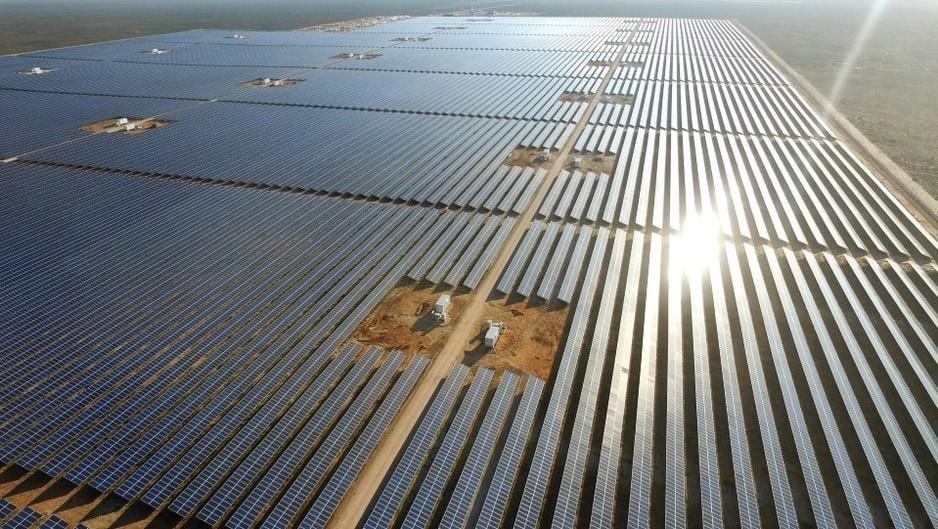 Ownership: Publicly traded French multinational energy company.
Major African markets: South Africa, Egypt, Angola, Mozambique and other countries.
Major projects: South African hybrid renewable energy developments, Egyptian solar facilities, Quilemba solar project in Angola and Metoro solar project in Mozambique.
TotalEnergies is one of the world’s largest integrated energy companies, and its transition strategy includes expanding renewable electricity while maintaining a substantial global energy business.
Its African investment footprint is extensive, giving it access to renewable energy development, power markets, industrial customers and infrastructure opportunities.
The company is developing and investing in solar, wind, storage and electricity supply projects in several African countries.
Its position is particularly important because multinational energy companies can use their existing industrial relationships, capital resources and engineering expertise to enter renewable energy markets.
Ownership significance: TotalEnergies represents the transformation of traditional multinational energy companies into broader electricity and renewable infrastructure investors while maintaining significant influence over Africa’s energy investment landscape.
PART II: COMPANIES WITH DEEP AFRICAN ENERGY FOOTPRINTS
9. Globeleq
Ownership: British International Investment (BII) and Norfund.
Major African markets: South Africa, Mozambique, Kenya, Cameroon, Côte d’Ivoire, Egypt and Tanzania.
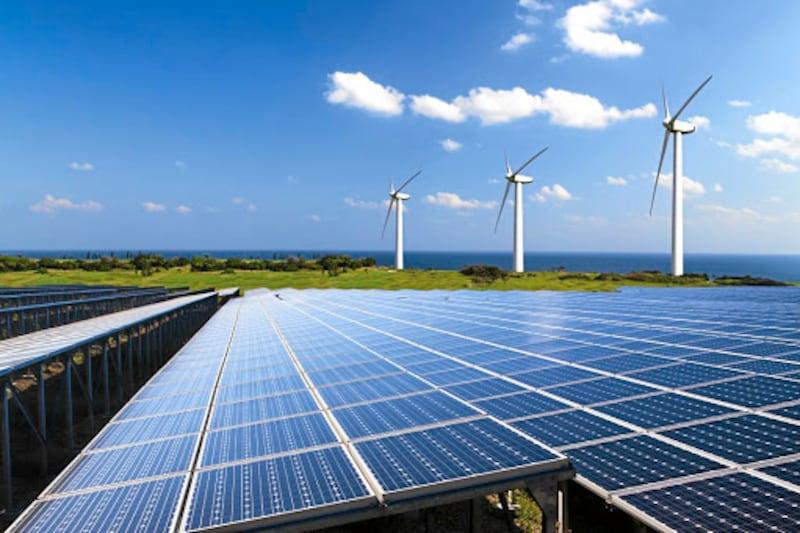
Major projects: De Aar Solar, Droogfontein Solar, Jeffreys Bay Wind Farm, Klipheuwel Wind Farm and Mocuba Solar in Mozambique.
Globeleq has been one of Africa’s established independent power producers, developing, owning and operating power infrastructure across multiple countries.
Its renewable energy portfolio includes solar and wind projects, although its overall generation portfolio also includes other technologies.
Its ownership is particularly interesting because it is backed by development finance institutions rather than a conventional private multinational energy conglomerate.
British International Investment and Norway’s Norfund provide capital and development expertise supporting the company’s long-term investment strategy.
Globeleq has invested in markets where electricity infrastructure is critical to industrial growth and economic development.
Ownership significance: Globeleq illustrates how development finance institutions can become direct owners of African energy assets, combining investment returns with development objectives.
10. CrossBoundary Energy
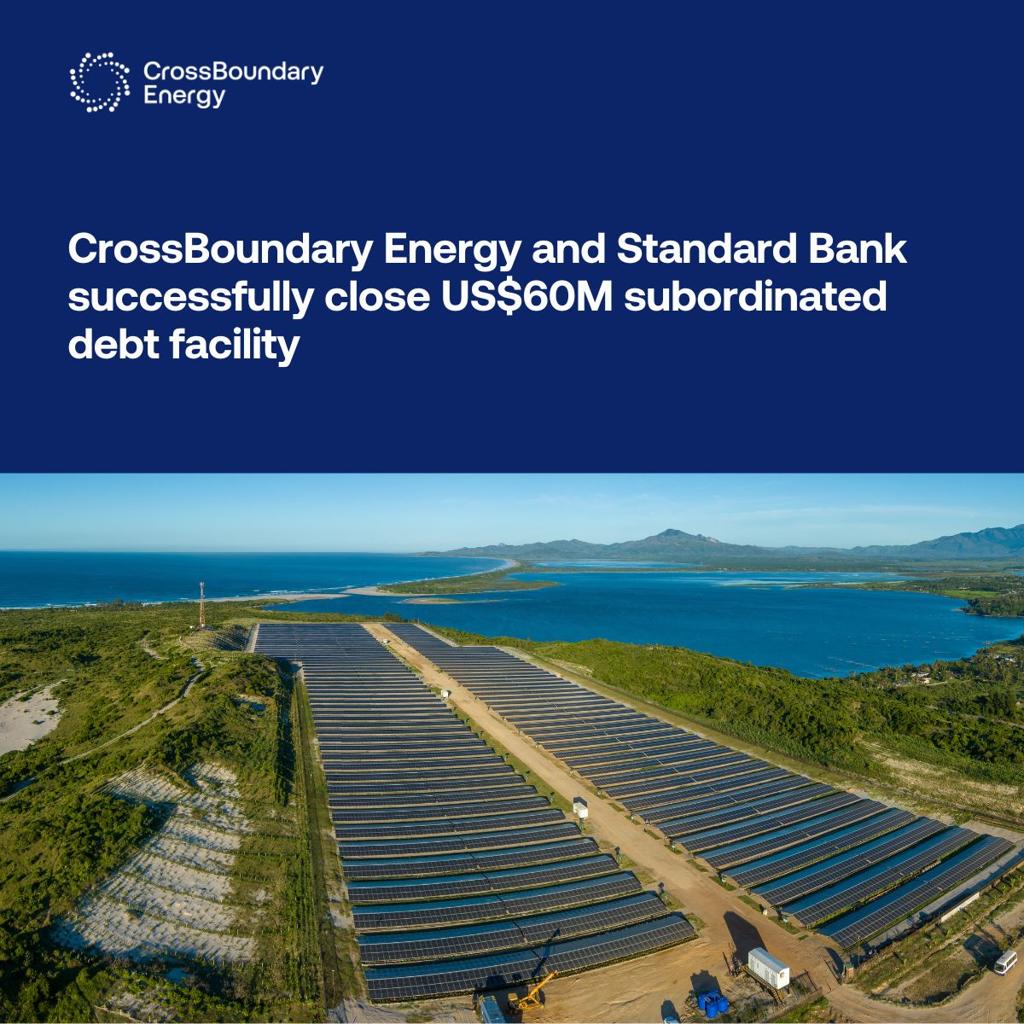
Ownership: Investment structure includes ARCH Africa Renewable Power Fund and CrossBoundary Energy Management, with additional institutional capital and financing partners.
Major African markets: Kenya, Nigeria, South Africa, Ghana, Mozambique, Madagascar, Rwanda, Zambia and other markets.
Major projects: Commercial and industrial solar, wind, battery storage, mining energy systems and energy-as-a-service projects.
CrossBoundary Energy represents a different type of power company.
Instead of focusing primarily on national utility-scale power plants, it develops renewable energy solutions for businesses that need reliable electricity, including commercial operations and industrial customers.
Its model allows companies to access solar, batteries and other energy solutions without necessarily purchasing the infrastructure themselves.
This approach is particularly relevant to African businesses operating in markets where grid reliability, electricity costs and diesel dependence affect competitiveness.
CrossBoundary Energy has expanded its portfolio across multiple African markets, including projects serving mining and industrial customers.
Its investment structures involve institutional capital, development finance and infrastructure investors. Its associated CrossBoundary Energy Access platform also finances and owns distributed renewable infrastructure such as mini-grids.
Ownership significance: CrossBoundary’s business model illustrates how companies can own the energy infrastructure serving Africa’s industries, meaning that ownership of the electricity supply itself is increasingly becoming a commercial asset class.
11. Nareva Holding, Morocco
Ownership: Moroccan investment and energy company associated with Al Mada.
Major market: Morocco.
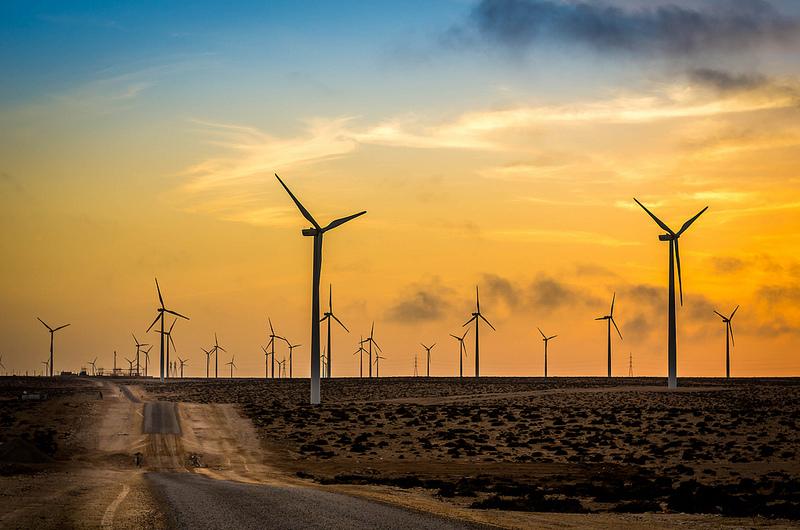
Major projects: Tarfaya Wind Farm, Aftissat wind farms, Akhfennir, Haouma, Foum El Oued and the integrated wind programme developed with Enel Green Power.
Nareva is one of the most important African-owned energy companies in the renewable energy space.
It has developed a significant portfolio of wind projects and participates in electricity generation, water-related infrastructure and industrial energy solutions.
The company’s position is particularly important because Morocco has developed a more coordinated approach to energy infrastructure, industrial policy, renewable energy procurement and electricity transmission.
Nareva’s partnerships with international energy companies demonstrate how African ownership can coexist with foreign technical and financial participation.
The Tarfaya Wind Farm, developed through a 50:50 partnership between Nareva and ENGIE, is an example of a major project in which a Moroccan company participates directly in ownership and long-term infrastructure development.
Ownership significance: Nareva represents a model in which a regional African company can build scale, develop expertise and participate in strategic infrastructure instead of remaining a passive recipient of foreign investment.
12. Red Rocket, South Africa
Ownership: South African-founded independent renewable energy producer with private investment ownership.
Major market: South Africa.
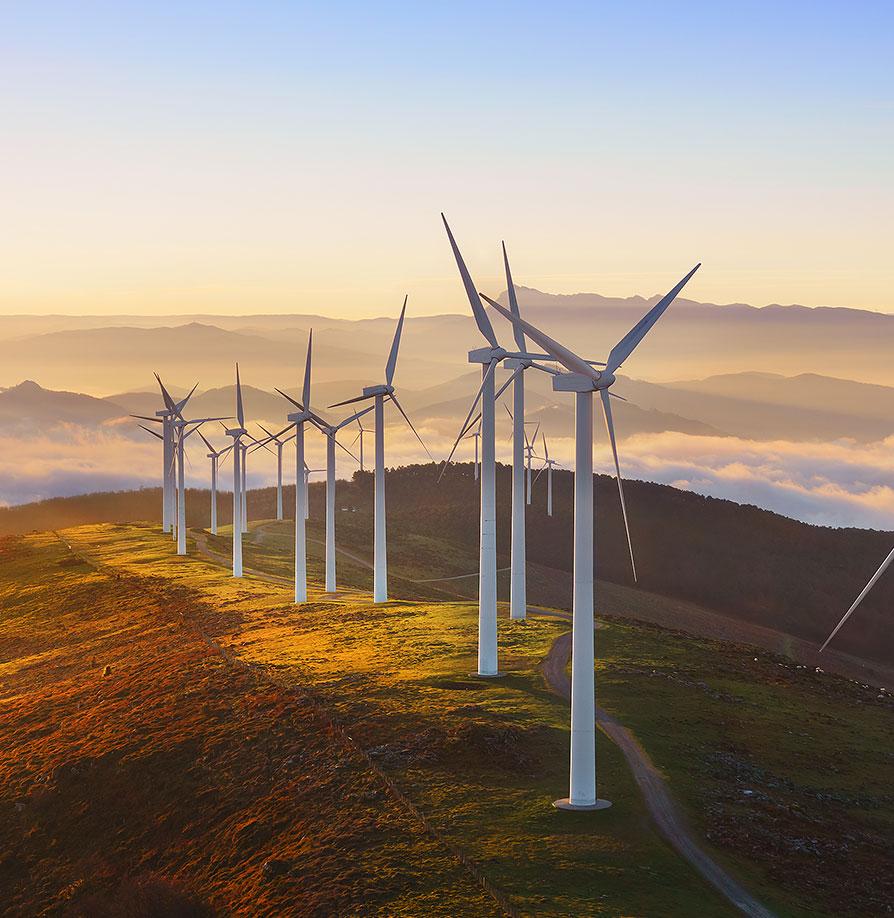
Major projects: Roggeveld Wind Farm and renewable energy projects across the South African power market.
Red Rocket is one of the African companies demonstrating that domestic project developers can participate in large-scale electricity generation.
The company develops, finances, constructs and operates renewable energy projects, including wind and solar infrastructure.
South Africa’s renewable energy procurement framework has created opportunities for local developers to compete with international companies, although access to capital and project finance remains a significant challenge.
Red Rocket’s position is important because it shows that African ownership is not limited to small rooftop installations or local construction contracts.
African companies can develop and operate utility-scale assets.
Ownership significance: Red Rocket represents the emerging African independent power producer capable of competing for long-term ownership of renewable energy infrastructure.
13. KenGen, Kenya
Ownership: Approximately 70% owned by the Government of Kenya, with the remainder publicly traded.
Major market: Kenya.
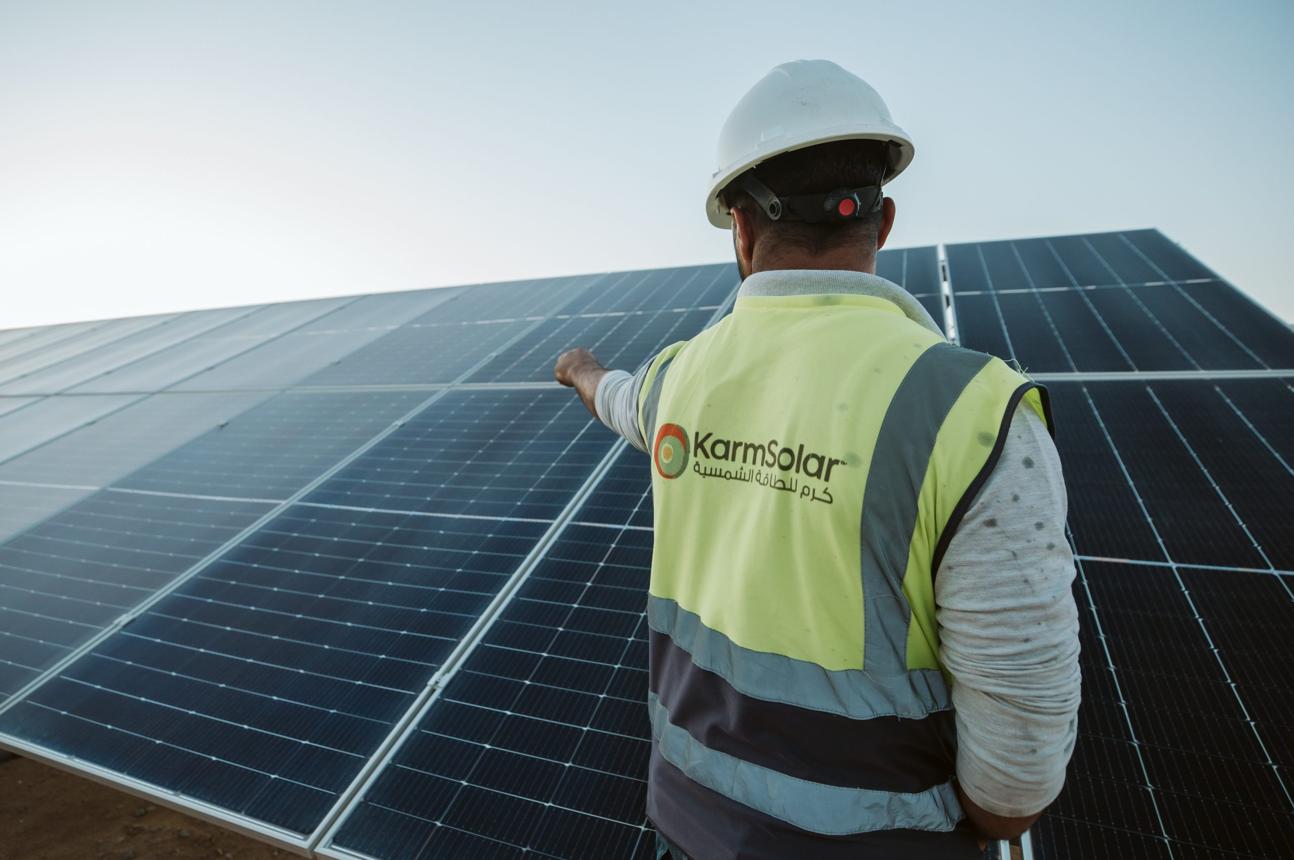
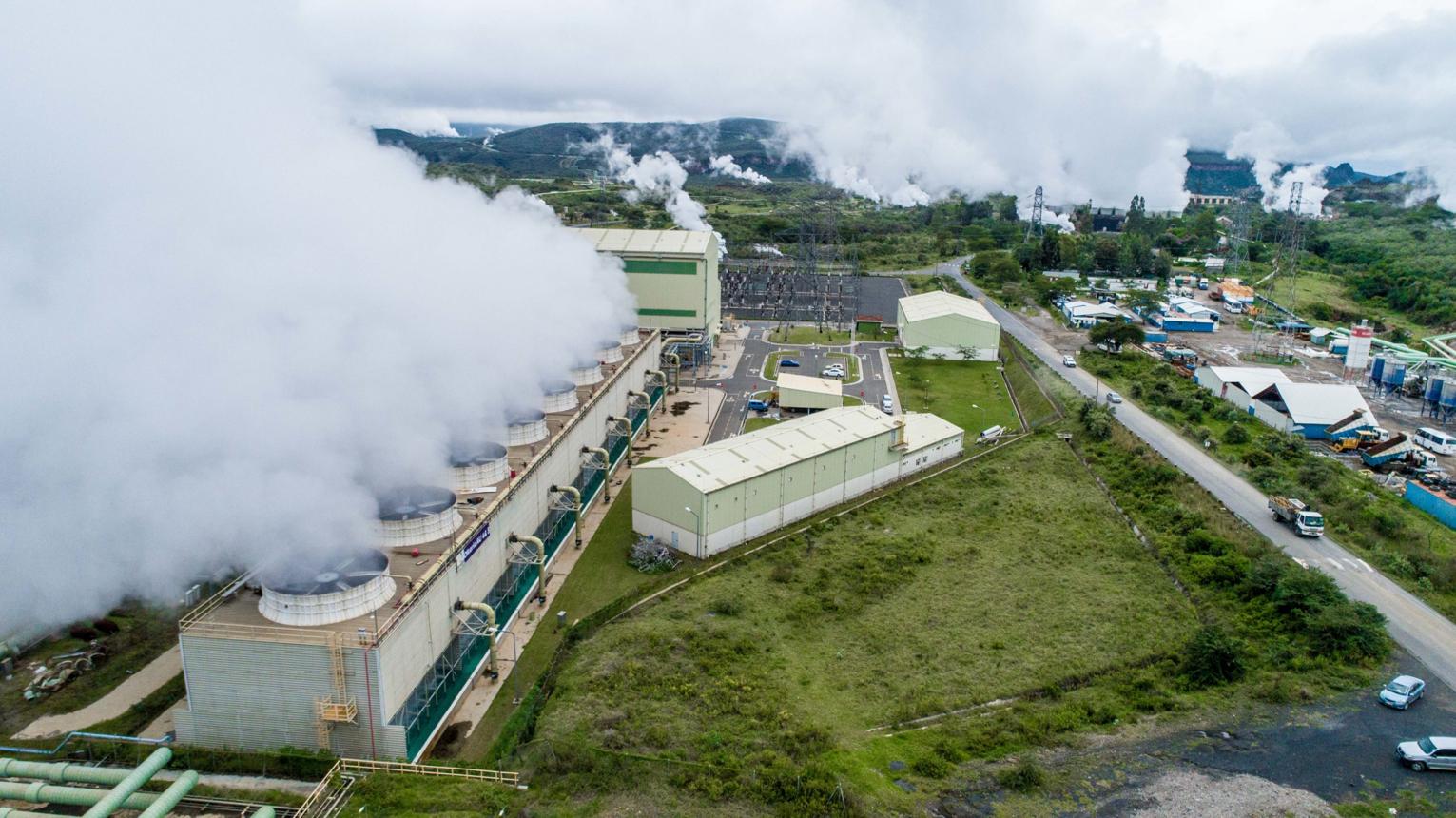
Major projects: Olkaria geothermal complex, geothermal development, hydroelectric power and renewable generation infrastructure.
KenGen is one of the most important African state-owned energy companies in the renewable electricity sector.
Its geothermal operations give Kenya a strategic advantage in generating electricity from domestic energy resources rather than relying entirely on imported fuels.
KenGen’s geothermal investments are particularly significant because geothermal energy can provide relatively stable electricity generation, unlike solar and wind resources whose output varies with weather conditions.
The company also has experience in power generation, engineering, project development and operating large energy infrastructure.
Kenya’s geothermal development has created technical capabilities, skilled employment and institutional experience that could support further energy investment across the region.
Ownership significance: KenGen demonstrates the potential of African state ownership to retain strategic control over energy assets, develop technical capacity and participate in the long-term economics of infrastructure.
14. KarmSolar, Egypt
Ownership: Egyptian-founded private renewable energy company with a diversified investor base.
Major market: Egypt.
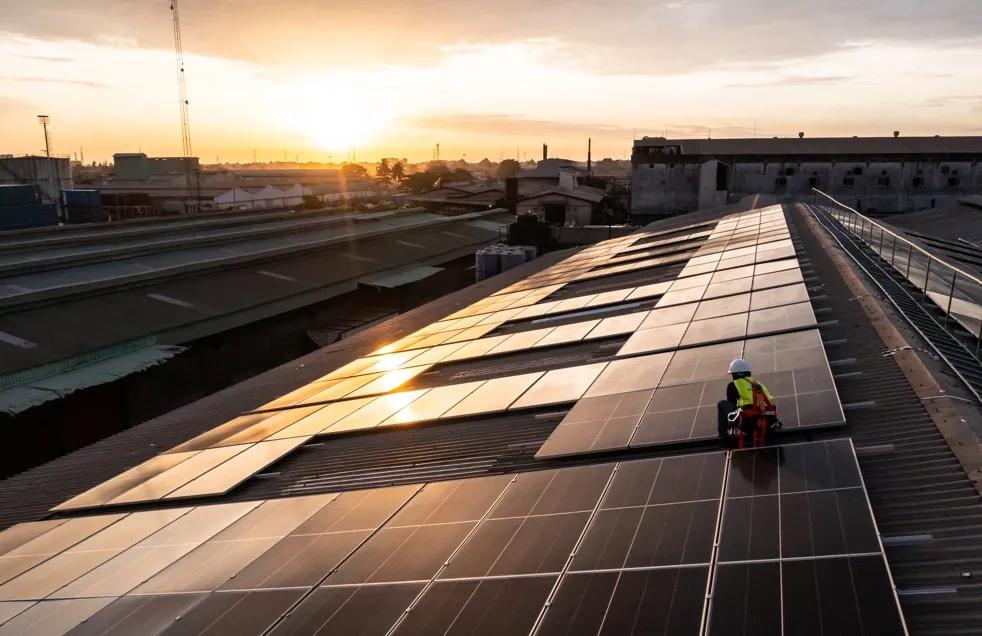
Major projects: Solar power projects, commercial and industrial energy solutions, agricultural solar infrastructure and participation in the Egyptian renewable energy market.
KarmSolar has developed a business around solar energy, commercial power solutions and infrastructure for customers seeking alternatives to conventional electricity supply.
The company is particularly relevant to the African ownership debate because it emerged from the Egyptian private sector rather than a multinational utility.
Its business model includes developing energy solutions for industrial, commercial and agricultural customers.
Egypt’s renewable energy market has attracted international developers and major institutional investors. Local businesses such as KarmSolar demonstrate the potential for domestic companies to develop their own market presence while working with international capital and technical partners.
Ownership significance: KarmSolar represents African entrepreneurship in the energy transition, illustrating the potential to build indigenous companies with technical, commercial and project-development capabilities.
15. Daystar Power, Nigeria and West Africa
Ownership: Acquired by Shell, making it part of the multinational energy group’s business portfolio.
Major African markets: Nigeria, Ghana and other West African markets.
Major projects: Commercial and industrial solar power systems, hybrid generation and battery storage.
Daystar Power was built around a business model that addresses one of Africa’s most persistent economic problems: unreliable electricity.
The company provides solar and hybrid energy solutions to businesses, reducing dependence on diesel generators and improving electricity reliability.
Its acquisition by Shell illustrates how international energy companies are buying established African renewable energy businesses rather than entering every market organically.
The acquisition brings access to capital, international technical resources and potentially larger investment capacity. However, it also shifts ownership of a company founded to address African energy challenges into the hands of a multinational corporation.
Ownership significance: Daystar demonstrates the growing acquisition market for African energy businesses. African entrepreneurs can build valuable companies, but the long-term ownership of those companies may ultimately move to international investors.
PART III: THE TECHNOLOGY AND SUPPLY-CHAIN CONTROLLERS
Owning the power plant is only one part of the energy transition.
The companies manufacturing solar panels, wind turbines, battery cells, power electronics and energy storage systems can influence the cost, availability and technological direction of Africa’s renewable energy development.
16. JinkoSolar, China
Ownership: Chinese publicly traded solar manufacturing company.
Major African markets: South Africa, Egypt, Morocco, Kenya and broader African solar markets through equipment supply and partnerships.
Major products: Solar photovoltaic modules, cells and related technology.
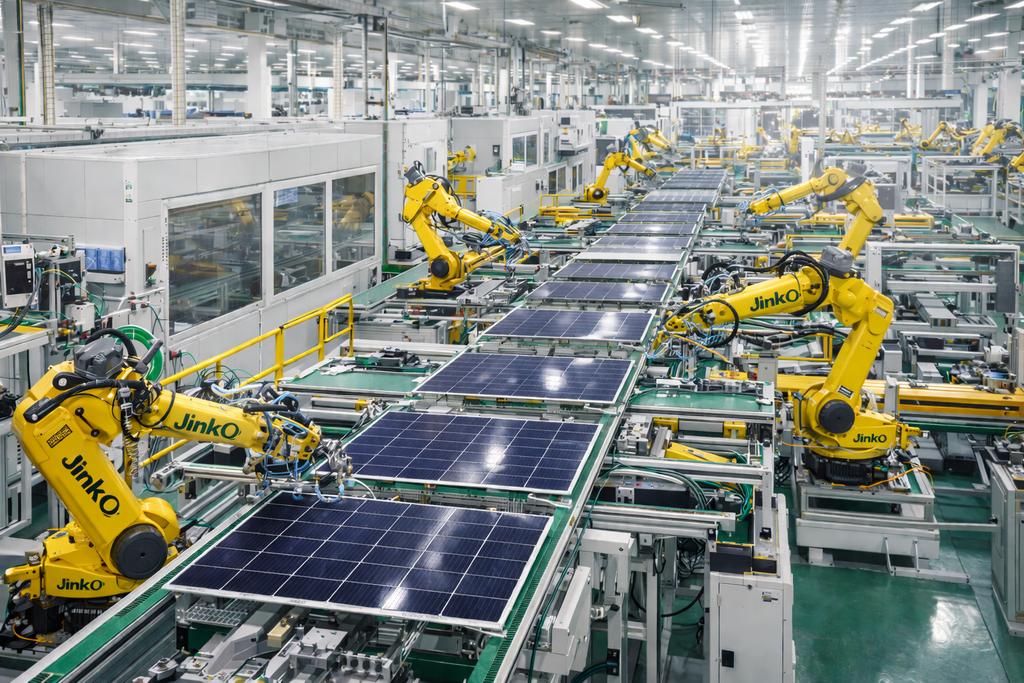
JinkoSolar is one of the world’s major solar equipment manufacturers.
As African countries expand solar generation, equipment manufacturers gain influence through the supply of panels, technology, manufacturing capacity, product performance and pricing.
Solar projects may be developed by African or foreign companies, but the equipment used to generate electricity frequently comes from international manufacturers.
This creates a second layer of ownership in the energy transition.
The developer may own the power plant, but the manufacturer controls the technology, production facilities, intellectual property and manufacturing ecosystem behind the equipment.
Ownership significance: Solar manufacturing companies influence the economics of Africa’s renewable energy transition even when they do not own the power plants themselves.
17. Vestas Wind Systems, Denmark
Ownership: Danish publicly traded wind technology manufacturer.
Major African markets: South Africa, Egypt, Morocco, Kenya and other wind markets.
Major products: Wind turbines, engineering, installation, servicing and maintenance.
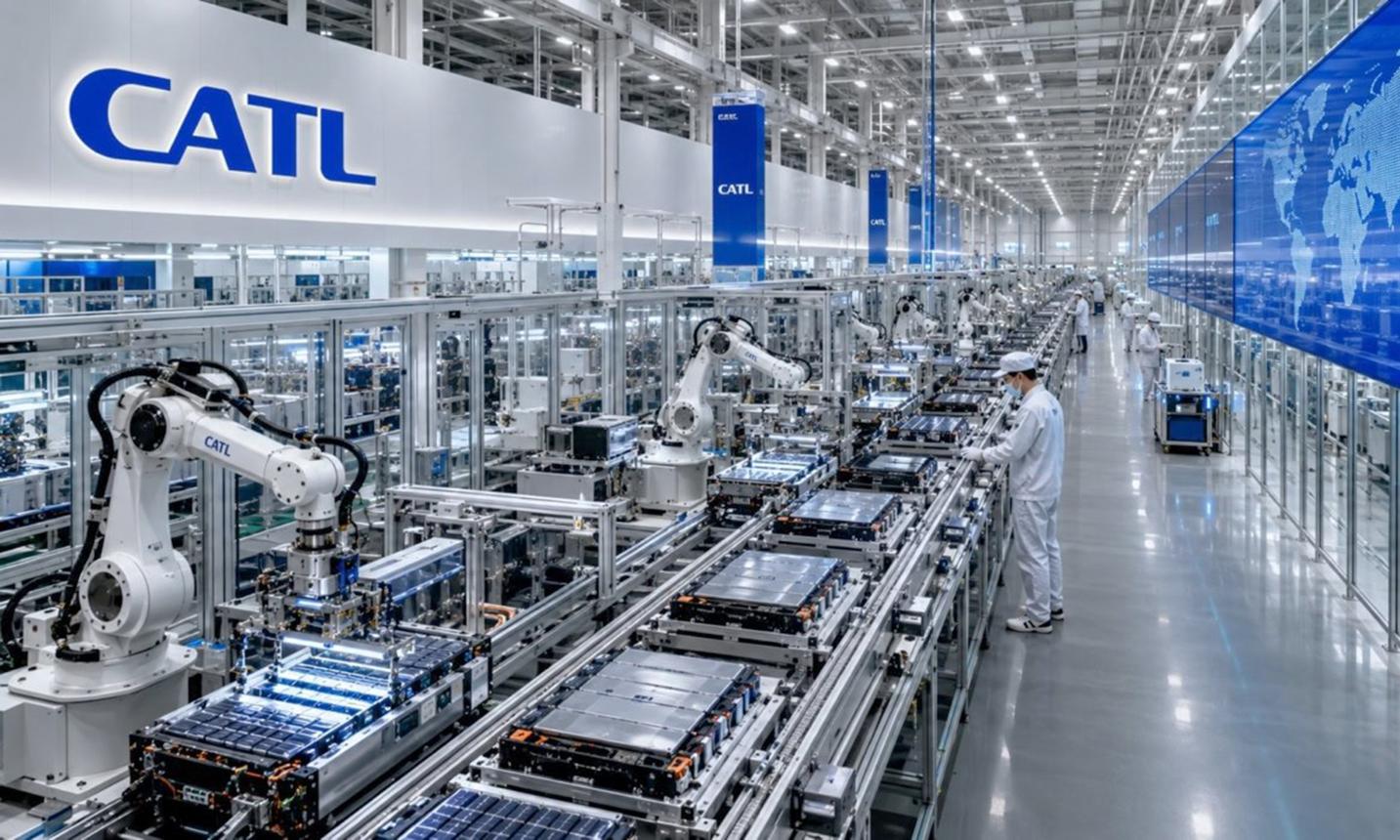
Vestas is one of the world’s leading wind turbine manufacturers.
Its influence on Africa’s wind industry extends beyond equipment sales. Wind turbine technology, servicing, maintenance, technical standards and long-term performance agreements are critical components of wind power infrastructure.
The companies supplying turbines can develop long-term relationships with project owners through warranties, maintenance contracts, spare parts and technical support.
Wind projects require specialised equipment and expertise, often making it difficult for new local manufacturers to compete immediately.
Ownership significance: The wind industry illustrates how technology ownership and servicing can create long-term economic relationships extending well beyond the initial construction of a power plant.
18. CATL, China
Ownership: Chinese publicly traded battery manufacturer with major strategic shareholders and institutional investors.
Major African markets: Indirectly across African battery supply chains, energy storage markets and mineral investment relationships.
Major products: Lithium-ion batteries, energy storage systems, battery technology and manufacturing.
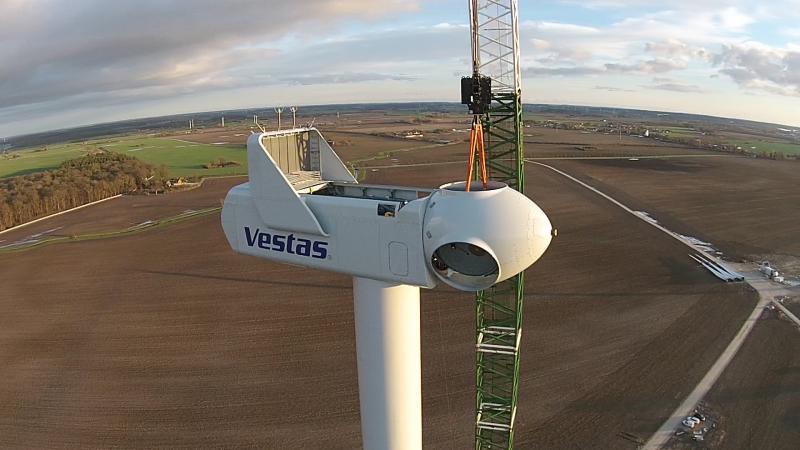
CATL is one of the most influential companies in the global battery industry.
As renewable energy expands, battery storage is becoming increasingly important for stabilising electricity supply, supporting solar and wind generation, improving grid reliability and powering industrial facilities.
The battery industry is closely connected to African mineral resources, particularly cobalt, copper and lithium.
CATL’s interests in mineral supply chains, including participation in the Kisanfu ownership structure in the DRC through its investment in the mine’s holding company, illustrate how battery manufacturers can have interests upstream in the resources required for their products.
This relationship connects mineral extraction, battery manufacturing and energy storage within a single global commercial network.
Ownership significance: Battery manufacturers are not simply technology suppliers. Their strategic influence can extend into mineral procurement, processing, manufacturing capacity and the future economics of electricity storage.
PART IV: THE MINERAL OWNERS
19. CMOC Group, China
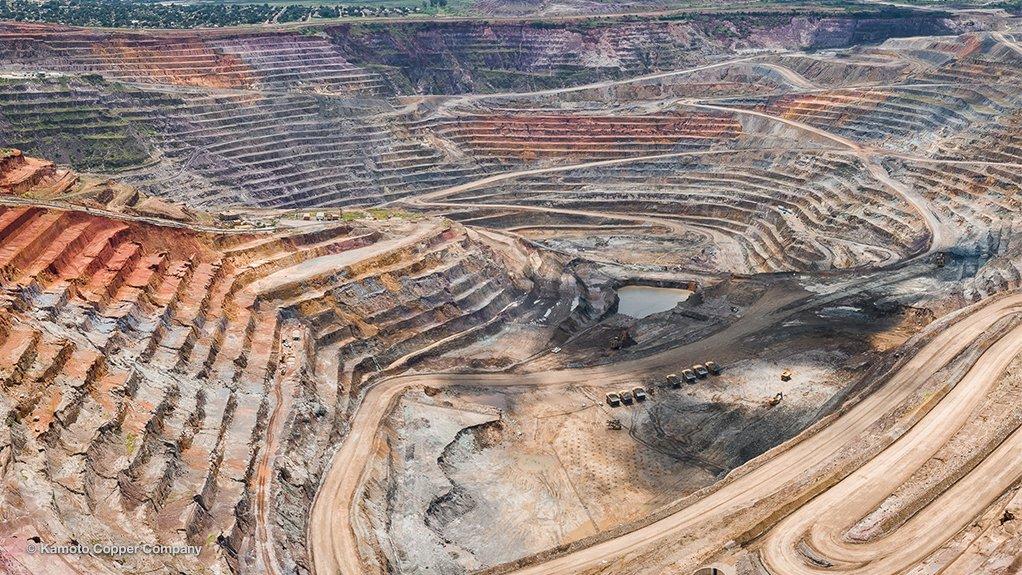
Ownership: Chinese publicly listed mining company with major institutional and corporate shareholders.
Major African market: Democratic Republic of Congo.
Major projects: Tenke Fungurume Mining and Kisanfu copper-cobalt operations.
CMOC is one of the most influential companies in Africa’s critical mineral supply chain.
Its operations in the Democratic Republic of Congo give it a significant position in the production of copper and cobalt, two minerals closely associated with the global electrification and battery industries.
Tenke Fungurume is one of the world’s major copper-cobalt mining operations. Kisanfu adds further strategic significance to CMOC’s position in the DRC.
The ownership structures of these assets involve international capital and Congolese state participation, but the majority controlling positions are held by CMOC.
This gives the company influence over production, capital allocation, operational strategy and the commercial pathways through which minerals enter global markets.
Ownership significance: CMOC demonstrates how control of mining operations can translate into strategic influence over global supply chains, particularly where minerals are concentrated in a small number of producing countries and companies.
20. Glencore, Switzerland
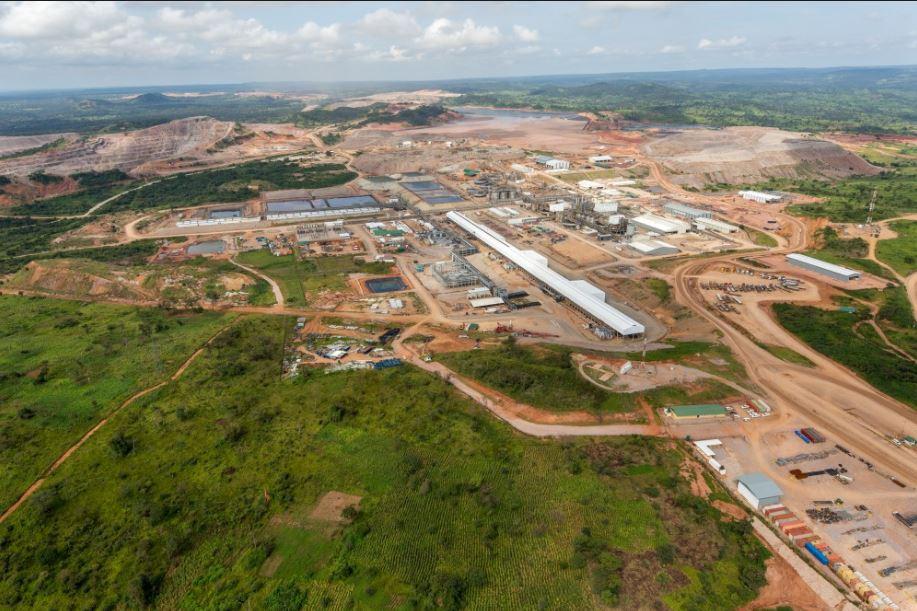
Ownership: Publicly traded multinational commodity and mining company.
Major African markets: Democratic Republic of Congo, Zambia and other African mining jurisdictions.
Major projects: Kamoto Copper Company and Mutanda Mining in the DRC, alongside major copper interests in Zambia.
Glencore is one of the world’s most influential commodity companies.
Its operations in the DRC position it within the copper and cobalt supply chains that support electrification, battery manufacturing and industrial energy infrastructure.
The company’s mining interests include Kamoto Copper Company and Mutanda Mining.
These assets are important not only because of their mineral production but also because of the commercial infrastructure required to process, market, trade and distribute metals.
Glencore operates across the mining and trading sectors, giving it influence beyond the physical extraction of minerals.
Ownership significance: Glencore represents the integrated resource model in which companies can combine extraction, processing, logistics, marketing and global commodity trading, allowing them to capture value across multiple stages of the supply chain.
THE OWNERSHIP MAP: WHO IS AFRICAN, WHO IS FOREIGN, AND WHO IS PARTNERING?
The 20 companies reveal that Africa’s green energy landscape is not controlled by one country, one investor group or one type of corporation. Ownership is fragmented across sovereign-backed investors, publicly listed multinationals, development finance institutions, African entrepreneurs, mining companies and international technology manufacturers.
The distinction is important because the nationality of a project developer does not always reveal who owns the project itself.
A company may be headquartered in Africa but financed by international investment funds. A project may be developed by a foreign company but include African government equity. A multinational may partner with a domestic business that controls the local market and provides operational expertise.
The real ownership picture is therefore more complicated than a simple foreign-versus-African divide.
Ownership landscape
Gulf-backed strategic capital
Masdar, ACWA Power, AMEA Power.
Source of influence: Sovereign-linked capital, large-scale financing, international project development.
European multinational energy groups
Enel, EDF, TotalEnergies.
Source of influence: Technology, financing, project development, long-term electricity assets.
Development finance-backed investors
Globeleq, CrossBoundary Energy.
Source of influence: Institutional investment, project finance, development capital.
African energy companies
Nareva, Infinity Power, Red Rocket, KenGen, KarmSolar.
Source of influence: Regional expertise, domestic ownership, local markets, project development.
International technology manufacturers
JinkoSolar, Vestas, CATL.
Source of influence: Manufacturing, technology, equipment, intellectual property and supply chains.
Global mineral producers
CMOC, Glencore.
Source of influence: Mineral extraction, processing, commodity trading and supply-chain control.
The growing presence of African businesses is significant, but it must be measured against the scale of capital and technology controlled by international companies.
The most important question is not how many African companies appear on a list of project developers.
It is how much equity they own, how much capital they mobilise, how much infrastructure they control, how many strategic decisions they make and how much value they retain.
THE COMPANIES AFRICA SHOULD BE WATCHING
The next ownership battle will happen beyond the power plant
The first phase of Africa’s renewable energy transition was largely about attracting investors, building capacity and increasing electricity generation.
The next phase could be much more commercially competitive.
Battery storage is becoming increasingly important. Industrial customers are looking for reliable power. Mining companies are exploring renewable energy to reduce operating costs. Governments are seeking new electricity infrastructure. Data centres and digital infrastructure are increasing demand for dependable electricity.
These developments could create new opportunities for African companies to own assets and enter markets that previously depended heavily on national utilities.
But the competition will not be limited to generating electricity.
It will involve ownership of:
- Battery storage facilities.
- Transmission infrastructure.
- Solar and wind project portfolios.
- Industrial power supply contracts.
- Energy trading platforms.
- Renewable energy financing companies.
- Mineral processing facilities.
- Battery recycling businesses.
- Solar equipment manufacturing.
- Engineering, software and energy management systems.
Companies that control several of these segments could have greater strategic influence than those that own a single power plant.
The green energy economy is increasingly interconnected. Mineral producers depend on processing infrastructure. Battery manufacturers depend on minerals. Renewable energy developers depend on equipment manufacturers and finance. Industrial customers depend on electricity contracts and storage systems.
The companies capable of connecting these layers will have substantial influence over the future economics of energy.
AFRICA’S OWN COMPANIES MUST BECOME OWNERS, NOT SPECTATORS
The most important takeaway from this investigation is not that foreign companies are investing in Africa.
Foreign investment is essential to the continent’s infrastructure development. Many projects require capital, technology, engineering expertise and financing capabilities that African markets cannot yet provide at sufficient scale.
The problem arises when foreign investment becomes the only pathway to building strategic infrastructure.
Africa needs its own generation of energy companies with the ability to develop projects, raise capital, acquire assets, manufacture equipment, negotiate contracts, own infrastructure and expand across national borders.
Kenya’s KenGen, Morocco’s Nareva, Egypt’s KarmSolar, South Africa’s Red Rocket and the broader African platform Infinity Power represent different approaches to developing African participation in the energy industry.
They do not share identical ownership structures, financial capabilities or market positions. But they demonstrate that African participation can extend beyond government policy and local employment into commercial ownership, project development and strategic decision-making.
The next generation of African energy companies must be able to compete for billion-dollar assets, not merely provide services to billion-dollar projects.
That will require more than political declarations.
African pension funds will need investment structures that allow them to participate in infrastructure without exposing retirement savings to unmanaged risks. Local banks will need to develop the capacity to finance long-term energy assets. Governments will need predictable regulation and transparent procurement. African developers will need stronger balance sheets, experienced teams and access to project-development capital.
And regional markets must become large enough to allow companies to scale beyond the limitations of individual national economies.
The opportunity is not to exclude foreign corporations.
It is to ensure African companies become strong enough to negotiate with them as partners, competitors, shareholders and asset owners.
WHAT AFRICAN GOVERNMENTS SHOULD ASK BEFORE SIGNING THE NEXT DEAL
The rush to attract renewable energy investment can create pressure for governments to prioritise project approvals, headline investment figures and installed capacity.
But investment announcements should not become the sole measure of success.
Before approving major renewable energy, mining, battery or green industrial projects, governments should consider a broader set of ownership and economic questions.
The ownership test
Who owns the project? Identify the ultimate shareholders, beneficial owners and controlling entities, not merely the local project company.
Who finances it? Determine the balance between equity, commercial debt, concessional finance, public guarantees and domestic capital.
Who receives the profits? Examine dividend flows, debt servicing, management fees, royalties, taxes and reinvestment obligations.
Who supplies the technology? Identify whether equipment, software, intellectual property and technical services are locally developed or imported.
Who gets the contracts? Track procurement opportunities for African manufacturers, engineering firms, construction companies and service providers.
Who develops the skills? Establish meaningful pathways for local engineers, technicians, project managers, researchers and executives.
Who controls the infrastructure? Understand whether African investors or institutions hold operational influence, equity stakes and long-term strategic control.
Who benefits from the electricity? Determine whether projects serve domestic industry, local communities, national grids, export markets or a combination.
What remains after the investor leaves? Evaluate the durability of assets, technical capacity, local suppliers, institutional expertise and economic benefits.
These questions do not discourage investment.
They improve the quality of investment by making ownership, development impact and long-term economic contribution part of the commercial conversation.
THE VERDICT: AFRICA’S GREEN FUTURE IS A QUESTION OF OWNERSHIP
Africa’s green energy future is being shaped by some of the world’s most powerful corporations.
From Gulf-backed energy investors and European utilities to Chinese mineral producers, international battery manufacturers and development finance institutions, a growing network of companies is positioning itself to benefit from the continent’s renewable energy expansion and critical mineral resources.
Their investments are bringing capital, infrastructure, technology, jobs and electricity to markets that urgently need development.
But the ownership structures behind these investments also reveal a strategic challenge.
Africa may become increasingly important to the global energy transition without automatically becoming more influential in the companies, technologies and financial systems that drive it.
The continent’s resources could power global industries while the most profitable stages of the supply chain remain concentrated elsewhere.
This is why the next phase of Africa’s energy transition must be measured differently.
Megawatts installed are important. Investment attracted is important. Mineral production is important.
But the ownership of those assets, the capacity of African companies to compete, the strength of domestic capital markets, the transfer of technical expertise and the ability to retain profits will be equally important.
Africa does not need to own every solar panel, wind turbine, battery factory or mining company operating on its territory.
It needs to own enough of the strategic infrastructure, businesses, technology, financing and value chains to influence its economic future.
The companies listed in this investigation represent the current landscape of power, capital and industrial influence.
But the most important company in Africa’s green future may not yet exist.
It could be a Kenyan energy developer, a Nigerian battery company, a South African manufacturing business, a Congolese mineral processor, an Egyptian technology company or a regional infrastructure investment platform built by African entrepreneurs.
The green revolution will create new fortunes, new industrial leaders and new centres of economic power.
The question is whether Africa will simply host those fortunes, or build companies capable of creating and owning them.
Because in the green economy, the country that supplies the resources is not necessarily the country that controls the wealth. And the company that builds the infrastructure is not necessarily the company that captures the greatest value.

More from Magazine

Seychelles’ Aldabra giant tortoise population hits 180,000
Seychelles’ Aldabra tortoise recovery offers a powerful lesson in conservation, patience and why protecting ecosystems can matter beyond borders.
Who owns South Africa’s fuel infrastructure?
South Africa’s fuel shock exposes the hidden ownership, infrastructure and corporate power shaping prices paid by consumers and industry.
How Aliko Dangote is turning Africa’s biggest refinery into a $47 billion public company
Nigeria's SEC has cleared a $1.6 billion share sale for Dangote's refinery, setting up Africa's largest-ever stock market listing.