

Africa’s economic future is being shaped not only in presidential offices, central banks and international financial institutions, but also in corporate boardrooms where a relatively small number of business groups make decisions affecting millions of people. From Nigeria’s industrial empires to South Africa’s technology investments, Morocco’s strategic holdings and East Africa’s financial networks, these corporations have accumulated influence over industries that determine how the continent produces, trades, communicates, finances development and competes globally. Their power, however, raises a fundamental question: who actually owns the businesses shaping Africa, and how much influence should private and state-linked capital have over the continent’s economic direction?
The corporate power behind Africa’s economy
Africa’s corporate landscape is considerably more complicated than conventional rankings of its richest companies suggest. Revenue, market capitalisation and billionaire wealth provide useful indicators, but they do not independently measure economic influence.
A privately controlled conglomerate may have less publicly reported revenue than a listed multinational while exercising substantial control over domestic manufacturing, distribution, employment and investment. Similarly, a state-owned corporation can influence national economic policy through its control of energy, minerals or strategic infrastructure.
The OECD’s Africa Capital Markets Report 2026 illustrates this concentration. Its assessment of Africa’s largest companies identifies Sonatrach and Nigeria’s NNPC among the continent’s biggest corporations, while highlighting the continuing importance of state ownership in strategic industries.
The following ranking assesses 20 influential African-rooted or Africa-based corporate groups and strategic enterprises. It considers economic scale, ownership and control, industrial importance, geographical reach, investment capacity and strategic influence. It is an editorial assessment, not an audited ranking of consolidated revenue or personal wealth. Privately held groups are included because excluding them would overlook significant concentrations of economic power.
1. Dangote Group, Nigeria
Aliko Dangote’s business empire represents one of the continent’s most ambitious attempts to build industrial capacity under African ownership.
Its interests span cement, fertiliser, food processing, energy and refining. Dangote Cement has established operations across several African countries, while the Dangote Petroleum Refinery has introduced a new dimension to Nigeria’s position in the global energy industry.
The group’s significance extends beyond its owner’s wealth. Its investments influence construction costs, agricultural inputs, fuel supply, foreign exchange demand and industrial development.
Dangote’s majority ownership of Dangote Cement illustrates the concentration of control possible through listed subsidiaries and holding structures. The group’s future challenge is to demonstrate that its enormous industrial capacity can translate into sustainable competition, transparent governance and broader economic benefits.
2. Naspers and Prosus, South Africa
Few African corporate groups have achieved the international investment reach of Naspers.
Established in 1915, the South African company transformed from a traditional media business into a major global consumer internet investor through its majority ownership of Prosus.
Its interests include technology, digital commerce and internet platforms. In South Africa, its businesses include Takealot, Property24 and other digital services.
Naspers demonstrates that African-origin capital can influence global technology markets rather than simply participate in them as a consumer.
Its influence is particularly important because digital platforms increasingly shape commerce, advertising, logistics and access to information.
3. MTN Group, South Africa
MTN has developed into one of Africa’s most consequential telecommunications businesses, with operations spanning numerous African and Middle Eastern markets.
Its influence goes beyond mobile subscriptions. Telecommunications infrastructure supports digital payments, financial services, businesses, government services and international connectivity.
Its Nigerian operations are particularly significant, while its presence across West, Central and Southern Africa gives it considerable regional reach.
MTN’s ownership structure combines international institutional investors with public shareholders and strategic interests. Its position demonstrates how telecommunications companies have become essential economic infrastructure rather than conventional consumer businesses.
4. OCP Group, Morocco
Morocco’s OCP Group occupies an unusually strategic position in the global economy because of its phosphate resources and fertiliser production.
The group is majority-owned by the Moroccan state, with the state holding 94.12% according to its 2025 financial disclosures.
Its importance extends far beyond Morocco. Phosphate-based fertilisers are central to agricultural productivity, food security and international agricultural supply chains.
OCP’s investments in fertiliser manufacturing, research and industrial infrastructure give Morocco substantial influence in a market with direct implications for African food production.
Its challenge is to balance commercial expansion, environmental sustainability and the continent’s need for affordable agricultural inputs.
5. Sonatrach, Algeria
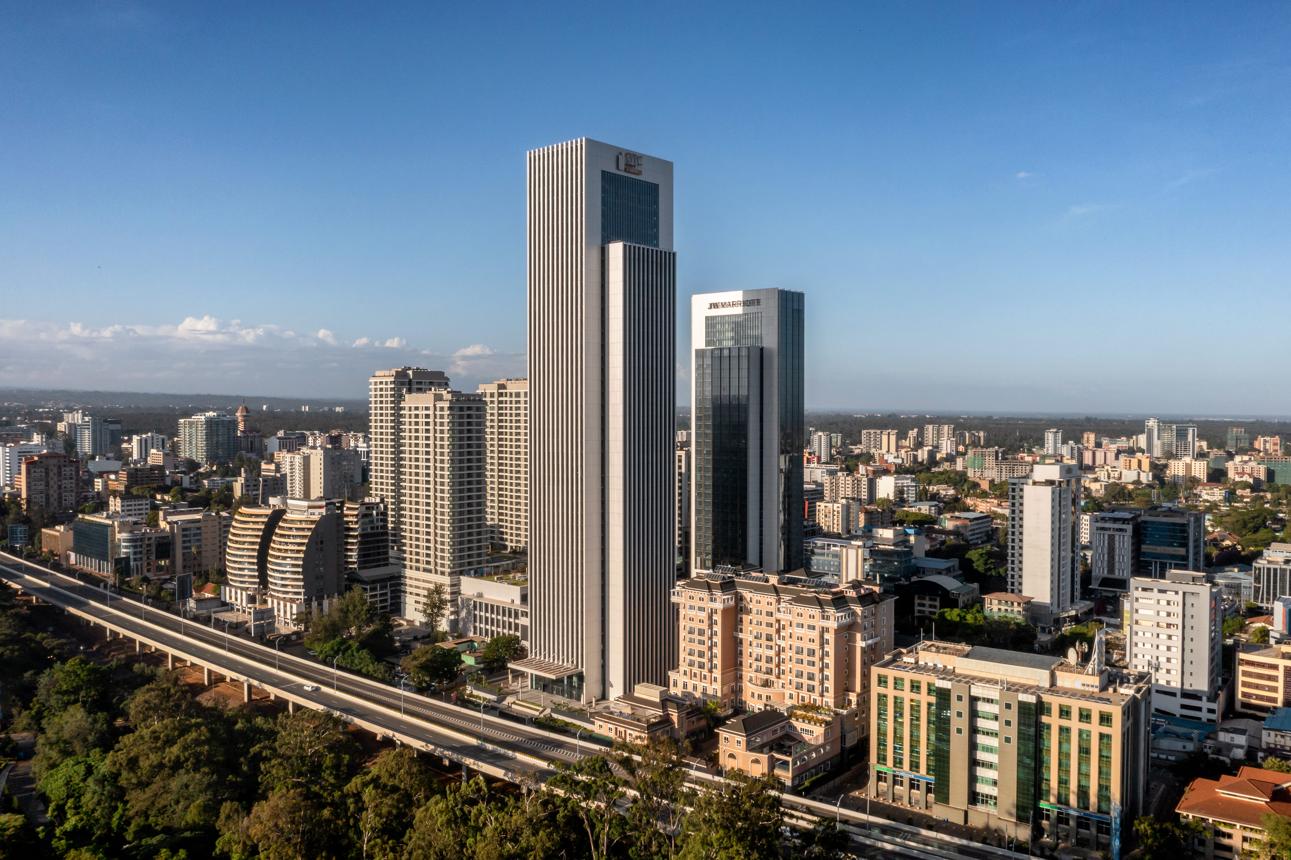
Sonatrach is one of Africa’s most economically powerful state-owned enterprises.
The Algerian energy giant operates across oil and natural gas exploration, production, processing, transportation and exports.
The OECD identifies Sonatrach as Africa’s largest company by 2024 turnover, reporting approximately $64.8 billion.
Its influence is inseparable from Algeria’s public finances, employment, energy security and international relationships, particularly with European energy markets.
Sonatrach illustrates how control of natural resources can translate into national economic influence and geopolitical importance.
6. Nigerian National Petroleum Company Limited, Nigeria
NNPC occupies a central position in Africa’s largest oil-producing economy.
The company is wholly owned by the Nigerian state and operates through an increasingly commercial corporate structure established under the Petroleum Industry Act.
Its business interests include upstream petroleum, gas, refining, pipelines and energy trading.
With 2024 turnover of approximately $30.2 billion, according to the OECD, NNPC is among Africa’s largest corporations.
Its significance is not simply its financial size. The company’s performance affects government revenue, foreign exchange availability, domestic fuel supply and Nigeria’s broader economic stability.
Its long-term credibility depends on transparent financial reporting, operational efficiency and accountability to the public.
7. Sonangol, Angola
Angola’s Sonangol remains a major force in the country’s petroleum industry and public finances.
The state-owned group has historically combined commercial energy operations with responsibilities connected to national economic development.
Its interests include petroleum exploration, production, logistics and associated energy services.
Sonangol’s strategic importance is particularly evident in Angola’s international energy relationships and the government’s efforts to diversify the economy beyond oil.
Its restructuring and governance reforms will help determine whether the company becomes a more efficient commercial enterprise.
8. BUA Group, Nigeria
Founded by Abdul Samad Rabiu, BUA Group has become one of Nigeria’s most important industrial conglomerates.
Its principal interests include cement, sugar, food processing and infrastructure-related investments.
BUA Cement is a particularly important component of the empire. Its published ownership disclosures demonstrate the substantial control retained by Rabiu and associated holding structures.
The group’s expansion reflects a wider shift in African capitalism: entrepreneurs who previously relied heavily on importing essential products are increasingly investing in domestic manufacturing.
BUA’s growth also raises questions about competition, market concentration and the relationship between industrial expansion and consumer prices.
9. Mansour Group, Egypt
Mansour Group is among the most influential family-controlled business conglomerates in North Africa.
Its interests span automotive distribution, consumer goods, industrial operations, logistics and financial investments.
The Mansour family has built a diversified business network with relationships extending beyond Egypt into other international markets.
Its strength comes from its ability to combine established distribution networks, international partnerships and long-term family capital.
The group illustrates how private business dynasties can become important economic institutions in countries where large-scale domestic investment is essential for industrial development.
10. Al Mada, Morocco
Al Mada is one of Morocco’s most influential investment holding companies.
Its diversified interests span banking, mining, telecommunications, energy, construction, retail and industrial investment.
The holding company represents a model of corporate influence that differs from a conventional family-owned operating business. Its power comes from strategic investments and stakes across several sectors.
Through its investment network, Al Mada contributes to Morocco’s economic diversification and the expansion of domestic capital into African markets.
Its importance also highlights the growing role of institutional and holding-company ownership in shaping the continent’s corporate landscape.
11. Orascom and the Sawiris business interests, Egypt
The Sawiris family has built one of Africa and the Middle East’s most recognisable business dynasties.
Its commercial interests have developed across construction, telecommunications, chemicals, investment and international infrastructure.
The family’s business activities operate through distinct corporate structures rather than a single unified operating company. This distinction matters when assessing ownership and attributing assets.
Orascom Construction and other businesses associated with the family demonstrate how Egyptian capital has established a presence in international markets.
The family’s influence reflects the importance of private investment in infrastructure and industrial development.
12. Akwa Group, Morocco
Akwa Group is a major Moroccan business conglomerate with interests in petroleum distribution, gas, tourism, telecommunications and real estate.
The group is associated with the Akhannouch and Wakrim families. Its business origins date to the development of fuel distribution activities in Morocco.
Its influence is particularly important in energy distribution, where access to supply networks and retail infrastructure creates significant commercial advantages.
The political and commercial profile of Aziz Akhannouch also makes the group an important case study in examining the relationship between business ownership and public office.
However, commercial interests and political responsibilities must be distinguished, and allegations of improper influence should never be assumed without evidence.
13. MeTL Group, Tanzania
Mohammed Enterprises Tanzania Limited, widely known as MeTL Group, is one of East Africa’s most prominent privately held conglomerates.
Founded by Mohammed Dewji’s family, the group has developed interests in manufacturing, agriculture, textiles, food processing, logistics and distribution.
Its business operations extend beyond Tanzania into other African markets.
MeTL is important because it demonstrates the scale of private industrial capital that can develop outside the continent’s largest financial centres.
Its manufacturing activities also connect directly to employment, agricultural supply chains and regional trade.
14. MIDROC Ethiopia, Ethiopia
MIDROC Ethiopia is one of the country’s most prominent privately controlled investment groups.
Associated with Sheikh Mohammed Hussein Ali Al-Amoudi, its business interests have included agriculture, mining, construction, hospitality and property.
The ownership structure of MIDROC Ethiopia PLC has been disclosed in connection with an International Finance Corporation investment, identifying Mohammed Al-Amoudi with a 75% stake and Sofia Saleh Al-Amoudi with 25%.
Its influence reflects the importance of private investment in Ethiopia’s industrialisation and service-sector development.
The group’s future opportunities are linked to the country’s efforts to attract investment, expand infrastructure and increase private-sector participation.
15. IBL Group, Mauritius
IBL Group is among the Indian Ocean region’s most diversified corporate groups.
Founded in Mauritius in 1830, it operates across retail, consumer brands and distribution, industrial activities and services.
Its FY2025 corporate disclosures report revenue of approximately $1.5 billion, operations in 20 countries and more than 39,500 team members.
Its international expansion has strengthened its position in East Africa and the wider Indian Ocean economy.
IBL demonstrates how smaller African economies can develop influential regional investment groups by combining local capital, acquisitions and cross-border partnerships.
16. AXIAN Group, Madagascar
AXIAN has emerged as an important African investment group with interests in telecommunications, financial services, real estate and energy.
Its investment strategy extends across several African markets, particularly in the Indian Ocean and parts of East and West Africa.
Its importance lies in the combination of infrastructure investment and consumer-facing businesses.
Telecommunications and financial services offer opportunities to expand digital access, while energy investments address infrastructure gaps that constrain economic productivity.
AXIAN illustrates the growing role of regional investment groups headquartered outside Africa’s traditional corporate centres.
17. Bidvest Group, South Africa
Bidvest is a major South African diversified services and industrial group.
Its business portfolio includes commercial services, distribution, logistics, trading and industrial operations.
Unlike family-controlled conglomerates, Bidvest operates as a listed corporate group with institutional shareholders and professional management.
Its broad business network gives it an important role in supporting the operations of other companies, making it influential across multiple sectors without necessarily dominating one consumer-facing industry.
Its significance demonstrates why corporate influence cannot be measured solely through ownership of natural resources or household brands.
18. Safaricom and the Vodacom corporate network, Kenya and South Africa
Safaricom is one of East Africa’s most strategically important companies.
Its M-Pesa platform has helped transform digital payments, financial inclusion and commercial transactions in Kenya. Its telecommunications infrastructure also supports businesses and public services.
The ownership story changed significantly on June 30, 2026, when Vodacom completed the acquisition of an additional 20% of Safaricom.
Following the transaction, Vodacom held 55%, the Kenyan government retained 20%, and public investors held 25%. A legal challenge concerning the transaction was reported in Vodacom’s subsequent financial disclosures.
The change illustrates a central question facing African economies: how can governments attract capital and unlock the value of strategic national assets while retaining appropriate public oversight?
19. Ecobank Transnational Incorporated, Togo
Ecobank is one of Africa’s most important pan-African banking institutions.
Headquartered in Lomé, Togo, the group has developed a banking network across numerous African markets.
Its importance lies in its regional financial infrastructure. Cross-border payments, corporate banking, trade finance and financial services are essential to the development of intra-African commerce.
Ecobank’s model addresses a structural problem in African markets: businesses frequently encounter fragmented financial systems when operating across national borders.
The group’s influence will depend on its ability to strengthen financial integration, manage credit risks and compete with increasingly sophisticated digital financial services.
20. Heirs Holdings, Nigeria
Heirs Holdings, founded by Nigerian investor Tony Elumelu, represents a different model of African corporate power.
Rather than concentrating its activities in one industrial sector, the investment company has developed interests across energy, financial services, hospitality, healthcare and other businesses.
Its associated interests include United Bank for Africa and investments in energy and infrastructure.
The group’s investment philosophy emphasises African entrepreneurship and long-term capital deployment.
Its influence is particularly relevant because it connects private investment with the financing of businesses and infrastructure that can support wider economic development.
Why corporate ownership matters more than ever
The rise of these business groups reveals an important contradiction in African economic development.
The continent needs large companies capable of financing infrastructure, developing manufacturing capacity, creating jobs and competing internationally. Yet the concentration of ownership can also create barriers to competition and weaken the bargaining position of smaller businesses.
In sectors such as telecommunications, banking, fertilisers, petroleum and cement, a small number of companies can exercise considerable influence over prices, investment decisions and market access.
This makes corporate governance and competition policy essential components of economic development.
Governments must distinguish between building national champions and protecting dominant businesses from competition. The two objectives are not necessarily compatible.
There is also a question of political accountability. When companies operate in strategic sectors, their decisions can have consequences extending well beyond shareholders. Energy supply, mobile payments, banking infrastructure and agricultural inputs affect the wider public.
Business relationships with governments are not inherently problematic. Large infrastructure projects require cooperation between public institutions and private capital. The concern arises when transparency, independent regulation and fair competition are compromised.
The next battle is over capital and continental influence
Africa’s most powerful business groups are entering a period in which ownership, technology and access to financing will become increasingly important.
The African Continental Free Trade Area offers opportunities for companies capable of expanding across national boundaries. However, differences in regulation, infrastructure, taxation and financial systems continue to complicate cross-border investment.
Access to long-term financing is another decisive factor. African companies often face higher borrowing costs than international competitors, limiting their ability to invest in advanced manufacturing, research and infrastructure.
Meanwhile, global investors are increasingly interested in African energy resources, critical minerals, agricultural production and digital infrastructure.
African business groups therefore face a strategic choice: remain largely domestic operators, become regional champions or build internationally competitive corporations with African ownership and governance.
The answer will influence who captures the value created by the continent’s economic growth.
The real question is who controls Africa’s economic future
The 20 business groups examined here represent different forms of economic power. Some are controlled by wealthy families, others by public shareholders, institutional investors or national governments. Their industries and ownership structures are equally diverse.
But together, they reveal that Africa’s economic future will not be determined by government policy alone.
The companies controlling industrial capacity, financial networks, energy infrastructure, telecommunications and distribution will help determine the direction of investment and the distribution of economic opportunity.
The challenge is not simply to create more African billionaires or larger conglomerates. It is to build businesses that generate productive investment, create competitive markets, develop skilled workforces and contribute to national prosperity.
Ultimately, the most important measure of an African business empire should not be the size of its owner’s fortune, but the value it creates for the wider economy and the people whose lives depend on it.

More from Magazine
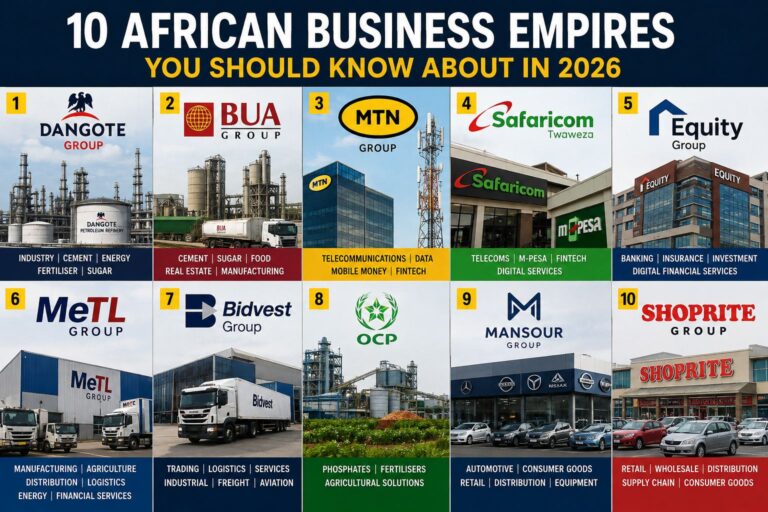
10 African business empires you should know about in 2027
From banking and telecoms to manufacturing and technology, these African business empires are reshaping markets, influencing economies and redefining wealth.
The 20 companies controlling Africa’s green energy future
From power plants and battery factories to mineral mines, these companies shape who captures Africa's clean-energy value and long-term profits.

Seychelles’ Aldabra giant tortoise population hits 180,000
Seychelles’ Aldabra tortoise recovery offers a powerful lesson in conservation, patience and why protecting ecosystems can matter beyond borders.