

Guinea’s greatest economic opportunity may not lie in how much iron ore it can extract, but in what the country chooses to do with the money after selling it. The approval of a $1 billion sovereign wealth fund signals an important shift in the country’s relationship with its mineral resources. For decades, resource-rich African economies have struggled to convert underground wealth into lasting prosperity. Guinea now has an opportunity to challenge that history, but the creation of a financial institution is only the beginning. Its real significance will depend on whether the country can protect mining revenues from political pressures, invest them intelligently and build an economy capable of generating wealth long after its most valuable mineral deposits have been exhausted.
Guinea’s sovereign wealth fund marks a new economic direction
On November 25, 2026, Guinea’s National Assembly unanimously approved legislation establishing the Sovereign Fund of Guinea, known by its French abbreviation, FSG.
The government intends to build the fund to an initial capital value of $1 billion within five years. Its principal sources of financing will include 30% of fiscal and non-fiscal revenues generated by the enormous Simandou iron ore project and 5% of revenues from qualifying new extractive projects.
The proposed institution will have three broad objectives: supporting economic diversification, protecting the economy against financial shocks and preserving part of the country’s natural resource wealth for future generations.
The legislation also provides for a 99-year institutional lifespan, renewable under the applicable legal framework.
These arrangements represent an attempt to move beyond the traditional model in which mineral revenues are absorbed into annual government budgets and spent according to immediate political and economic priorities.
However, the distinction between announcing a financial target and establishing a functioning investment institution is important. Parliamentary approval is confirmed, but the government has indicated that the legislation must still be transmitted to President Mamady Doumbouya for promulgation.
The real test will begin when the fund starts receiving money and making investment decisions.
Simandou changes the economics of Guinea
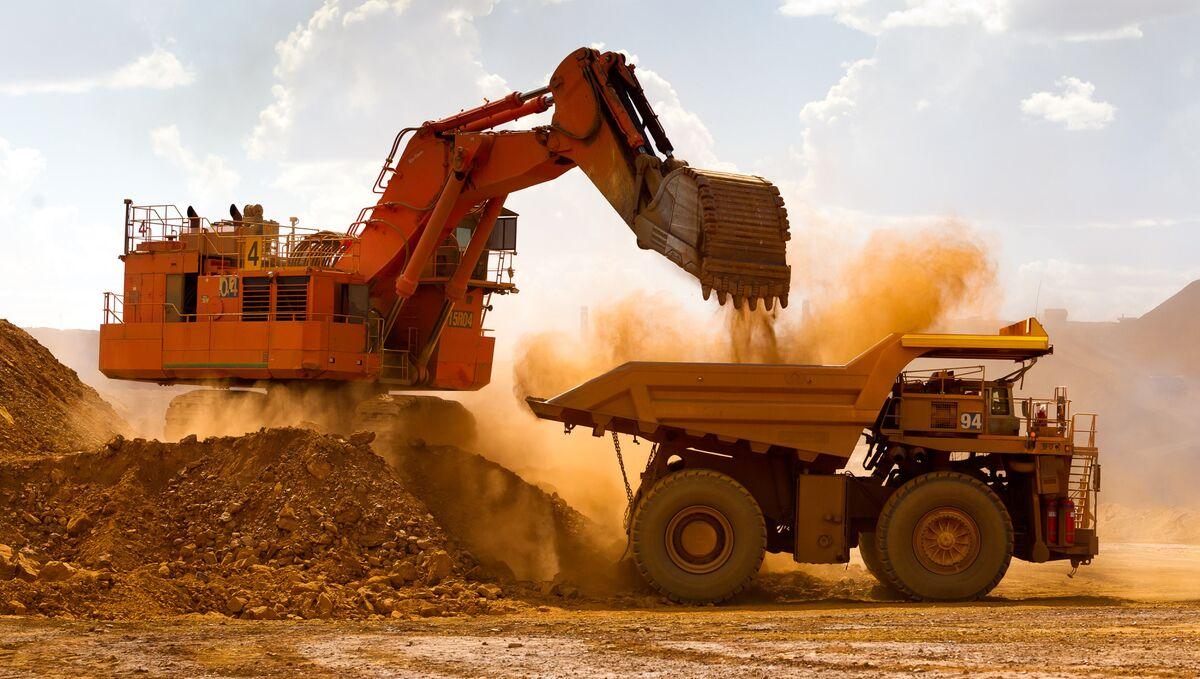
The importance of the fund cannot be separated from Simandou, one of the world’s most significant high-grade iron ore deposits.
Located in southeastern Guinea, Simandou has the potential to transform the country’s position in the international iron ore industry.
Its development involves major international mining interests, including a consortium led by China’s Baowu and a joint venture led by Rio Tinto.
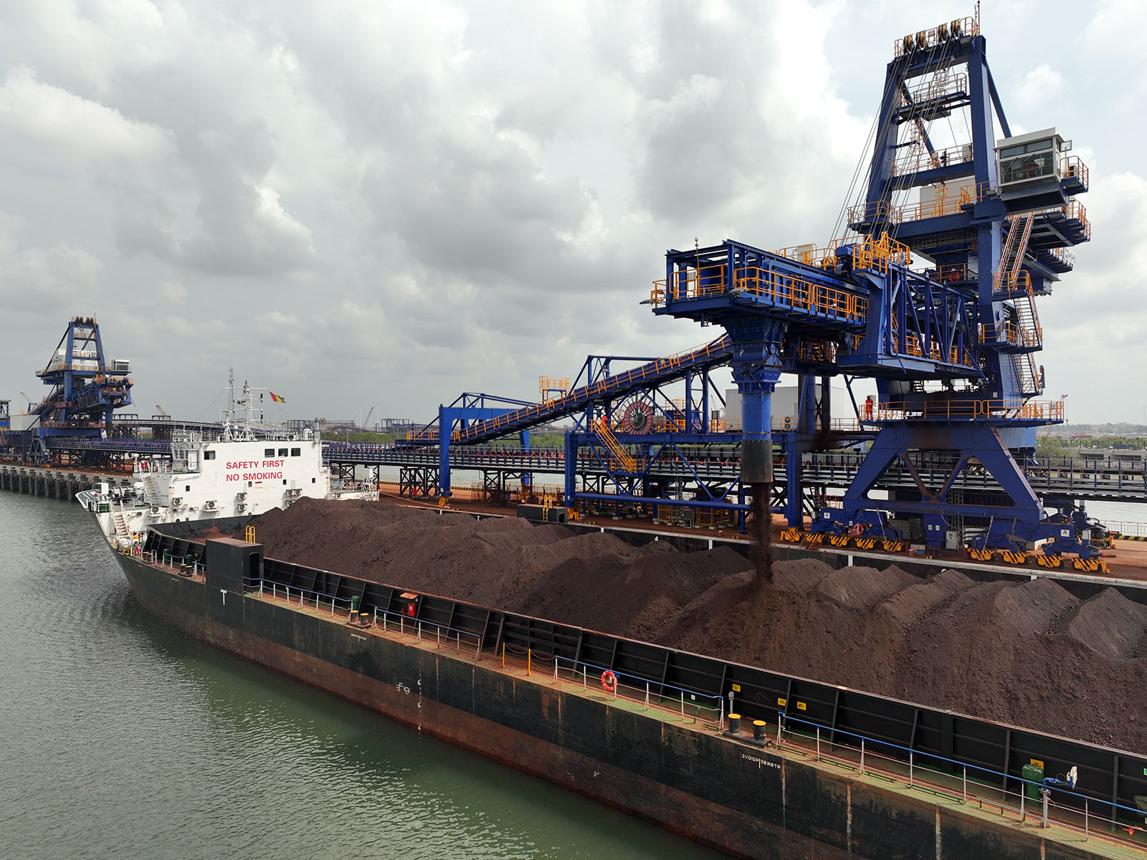
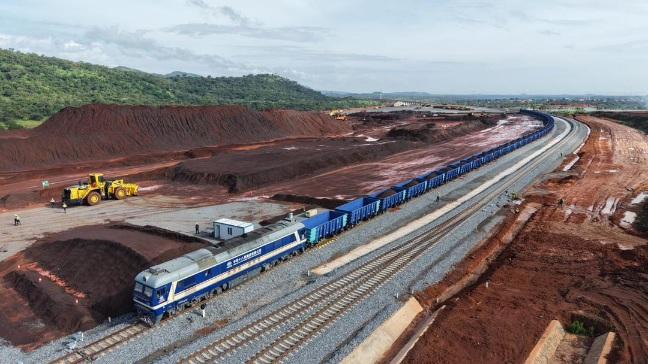
The project extends beyond the extraction of iron ore. Its infrastructure includes mines, a railway network stretching approximately 650 kilometres and a new export port.
The scale of the investment reflects the commercial importance of the deposit and the logistical challenges involved in bringing its resources to international markets.
The World Bank has identified Simandou as a major opportunity to accelerate Guinea’s economic growth. Its projections indicate that economic growth could average approximately 9% between 2026 and 2028.
Yet rapid economic expansion does not automatically produce broad-based prosperity.
Mining operations can generate substantial export earnings, government revenues and infrastructure investment without creating employment opportunities on the scale required by a growing population.
This distinction is particularly important for Guinea.
The country needs to ensure that Simandou becomes more than an internationally important mining operation. Its development should also support domestic businesses, agricultural production, industrial capacity and the expansion of skilled employment.
The sovereign wealth fund is intended to help bridge that gap.
The bigger question is who controls the mineral wealth
Africa’s mineral wealth has frequently generated a difficult economic contradiction.
Countries can possess enormous natural resources while remaining heavily dependent on external financing, imported manufactured goods and international commodity markets.
The problem is not simply foreign ownership of mining operations. Large-scale extraction requires considerable capital, technical expertise, infrastructure and access to international markets.
The deeper question concerns how much economic value remains within the resource-producing country.
Guinea’s proposed fund introduces another dimension to this debate.
Instead of relying exclusively on taxation, royalties and direct state participation in mining operations, the government is seeking to establish an institution that can accumulate and manage a portion of the resulting public revenues.
This could gradually strengthen the country’s financial position.
A professionally managed sovereign investment institution can also create a mechanism through which temporary commodity income is converted into financial assets capable of generating returns over many years.
However, the distinction between mineral ownership and financial control remains important.
Guinea may collect substantial revenues from Simandou, but it will still need to negotiate effectively with investors, maintain credible taxation arrangements and develop domestic capacity to participate in the wider iron ore value chain.
A sovereign wealth fund cannot independently resolve weaknesses in mining contracts, taxation administration or industrial policy.
Its contribution will depend on how effectively it complements those institutions.
The $1 billion target is only the beginning
The proposed capital target is significant, but the actual funding arrangements deserve close examination.
Under the government’s announcement, the fund will receive 30% of Simandou’s fiscal and non-fiscal revenues, alongside 5% of revenues from qualifying new extractive projects.
This provides a potentially substantial long-term financing base.
However, the amount accumulated will depend on actual production, iron ore prices, applicable taxes, dividends and the government’s ability to collect what it is owed.
The value of mineral exports should not be confused with the revenue available to the state.
Mining companies incur substantial costs associated with construction, operations, financing, transportation and other commercial obligations.
Consequently, the fund’s future resources will depend on the actual financial performance of the mining industry and the fiscal arrangements governing each project.
There is also an important distinction between the announced $1 billion target and money already deposited.
The government has not presented the target as evidence that the entire amount is immediately available for investment.
Investors and citizens will therefore need clear annual reporting showing how much has been committed, how much has been received and what portion remains invested.
Without that information, the headline figure risks becoming more important than the institution’s actual financial performance.
Governance will determine whether the fund succeeds
Perhaps the most important question surrounding Guinea’s sovereign wealth fund concerns its independence.
The government has outlined a governance structure involving a nine-member board, seven of whom will be independent. The remaining two will represent the finance ministry and central bank.
According to Reuters, President Doumbouya will also head a committee involving ministers and civil society representatives responsible for approving the fund’s strategy.
This structure contains both opportunities and potential governance challenges.
Independent board members can introduce professional expertise, investment discipline and greater institutional credibility.
However, independence must exist in practice, not merely in the appointment documents.
A successful sovereign wealth fund needs clearly defined responsibilities separating political oversight from daily investment management.
The government should establish transparent procedures for appointing directors, evaluating performance, managing conflicts of interest and publishing investment decisions.
The Guinean authorities have also outlined several accountability mechanisms.
These include oversight by the Court of Accounts, annual external audits, reports to parliament and regular publication of financial statements.
Withdrawals will require approval from both the fund’s board and the National Assembly through a finance law. The government has also stated that the fund must not finance ordinary government operating expenditure.
These safeguards are important because the greatest danger facing a resource-backed investment institution is the possibility that it becomes an alternative source of discretionary political financing.
The principles governing internationally recognised sovereign wealth funds, particularly the Santiago Principles, emphasise transparency, accountability, clearly defined investment mandates and operational independence.
Guinea will need to demonstrate that these principles translate into enforceable practices.
Why domestic investment could matter more than the headline figure
One of the most interesting aspects of the initiative is its intention to support productive investment inside Guinea.
The government has identified infrastructure, energy, industrial development, agricultural processing and local mineral transformation as potential investment priorities.
This could be particularly significant for an economy seeking to reduce its dependence on raw commodity exports.
Agriculture offers an important example.
Guinea possesses considerable agricultural potential, but turning that potential into competitive commercial production requires reliable electricity, irrigation, storage facilities, transport networks, processing infrastructure and access to finance.
A well-managed investment fund could help mobilise capital for commercially viable projects in these areas.
Energy investment could also strengthen manufacturing and industrial development.
Reliable electricity is essential for processing mineral resources locally, supporting small businesses and attracting investment into industries that require consistent power supplies.
Transport infrastructure presents another opportunity.
The railway and port developed for Simandou could potentially become part of a wider economic corridor connecting mining operations with agricultural producers, industrial businesses and regional trading networks.
This is an important distinction.
Mining infrastructure designed exclusively to transport minerals may generate substantial export revenues without significantly transforming the surrounding economy.
Infrastructure designed to serve multiple economic activities can produce much broader development benefits.
The World Bank’s 2027 to 2033 country partnership framework for Guinea similarly emphasises economic governance, skills development, energy, transport and private investment.
The challenge is to connect these priorities through commercially sound investments rather than isolated projects driven by political visibility.
The danger of creating another resource-dependent economy
Guinea’s opportunity also carries substantial risks.
A rapid increase in mining revenues can create pressure for higher government spending, currency appreciation and greater dependence on a single export industry.
Economists describe one potential consequence as Dutch disease.
This occurs when a booming resource sector places pressure on other tradable industries, potentially making agriculture and manufacturing less competitive.
For Guinea, this would undermine the very diversification objectives the sovereign wealth fund is supposed to support.
A second danger involves commodity price volatility.
Iron ore prices are influenced by global industrial demand, steel production, Chinese economic activity and developments in international trade.
A slowdown in major consuming economies could reduce export earnings and government revenues.
If public spending becomes dependent on optimistic mining projections, a downturn could expose the country to serious fiscal pressure.
The International Monetary Fund has repeatedly emphasised the importance of transparent mining revenue collection, stronger public financial management and rules-based fiscal policies.
Its November 2026 approval of a 38-month financing programme worth approximately $417 million for Guinea reinforces the importance of maintaining economic stability while mining production expands.
The implication is clear: the sovereign wealth fund should operate within a broader fiscal framework.
It cannot replace responsible budgeting, effective taxation, prudent borrowing or investment in essential public services.
What ordinary Guineans should expect
For citizens, the ultimate measure of success will not be the size of the fund’s financial portfolio.
It will be whether the country’s mineral wealth improves living standards.
The government has made an important distinction between the sovereign wealth fund and the national budget.
According to the finance ministry, the fund will pursue long-term investment and wealth preservation, while ordinary public expenditure, including healthcare, education and social protection, will remain the responsibility of the national budget.
This separation is sensible.
Citizens should not have to wait decades for the benefits of mineral wealth to appear through investment returns.
They need accessible healthcare, quality education, reliable electricity, employment opportunities and infrastructure today.
At the same time, future generations should not inherit an exhausted mineral economy without the financial assets and productive industries needed to sustain development.
The challenge is therefore to balance immediate development requirements with long-term savings.
Local communities near Simandou also deserve particular attention.
Mining infrastructure can transform regional economies, but it can also create environmental pressures, land-use disputes and unequal distribution of economic benefits.
A credible development strategy must ensure that affected communities have access to meaningful consultation, appropriate compensation and measurable local development opportunities.
A wider lesson for Africa’s mineral economies
Guinea’s initiative has implications beyond West Africa.
Across the continent, governments are reconsidering how they negotiate mining agreements, collect resource revenues and participate in international mineral supply chains.
Countries such as the Democratic Republic of Congo, Zambia, Ghana and Namibia face different versions of the same underlying challenge: how to convert mineral production into sustainable economic development.
The establishment of a sovereign wealth fund offers one possible instrument.
However, the broader lesson is that African mineral sovereignty requires more than higher taxes, increased state ownership or ambitious investment announcements.
It requires strong institutions capable of managing public wealth, supporting domestic enterprise and ensuring that resource extraction contributes to economic transformation.
For further context, see Who Owns Africa’s analysis of Africa’s critical minerals and the competition between China, America and Russia.
Guinea also faces an opportunity to connect mineral revenues with the development of local industries rather than relying indefinitely on exporting raw materials.
Its experience could become an important reference point for other African governments considering how sovereign investment institutions can support industrial development.
But success will require more than copying the institutional structure of established sovereign wealth funds.
It will require political commitment, professional management, transparent public accounts and an investment strategy aligned with the country’s actual economic needs.
Guinea must build an institution stronger than its mining boom
The approval of the Sovereign Fund of Guinea is an important institutional development, but it should not be mistaken for the completion of the country’s economic transformation.
The real achievement will be measured by what happens after the first mining revenues arrive.
Can the government resist pressure to divert accumulated savings towards short-term political priorities? Can independent directors exercise meaningful authority? Can investments generate commercial returns while supporting productive economic activity? And can citizens independently establish how much wealth the country has accumulated?
These questions will matter far more than the $1 billion headline.
Simandou gives Guinea an opportunity that few countries receive on such a scale. It offers the possibility of converting a major mineral discovery into a stronger financial position, a more diversified economy and greater economic independence.
But iron ore is a finite resource. Its value to future generations will depend on the institutions, industries and financial assets created while it is being extracted.
Guinea’s greatest success would not be to build a billion-dollar fund from its iron ore revenues. It would be to reach a point where the country no longer depends on iron ore to finance its future.

More from Mining
Liberia’s $5.6 billion mining deal: Who controls its energy future?
Liberia is converting gold revenues into electricity and infrastructure, but financing arrangements raise questions about public ownership, accountability and economic sovereignty.
DR Congo cobalt export ban: How it could reshape global battery markets
Congo's export suspension exposes the imbalance between mineral ownership, industrial power and financial rewards shaping the global battery economy today.

Who really owns Africa’s gold? The battle for mines and refineries
West Africa's refining ambitions expose a deeper struggle over mineral ownership, foreign capital, economic sovereignty and who ultimately profits from Africa's gold.