

Liberia’s $5.6 billion agreement with Bea Mountain Mining Corporation could become one of West Africa’s most consequential experiments in resource-backed infrastructure financing. But beneath the promise of 270 megawatts of new electricity generation lies a more important economic question: can a country transform its mineral wealth into public infrastructure without compromising the financial interests of future generations?
On November 25, 2026, Liberia signed a major infrastructure agreement with Bea Mountain Mining Corporation, its largest gold mining company, in a programme expected to deliver four power plants, new transmission infrastructure, reservoirs and an extensive road network.
The Master Infrastructure Development Agreement, known as MIDA, carries a reported value of approximately $5.6 billion, although the Liberian government previously described the programme as worth $5.7 billion.
The proposed development could substantially expand Liberia’s electricity generating capacity, which currently stands at approximately 126 megawatts.
For a country where electricity shortages continue to constrain businesses, manufacturing and household development, the potential economic benefits are considerable.
Yet the agreement is not simply a story about a mining company financing power plants.
Its financing structure, tax arrangements, ownership provisions and implementation conditions raise questions about how Liberia intends to convert mineral revenues into lasting public assets.
The difference between an impressive infrastructure announcement and a successful national development programme will depend on the details.
Liberia’s $5.6 billion mining investment explained
The infrastructure agreement covers a collection of projects designed to address some of Liberia’s most persistent development constraints.
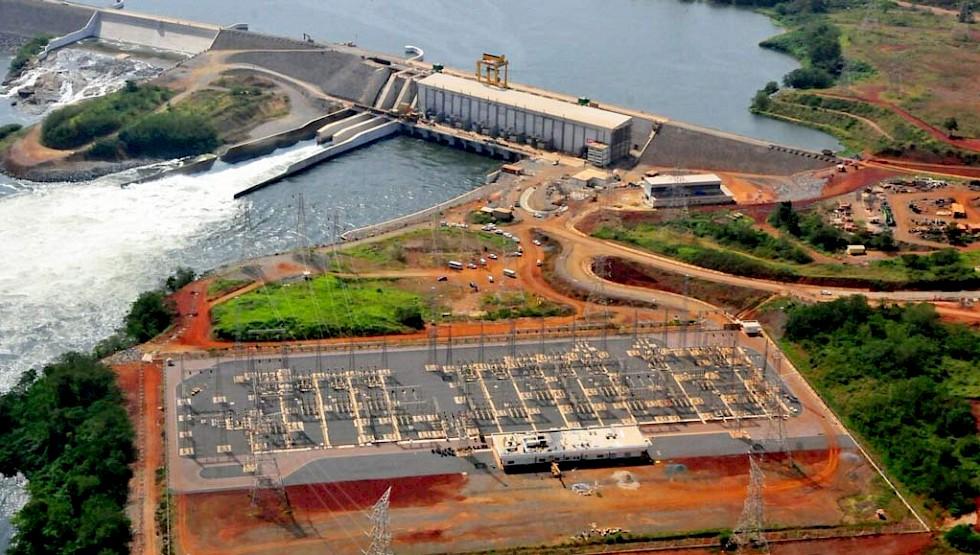
According to the Liberian government and reporting by Reuters, the programme includes four power plants with combined generating capacity of approximately 270 megawatts.
These comprise a 100-megawatt hydropower facility on the Via River, two hydropower developments on the St. Paul River with a combined capacity of 110 megawatts, and a 60-megawatt biomass power plant.
The programme also includes three reservoirs with combined storage capacity of approximately 10 billion cubic metres, major transmission infrastructure and improvements to the national electricity grid.
Transport infrastructure is another central component.
The agreement identifies a 146-kilometre Liberia Development Road, alongside an allocation of up to $1 billion for additional roads and approximately $230 million for national grid improvements.
An investigation by The Liberian Investigator provides a particularly useful breakdown of the 22 infrastructure projects included in the Bea Mountain agreement.
Its examination distinguishes between core projects with specified costs and additional projects that require further approvals and implementation arrangements.
This distinction matters because the headline investment figure should not automatically be interpreted as money already spent or a guarantee that every proposed project will be completed.
The electricity crisis behind the agreement
Liberia’s electricity challenge is deeply rooted in its history.
The country’s civil wars destroyed much of its electricity infrastructure, leaving the national power system severely weakened.
Reconstruction has gradually improved generation and distribution, particularly following the rehabilitation of the Mount Coffee Hydropower Plant.
Nevertheless, electricity access remains among the lowest in West Africa.
An IMF assessment published in 2026 placed national electricity access at approximately 32.7%, with rural access below 10%.
The World Bank’s May 2025 assessment also highlighted progress in expanding electricity connections, while identifying persistent challenges involving utility finances, rural access and the reliability of electricity supply.
For Liberia, these weaknesses represent more than an infrastructure problem.
They affect industrial competitiveness, business productivity, healthcare delivery, agricultural processing and the country’s ability to attract investment.
Mining companies require electricity to operate processing facilities. Manufacturers need predictable energy supplies to control production costs. Hospitals need reliable power to maintain essential medical equipment.
Consequently, Liberia’s electricity investment has implications far beyond the mining industry.
The challenge is ensuring that new generation capacity translates into affordable electricity reaching households and businesses.
Who actually owns the infrastructure?
The ownership question is perhaps the most important aspect of the agreement.
The distinction between financing infrastructure and owning it is fundamental.
The Liberian Investigator’s examination of the MIDA states that completed power plants and transmission infrastructure are designated for transfer to the Liberia Electricity Corporation, while completed roads are designated for the Ministry of Public Works.
This is a significant provision.
It suggests that the programme is intended to create public infrastructure rather than simply private electricity and transport facilities serving Bea Mountain’s mining operations.
However, legal ownership is only one dimension of control.
The government must also establish who will manage the facilities, determine operating standards, pay maintenance expenses and oversee electricity purchasing arrangements.
A publicly owned power plant can still face financial difficulties if its operating costs are excessive or its electricity is sold under unsustainable commercial arrangements.
Liberia should therefore publish the relevant ownership, operational and maintenance provisions.
The country also needs independent oversight to ensure that the completed infrastructure remains accessible to the wider economy.
This debate connects with our investigation into who controls Africa’s green energy infrastructure and the companies shaping its future.
The financing model deserves closer scrutiny
The agreement’s financial structure deserves particular attention.
According to the government’s explanation, additional revenues payable by Bea Mountain, made possible by higher gold prices, will help finance the infrastructure programme.
However, detailed reporting on the agreement indicates a more complicated arrangement.
Bea Mountain is expected to advance financing for approved construction works and recover eligible costs through offsets against specified payments owed to the Liberian government.
These include certain tax, royalty, dividend and other fiscal obligations.
The agreement reportedly permits up to $500 million of outstanding work to be financed at a time.
Unrecovered balances attract interest linked to three-month Secured Overnight Financing Rate, or SOFR, plus two percentage points.
This arrangement is economically significant because it means the infrastructure programme is connected to future government revenue.
It is therefore important to distinguish between a conventional private investment, a government borrowing arrangement and a contract under which future fiscal obligations are used to recover construction costs.
Each has different implications for public finances.
The Liberian Investigator’s editorial, Build the Power, Build the Roads, But First Prove the Price, raises important questions about the project’s actual cost, financing exposure and the treatment of tax offsets.
One of the central issues is whether the advertised $5.6 billion to $5.7 billion represents a firm financial commitment, a collection of approved project costs and provisional allocations, or a combination of the three.
That distinction should be clear to parliamentarians and taxpayers.
Gold prices and the danger of commodity dependence
The financing model creates another vulnerability.
Gold prices are determined by international markets and can experience substantial fluctuations.
A rise in gold prices can increase mining revenues and improve the financial capacity of a mining company.
A prolonged decline can have the opposite effect.
If the infrastructure programme depends significantly on additional gold-related fiscal payments, the government must explain how it will protect implementation from commodity-market volatility.
Liberia should also establish what happens if production declines, construction costs increase or financing obligations remain outstanding longer than expected.
This is particularly important because public infrastructure requires long-term maintenance.
A power plant may take years to construct but must operate for decades. Its turbines, transmission equipment and other components require continuous investment.
The government should avoid creating an arrangement in which the country receives new infrastructure but inherits financial obligations that are difficult to sustain.
Bea Mountain and the corporate ownership question
The corporate ownership structure behind Bea Mountain also deserves attention.
Bea Mountain Mining Corporation’s 2023 audited financial statements identify Mano Gold (Liberia) Limited, registered in the British Virgin Islands, as its sole shareholder.
That information does not establish the ultimate beneficial ownership of every entity involved in the new agreement, nor does it demonstrate that the shareholder receives ownership of the proposed public infrastructure.
Nevertheless, it illustrates why corporate transparency is important in major African mining investments.
Citizens should be able to understand the companies financing public infrastructure, their ownership structures, their contractual responsibilities and the financial arrangements through which project costs will be recovered.
Liberia should publish relevant beneficial ownership disclosures and make the complete agreement accessible to the public.
The broader African challenge is examined in our feature, Africa has the minerals, but who controls the money?.
The central argument is that mineral ownership alone does not determine who captures the economic value created by mining.
Financing, processing, infrastructure, commercial agreements and financial institutions all influence where the benefits ultimately flow.
The environmental cost of energy development
The proposed hydropower developments introduce environmental and social considerations that cannot be separated from the investment.
Large reservoirs can affect agricultural land, river ecosystems, fisheries and communities living near project sites.
The proposed Via River and St. Paul River developments therefore require detailed environmental and social impact assessments.
Land acquisition and compensation arrangements should also be transparent.
The 60-megawatt biomass project raises separate questions about the sustainability of its fuel supply.
The government must establish whether the use of timber and vegetation cleared during construction can support reliable generation without encouraging unsustainable harvesting or damaging surrounding ecosystems.
There is also a wider environmental issue involving Bea Mountain’s existing mining operations.
An Associated Press investigation published in January 2026 documented repeated pollution incidents involving cyanide and other hazardous substances at the company’s mining operations.
The investigation cited Liberian environmental records and interviews with residents, officials and specialists.
These findings make independent environmental oversight especially important.
The government should ensure that environmental obligations remain enforceable throughout the infrastructure programme and that affected communities have meaningful channels for reporting concerns.
Can infrastructure transform Liberia’s economy?
If implemented effectively, the agreement could create opportunities across several industries.
Reliable electricity could support manufacturing, agricultural processing, telecommunications, refrigeration and commercial services.
Better roads could connect agricultural communities with urban markets, ports and industrial centres.
Construction projects could generate employment and create opportunities for Liberian engineering companies and contractors.
The programme could also strengthen Liberia’s attractiveness to investors looking for opportunities in mining, processing and industrial production.
However, infrastructure construction alone does not guarantee industrialisation.
The country needs policies that encourage businesses to invest in production, develop technical skills and build competitive domestic supply chains.
This is an important lesson from other African infrastructure projects.
Our analysis of Tanzania’s $3 billion Julius Nyerere hydropower investment examines the challenge of converting additional electricity generation into employment and wider economic development.
Similarly, Ethiopia’s expanding hydropower ambitions demonstrate how electricity infrastructure can influence industrial competitiveness and regional economic relationships.
Liberia should learn from these experiences.
What parliament must demand before implementation
The Liberian Legislature has an important responsibility in examining the agreement and its long-term financial consequences.
The most important issues include:
- Complete disclosure: Publication of the signed MIDA, technical schedules, financial obligations and relevant implementation agreements.
- Independent cost verification: External engineering and financial audits to assess project costs, construction progress and cost variations.
- Ownership protection: Clear legal provisions establishing public ownership and access to completed infrastructure.
- Fiscal accountability: Transparent reporting of tax and royalty offsets, outstanding balances, interest calculations and future government revenue.
- Environmental safeguards: Independent monitoring, land compensation and community consultation.
- Local economic participation: Meaningful opportunities for Liberian contractors, engineers, technicians and suppliers.
- Operational sustainability: Long-term funding arrangements for maintenance, staffing and electricity distribution.
The legislature should also examine the difference between the core projects and additional infrastructure allocations that require further approval.
A project that is commercially attractive on paper must also be financially sustainable and legally enforceable.
Liberia’s economic sovereignty will be decided after the signing
The Bea Mountain agreement represents an ambitious attempt to connect mineral revenues with national development.
It could help address electricity shortages, improve transport infrastructure and create opportunities for industrial expansion.
But its ultimate success will depend on institutional strength.
Liberia must demonstrate that it can manage a complicated financing arrangement, enforce environmental obligations, protect public assets and ensure that citizens receive measurable economic benefits.
The country should also avoid allowing the mining sector to become the sole foundation of its infrastructure financing strategy.
Diversifying electricity generation, expanding renewable energy, improving utility management and developing domestic capital markets will be essential.
The real opportunity is to use mineral wealth as a starting point for a broader economic transformation.
Liberia does not simply need more power plants. It needs an electricity system that supports businesses, households and industries. It does not simply need new roads. It needs transport networks that connect producers to markets and create economic opportunities.
And it does not simply need foreign investment. It needs investment that strengthens domestic institutions and creates capabilities that remain after individual mining operations eventually close.
The $5.6 billion Bea Mountain agreement may help Liberia build the infrastructure it has needed for decades. But the country’s most valuable achievement would be developing the institutional and financial capacity to control what that infrastructure becomes. Gold can finance the foundations of prosperity. Only sound governance can ensure that prosperity belongs to the Liberian people.
About Who Owns Africa: Who Owns Africa investigates the companies, governments, investors and institutions shaping Africa’s politics, business, resources and economic future.

More from Mining
DR Congo cobalt export ban: How it could reshape global battery markets
Congo's export suspension exposes the imbalance between mineral ownership, industrial power and financial rewards shaping the global battery economy today.

Who really owns Africa’s gold? The battle for mines and refineries
West Africa's refining ambitions expose a deeper struggle over mineral ownership, foreign capital, economic sovereignty and who ultimately profits from Africa's gold.

Africa’s critical minerals: How China, America and Russia are competing for control
Africa's mineral wealth is attracting global powers, but ownership, processing capacity and political influence will determine who ultimately captures its economic rewards.